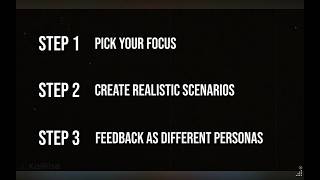
Mike Lyons shows how to use AI to generate practice customer feedback before you have real users. Pick a narrow question, write realistic scenarios, then generate responses from different personas to spot patterns worth testing with actual customers.
Chapters
Now that you've designed a feedback collection system, here's something AI can do that would be pretty difficult for humans. It can simulate feedback at scale. Now look, I know this might sound kind of backwards, like why create fake feedback when you can just go talk to real customers? But here's the thing. Real customer feedback, it takes weeks, months, sometimes longer to collect. And you need dozens of responses to spot meaningful patterns. Well, maybe your product is still in the early stages and you don't have enough actual customers yet. You still need to practice the skill of turning customer feedback into actionable insights. Well, this is where simulation becomes helpful. Think of it like flight simulators for pilots. They don't practice emergency landings on real planes with real passengers. They use simulated scenarios to build the skills they'll need when it actually matters. So I'm going to show you how to use AI as your research partner in this. Turning patterns of customer feedback into testable theories about user behavior. But to practice this skill, we need feedback to analyze. And AI gives us that practice data in minutes instead of months. So you can focus on the more valuable skill, forming insights that drive better product decisions. Okay, so here's my three step method for simulating customer feedback. Step one. Pick your focus. Start with one specific question you need answered. Are you testing reactions to a new feature? Maybe you're exploring whether a workflow change reduces confusion. Now, just a pro tip here, keep it narrow. When you try to test everything at once, the feedback becomes scattered and confusing and just not very helpful. All right, on to step two. Create realistic scenarios. So don't ask generic questions like what do you think about our app? Instead, create. Create concrete moments. For example, you're three weeks into a client project and the scope just expanded. You need to update deadlines for your team, so you open Technova's mobile app to recalculate timelines. See the difference? Now you've set the stage for a realistic scenario, something AI can better understand and is certainly more applicable to your context. Okay. And finally, step three. Generate feedback as different Personas. Ask AI to roleplay as different customer types in your scenario. Maybe it's a busy project manager rushing between meetings or an operations director working late on Sunday. Get multiple responses from each type. People aren't consistent and neither should your simulated feedback be. Alright, there you go. Three quick steps to gather simulated customer feedback. Step one, pick your focus. Step two, create realistic scenarios. And step three, generate feedback as different Personas. This approach lets you fail fast and cheap. You know, Netflix uses similar simulation techniques to test new interface changes before rolling them out to millions of users. Users. They generate thousands of simulated user interactions to predict how real subscribers might react to different layouts or recommendation algorithms. Okay. In the next interaction, you'll work through steps one through three with picking your focus, creating scenarios, and generating that simulated feedback. Then we'll come back for a deeper dive, where you'll learn how to analyze the AI generated feedback to identify specific areas worth validating through actual customer engagement. And when you run several simulations, patterns begin to emerge. And it's those patterns that become the insights you can test with real customers. And that's where the real magic happens. Nope. There's no way I'm saying real magic happens. And that's where the real value begins to occur. You're about to see how a few hours of smart simulation can save you months of building in the wrong direction.