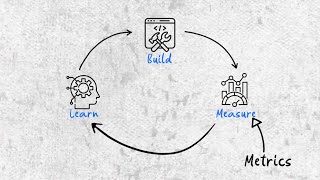
Mike Lyons walks through testing assumptions early in product development. Extract your riskiest bets, build the cheapest version to test them, show it to real customers, measure what happens, then decide to tweak or pivot. A meal-planning app example shows how testing can flip your whole direction.
Chapters
The faster you iterate, the more you learn and the faster you succeed. Have you ever bought something you were really excited about only to find out that it wasn't what you expected? What a piece of junk. That's exactly what we're trying to prevent when we build products. Taking the guesswork out of product development is pretty simple. We build stuff, test it, learn from it, and then keep going till we get it right. This whole approach comes from Eric Reiss and Steve Blank. These guys figured out that building products without testing them first is a recipe for disaster. But you might be wondering, okay, well, how do we test our ideas? Good news here. Within the test step, we have a testing process. And it starts by revisiting our value proposition canvas. Remember, these aren't facts yet. They're just educated guesses of what we need to test. The key is pulling out the riskiest assumptions, the ones that could sink our product if we're wrong about them. For example, if you're building a meal planning app, your big assumption might be that people want to plan their meals a week ahead. That's something we need to test before a single line of code is written. And once we know what we're testing, we need to make something to test those guesses with. It could be a simple drawing, or a mock up, or a bare bones version of the product. Whatever is the quickest and cheapest to learn from. Sometimes it's as simple as a landing page that describes your idea. The important thing is not to build more than you need to test your guess next. We put it in front of real customers, not our friends or co workers, but actual people who might use this thing. And we watch what happens. We, we keep track of how people react. Did they use it like we thought they would? Did they get stuck somewhere? Do they even care about the problem we're trying to solve? These are the things that we're looking for. Let's say with that meal planning app, we found out that people don't actually want to plan a week ahead. Instead, they just want help figuring out what to make for dinner tonight based on what they have in their fridge. That's valuable information that changes everything about our product. The next part is crucial. We look at what actually happened versus what we thought would happen. This is where our metrics come in. Sometimes we're right, but often we're wrong. And that's okay, because now we know what to fix. We take everything we learned and decide what to change. Maybe we need to tweak something small, or maybe we need to go back to the drawing board. Either way, we're making decisions based on real feedback, not just hunches. And the key to all of this is staying objective. It's easy to get attached to your ideas, but remember, we're not trying to prove ourselves right. We're trying to learn what's actually going to work. And then we do it all over again. Build, measure, learn. That's the cycle. Keep going until you're sure you're building something people actually want. Now I've used this process hundreds of times with teams all over the world, and it works. Whether you're building software services or physical products, the principles stay the same. Test your assumptions early, learn from real customers, and adjust based on what you find out. Remember, every successful product started as a guess. The difference between success and failure often comes down to how well you test those guesses before investing too much time and money.