Mike Lyons explains why psychological safety matters most for high-performing teams, citing Google's Project Aristotle research. He contrasts old plan-driven software development with agile methods that restore human connection through daily standups and sprint planning, building trust and a culture where failure becomes learning.
Questions this video answers
2012.
Psychological safety.
Chapters
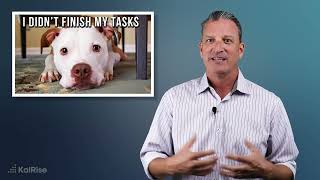
In 2012, Google launched Project Aristotle. Now this project was aimed to figure out what makes high performing effective teams. Google researchers believe that teams can do more together than working alone. Well, after years of studying and gathering, working across hundreds of teams and gathering data, the number one predictor of team effectiveness was psychological safety. Not work environments or colocation or like access to really cool technology or high speed computer. No, it was psychological safety. The idea that we are safe with each other, we're safe to fail, we're safe to succeed, we care for one another as team members. It's an interesting piece and it ties into this idea of really developing our soft skills as agilists, as agile team members. Yeah, I've mentioned this but you know, back when we used to develop software, psychological safety had, wasn't even discussed, we didn't even talk about it. We didn't have to work on soft skills because developers developed to the stack of business requirements what there was no human interaction what soft skills were needed. The project manager simply followed the project plan, are you on time? Are you on scope, Are you on budget? And that was all that mattered. And the result? Yeah, bad, like bad stuff. Poor software components people didn't use. Companies were developing and releasing products that nobody would use and nobody cared about. So agile as a method of delivery really brings humanity back into our craft and developing soft skills is a key piece of that. Soft skills like community and trust really get built and formed out on scrum teams, on agile teams. Let's take one example, the daily standup. Now the daily standup is for the team, by the team, to know if the team is going to meet the team commitments. And it is a very transparent moment. Nobody wants to stand in front of the team and say I didn't complete what I said I was going to complete yesterday. It's a vulnerable moment when your peers are around you. Now psychological safety would say, when I tell my team members I didn't complete what I said I was going to complete yesterday, that I'm not met with some sort of in a reprimand or punitive action. I'm met with, oh well, how can we support you? That's way different. Psychological safety and that trust is built through things like the daily standup. Take another example here. Let's think about the idea of shared understanding, not shared documents, shared understanding. Well, the Sprint planning session where we're asking, asking questions of our product owner and refining and understanding what's in the backlog. That's a great, great time for building and creating shared understanding. Agile brings soft skills to the front of all of how we operate as teams. We're not afraid to fail together, we're not afraid to learn together, to grow together, to get better together. No individual superheroes. We rise and fall as a team. And agile teams bring that sort of high performing piece with, with that comes along with all of the other practices and principles that go in there. That approach towards being high performing comes from, from psychological safety.