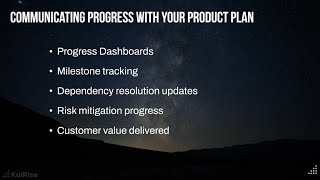
Mike Lyons argues that hiding dependencies and risks in product plans costs you stakeholder input that could save the project. He recommends a risk register, monthly risk reviews, and weekly dashboards that show progress, dependencies, and what could go wrong. Technova's example: they made task estimates and AI workflow optimization central to their planning.
Chapters
What if I told you the most valuable information in your product plan is precisely what you're tempted to hide? I'm intrigued. Go on. Those dependencies you're not sure about. Those constraints that are keeping you up at night. Those aren't weaknesses to conceal, but they're exactly where stakeholder insight could save your product. Even the best laid plans often go awry. And we need to give careful consideration to how dependencies and risks might affect our product plans. But what's the difference between a dependency and a risk? A dependency is something your project relies on to succeed. Think about technical dependencies like system integrations or third party software. Business dependencies could include regulatory approvals or stakeholder decisions. Well, your product plans. They should show clearly how and where these dependencies might impact delivery. This transparency doesn't signal weakness. Not. Not at all. It creates opportunities for collaborative problem solving. But what about risks? Okay. A risk is a potential future event that could negatively impact your project. Many teams keep a risk register. It's nothing fancy. It's just a place to capture and make risks visible. In it, you would capture the risk, its probability, impact, and your mitigation strategy if needed. Some risks you'll just accept, others you'll have to actively manage. I'm a fan of regular risk review meetings. It helps us stay ahead of our problem. You might do this monthly or at a minimum, quarterly. This time lets you update status and check mitigation strategies, even adjust plans as needed. In my experience, these reviews aren't just sort of internal exercises. They're valuable touch points with stakeholders who can provide fresh perspectives. Product plans serve as powerful tools that build trust with customers and stakeholders. And when we make our planning process visible and transparent, we create opportunities for meaningful collaboration. At Technova, we know users are frustrated with inaccurate task time estimates. Instead of hiding this challenge, Technova should make it central to their communications. The team might consider adding AI powered workflow optimization as a roadmap theme. We could create specific features like improved estimation algorithms, historical data analysis and agency specific benchmarking. This customer insight wouldn't just change our plans. It could transform our delivery work. When incorporating customer insights into plans and delivery work, consider the linking each insight to roadmap themes, prioritizing based on impact and strategic alignment, creating measurable outcomes, regularly validating with customers, and being transparent about what might affect delivery. Product plans are powerful communication tools when used effectively. Here are some specific ways to use them to communicate progress. Progress dashboards create visual displays showing completed in progress and upcoming work against roadmap themes. Update these weekly to show movement and velocity. Milestone tracking Highlight key achievements and upcoming milestones with clear dates and status indicators. Dependency Resolution Updates Regularly communicate which dependencies have been resolved and which remain, showing how the path to delivery is being cleared. Risk Mitigation Progress show how identified risks are being addressed with clear metrics on risk reduction efforts. Customer Value Delivery Track and communicate how much of the planned customer value has been delivered, not just how many features are complete. Tailor information for different audiences. Executives need business outcomes and strategic risks. Development teams need technical dependencies. Customers need delivery timing and how their feedback shaped priorities. Regular touchpoints Keep everyone aligned as conditions change. Quarterly roadmap reviews, month monthly updates and weekly check ins should include open discussions of dependencies and risks, inviting stakeholders to contribute to solutions. The best plans create conversations, not compliance. When your team can explain what they're building, why it matters and what might get in the way, you've created true shared understanding.