A short talk by Mike Lyons arguing that product teams must deeply understand customer problems before building solutions. Using a 2019 case study from Nairobi, he shows how apparent constraints (connectivity) can mask the real issue (device limitations) and presents two discovery techniques—focus groups and user journey mapping—plus practical tips and trigger questions to run them effectively.
Chapters
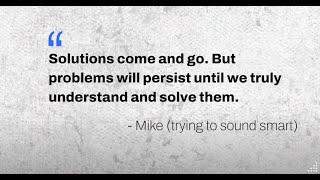
Albert Einstein once said, if I had an hour to solve a problem, I'd spend 55 minutes thinking about the problem and 5 minutes thinking about solutions. See, too often we rush to build solutions before truly understanding our customers pains and problems. I think we all get excited about features and functionality, but maybe forget to ask the fundamental question, what problem are we really trying to solve? I was a product owner leading a global mobile app project in 2019 for a non profit organization and we had built what we thought was a pretty good solution for tracking field operations. Now we knew about connectivity struggles in Kenya, so we'd built offline capabilities into the app. But when I visited our focus group in Nairobi, I discovered a much bigger problem that we hadn't considered. Most of our U.S. teams, well, they used newer phones with sort of larger screens and plenty of storage. But in Kenya, field workers were using budget Android phones with tiny screens and limited storage. Workers were having to delete personal photos and apps just to run our software. By spending time with the field workers, we learned that they needed a lightweight app that could run on basic devices. The problem wasn't connectivity, it was the device itself. This taught me that sometimes the obvious problem is not the real problem. And that brings us to a fundamental truth about product ownership. Solutions come and go, but problems will persist until we truly understand and solve them. This is where the fit portion of the value proposition canvas helps us understand if our product actually matches what customers need. Now, there's a number of different ways to discover customer problems. I'm going to talk about two of them here. One of them is a focus group, just like the focus group I talked about when we were in Nairobi. Okay, if this focus group isn't real, I'm going to take you apart like a human string cheese. They're excellent for generating discussions that reveal unexpected insights and allow participants to build on each other's ideas. One person's comment or use of a mobile phone, in my case, often triggers thoughts from others that wouldn't have surfaced in one on one interviews. Now here's how you can run an effective focus group. Select six to eight participants who represent your target users. Now, I've provided some trigger questions for you to use. You'll see them down below as well as in your student workbook, and you'll use these questions to help you in your focus group. Start with the jobs questions to understand where they're coming from. Maybe a question like what are different contexts you might find yourself in? Then move to pains questions like what's keeping you awake at night, or what are your main difficulties? You could then explore gains like what would make your life easier? Or what do you dream about now? Just a pro tip here. You may want to have someone else moderate the focus group so you can remain in observation mode. Invite a skilled moderator to lead the discussion, and ask someone else to record and document not just what people say, but what their reactions are to other people's comments. This will free you up to look for patterns and themes across different users. Okay, Another technique you might use for problem discovery is called user journey mapping. You might think of it as telling the story of your customer's experience with your product, from their first interaction to their last, kind of like following their steps through their day to day with your product. It helps you visualize the entire experience through your customer's eyes, not just individual touch points. It's particularly powerful when you're trying to understand where things might be breaking down in their experience or where opportunities for improvement exist. Okay, here's how you create one Using your customer profile from your value proposition canvas, map out each step your customer or potential customer takes to achieve their jobs to be done. Just take a first cut at it. Then grab those trigger question tools we provided to uncover more information about the steps you have if those steps are indeed solving the customer's problems and what might be missing. Just a quick example. In the Customer jobs trigger questions, you could consider things like what's the one thing that your customer couldn't live without? Document all of this for each step as you identify pain points and opportunities for improvement. Now, something I'll point out here is that journey mapping isn't just for existing products. In fact, when you don't have a product yet, journey mapping becomes even more valuable. Instead of mapping how your people use your product, map how they currently accomplish their goal without it. Think about it. Before Netflix, people still watched movies. Before Doordash, people still got food delivered. Well, map that current experience. This current state journey mapping helps you identify pain points and opportunities in existing behaviors and look for places where people have created their own solutions or where maybe they're using multiple tools to accomplish what could be streamlined if they just had one tool. And pay special attention when mapping these current journeys to statements like I wish I could or the most annoying thing is it's amazing all these facilities and you make a piece of crap like this. And once you understand the current journey, you can create a future state journey map showing how the experience will look with your new product. And this helps validate whether your product idea actually solves real problems. These discovery techniques, the focus group and the journey mapping exercise, along with our trigger questions, they work best when used together. You see journey mapping, well, it gives you the big picture of the customer experience. And focus groups will they help you deep dive into specific aspects to validate your understanding. And the trigger questions? Well, they ensure you're not missing important aspects of the customer experience in either method. Remember, as Einstein suggested, we're spending time really understanding the problem before jumping to solutions. These methods help us do exactly that. They force us to slow down and really see the world through our customers eyes.