Let's Talk Mental Health with Dr Ishan Shivanand | World Mental Health Day Exclusive
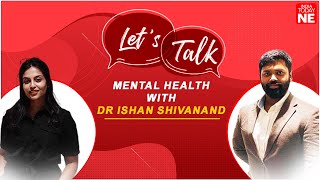
Dr. Ishan Shivanand, a mental-health researcher and founder of the Yoga of Immortals program, warns of a growing mental-health pandemic among young Indians manifesting as stress, anxiety, depression, and suicide. He attributes a recent high-profile corporate death to chronic, unchecked stress and India's cultural glorification of overwork. Shivanand advocates yoga and meditation alongside psychiatric care, and calls for policy-driven integration of indigenous wellness practices and robust research.
Chapters
Welcome to India Today Any. I'm Ashmita Saha, and today we are joined by Dr. Ishan Shivanan, a mental health researcher and professor specializing in non-pharmaceutical, non-invasive meditative modalities. He's also the founder of the Yoga of Immortals program. Amid rising concerns about mental health globally, with reports of increased stress, anxiety, and burnout, especially in light of post-pandemic world, mental wellness has become a critical topic. Governments and organizations worldwide are emphasizing the need for better mental health solutions. Dr. Ishaan has merged ancient Indian healing sciences with modern mental wellness solutions, addressing challenges like stress and anxiety through his programs, benefiting professionals, athletes, and military personnel by building resilience and improving mental health. So, Dr. Ishan, welcome.
Thank you so very much, Miss Asmita. It's a pleasure being here.
Yeah, we are pleased to have you here, sir. Okay, so before we, uh, like start set of questions that I have for you. You first define what mental wellness is in today's fast-paced world. So what basically is mental wellness?
I will define mental wellness as the ability to do the work that is required from us and at the same time feeling fulfilled, content, and at peace. It is in human nature to feel that we are evolving, to feel that we are achieving. We have an innate healing ability that makes us resilient and that gives us the power to enjoy the world that is around us. And mental wellness strives to help us be in tune with this inner capability.
Okay, and why do you think it is becoming increasingly important nowadays?
It is becoming increasingly important because if we look at any data or graphs that is taken out from the surveys from government medical institutions, educational institutions, we are seeing a severe decline in mental health of individuals, especially the young generation. When I say young, I mean the generation that's just coming out of the universities, that's entering the workforce, and even generation as young as the ones that are in high school. They are dealing with stress and anxiety and depression that we have not seen before in history. And such data is definitely a cause of panic that what it is that we are doing that is wrong in our approach towards life itself that is causing such mental health predicaments. And the problem is that if there is a mental health pandemic, it will not remain just mental health pandemic. It is going to trickle down into our physiological health. It is going to have a massive impact on a country's economy, on the world's economy. We have the problem of absenteeism, where we have well-trained professionals that are not able to show up for work. We have the problem of burnout. We have the problem of student suicide. We have the problem of substance abuse. And governments just can't keep spending money on these issues. Because if we do not curb them, if we do not nip them in the bud, then we are looking at a problem that would be too much of a predicament to handle in the future. Yes.
Okay, since you spoke about suicide, I have this question. Like, I'm sure you must have come across this news where, you know, recently, 2 weeks ago, an employee, a corporate employee, she was very young, and She allegedly died due to work-related stress. So she, she was working at a very, you know, reputed, you know, uh, in a very big firm basically. And reportedly she died due to work-related stress. Have you come across that news? She was 26 years old. She was a chartered accountant.
I have not come across this news, madam, but, um, I would love to comment on it.
Yes, yes, yes, please. I want to know about your opinion, like what must have gone wrong. What is something, uh, you know, this, uh, corporate sectors, probably they are pressurizing the employees. What, what exactly? Like there are lots and lots of myths around it. So is there anything that you would like to address?
I would like to address that we should not leave stress unchecked. Because it's not like there is stress and we just drop dead in one day or two days. The abuse must have been long-term. The child that you have mentioned that has lost its life, something that is extremely unfortunate. And if you say she's a chartered accountant, that, oh my goodness, she must have studied so hard. Yes, family must spend so much of money. And that shows that her stress herself. The problem that she has facing must have started from a young age, because stress becomes chronic stress. Chronic stress starts to have a physiological impact on our cardiovascular systems. It starts to develop problems like insomnia. And then we start to— and here it's, it's conjecture because I don't know the case details— then we start to abuse our body to function. When we can't sleep. And that is the time when we need sleep aids, that is the time we need stimulants to sort of function and such abuse over long period of time eventually adds up. And that is why I say chronic stress has to be addressed. And the case that you have defined is something that, that just kept on happening. And the person involved did not put a check. And the thing is, society plays a very big role in this. I'll give you an example. I am also an expert in theology. That means I work a lot on scripture. And that means I provide faith-based therapies as well. And many times parents come to me, and parents come to me and say that we are stressed that our child is not stressed. And then I—
okay, so they are stressed just because their child is not stressed.
Yeah. And I'll speak in vernacular. I'm not sure if you are well-versed in Hindi. So in Hindi, the thing is, mere bachi, meri beti ko shaadi ki chinta nahi hai. Usko kya karen ki chinta ho? Ab shaadi ho gayi, so if they are married, unko bachho ki chinta nahi hai. You know, she's not worried about having kids. Why the hell is she not worried? If a child is in school, they are worried that is exams, which in turn is really wishing stress upon that child. And when a child is extremely stressed, so from a part of their heart, they're saying, oh my God, he's so stressed. But also I see a sense of pride, false pride. And then it's a culture promoting all these things, and that's where I'm saying parents, institutions, as well as individuals have to learn to address and express.
So do you think in India, to be specific, leading a stressful life has become normal? Like people have started normalizing it?
Not just normalizing it, it's something they've been promoting. It's something to strive for. It's something to be boastful about, that I have stress, I have so much to do. And if a person is relaxed, if a person is focused on their breath, Taking a job as a job and learning to disconnect from that job.
The person is seen as not, you know, committed or dedicated towards their work. They are not career-oriented, right? This is what the conception is right now for a hardworking employee.
You have to be always burdened with countries in the EU, countries in North America are now developing policies that gives the right to an employee to shut off after the workday is done. And I think—
so why do you think India is not adopting that? Because now there are cases which is like so evident, they're pointing out fingers at the, you know, companies which— that are promoting, you know, toxic work culture or, you know, excessive pressure. They are burdening the employees with excessive pressure, with, you know, insane work timings. So why aren't they not adopting what is being preached outside?
So I feel India is trying, and India has developed institutions like NIMHANS, where we are doing a lot of mental health research, and we are trying to get to the root cause of the problem. And the Government of India can't really work on all these factors alone. I think this is where it is the public, it is the society, and the government, that all three have to work together. And That can only happen if we promote science, if we promote research, if we try to understand what the problem is. Because India is the land of a lot of indigenous medicines. And a lot of the times, problems are underwritten. And indigenous medicine, although I myself am a promoter of indigenous medicines and indigenous wellness modalities, I still am very, very aware of what needs to be said to a person who is suffering. When it comes to indigenous medicine, especially in India, I've seen sometimes that we overpromise and underdeliver. And at times like this, at the times of crisis, it is research that takes a backseat, because people think that we know, You know, just because we are doing something, we know, we know, we know stress, we know depression, we know insomnia, we know bipolar, we know schizophrenia. Whereas the fact is, we do not know, we have to research upon these modalities, we have to research upon the mental health of the students, we have to research upon not just the urban mental health, but rural mental health as well. We have to understand what's happening with women, what's happening with men, what's happening with students. And once we have that research, once we have that clear data, that is the moment where Government of India can create policies and then implement it in that private sector. But it's a long way to go because all you have to do is understand the budget and understand how much money we are putting in mental health research.
And you would be amazed to know, but also in organizations, we have seen key, there are, you know, training programs like, like a weekly program will be there where, you know, they will speak to the employees, or be it school or colleges, they'll speak to the students about the well-being, mental well-being, or, you know, they'll talk about yoga. They'll even start— they'll get a professional who will teach us yoga and all. Do you think, like, how do these kind of programs help the people?
It depends completely upon the intention of the organization. Because I work with Fortune 500 organizations, some of the organizations are performative. Performative means that World Yoga Day is coming, World Mental Health Day is coming, Suicide Prevention Week is coming. So that is the time they want to do something that looks good on paper. That looks sort of nice and strategic. So they would, they would do all these things. And, and then that's it. It's a performance. Mental health is long-term. Mental health has to be implemented. And I see that in some of the companies that I work with, I can't name them, but some of the top tech companies, they are very, very concerned about their mental health. And they are, they know that their value comes from their employees. And if their employees are having a problem, then that means that microcosm will affect the macrocosm, it will affect the company morale, it will affect the company performance. And that is something they can't afford, afford, you have to understand the economics of mental health. And that's what I said when we were beginning, that absenteeism or burnout or mental health issues of an employee has a dollar cost associated with it. And I think that is where again, the population dynamics also comes into play. Because some of these companies spend so much money on recruitment, so much money on building that talent that now they are worried about the mental health of the talent, whereas a country that has an exorbitant population, the thought process is that you are dispensable. Whereas if you can't figure out to run with a program, then we'll just get somebody else that's standing in line. So that human value is an attitude that some companies have, and they value that talent above all. But then there are, of course, some companies that do value monetary gain above all. And that is where I think even as an employee, if we have a choice, then we should choose who we are working for.
True, true. Okay.
If we have a choice, and looking at the current economy, a lot of people do not have a choice.
Do not have the choice.
These times, you know, where our conversation should go now is what can we do where we cannot control the circumstances that are around us? So what can we do to make sure that we do not cause our own burnout? Yes.
So the question that you raised in the end, like, what can we do? Just help us with the answer. Help us understand, like, how we how we can go about it?
So there are 3 things. Number 1, we need to understand our own mental health. So if we are at a place where we are finding that we— it is very difficult to function, that we have reached to a stage that we cannot manage, or to a point where we are hiding our substance abuse, we are hiding our insomnia, we are hiding our depression, we are having suicidal tendencies, that's where you need acute care, seek out help, seek out some form of pharmaceutical intervention from a psychiatrist, seek out some institutionalization that will help you decompress if you are at that stage where you think I can't manage anything. Secondly, if you are at a stage where you feel that, yes, things are still under your control, then that is the time you should look at chronic care. And chronic care is when we work upon behavioral modification. And what that means is we start to bring in modalities in our life that can help us become much more resilient. This is called resilience training. So we learn meditative modalities, we learn how to breathe, we learn how to mitigate stressful situations, and we learn how to deal with the stress that comes in our life. And Trust me, it is a skill. I have worked with militaries. The whole point of training is making a soldier understand the stressful situation that is going to come and how a soldier is going to deal with the problem that he is going to face. So if we bring that training, then we will have the tools that can help us. But we must understand mental health is a long-term effort. Thirdly, if you find that there is no problem, you are living your life just fine, I would still recommend preventative modalities because prevention is better than cure. If you are at a stage where you don't feel stressed, you can get a good night's sleep, you are not dependent upon substances, you have happy thoughts that, oh my goodness, you are one of the luckiest people in the world, but we do not know about uncertainty. Uncertainty is one of the biggest reasons of stress, fear, and anxiety. So to deal with that uncertainty, it is much simpler to start practicing some form of behavioral modification through meditation or contemplative arts. Yes. Okay.
So the first point that you said A question struck my mind, actually. So a few people, they are under this impression that if at all they are feeling they are having suicidal tendencies, or if they feel they are not in a healthy mental state, they don't want to reach out to a professional because they think that others will call them they're mad, they are not, you know, fit, uh, like they're not, uh, fit to have a healthy conversation with people. And people will start, you know, calling them mad, they are not, uh, they are not mentally sound, and all of that jazz. So how do we break that taboo? Because I have seen people, I have had, like, I have a few friends and they actually, they are scared of reaching out to professional, but then yeah, whatever you know, symptoms that they are talking about, it indicates to the fact that probably they are not in the correct mental space.
So depends where you are going. If you're going to a professional, there are ethics involved, and all your data is supposed to be completely, utterly confidential. So who will call you mad? The problem, I think, comes if you go to a pandit ji And you say, I have depression in front of 20,000 people in a pandal on a mic, then there is a problem, then there are no ethics, then there is no compliance, then there is no confidentiality. The problem is—
But I think it's quite common in India. That is quite common in India. We, like, whenever you open Instagram or Facebook, you will go through such reels where, you know, people reach out to a pundit and they, you know, openly discuss their problems and the solution that we get is—
So that is what I'm saying to you. It completely depends on where you are taking your problem. If you feel you need acute help, there are trained professionals that can help you. And even if you are taking theological aids, that is what a pandit ji is, then also be very careful on which theological aid you are going to take, because India is the land which has a lot of beauty in its history in dealing with and understanding mental health. We have manuscripts like Yoga Sutras, the Bhagavad Gita, Kathopanishad, where we are dealing in detail about the predicaments of the mind and how to deal with it. We have the Patanjali Yoga Sutras, we have the Shiv Sutras, we works by Abhinav Gupta. We have Sushrut Sahita that talks about even the biology of belief. So again, there are means out there that will give you correct solutions. So you have to work hard a little bit or confide in the people you love that can help you, and then you all can work together on a solution and understand this. You deserve health. So even if in your health journey somebody calls you mad, to hell with them.
So what if that comes from our friends or parents? Because this is the normal tendency of a human being, the first person we reach out to is probably our parents or our boyfriend or our best friend, like the nearest person who we are in touch with, who we share our sorrows with. So what if they say, "No, probably you are overthinking and you don't need that help." What if it comes from someone who is actually very close to you? Then what?
Don't be gaslighted, because you can be gaslighted. And you have to understand your parents are a product of their time, a product of their society. And they did deal with their issues in a way, and they are probably more resilient than you because they have tools like faith and belief that they worked upon, which you may not have. And going to them and listening to something that you feel, feel is not right. And again, do not be gaslighted. And again, again, why are you going to your friend why are you going to, you know, parents are trustworthy, and parents will help. But again, that's the thing. If you are having typhoid, you're not going to your friend, you're going to a doctor.
Doctor, yeah.
If you are having mental health issues, then you need a healthcare professional, you need an HCP, an HCW. And even if you are going towards a faith-based protocol, then you need a faith-based modality. I'm faith-based, but I understand mental health. So you need— even in faith-based, there are resources that will help you deal with your predicament. But then you have to be wise on where you are going. And again, I am telling you this, this is for chronic care. For acute care, we can't afford to make mistakes. Imagine if there is somebody who is suicidal and he goes to a resource like a friend, and a friend just snubs him down and says, 'Yeah, this, that,' and unfortunately the child does something, then the friend has to live with guilt all his life. Because if the friend doesn't understand mental health issues, Is it on the friend? So we have to learn to have empathy, understanding, and awareness. That is why a lot of mental health is about awareness itself. So if you are such a person who is intelligent, who is educated, who is aware, then maybe it becomes your more moral obligation to help guide different generations around you, to help them understand what mental health issues are.
So how do we identify this is the right stage, this is the time I should go and speak to a professional who can help me out, you know, come out of the situation? So some of the indicators that you would like to, you know, Tell us.
So burnout is a very good indicator. When we feel there is a complete lack of motivation, that is, there is a form of desensitization where we feel completely disconnected to the work that we are doing, we feel completely disconnected to our family and friends, we start to become alienated, isolated, we start to feel that we cannot continue without the aid of substances, and those substances could be stimulants or inhibitors, and we find ourselves going into a cocoon, and we feel that we do not have the scope to come out of it. I think that is the time when you start to feel completely, totally helpless. You need help. And that is the time somebody has that ability out there to help you come out of this situation and teach you never to go back in this hole again. Yes.
Okay, so in situation like this, how do you think yoga helps us?
So yoga is a preventative tool. Yoga is a lifestyle management tool. A person who has a recurring practice of yoga is found to be much more resilient than a normal person. Resilience means our ability to deal with stress. Some people have very low resilience, so minor stressful situation will break them. And low resilience also means the inability to heal from traumatic events when they come. We have seen this over and over in our research. People who have yoga, people have a theological backing in their life, they are much more resilient. They are much more prone to rehabilitating themselves from trauma, and they are much more prone to living through crisis. So if a person uses yoga as a tool to bring peace and balance in their life every single day— and when I say yoga, I don't just mean the the physical exercises that people think are yoga, because yoga is much deeper. Physical exercise is a very small part, maybe like 3% of yoga. The real cognitive aspect of yoga— dharma, dhyana, samadhi, awareness, intention, contemplation— all those things, if they are mastered on a daily basis, then that is the person who will have a very high resilience. And I really request parents that if you care for your child, and if you want your child to be in high stressful environments that we know are going to— we know statistical data, we know today, our surgeons are more prone to stress, we know it's a workplace hazard, we know about chartered accountants, they face so many cardiovascular diseases, we know about engineers, data scientists, that these are high-stress jobs. So you are sending your kid into a high-stress environment, but you're not giving them any form of resilience training, then you are setting up your kid for failure. So that is the time where we understand the workplace hazard, and yoga should become policy, meditation should become policy, it should be part of the education system, because Indians are the one, Indians are the one around the in the world that are doing the most stressful jobs. So if our youth is the one that is dealing with the crap of the world, then we need to be trained to deal at least with our own crap.
So do you think there is a training required for the parents too, for them to understand the— because obviously, like I said before, uh, like when a person is going through something, they will reach out to their friends, family, parents. So parents should also educated, since you said because they are the product of previous times, so they might not be well educated about the situation their child is going through. So there should be proper training for parents too.
I think we should take a step that has the minimum steps required. So if you want mental health to be prevalent, then the more steps you involve evolved, the more difficult it is to actually implement, implement it. So I believe children are going to educational institutions. I believe there is government policy that dictates standards of the educational institutions. And I believe it is high time that governments wake up, which they are waking up around the world, that they start investing in data, They start investing in research, they start understanding the beauty and benefits of yoga-based, meditation-based modalities, and they start implementing them in standardized educational protocols. Because if a parent is making the effort to send a child to school, the parent already acknowledges that he doesn't have the means to educate the child, right? So that's why they're sending them to school. And that's what they're expecting. What we are not capable of, if we are spending half of our salaries and sending this, this child to school, then the school must do a good job. And the school is doing whatever it's doing based upon the standards that have been created by the government, by the educational institutions. So that is where the work needs to happen. Policy. If policy is implemented, that is where we save lives. Yes.
Okay. So tell me, in your experience, like, how effective are non-pharmaceutical approaches like meditation, mindfulness?
Okay.
Compared to traditional therapies? Compared to traditional therapies?
Yes, for severe and acute cases. We need pharmaceutical interventions. If a person is going through a severe bipolar episode of melancholy and mania, if a person is having delusional disorders, delusional episode of schizophrenia, a person can become a threat to themselves, their loved ones. That is the time pharmaceutical interventions are needed. And there non-pharmaceutical interventions come into play are when we are looking at chronic care. Because let us assume somebody is having an episode, so we may sedate that person, but we can't keep them sedated or chemically lobotomized all their lives. We need to have some strategy, some plan of their behavioral therapy so that they can somehow be in control of their lives. That is where non-pharmaceutical interventions come into play. They are extremely powerful when it comes to prevention. They are extremely, extremely powerful when it comes to rehabilitation. And they are completely, beautifully powerful when it comes to helping a person overcome their mental health issues. So that is where it is an integrative approach to therapy that we must learn to take. An integrative approach is where the psychologist, the psychiatrist, and the native medicine expert is working hand in hand, respecting the boundaries as well as the solutions of each other. Yes.
Okay, so you said you have worked with, uh, you know, professionals, athletes, you know, even military personnel, right? So you have worked with a diverse group of people, right?
Yes, ma'am.
Yes. Okay, so how do you think your approach in yoga of mortals is different? And like, how is it adaptable to, you know, diverse group of people?
We have to understand the group of people when it— and their needs. So an athlete will have different needs, but they will still be similar to the needs of, let us say, military personnel. When it comes to military personnel, then what exactly are we dealing with? Are we dealing with post-traumatic stress disorder? A veteran that has seen action and now is coming back into real life, or are we dealing with a soldier that is about to go into battle? So that soldier is, let's say, a cadet in West Point and he's not yet seen action.
Okay, so you also work with, uh, you know, soldiers who actually, like, before they start their career in the battlefield or before they Before this, okay, okay.
Even, even in India itself, in 2019, I had the good fortune of working with the Border Security Force and some other military units that were getting trained. And even the Indian military is now looking at all these modalities for the betterment of their soldiers. And I was very proud to work with the high-ranking officers that I was dealing with because they were understanding. And something as simple as they were saying that because of phones, when first soldier was, let us assume, on the border, he could focus on his job. And today, all the politics, all the turmoils of home through that phone come to him and he can't do anything about it. So he is in a state of stress. So they were understanding it. And, uh, coming back to your question, that we have to understand who the population subset is, and based on that, our, uh, approach is generally a three-pronged approach. Number one is research. We understand where a person is, where the mental health is, Based upon that, there is a research-based protocol implementation, something that we've already worked upon, and we implement that protocol. After that, there is a post-survey. We see, is that working? Is there some tweaks that need to be done? Is there something that need to be added? And then, then the whole thing continues. Research, implementation, and then the post-survey. Research, implementation, This is a constant feedback loop that helps us. And, and the more we work with a subset or population group, the better we get equipped over time to deal with the issues, because there's a better understanding of that research. And that's why I believe there should be a marriage of science and Indian knowledge systems if we want a long-term impact on the mental health of a population group. Yes.
Okay, uh, now, uh, you know, share some, uh, you know, practical tips or techniques, uh, that, you know, we as individuals can incorporate in our day-to-day lives to improve our mental health.
Fantastic. The first thing I think that we can do is we can learn to switch off media.
Switch off from media?
From media. Not all the time. I understand. I am—
actually, this is an advice you're giving to a person who herself is a media person. Like, I cannot detach myself from media.
So yes, of course, I understand. But you can have limits. You can have limits. So you can have a limit of when you feel appropriately You can disconnect from media in the evening and in the morning. So it's, it's called sleep hygiene. It's a mental health detox that we should allow ourselves.
Elaborate it. Sleep hygiene.
Yeah, sleep hygiene is— so let's assume for our mental health, we need a good sleep. So let's, let's break it down. We need a good sleep. So for that sleep, we need a sleep hygiene. What that means is that we should have some form of discipline structure when it comes to food, when it comes to our recreation, and when it comes to our schedules. So food is extremely important. I've seen young people, they do not think on what is the food. That they are eating? What are the timings at which the food they are eating and what is the quality of food that they are consuming? They must understand there is a correlation between food and mental health as well. And if there is a discipline and a structure, it will help them on the long term. Second, when we are talking about social media, it comes with Recreation. What are the recreational tools that we are using? We think that we are using social media as a form of healing, as a form of relaxation, whereas we have scientific studies that long-term use of social media is not mitigating our stress, but in some way it is increasing our stress and anxiety. So we must find out better ways of recreation that gives us a boost in our long-term mental health and physiological health. So recreation could be sports, recreation could be exercise, recreation could be quality time with your friends and family, recreation could be meditation, recreation could be yoga. Social media is not recreation. It's numbing. It's technological drugs. It's, it's a coded cocaine. So we don't need it as a recreation. So we must understand that there should be timings with which we indulge in it. And there should be timings when we stop drowning in it. So that's, that's, that's another thing, recreation. And the third thing is if we can have some form of a schedule, schedule is very important schedule. Allows us to be accountable to ourselves. Something as simple as choosing the time to wake up, choosing the time to sleep, we have seen it, it gives a lot of impact, a better impact on a person's mental health. Secondly, in schedule, what do you do right after you wake up also matters. Let us assume you wake up at 5 AM in the morning and then you pick up your phone. You start scrolling, or you see—
not helping you in any way.
Precisely. So if you wake up at 5 in the morning, then what precisely you do after wake up, if you have a healthy recreational activity, like exercise, like meditation, like yoga, it will help you. The same goes before you go to sleep. That is the time you must indulge in a healthy recreational activity. And these things, I think, can help you. Second thing that I would really recommend to youth is focus on a form of community. In everyday life, colleagues are not community. Family is not community. Community is people who have shared values. Community is people who have shared interests. So maybe join a community, maybe join a meditation group or a dance group, or a sports group, I don't know, some group where you can indulge in an activity that makes you happy, that allows you to, to be better. And that community should not be like a social pressure, like a kitty party, that karna padega, but something that you want to do, you want to do, which interests you. Yeah, precisely. And that, that community will have a massive positive impact on your mental Okay, okay, thank you.
Uh, so can you see me? Yeah, sorry, the window disappears suddenly. Okay, so what I feel is mental health issues, they often carry a stigma, I feel. So, uh, do you— are you like— are you with me? Like, even do you have the same—
like, nobody likes having an issue. Yeah, even diabetes, nobody likes to have. Nobody wants to have it. Everybody tries to barter with destiny when a problem comes. Nobody wants to have cancer. Exactly. Everybody will think, why, why is it? Every disease, disorder, predicament, comes with the form of prejudice and stigma.
Stigma.
So now mental health is too much of an issue to just push under the rug. It is a very real, real predicament. And it is a predicament that the whole family faces together.
Exactly.
And that this is an issue, and we must work upon the solutions, the better it is. And in fact, I think mental health issue is a wake-up call. Because generally, when we look at mental health issues, then yes, there are some, some issues that are genetic. There are some issues that could be passed on from your family, issues like schizophrenia.
And okay, so schizophrenia is something that we pass on to our next generations?
That can be passed on genetically, even depression, even suicidal tendencies, even substance abuse disorders. There is a generational trauma associated with it. And if there is substance abuse in the previous generations, then the chances of the next generation dealing with that issue can happen. So a lot of the times, yes, there are issues that are genetic. But most of the time, these are preventable lifestyle disorders, anxiety, stress, and so many other issues. These are preventable lifestyle disorders. So if, if the mental health issue is coming up, and it's preventable, it's a lifestyle disorder, and we start to have what you call a sort of mental stigma associated with it that, oh, why can't I drink like my friends? Or why can't I abuse my body like the world around me? Why can't I work like my dadaji? Then the trouble is, we are not listening to our body's alarm bells. And that's when tragedies So mental health issue is your body telling you, your mind telling you, wake up, you can't live like this. There is no happiness. There is no gold coin at the end of the rainbow. You're not a leprechaun, for God's sake. You're a human being, and you value and you matter. And you must wake up and you have that ability. No matter if the issue is genetic, no matter if it's a lifestyle issue, to live a life in a certain manner where you can heal yourself. Healing is possible, cure is possible, resilience is possible once effort is made. Yes.
Okay. So before we wind up this conversation, just give a message to those who are, you know, hesitant to seek help for their, you know, mental health struggles. What would be your message to them?
My message would be: you matter. You matter. If you are bleeding and you bleed to death, then who are you useful to? Even in the airplane, they say help yourself if before you help others. You matter. And if there are people in your life that love you, and there are things you want to do for them, then understand, help yourself. Charity begins at home. And if you can take these steps, if you can value yourself, if you can love yourself, if you can just accept one thing. That, that's it. One thing I want all of you who are listening to me, just, just look in a mirror and say this to yourself: you deserve peace, you deserve happiness. And if you can just accept this, then please reach out, seek any help that you deem necessary. If you need theological, then, then go towards theology. If you need non-theological, just Go towards non-theological. Do not procrastinate your health journey. Tragedies happen, and we will not like you to be part of some statistical data. We want you to be part of happiness, joy, and love. That's what I would like to say.
One last question. I know the previous question was supposed to be the last one, but since like the conversation is really very insightful. Now, just one question I have is, like, what do you think we as a society, what steps do we need to take to normalize conversations around mental health?
Invest in research, invest in research, invest in data, invest in strategies. And then once we have data, then invest in implementation. That is the only way we can have conversations. Otherwise, we are just taking out data points from the air. And that's, that's not how good work happens. We need to invest in an infrastructure of research. That is what we need to do as a society. And I think India has such a big population group. India has such a vast urban and rural population that if India becomes serious about mental health, then India can become a world leader. Because India has so many, it has a plethora of indigenous and native medicine modalities, it has a plethora of mindfulness, meditative yoga modalities, we can do so much of research, that we can provide solutions to the world. And the government keeps on saying, Vishwa Guru, I think this is the best way to be a Vishwa Guru, because the whole world is being mad. The whole world's trajectory of mental health is going down, and if India can solve this problem, then the whole world will be forever grateful. Yes.
Great. Okay, thank you.
Thank you, Martin.
Thank you. Thank you so much for your time. Thank you so much.
Thank you. Have a very, very pleasant, uh, day. This was insightful interview.
Yes, yes, I, I assume I have covered everything, like, since you are, uh, you are the expert in this, uh, in this topic. So do you think, uh, we, we, like, do you want to address anything else that we didn't cover in this conversation? Anything else that you want to—
I think, madam, we covered a lot of things, and you will have— you will help a lot of people with this conversation. And if ever there is anything— like you told me about this case that happened— if there's anything at all that happens where you will need some form of insight into a mental health predicament, then I'm always there as a resource.
Okay, thank you so much. Thank you so much. It was really nice having a word with you. I learned a lot of things today. Thank you so much. I'm sure this conversation will help a lot of people. Are currently in a situation where they cannot seek help. And this, you know, virtual meeting that we have can save lives. I hope that—
Thank you, Miss Sahar. Thank you so very much. Have a beautiful day. Bye-bye.
Wish you the same. Thank you.


