Overcoming the Overdose Epidemic : Podcast with ONDCP Director Dr. Rahul Gupta
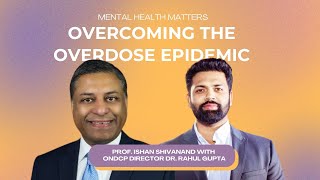
Dr. Rahul Gupta, director of the Office of National Drug Control Policy, discusses the U.S. overdose crisis and the ONDCP's two-part strategy: prevention through education and harm reduction through naloxone access. He highlights resources for parents, including realdealonfentanyl.com, and describes a new global coalition of over 100 countries working to disrupt synthetic drug supply chains.
Chapters
Namaskar, Dr. Gupta.
How are you?
Good, how are you?
Excellent, sir. First of all, thank you so very much, Dr. Gupta, for taking out the time. I really applaud and appreciate the work that you are doing, and it is a great honor from my end to be conversing with you here today.
Thank you for having us as well. We appreciate the opportunity. Thank you.
Yes, sir. So first of all, Dr. Gupta, I met you during the interfaith conference that we had at the White House, and I was so happy to see you there as an Indian American director of the ONDCP. So could you please tell me a little bit about yourself, about your journey, and what led you to such an important place, such an important role for the wellness of the country in itself. So please guide us.
Certainly. Thank you. Uh, you know, uh, health is so important, and health of course is a pathway for so many of us through wellness, and, and then wellness to obviously the ability to achieve you know, attain peace, attain the ability to function and be productive members of the society. So that's really what attracted me as someone who was born in India to focus on the health side of things. Obviously went to medical school, graduated from University of Delhi, University College of Medical Sciences at the age of 21. And just really wanted to focus further on how do we really harmonize the health of people and have the best practices you can have, evidence-based, data-driven. And that led me to also then further have subspecialty training in pulmonary medicine at Beth Israel Deaconess University, beyond which And then I obviously was able to then move to the United States, do my internal medicine residency, and then really practice further in lots of variety of areas. I had practiced obviously in Delhi, city of over 30 million people, but then I got to, from Chicago after training, go to a very rural town in Alabama where We had as little as 1,800 people in the town, very much similar to a, you know, similar type of village setting. And small towns is really where America lives. And you— it's a culture, tradition, and understanding of the relationship that is so critical, which often becomes a very fabric of communities, of countries, and of the world. So this has helped me since then, moving and working in different states in the United States, to not only encourage that fabric to continue but also understand that health is not only dictated by the four walls of a doctor's office or a hospital, but also what happens beyond those four walls. For example, if you typically go to a physician, you know, for a 15-minute visit 4 times a year, let's just say, that's 1 hour of your life in a year you're spending with the doctor. Um, the other 364 days and 23 hours, you're not there. So that's actually what dictates health, wellness, peace, prosperity, a lot more. Yet we think health is equal to medical care. So this is the, the challenge that I've seen communities and countries struggle with all the time. So one of my focus has been how do we function on prevention? How do we prevent? How do we function on challenges that are more important, most important to us today in terms of suffering, in terms of physical and mental health, but also how do you prevent those to begin with, all the way up to treatment. So this is really what led me since then to go from practicing 100% full-time in a private practice setting to an academic practice setting where I was professor at a number of universities, to then become focused on public health. Because public health in a practice you're really seeing one person at a time, so, which is great, I loved it, but in public health and public policy, you're able to make an impact with policies and programs and partnerships in a larger context. And so I also began that from a local level in West Virginia, the local health commissioner, to a state level where I served two governors Democrat and Republican, and then eventually worked with March of Dimes, which was focused on the importance of mortality, which is also a big challenge across the globe, certainly in the United States. And then 2 years ago, I was, you know, President Biden nominated me to a position of the Director of Medical Policy Office here at the White House. Um, and, and that was confirmed, uh, subsequently, a year since, or 2 and a half years ago.
Beautiful, sir. Um, I would also like to ask you, uh, Dr. Gupta, is that, uh, you have been an academician, uh, in your life. You have done so much research. You've also taught. You've also practiced medicine, um, which is very powerful if you are looking at addiction as not just substance crisis but also as a mental health crisis. So could you please guide us that what exactly the ONDCP is doing for the people of America and the people of the world, as, as in how can ONDCP help normal citizen when it comes to— yes, of course, there are the citizens who are suffering from the drug crisis, but what about everyday normal citizens? How can the ONDCP help, and, uh, what it is that is the work pertaining to ONDCP?
Yes, sir, wonderful. That's an important question because, um, today, look, uh, when this office was put into place in, um, back in 1989, uh, there were lots of, uh, drug control policies being formulated across the world in countries including in India, Latin America, and other places. And they were in response to recognition of the challenge of oftentimes what we call illicit drugs. Um, they can be— illicit drugs could be opioids, they could be cannabis or what is called ganja or hashish. They can also be stimulants like meth. They can be cocaine and all of these. At the time, we had very limited knowledge about the, the addiction, the brain pathways. In fact, when I went to medical school, Um, in the late '80s, early '90s, there's almost no neurological understanding of scientific pathways to the disease of addiction, per se, or mental health in so many ways. We just didn't know what we didn't know. And since then, uh, we know so much more. Uh, we're not perfect, but as a scientific community, we have so much more understanding of the pathways the, the, the, the way and the formulations that how we people end up and having challenges in mental health, challenges with addiction. Um, and the fact is today that mental health, while most stigmatized and, um, under, uh, sort of estimated, has a very significant component to affecting physical health. So across the world We have somehow figured out how to separate the head from the body. But the fact is that the challenges of having a mental health disorder can not only affect your physical health, but can often be fatal or at least diminish your functioning on a day-to-day basis. And you're often, as opposed to having a leg pain or a pneumonia or something, You're sometimes afraid to tell anybody about it. Other times you don't want to show that you're less stronger than anyone else mentally, so you try to shy away from it. Or sometimes you often, one tries to, in a population, tries to overcome it themselves, not knowing what needs to happen. The fact is that today, if you look at countries like United States, India and so many other countries, there's a significant component of mental health that happens to people. In India, it's about 15%. In the United States, almost a quarter of the people that go into a primary care practice like mine have depression, and still more people have anxiety and other conditions. So it's a prevalent condition, yet for everyday people, it is the one that people suffer from— anxiety, depression, and other things. In the pandemic period, because we have been so socially isolated and often dependent on screens than people and disconnected with community for sometimes the right reasons, those things have gotten worse and worse in a way that they have almost never been before. So we're in a phase right now where we have significant challenges in terms of social isolation, of mental health and addiction that overlap with each other and that cut across the world with people, because every one of us has seen the challenges of the COVID pandemic as well as the mental health challenges. So it's really important, first of all, for anyone to recognize, know that we often don't talk about it, but it is so critical and important to talk about the challenges of mental health, challenges of things like simple things like, you know, behavioral depression, anxiety. But that can also lead to not only casual use of illicit drugs, but oftentimes then when you're using it casually, it can end up in addiction, which is itself a very well-studied now pathway of brain function whether it's addiction to gambling, addiction to food, addiction to drugs. Pathways are often very similar, and people don't recognize that. So in some ways they're protective of us, but in other ways, that seeking that particular chemical called dopamine in our brain, whatever activity makes us feel good about it, is what causes us to do more of that activity. That exists in humans, it exists in other animals as well. So it's important to recognize that yourself, be able to seek help when you need to, but also be able to prevent it because we know that people who can educate appropriately their children on these things can delay or prevent absolutely the use of drugs, the use of other sort of both addictive substances but also addictive habits. Because we are as humans often vulnerable to that. So it's important for anyone today. Mental health, it cuts across all boundaries— rich, poor, Black, brown, white, urban, rural. You know, no matter who you are, what political party you can belong to, how much money you make, where you live. It does not care. It's indiscriminate in the way. And this is the reason why we see oftentimes so many celebrities, so many well-off people, uh, either, uh, you know, die by suicide or have disease of addiction. And people wonder why, what's the need for them to be suffering? The fact is that these diseases and disorders do not care for who you are. They affect so many people. And we need to— the way we get ahead of these is to actually recognize them, spread the knowledge of the importance of intervention and prevention. And that's kind of what one of the things that office does. We work very closely with our partners across both federal government agencies, from Health and Human Services, various agencies, to others in government from the supply side. And then we're working with other countries. Right now we're doing a tremendous amount of work with Latin American countries, countries that have often for decades has said, we also need to look at people to help with their addiction. And the United States has largely been focused on the supply side. How do we, you know, if people are handling drugs or using drugs, how do we make that illegal and arrest them and incarcerate them? That has not turned out to be a really wise choice for people who suffer from addiction. Today in America, at any given day, there's 2 million people who are incarcerated. 80%, up to 80% of them are there because of drugs one way or the other. And 95% of those will come out. We know that when people come out, from prison or jails, in the first few days, there's a 100— over 124 likelihood that they will die from overdose. You also know that there's a high likelihood they will be incarcerated. All this because while we put people in for drugs, we don't treat their addiction while they're incarcerated. Those are the things we're trying to change. We're trying to change the criminal justice system where people could get the treatment for a disease that exists in them while they're incarcerated. So when they come out, not only are they much less likely to die, but also to contribute to society through economic empowerment, opportunity, and other things, and become part of that society. So there's no less recidivism, less incarceration. But we're doing the same thing and working with other countries like Colombia and Mexico and Ecuador and other countries as well in Latin America who have for a long time said that to us. And now finally, you know, we're partnering very closely with them. As the first physician in this office ever to lead the office, it is important to me that we look at both sides as two sides of the same coin, the demand and supply. And that's exactly what we're also working to do with our Indian counterparts. Ours to work in partnership with both public health, um, as well as for, um, prevention of the, uh, diversion and supply side as well.
Wonderful, sir. So I would love to ask you about, uh, the global work that's happening, but before that, there's a very important question, uh, I would like to go to that. So a lot of my colleagues are, uh, uh, double income households, whereas the husband, wife, they both are working, and, um, A lot of the time the parents don't spend with the youth, and I do know that because you have a physician background, a lot of evidence-based resources have been created, and ONDCP believes in decimation of education. So what are some of the resources that are there for a parent who is not spending that much time with his child, uh, and if there is some problem, so what are some forms of early detection that are there? What are some resources that a parent can utilize if by any chance, uh, due to unfortunate incidences, a parent finds out that their child has gotten into addiction? And please, please guide us, sir. What are those resources that ONDCP has created for the common people?
Well, first of all, I want to say thank you for that question because I can tell you, speaking with parents all across the country and including parents who are right here in the White House, like the Vice President, don't— anybody should not think that because they are someone or whomever, their child cannot be impacted. I, as a parent myself, regularly, when my children are living other places across the country, connect with them to make sure that, that, that sense of family and community there so they don't feel lonely, because that's one of the really important parts of children or young that are thinking about experimenting. So first of all, it's important to understand the problem. For a lot of, for a lot of our young people, it is important to ensure that we are connecting with them as opposed to waiting for them to connect with us. So no matter how busy you are as two parents with two or more jobs that we often know each parent can have oftentimes, You're having a conversation at the dinner table. You're finding ways to talk to your children and exploring that. Before I get to the red flags, or sometimes, it's also important to understand that drugs have changed from our generation to the next generation. It used to be a time when drugs were bought and sold on the street corner. I was offered drugs several times before I got— so the question is today is today to get those drugs are as easy as in the palm of your hand. We can log on to a social media site and purchase what a youth person thinks is they're ordering, you know, some medication that help them sleep better like Xanax or some medication to help them study for the exam better like Adderall, um, some of those medications. They have no idea that what they're ordering is not what they're going to get. What they're going to get is probably a potentially lethal dose of an opioid called fentanyl or something else. So these counterfeit pills are in the market. So oftentimes the adolescents don't even know that there's a risk for overdose and death. That's the one thing. The way we purchase has changed. The way we consume drugs has changed. It used to be when we were young, um, people would go to parties and use, uh, you know, uh, drugs like cannabis or charas kanda, or they would use alcohol or smoking. Today there's exchange of pills that were stigmatized at the time, but they're no longer Uh, people and youth are sharing pills with each other in parties. So all of these things are important because this is the conversation that parents should be having with their children at the dinner table. Um, if we don't have that conversation about their mental health, how are they feeling with their friends and their colleagues, are they feeling left out, we will not know that they are suffering in isolation. We will not know that, you know, how they're doing. The second thing, more objectively also, is their academic performance. Sometimes there may be no reason for their grades declining. Sometimes they may be isolated, may not have the social cultural events happening as often. Sometimes the way they're keeping up their usual looks and others may have changed. There's all these signs in their social networking, in their academic performance, in their overall relationships, that sometimes serve as triggers for parents to have a conversation, say, hey, you're different, tell me more. This often is the beginning of a conversation that could help literally prevent the death or the overdosing of your child. But because they feel belong, they feel connected, they feel that they can go to somebody that they can talk to if they're in trouble or otherwise. That just simple feeling like that is sometimes so powerful to prevent the young people from going into other areas which may not be so fortunate. So it's important for parents. Parents have a very important role to play in the, in the crisis of today. Because we know in the United States, from— if you look at 2019 to 2021, the overdose death rates in teens doubled. 100% increase. And in 2 out of 3 times when you look at those deaths, uh, there were bystanders nearby. People were nearby, but the antidote, naloxone, was not available. So it's a problem of prevention, intervention, but also then making sure that people— we have the tools that we need to save people, children especially, when we need them and where we need them.
Yes, sir. So this is very good in prevention that we talk about, we overcome the stigma, and we bring mental health awareness to the child's life. But what about crisis management? What if we have crossed the barrier of prevention? So at that time, what are the resources that a parent has access to through the ONDCP that they can rely upon? And you talked about naloxone, so, uh, how can a parent have access to it, or teachers have access to it, or where a lot of youth do congregate? Please guide us on that as well, sir.
Yeah. So one of the things that OMBSP is doing is we're working very closely with the federal Department of Education. And, and we have a program here at the office called Drug-Free Communities Coalition, where we have 750 communities across the country here where we provide them youth empowerment, basically a multidisciplinary approach to prevention for youth. and then funding for that. With the Department of Education, we're working on that. We will be releasing later this month, at the end, towards the end of this month, in a big prevention, um, um, uh, celebration, um, information brochures that will go— any school system across the country can access those brochures. And they will talk about the importance of that. But it's also, they can disseminate that information, put in K-12 children's backpacks, share with them, whether digital or in paper. So that's one part of prevention piece that we're doing. Secondly, we've launched a realdealonfentanyl.com, a campaign, a social media campaign. Real Deal on fentanyl.com. We've already gotten over a billion impressions from that. And what that campaign does is two things. First, tells young people through young people, social media influencers who are also young people, that, hey, fentanyl is dangerous. Um, try to, you know, not avoid it. Two, it basically says, here's naloxone, or Narcan. Here's how to use it. Make sure you have it. And we know from our evaluation data that it's been pretty effective. So that's the other thing we're doing is launching this campaign, which also has digital billboards in train stations, universities, and other places where young people often inhabit. Third, we are launching a binational bilingual campaign that is going to be with Mexico to talk about— because it's important, it's also important to talk about not only in English but also sometimes it's bilingual populations that need that support as well. Fourth, we have partnered with the Mexican consulates across the country. There are 53 consulates in the United States of Mexico, and about 3 million people visit those consulates each year. Do they have their health window where they will get similar information where people that are visiting can get the help and know where to get the help and get the vaccine for for free. So those are things. Now, we also are lying to— because this naloxone is so important, we now have it over-the-counter available in the United States. That means that it's available in pharmacies sitting right next to, on the shelves to Motrin and Tylenol. People can buy it. They can still go to the counter and get it almost free of cost in most situations because through their insurance or other systems. And we want to see naloxone be available in every school, in every mall, public place, restaurants, other places, just like fire extinguishers or AED or automatic defibrillator devices. It is that level of importance to make sure that your school has someplace where it is available hanging on the wall. So in the unfortunate circumstance that may happen of a somebody, a child, school official, parent, or a visitor overdosing, that you can save that life right there. So it's not only about helping your friends or your family, but it's also helping a stranger. One can be a hero in helping someone you just don't even know by providing naloxone and then calling 911 to get the help so they can get into treatment as well. So all of these things are just a few of the things that we're doing to make sure that those resources are available. We have a lot of other resources available on the ONDCP website as well, people can go to. So along with Drug-Free Communities Coalition, as I mentioned, it's, covers more than 50 million people across the United States, that those coalitions. So it's really important to get the word out, but also that it have those resources. And then we're working with you and the faith community As you mentioned earlier, we convened for the first time the faith leaders event to make sure that all communities, all leaders, we're working together on this very important issue to disseminate good information. Because the fact is today, people do go to their leaders in faith, spirituality, and others for help, for guidance oftentimes, if they cannot find it elsewhere in the community. Or in addition to it, it's very important for those leaders to be aware and educated about what the right methods are, what needs to happen. So those trainings are also really critical.
I completely agree with you, sir. And I was there at the roundtable with faith leaders hosted by yourself and Mayor Stephen Benjamin. And I really loved how your message was reaching to the grassroots of the various communities. And you're absolutely right, in the United States, a lot of the times people reach out to their faith leaders because of the stigma and shame involved with addiction. And it is very powerful to get faith leaders involved in the fight against crisis. And I also wanted to ask you, what motivated you to take this step step because you are being a physician and you being the director of ONDCP and Science Pact, and you saw the powerful role that faith leaders play and you invited various interfaith leaders from every single diaspora. So what motivated you to involve faith leaders to help with this crisis and what message would you like to give to the faith leaders? How they can better help their communities, uh, and be in, in tune, in sync with the directives of ONDCP?
Yes, that's another great question. So, um, this is always, uh, and you will see this from leaders all across the world and so many things, which is, are you— the question that comes up is, what are you solving? A problem for, right? What is the purpose of— what are you trying to do? So for, for me, in this administration, it's clear that we have an American dying every 5 minutes around the clock, over 110,000 people a year. And then there are millions more who are suffering, uh, from opioid addiction, and tens of millions more that are suffering from addiction overall. And then obviously so many more people with mental health. The question that becomes if you are trying to both avoid, prevent death, but also help people with addiction have a better life, better approach, better things, is you want to put yourself in their shoes. You want to understand what those communities, what people, what will help people. It's in some ways called harm reduction. Is meeting people where they are and helping them move forward. Part of that is understanding people, and not everybody, no matter where you live, has access to readily available healthcare or feels that's the first step they should do. Sometimes it's the faith-based community that's the first option. Sometimes they are arrested and it's the local jail where they end up, or a court system. They have sometimes the business community. And it's really important to think from the perspective of a person who may need the help, as opposed to think from the perspective of the director. And when you think that way, your whole approach changes. It's not about so much of what, what, you know, it's more of an art than only a science. And part of that art is to make sure that you are working with the influencers, who and wherever they might be, to ensure that the work is cross-sector, but also it is using the best data, best science available to inform public. That's why the work of the faith community is so important, because we can always incorporate the data, the science, into the faith leadership to be able to help people, to be able to direct people to the right resources. But if the community would not, would not be aware of where those resources are or what can be done, then we all become helpless. So it's really important to empower the people who have the power to make so much changes in people's lives, to make, help those people even make better decisions when it comes to addiction, mental health, and addiction. Challenges. And, and so we hope that this will be also an important contribution to the mission of saving lives at the end of the day, because we all have a common mission. It's making sure we're saving lives, making sure that we're keeping people healthy and well, as well as make sure that we're, you know, a just and peaceful society. So those are the things that are so important, that health, as I mentioned before, award, and the faith community is such an important piece of it.
I really appreciate you acknowledging the importance of faith communities, sir. And when I was at the White House, there were— there was representation of every single person. And there I also hear you speak about one of the most important directives of ONDCP is to disrupt the supply. And for that reason, there is a global coalition where yourself and ONDCP is working with so many different countries, and you're also working with India. So could you please tell us a little bit more about how this global coalition is going to work, how this is going to help disrupt the supply And what is the US-India partnership looking like?
Good, great. And I just want to add, you know, the president is also a person of faith. So it's really important to be working for a leader who also believes in the work of the faith community so deeply. So you're right. You know, one of the things we realized is that, look, there are very important changes that have happened in the drug crisis in the last 5 to 7 years. And it is not only as we talk about how the drugs are bought, sold, and consumed, but also how they're created and manufactured. And then I'll explain that part as well, because if we don't recognize that, um, that will not help us make progress. This is not your grandma's drug epidemic. Um, so in the production side of this, there used to be time for for thousands of years drugs have been around, illicit drugs. Um, there used to be a time where you have farms and farmers and fertilizers and these crops that are produced— poppy, marijuana— those things are on the fields used and people consume them. They're transported oftentimes, coca, I mean cocaine, uh, in large volumes oftentimes. That is changing. We are transforming, and it's not a good one. Uh, we are moving and transitioning into a place where chemistry has taken over. So today, all you need is to have a room like a closet, a chemistry set, a basic chemistry lab science set, and internet, and you can create some of the most deadly, lethal drugs ever created on the face of this planet. When we see— and these drugs are often because they're synthesized in a lab, they're called synthetics. And so when we see this, and this is happening relatively recent, meaning 5 to 7, 8 years compared to the thousands of years of human history, it is important for someone like me to, you know, raise the bells and say this is something that's important. But then we see that this is a problem where the traditional drugs may have inflicted some communities in some countries. The potential for these synthetic drugs, because how easy they produce, the formulas can be found on internet, the chemicals are often dual-use chemicals readily available, and there's profit to be made. Money to be made by the bad guys. So that tells us that this could happen to anyone across the world, in any country, anywhere. Really, no one is immune anymore. Your shores are not immune because of the seas or the land borders or other places. When that happens, we look at the data. So today we see whether it, you know, you could divide up the whole world into 3 sets of countries. Countries who have a problem with synthetic drugs and know about it, like in the United States, countries that have a problem with synthetic drugs but may not fully know about it, and those countries who are going to have a problem with synthetic drugs. Now, when you see United States, we are dealing with fentanyl. That's a synthetic drug. Similarly, in Middle East, we're dealing with Captagon. Which is also a synthetic drug. In North Africa, we're dealing with ketamine and others. In Australia and India, we're dealing often with methamphetamine. In fact, just earlier in 2023, there was a cash supply interdiction by the Indian Navy and the NCB of 15,000 crore rupees for methamphetamine, largest cash ever. So obviously it's there to be used and to be, you know, exploit people and vulnerable people. These synthetic drugs have become a real threat to the world, not only to United States. So United States has exerted its leadership position to call on the world countries to form a global coalition against synthetic drugs. Back on July 7th, I participated in the meeting along with Secretary Blinken. We have now today over 100 countries signed up and 14 international organizations like the World Health Organization and others that have gotten on board, including India, to do the following. First of all, recognize the importance of the threat of synthetic drugs, the future of the world population and the suffering. Second, to ensure that we are working together, all of these countries, in a similar way to understand that we have no option but to work together and collaboratively align in order to address. What does that work? Well, first, we want to make sure that we are increasing our testing. We are finding out. So when I mentioned the two latter two groups of countries, those who have a synthetic problem, don't know about it, of those who are going to have synthetic problems. What we are going to need is surveillance. We're going to need better testing methods available so countries can early detect and be prepared for it. Second, public health. We need to make sure that people are getting the help they need— mental health, addiction, and other things— and there are systems in place across the globe for countries to do that. And third, making sure that we're disrupting the trafficking and production of these drugs, dismantling the systems that drive profits, feeding on the vulnerabilities of people across the globe, including in America. So these are the areas that we're working on. Various countries are leading the workgroups of these, uh, this work, and it's really important. Um, our partnership with India is one that's been going on since 2020, but we have recently, with the Prime Minister Modi's visit in June, to the United States have had really significant acceleration of that work. Within the bilateral joint agreement, there's a clearly indication of the two leaders wanted to have a 21st century drug policy framework that includes the ability to have a look at workforce, look at controls, but also look at the global supply chain. India being the pharmacy of the world, what we know and we have learned from the Chinese experiment is as we became more dependent on China for this shipments of drugs, pharmaceutical supply, we also saw an emergence of the illicit industry in China of precursor chemical supply. Chemicals that can be converted into illicit drugs like fentanyl and methamphetamine. We, while we continue to work with China, we want to make sure that the same issue doesn't get repeated in India. So as India becomes the pharmacy of the world, we want to make sure that there's integrity in the supply chain, the diversion is minimized or eliminated, and we're working on, on same wavelength to ensure that people who need the help are getting it, but the criminals on both sides who are trying to profit off of these, some of these chemicals, dual-use chemicals, are denied that access. So it's that relationship that is so critical, both in terms of public health but also public safety. And the work of those two countries will be symbolic and exemplary for the world to follow.
I completely agree with you, sir, and I'm sure in the leadership of United States, the global coalition and the world can help together fight this pandemic, and I look forward to this partnership with the United States and India for the same. The last question, sir, that I would really like to ask you is that how can an ordinary citizen, and, and not just an American citizen, If we are talking about America itself, America is such a melting pot, and America is the place where everybody with a dream comes, and America helps that dream become a reality. So how can that person who's living in America, or anybody who's listening to this in their country, help with the mission and the work that you are doing? And, and finally, What and when is the light at the end of the tunnel, and how do you see that happening?
Great. Well, let me say, first of all, the, the biggest, most important thing for anyone across the globe, but especially the United States, is to understand the real threat of mental health, social isolation, and drug addiction. It is one that is not only killing so many people, number one cause of death for people 18 to 49 years of age in the United States, but it really, we see United States as the canary in the coal mine, so to speak. We see ourselves as an example of what can happen to other countries. It's really important to understand that. For someone who may not, is so fortunate to not have come across any of these challenges, I think it's really important to have a level of understanding of the danger, but also compassion for people who do suffer from addiction, mental health, and the elimination of stigma. Stigma is one that we need to work on no matter who you are, where you are, what you do every day, whether you're an engineer or a faith-based person or another business person or a physician or otherwise, stigma is one that pervades the entire country and the entire world. And we've been here before. We've had stigma against cancer. If you think about it, 100 years ago, people would often not want to talk to people with cancer. We had no medications for them. We would let people die and not even tell them that they had cancer. And we turned the page. We decided that we're not going to let this happen anymore. And today we have some of the best research and development investments, treatments. We have so much compassion for people suffering from cancer. We have early screening and treatments for cancer. We have to have a vision of the future where we look at addiction and mental health in somewhat of a similar way, that we can go from intervening early, we can prevent to begin with, focus on our young people to make sure they understand the risks and the challenges of addiction and mental health. And then get people the help they need and help them get back onto recovery journey. The journey of recovery is much more than treatment. It's about housing, it's about transportation, childcare, economic opportunity, and so on and so on. So I believe the future is one for where people can live in peace, prosperity, wellness, and health through the values of ensuring that we can look at preventing mental health addiction and isolation. We can make sure that people who need the help are getting the help and then reintegrating into the community to become productive members of the society. And for those individuals right now, people, everyone You need to think about carrying naloxone with you. Because as I said, it may not be you or your family or your friends. It may be a random stranger you don't know on the street that is suffering from addiction and overdose. And don't feel helpless. Feel like you can do something about that. You save someone's life. No matter— you don't have to be a physician with a degree to save someone's life today. And at the same time, make sure you're watching out for signs and symptoms addiction, mental health, your family, and getting them early help while increasing your connection and community and connectedness, as opposed to staying stuck on the screen as we've been for the last hour.
Yes, sir. But thank you so very much, sir. And I completely agree with your message— compassion and awareness. Compassion definitely will help people, and awareness will help you help yourself and the people around you. Thank you so very much, Dr. Gupta. It has been a pleasure and an honor conversing with you, and I really hope and pray that you are able to achieve all your goals. You are able to help the people of United States, and you are able to then guide the world to combating this epidemic that we all are facing. More power to you, sir. Thank you so very much.
Thank you, and with your help and help of others, I'm sure we can achieve that. Thank you for your time and safe travels to you.
Thank you, sir.


