Austin Hughes (Ex-Ramp, Founder UnifyGTM): The Growth Frameworks Behind Acquiring 1000s of Customers
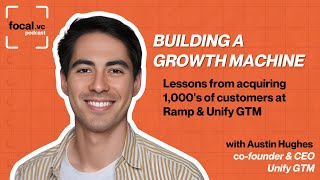
Austin Hughes scaled Ramp from hundreds to 12,000 customers in two years by running 100+ experiments per quarter, each scoped to a few hours. At his startup Unify, he built a workflow engine that detects buyer signals like website visits and triggers personalized outreach within minutes. He emphasizes rapid feedback loops, impact-to-effort scoring, and hiring people with quantitative backgrounds.
Chapters
If you properly scope individual ideas and each person is responsible for just a few a week, which everyone can typically get done and find the space for, you stack that up, right? You've got 12 weeks in a quarter, um, or 13 weeks in a quarter. And all of a sudden, you know, even across, uh, let's say you got 3 people shipping 3 things a week. I think at that point you've got, call it 13 or 36, 36 experiments per, uh, per person per quarter. And so, you know, you stack that up and you got over 100.
Most startups don't focus on growth nearly early enough, which is what today's episode is about. Our guest today is Austin Hughes, an early growth leader at Ramp, was part of the core team that scaled Ramp from a few hundred to over 12,000 customers in just 2 years. And today, Austin is the co-founder and CEO of Unify, whose mission it is to power warm outbound for the world's most ambitious growth marketing, and sales team. To date, Unify has raised over $30 million from the likes of OpenAI, Thrive Capital, and Emergence Capital, as well as the founders of companies like Ramp, Flexport, Box, and many more. On top, Austin is also a prolific writer on LinkedIn and on X. I can highly recommend following him on both platforms. Welcome, Austin. It's wonderful to have you on. Excited for this one. Let's jump straight in and first talk about your incredible experience at Ramp before we dive into how you're now applying some of these learnings to how and what you're building at Unify. So maybe walk us through— at Ramp, you had a very strict process and operating framework regarding how you thought about growth. Can you walk us through, through that framework?
Yeah, 100%. So at Ramp, operational excellence was just a big focus area, I think, for the company more broadly, and growth was definitely following in the same footsteps there. We thought about building growth from a cultural perspective first, right? And so I think how we operated tend to align with just like modern ways of thinking about experimentation, velocity, etc. These things just like broadly aligned with the company's culture. But I think if I were to call out one or two things in particular, um, experimentation, and that being a really big piece of the DNA of how we operated, was really key to learning quickly. Um, there's a lot of things that come along with experimentation, right? The willingness to accept failure, the willingness to, um, to learn from your mistakes. Um, I think that was a big piece of it. And I think also velocity as well is worth calling out. A big tenet of the company in general is just operating with as quickly a big tenet of the company is operating with the utmost velocity, focusing, narrowing scope so that you can get things done more quickly. And the growth team definitely embodied this as well.
And you can always say, right, that this is not something you want to dive into with too much detail. But it's like one of the things that stuck with me is that you said basically every quarter you'd run dozens, you'd have dozens of ideas, run dozens of experiments, and also record dozens of wins. Can you tell us a little bit just about what kind of velocity and how much velocity was actually in there? Because it's one of the most fascinating things that I've heard about Ram as a company.
Yeah, 100%. So what we saw is that the team grew a lot over the years, right? Early on it was just a couple folks and then it grew to be, call it, tens of folks. But generally what we had is a very strong culture of everyone being accountable for a few ideas every single week. And those ideas weren't, oh, I'm going to write something on my notepad and I'm going to file it away and come back to it at some point. The— we, we centrally tracked all these ideas and we tried to understand what are the hypotheses that we are testing here, um, and then what is the work that we're going to do to go validate this hypothesis. And so we had a really strong culture, I think, of accountability around that stuff, which let us learn really, really quickly. And so really, you actually don't have to do, uh, a crazy amount of work at the same time, but if you properly scope individual ideas and each person is responsible for just a few a week, which everyone can typically get done and find the space for, you stack that up, right? You've got 12 weeks in a quarter, um, or 13 weeks and a quarter, and all of a sudden, you know, even across, uh, let's say you got 3 people shipping 3 things a week, I think at that point you've got, call it 13 or 36, 36 experiments per, uh, per person per quarter. And so, you know, you stack that up, you got over 100. And, um, you know, even if you imply, you know, call it 20 or 30%, uh, chance of success in that case, you're still stacking tens of wins in that case, which is, uh, a huge monumental amount of learnings in a single quarter. And so that's really the, I would say the overarching framework that we applied. The key that I think a lot of people struggle to get right is really the discipline and how you operate around those ideas and making sure that you are truly testing things and you are truly learning. That was an area that I always thought that we spiked in, but ultimately I think that's why we were able to grow so quickly and learn so much from what we were testing.
I mean, so much content is fascinating. I think one of the things that stuck with me that he told me in an earlier conversation is that a lot was around how can you de-scope experiments in a way where you only spend a few hours on it and get enough signals versus spending weeks on every single experiment.
Yeah, I think to bookend that experience, what I saw was that folks who were a little more senior on the team and had been around the mill and had done this before typically would be able to de-scope experiments into just a few hours of work. And so, uh, while there may be some extravagant idea to build something with engineering and have it take 2 to 3 weeks, and you know, it may take, uh, an entire engineer sprint, that's never the right answer, or very rarely is the right answer for a first build on something. Instead, there's a question that we should ask of how could we run a script ourselves, or how could we scrape something with a, a tool that's out there and have a CSV that we could test in a matter of an hour or two and at least get some initial signs of life because Once you have initial signs of life on something, it's really easy to double down and to invest a ton of time and energy. But oftentimes teams put the, the cart before the horse and are actually investing a crazy amount of energy on that first go. And if you're wrong in investing a crazy amount of energy and resources, you just can't learn or grow that quickly. And so, um, put another, another way, we just would try to just not be lazy, but we would try to de-scope things as much as possible so that we could get down to the learning that we wanted to have and get there as quickly as possible. Ideally tomorrow and not next week or in two weeks.
That makes a lot of sense. And it's unfortunately still very rare to see, right, that kind of these type of feedback cycles and the commitment to just de-scoping everything as much as you can. The one more thing that stuck with me, I think, is that you said, right, you very rarely have moonshot virality moments. And so you can't really rely on those to actually grow the business. And that's where the velocity and experimentation comes in. Is there any kind of anything that you can explain or tell us around, right, how to identify what could be a potential moonshot or virality moment based off of just very few data points? So how did you kind of, how do you think about actually leaning into something that started working this early on when you do scope an experiment this much?
Yeah, it's a good question. It's a really good question. So I found that like the way that I would think about it is you've got channels for the most part, and then you've got like individual ideas or things that run within those channels, right? So in the case of, you know, performance marketing, you might have one specific set of keywords that you're going after that correspond to something, and that's kind of a campaign within a broader strategy, which is performance marketing. Very rarely are there new channels that crop up, and very rarely are there new channels that crop up that tend to be big enough to support large amounts of growth. That's not entirely true though, because as new paradigms are shifting, right? Like as, 20 years ago you had the rise of SEO through the rise of Google and platforms like that. We'll see what happens with Perplexity and OpenAI and all those products as a, a lend, uh, where consumer attention shifts. You all of a sudden have a new, uh, way of getting in front of consumers. And so that can open up a lot of new growth avenues. So I, I think that what I've seen is that for, for startups and companies that are trying to grow, oftentimes the, some form of the more traditional channels are actually still really good and valuable for getting off the ground. You don't need to innovate on an entirely new growth channel with a moonshot idea to, to see a lot of success. Oftentimes you can take traditional channels, things like outbound performance marketing, and really lean into those and, and find success. And so, um, that's kind of how I, I think about it and how we think about standing up new channels at, at Unify. There are some areas where we have to lend some creativity from others around us that we see. But generally speaking, we bet on these channels that we kind of know work, and we're always thinking about testing new channels for us. They may not have been new to begin with, but they are, they are new to us and they're, they're more just layers on the cake. That is our pipeline production every month. So maybe a little bit, a little bit of an off tangent, but that's kind of how I think about the idea of moonshots and experimentation ideas. Yeah.
Yeah. No, this is fascinating and something I want to come back to. And it's a fantastic segue into kind of your time now, right? Post-Ram, starting Unify, and we'll get into some of the details of how you think about these different channels, what you've tested and so on. But maybe before, before we start or before we dive into the details, right, you started building Unify about 18 months ago and you said that starting at $0 is very different versus growing revenue off a few hundred customers. Can you walk us through how you approach the initial customer discovery and sales at Unify, kind of coming from a growth background and not necessarily having done about the zero-to-one journey before?
Yeah, I kind of had to throw all away. I had to throw away every piece of knowledge that I had before on the growth stuff because when you don't have a product, you don't have a reputation, it's, it's so much harder, right? And I think, uh, I built a lot of empathy for what earlier stage founders go through in that period of time of just having to slog through it on my own. What I found was that in the early days, you have to just do everything in your power to go out and meet people and put yourself out there and put yourself in front of people. And very rarely is it going to scale. But what you need to do is index the time and, and mental bandwidth to think about the problem of how are you gonna get in front of folks. And so what did that mean for us early on? It meant that we would go to conferences when we knew that the people that we wanted to talk to would be there. It meant that we would get introductions through investors and we would ask them proactively about folks we think could be good fits. We would tap our own networks for folks that would chat with us. We're kind of pulling on any thread that we could to get in front and be in conversations, uh, around our product. And not all of those were perfectly pinned of, hey, we're gonna have this conversation, it's gonna be about being a design partner of ours or whatnot. But you have enough of those at-bats and eventually some of them start to fall in your direction. And ultimately it's a numbers game. And so, um, that's kind of how we, how we thought about it and helped us get to our first 10 customers and then, um, a little bit beyond that. And, uh, at a certain point the ball starts to roll and you can start to lean on more of these traditional growth channels to grow the business.
That makes sense. And I think it's something that you told me last time we chatted, which is focusing early on top of funnel is something that you actually have to learn first and that wasn't necessarily intuitive and that you were quite conscious of your own time in the very beginning before kind of realizing that early on it's just a numbers or it's quote unquote just a numbers game as you're still trying to figure out what you're actually building. Maybe help me understand a bit that evolution of what triggered that and some of the learnings that came with that.
Yeah, yeah, yeah. So early on we had a lot of conversations that didn't end up leading to some sort of like actual customer relationship, right? It was like a lot of like user interview type conversations of trying to get to know the space, trying to meet people, et cetera, and trying to just understand our buyers and our ICP more. We understood what was inside of our own heads, but we needed to understand what was outside of that and therefore what we'd be able to sell. And so through those conversations, um, learned a lot, picked up a lot about who our ICP was, who might buy, who might not buy. Um, and, and eventually some of those folks we, we triangulated around had deep enough problems that we could solve, particularly our pipeline production, that it was, um, worth their time and energy to spend time with us. And that was kind of the initial hook that we had was that outbound is hard, right? Outbound's really, really hard. And we got early teams who, um, were struggling with it. And were successful in other ways and we were able to lean into that. But the, the compelling pitch of being able to show up and deliver a product that had a clear promise of pipeline and that being their top priority goal created a little bit of a compelling event for them to be able to, to, to spend time with us. So that was a really great experience. Um, we, we learned a ton through that. Um, we also learned a ton about what not to do. We made so many mistakes about things that we thought would go well but didn't. Um, but that's maybe a, a separate topic.
Yeah, that sounds sort of— I think you hear that from every founder early on. It's kind of like you just throw everything at the wall with as high of a velocity as possible, see what sticks, make all the mistakes there are, and then just kind of learn from those and eventually hone in on what you're building and how you're actually growing your revenue base off of there, which is a good segue into kind of what I wanted to touch upon next, which is at what point in your journey As you said, you had to unlearn everything that you learned at Ramp with regard to growth. At what point in your journey at Unify did your growth expertise become more relevant again? And kind of what were some of those trigger points that allowed you to then lean into everything that you learned about growth?
Yeah, yeah, it's a, it's a good question. We hit a point of critical mass where we had a public persona, we had a public website, there was a, we had a few dozen customers and there was enough knowledge about, about Unify that we could start to lean into that with traditional growth channels. Um, and we could start to use that to target folks. I think early on when we were operating a little bit more covertly and in stealth, um, we couldn't really lean into that external messaging because we had to be educating people on the phone. And so I think once you get to that critical mass of a few dozen customers and you're starting to land, importantly, customers in different channels, right? People that you haven't met through investors, people you haven't met through network, you're probably about at the cusp of saying, okay, it's time to start betting on these other channels. The first that we bet on was outbound. It was one where you could be really proactive and learn about your ICP in ways that you couldn't with other channels. We also started betting really early on on social as well, and that ended up being a really big differentiator, and we can talk more about that. But I think there's a tipping point where you need to have enough, you need to have enough knowledge about who your ICP is, how they buy, and how you can reach them. And at that point, you can start thinking about traditional growth channels.
That makes a lot of sense. And so maybe to dive in on some of, or on how you think about growth and how you run it at Unify and how you're now leveraging that to grow at quite a fast clip is I read an old LinkedIn post of yours, which said, right, when I was, or to quote you, which was, when I was at the growth team at Ramp, we assumed we'd be wrong about 70% with about 70% of our bets. It was genius because the freedom to ideate, test, and iterate freely meant that we could move and learn at lightning speed. And it was also a ton of fun. At the same time, you also told me, right, there's a tendency to try something, come back with like lost results and say it doesn't work. Now, an example of Ramp, you had kind of the traction and progress that gave you a lot more confidence around some things would work because they have worked in the past. At Unify, you didn't necessarily have that. So how did you, maybe kind of explain how you applied that to Unify despite not having a track record of showing that things would work and what gave you the confidence to start to lean into some of the channels and messaging and everything that you had experimented with?
Yeah, it's a great question. I think at its core, it really comes down to thinking about who your ICP is and how they buy. And, you know, for better or for worse, you can often look at the companies in your category and how they've sold historically and gone to market historically and study that and learn a lot from that. And so, Um, we were really fortunate that we sell to go-to-market teams, which tend to be more receptive to, to outbound and things like that. But also we, we studied a lot of the greats in our category and we got to know how they went to market, especially in the early days for the first $100 million of revenue. And that was really informative for us to understand what the realm of the possible was. And there's a finite number of growth channels that are, that are out there. Um, and just understanding and being able to reverse engineer, um, You know, examples like HubSpot as a great example, uh, was a company that spent a ton of time and energy thinking about partnerships and affiliates and things like that in the early days. And that was really important for the growth story. And so we had some inkling that these sort of lessons were out there and we studied them. We also were able to draw on, um, you know, just given that I, I was a growth leader previously, we were able to draw on a lot of the, the thinking and a lot of the learnings from that period of time of what could work for us personally as we went to market. And so, Learned a ton there, but at that point, you know, we had some ideas about what might succeed and we were just optimistic that they were going to succeed in some form. And I think to your point, right, there's this, there's a little bit of a, there's a little bit of a tendency to have human emotion kind of cloud the judgment on if something is working or not. Oftentimes there's, there's lower quality experiments that weren't tested properly and weren't measured properly or weren't thought about it in the right way. And, and that can, quickly lead somebody to nixing an idea. I've been guilty of this myself too, where I didn't believe something was going to work, and so I made it not work, you know. But, um, but I think, uh, we came in with the idea that the glass was half full, right? Acknowledging that we were an early-stage company and it needed to, to find some stuff that was going to work. And so, um, we went out, we started testing, and just kept iterating and tweaking things we thought should work until, until they did. And so, um, yeah, that was a little bit of our journey.
That's fascinating. Maybe to make it very specific for the listeners, can you, because you mentioned HubSpot, can you give us an example of a very specific lesson that you borrowed from HubSpot that actually did work and maybe one that actually didn't necessarily work that you also tested and tried?
That's a good question. I don't have specific campaigns or things like that that we've tested from HubSpot, but I think the observation that affiliates and partnerships and things like that are really, really powerful and potent for a business, that in and of itself is a really important insight for us, right? And I think there's a lot to glean from that and there's a lot to study from that around, hey, why is that? Is that because there's product complexity that these partners importantly solve? Is that because these partners just have really good relationships with the end buyers? There's a whole bunch of reasons behind that. And so, That's kind of the lesson that we, that we pull from studying some of the greats.
That makes sense. And maybe, um, just because it's, it's always a controversial one. There's a lot of, um, especially investors that don't necessarily believe in partnerships early on, um, because you tend to not necessarily have, um, as close of a relationship with your customers and you're almost building more for partners. Are you running into the risk of building more for partners versus customers, which may not be, um, as scalable depending on how partners are incentivized? Having leaned into partners early on, what's your take on this feedback that we as investors give from time to time?
I mean, I think that any unfair advantages that you can have as a startup, you should lean into. And partnerships done well, the beauty of them is that you're basically taking free intros, right? Or not free, there's a cost associated with them, but free in terms of time invested and things like that. So I see value there, but To your point, I also think that one of the beauties of leaning into outbound early, which we also did, is that you will learn so much more about your ICP than any other channel because you will see exactly what lands with who. And there's so much that we pulled out of an experience of a year or so ago. We started leaning into good old traditional outbound, just pulling up LinkedIn, pulling up profiles of folks we thought might be interesting to reach out to. And through the experience of picking titles, picking personas, reaching out to them, experimenting with messaging, we found out who our early ICP was and where buyers would actually move quickly and why our deal processes were moving slow. And so I absolutely think that even if you are leaning into channels like inbound or partnerships that are driving folks to you, it's really important to think about going outbound even early because it will teach you a lot about your ICP to begin with, and it will also be a really important growth lever later in the business, and it's important to get it right sooner.
I would 100% agree. I think I see too often outbound always sounds fantastic until you actually run into the reality of it not working and taking an incredibly long time to actually figure out. And so a lot of founders unfortunately get discouraged quite early on and prioritize other, a lot less scalable channels. Maybe given that you guys were able to figure it out and kind of started to make it work, can you give us specific examples of things you tested, what worked, what didn't, and how that informed How you kind of readjusted, right? Some of the experiments that you talked about, readjusted your approach to outbound early on at Unify.
Yeah, really tactically, I, so I started doing the original outbound before we had a salesperson and on the team, and I wasn't very good at it. I had never done traditional outbound before. I also experimented with a little bit of more scaled outbound and we got some meetings, but they weren't particularly high quality ones for us to lean into. And so, um, kind of put that by the wayside and took it as learnings, but not enough for us to double down on yet as a business. But I, um, spent some time doing outbound, got some interesting responses, got a few meetings and some learnings. But, um, it wasn't actually until we brought on one of our early, um, sellers, Skyler, who was actually our first go-to-market hire. Um, he joined and ended up actually spending a whole lot of time thinking about, uh, just outbound and leaning into it. He had been really good at business development before that. And, uh, he actually was able to lean into it with a lot more energy and focus than I was, and also just candidly experience. And he started actually running through different personas that we thought we might sell to and actually picked up on that my perception of ICP was actually not correct, uh, at the beginning. And we had some, some learning of it. And so Skyler started experimenting with different pockets of folks we would target and found that there were certain pockets where he could guarantee a 10 to 20% reply rate and they were virtually all some form of I'm interested or I'm not interested right now, but this is interesting. And that was actually, I think it was having someone on the team who had that DNA already helped us move faster there. And having someone who was willing to kind of break the mold of what a founder was thinking was also really important for us to get to that next set of learnings.
That's fascinating, right? Because you could have also, being a founder and having tested outbound, you could have also been right, to your point about shutting down experiments before you actually know if they're working or not. You could have also shut it down just based off of your own experience. And who should be better at them figuring out the ICP? No one. It's hard to believe that someone else is better at figuring out the ICP versus the original founder. Maybe what gave you both the confidence to kind of keep investing into outbound at that point after it not having really produced results? And maybe also as part of that, how long did it actually take? How patient did you have to be until you actually figured out, got some initial results that outbound will be a great channel for you guys?
Yeah, it's a good question. Taking the first part, it took us a couple of weeks. We're pretty impatient people, I would say, here at Unify, and we like to make things work quickly. And so it was a very quick feedback loop where we wanted to make it work. We were sitting down every 24 to 48 hours to actually go in and test new hypotheses, try new lists, et cetera. So that was really important. And, um, we, we didn't get things perfectly right at the beginning. Um, in terms of why we had the confidence to keep going, maybe this is naivete or, you know, whatever it might be, or foolishness, but you look at every, you look at every scaled SaaS company, right? Or software company. And, uh, outbound is a, is a big lever for them, right? And I think, uh, that naivete and that like sort of inevitability of this should work, um, just given all of the track record and what we see in the market was what fueled us to say, no, this, this can work for us. We're just not thinking about it in the right way. And so that sort of thinking and also just like the willingness to, to lose and to, to take a few bruises here and there along the way. I'm certainly not right on everything. And I tell the team that when the team thinks I'm wrong, I ask them to tell me why. But, but like we operate with the assumption that like those, those things can be retested and relearned. And so we're not always right.
100%. The writing in 24 to 48 hours, at least from where I sit, is an incredible velocity on outbound and testing things because I too often see that folks take a week or two to kind of wait until they get back results from campaigns. And if they don't get the immediate gratification, they kind of move on or wait quite a bit, which obviously has a huge impact over the course of the year. in terms of your, your rates, uh, of learning.
How it played out too in practice is, uh, we would sit down, we'd have a list, we'd say 24 hours, let's go blitz this list. And that means sitting down, writing one-to-one messages. We can get out 50 of 'em in a day. And then the next day, like, what do we learn from that? Let's, let's repeat or do again. And you have a little bit of time delay in there, but if you're meeting every day and it's a top priority, I think it's another thing that's just so important for in the early days, just like setting your priorities and making space and time for them. That requires you to carve out the space to do the stuff well. But if you can do that, you can get to learnings much faster.
I 100% agree, which is a great segue into something else that you said, which is that you hold everyone on the growth team accountable for 1 to 2 key experiments a week, and you prioritize based on the ratio of estimated impact to effort. Can you kind of walk me through a little bit in detail how you actually, how you come up with impact to effort and how you think about this in general, how you measure this as a company, because sometimes it does, as you said, it does take a couple of weeks to know whether something will work or not.
Yeah, definitely. So impact to effort, the reason why we prioritize on that is that time is really the scarcest resource of an early stage company. You can also argue that dollars is as well, but oftentimes you can get scrappy and creative and so you can ignore the dollars part for a lot of channels, but really it's time and it's velocity that matters most. And so when we think about impact, we're thinking about direct inputs into our business. And so what does that mean for a growth team? It can be anything as high up in the funnel as a website visitor and as low in the funnel as a sales qualified lead or a closed one new customer. And so we force the team to think from the perspective of which of those metrics is each experiment driving and how many of them do we think it will drive. And there needs to be supporting math and arguments, etc., that stem from whatever the experiment is. To support that number on the impact side. We usually will probability adjust that as well, just to make sure that, you know, we're taking a more moonshot bet. There's a lower likelihood that it's going to succeed. Um, for something that we've tested and we've already run an MVP on, we're probably gonna see a much higher confidence score on that. So that's how we think about impact. And then effort is, uh, for us, hours, uh, or days of, of input time. And that's across the entire team that's working on it, right? And so There can also be a little bit of a tendency of, I'll think about it from how much time is it gonna take me, but this is gonna take X hours from engineering or X hours from this other operations person or whatever it might be. We try to really scope down the holistic hours from the team because, uh, hard work and hours are important, but, uh, what's almost more important is just being extremely thoughtful on the actual overall scope of what you're working on. And we find this is true in engineering and product teams as well as it is in growth teams. And so try to be really maniacal about that as well.
No, 100% right. Work smarter, not harder. Just to maybe make it, and this is a fascinating kind of framework that you have, to make it very tangible, can you give me an example of how this specific campaign or experiment that you tested and what, doesn't have to be exact scores, but kind of what rough scores were for someone to understand how that framework works inside of Unify?
Yeah, it's a good question. So like on given outbound campaigns or, you know, for us, like scaled outbound campaigns, typically for us, what we start with is how many people do we think we can reach through this campaign every month? Right. And so we'll start with that. Let's just make up a number. Let's say it's 500 people a month. Um, from there, typically what we'll do is apply a conversion rate down to meeting booked. And so something like, okay, let's say that we think we can get 4% of these people onto a meeting with this campaign. So all of a sudden you're going from 500 times 4%, that gives you your rough estimate. And then the question is really like, how well do we believe this estimate, right? Have we tested this? Do we have some sort of other belief that this is going to work, et cetera? And so that is how we'll think about the exact framing. It may be very different though on the, you know, take campaigns that we run on performance marketing, right? Or actually more like, this is really top of funnel, things that drive SEO traffic, right? Website traffic is, um, something that we also will apply a value to. The way that we actually try to equate these all into the same dollar amount, we give every actual one of these metrics a dollar amount, is by understanding the funnel conversions from a website, the standard website intent visitor down to, uh, the standard website visitor down to an opportunity created. And so if we understand what that funnel looks like for us, and you can use industry benchmarks to begin with if you don't have enough data. but you can actually equate experiments that touch different parts of the growth funnel. And so we try to be very scientific in that way.
That's fascinating. And it's also good to kind of segue into, right, you said you have to know when to take big swings. So what is it kind of, what type of signals are you looking for? Or what kind of confidence score or what needs to happen in order for you to decide that you're going to take a big swing on any individual campaign or experiment or anything else?
Yeah, it's a good question. If we run a quick MVP experiment and we see after a couple hours of work that we are seeing signs of success and at least enough that we're going to be able to greenlight this in some sort of capacity, that gives us the confidence to take a bigger swing there. So let's say that we ran this campaign that drove a couple meetings and the conversion rate was reasonably good, and we think that we can scale it up and make it repeatable by investing a week of engineering time. To make it very practical, we won't greenlight that engineering work until we have that initial success. But once we do have those signs of success that we are seeing output, we are seeing meetings, et cetera, then what we can do is actually be ready to invest that, that, that week that's, that's needed on the engineering side. And we can feel confident that that swing is going to hit with some high probability of success. So call it like more, much more than 50%.
Makes a lot of sense. How do you, right, because you come up with all these experiments and ideas and probability winnings and everything. How do you stay on top of that as a startup and kind of prioritize within the firm? Is that the growth team per se, or do you kind of have a weekly meeting where you go through it with the growth team and tell them what to lean into? What does that look like at Unify?
We personally use— everyone has their own processes and what works for them. You can use a Google Sheet, you can use whatever it might be, but we actually use Airtable to track this sort of stuff. Um, and we make sure that every project has an associated Notion doc for us that is like a spec or an experiment doc that outlines all the key details. And so the beauty of that for us is that if any given time somebody new joins the team and wants to get up to speed, or I want to dig into what's working and what's not working, or someone on the growth team is looking for inspiration of what to go test next, we can come back to this knowledge base that we've built of what's worked and what hasn't worked and learn from those past hypotheses very quickly. And that just lets us operate at a cadence that's much faster than I think other average growth teams do.
That's fascinating. I'm personally also a huge fan of kind of written documentation because it's just so much more scalable and powerful than anything else. So maybe right to jump to something else I'd love to dive into. This podcast usually isn't a plug of a startup's product in any way, I dive into kind of insights and things that founders have as they build their companies. But what you're building with Unify is highly relevant to kind of this growth topic that we touch upon. Before we dive into kind of what you're actually building with Unify, what do you believe is broken with growth today and kind of as a whole in this very noisy environment that we now live in?
It's a really great question. At its core, what we believe is that you have growth team members today and they're spending 80, 90% of their time, sometimes more, operationalizing these ideas that they've thought of, right? There's a little bit of creativity and there's a lot of operations work or making things actually happen. Um, our goal and what we're building is, uh, a canvas for growth teams to just move much more quickly so that they can spend 75, 80% of their time thinking creatively about the next things that they want to test rather than how to go execute on those. And so we're trying to shift that paradigm away from all this operations work that's typically bogged down revenue operations, growth, sales, marketing. It depends on the company, but we really want to shift the paradigm there and move towards a more creative world.
Maybe before I ask you how you're exactly doing it, why is creativity so important in growth and why do you want people to lean into or have much more time because it takes brain capacity and space. Why do you, why is it almost like your mission to basically give back time for creativity within growth?
I think growth is a lot like growth thinking is a lot like product thinking and you have to think from first principles. You have to kind of be a problem solver and you have to really be spending time thinking deeply about your ICP, where they spend time, where they live, et cetera. And ultimately, if you do that well, um, you're going to meet customers where they are and where they actually need you. And we think that's just a better world, is where growth teams are really successful in obviously putting meetings on the board and growing the business. But also that means that you're connecting with people when it matters most. Um, we think that's a really important idea and it takes a lot of time and energy, right? Like the average, um, you can't think about brilliant product ideas in an hour a day. You have to actually make the space to think deeply about the space that you're in, what you know, et cetera. And, um, we think far too little energy is being spent on that today versus what can be given a new product in the space.
That makes a lot of sense. You have a specific example of a specifically kind of creative growth idea that you had as somebody you work with. Over the years?
Specific growth idea. Say more about that one real quick.
No, just because you stress the importance of creativity, right? Creativity are often ideas that are non-obvious or out there. In hindsight, they always seem obvious, but maybe do you have an example? If you don't have one, that's absolutely fine, but do you have an example of a particularly creative kind of growth idea that you had that worked well over the years that you saw somebody around you execute?
Uh, well, I don't, I don't think I have any sort of like crazy single-shot genius ideas, but I will, but I will say that, um, when I have time to, to do this and actually sit down and like pour over the data and like what's happening, you, you just notice a lot of fascinating things, right? Like what's working and what's not working, what's coming in. And so I love personally like spending time looking through dashboards and analytics and understanding like what is working, what's not working, What's kind of an interesting tidbit that we might be able to lean into more? Like, who's the unusual person that responded to you and you're not really sure why? I think those sort of nuggets are fodder for a ton of different ideas. And I tend to be more of a volume person in that sense than I am like a single, single idea person.
But yeah, that makes a lot of sense. So now, right, we talked about what's broken and that you need time for creativity and the power of that. Now let's move on to Unify specifically. So you're using your own product to book over 100 meetings a month. So tell us, what does Unify do and how you use Unify internally to get to such an incredible rate of meetings booked every single month at this young age of the company already?
So Unify is really a workflow engine for scaled outbound. So think about it as doing outbound, but in a one-to-many capacity instead of a one-to-one capacity. you could use traditional sales engagement tools and products that exist in the market to do this, but they weren't purpose-built for it. So there's a bunch of kinks and things that slow you down. And so Unify is really built particularly on this premise of running plays or using signals to do what we call warm outbound. Um, we believe that this idea of thinking about from first principles, what are the things that your customer does right before they need you? Um, and trying to back into as many of those places as possible is the philosophy that we, we put in play. And so Unify is unique in that we're end-to-end in these workflows. So what does that mean? We'll do everything very tactically from helping you to understand which companies are doing research on your website down to pushing your target buyers at those companies into an outbound sequence that's being sent from Unify. And we'll also manage the email deliverability and all that good stuff. And so in this world, uh, typically folks were cobbling together a bunch of different solutions to make this work. but we do it in one place.
That's fascinating. And obviously calling solutions together takes a lot of time and you can obviously run generic campaigns, but those hardly ever lead anywhere. So maybe tell me what are some of the, for people to understand, what are some of, for example, the specific signal that you surface and what does a kind of a warm outbound workflow look like after you identify one of those signals?
Today we run more than 15 plays through Unify. And so we live in this world where we have a bunch of hypotheses running at any given time, and that's what contributes to that, that success. A very tactical campaign that we'll run is we understand who's doing research on our website every time someone has a very engaged session. So what does that mean? Someone is doing research on our pricing page or someone's going to our book a demo page but doesn't fill it out, or someone is researching us versus a competitor. Uh, what we'll do is say this company, let's go ahead and look up in Salesforce for us and say, is this person a customer? Are they a current sales opportunity? Do we have a way of explaining why they might be doing this? If we don't, what we want to do is automate the process of enriching that company with, uh, in our case it's growth folks, it's marketing folks, it's sales folks, uh, pushing those folks into the CRM so that we can actually be tracking those in one centralized place. And then automating very, very high quality personalized one-to-one messages from, from Unify to those folks. And so in our cases, what we'll actually do is we tend to personalize based off of someone's LinkedIn profile and the things that we see about them and how they describe themselves. And so that, that is an example of a play that is a bread and butter one for us that works extremely well. And the beauty of it too is just scales for us over time.
Yeah, that makes a lot of sense. Why, uh, why is it so important, uh, to act on a signal within 15 minutes of it happening?
Buyers are just used to a more on-demand experience for, for purchasing today. I think in everything, right? It stems from, it stems from B2C in particular, where, you know, 10 years ago there was no DoorDash, there was none of that experience, but people are used to having exactly what they want when they want it. And B2B is, is following the same footsteps. And so Typically what we see is that buyers are looking to make decisions quickly. They want things when they want them and patience is more scarce. And so in that, in that world, just timing is, timing is just so important with everything. And the faster, there's all sorts of studies that we haven't done, but on speed to lead and how that drives up conversion rates and all that good stuff.
Yeah, I'd be fascinated to, to see those studies when you, when you actually release them. But it is right, if someone's currently thinking about your company and you hit them right then and there, you actually get their mind space. Versus if they're doing something completely different, then it's very hard. We're all pulled in so many directions that if you're not paying attention to something, it's very hard. The bar to kind of get me to spend any time on anything that I'm not thinking about is just incredibly high, given all the different alternatives that draw my attention somewhere else. Now, right, what I find fascinating as well is what you said, you have kind of these 15 different types of workflows and scenarios. What I find fascinating about using Unify is that you basically, like, you're productizing your own frameworks and workflows that you've kind of had to cobble together manually and experimenting and basically turning those into much more scalable products that then other people get to use as they use Unify. And so maybe take me kind of a year or two into the future. How will Unify have changed growth by then? And basically, how are you enabling all this to basically leverage the work and things that you learned about growth in their own companies using Unify down the road?
A year or two down the road, we want to be serving a lot of the same mission that we do today around growth and helping companies grow. But I think the way that we want to do that is a lot more cultural and a lot deeper. And we want to create the best-in-class place for growth folks to do their jobs. And we don't really feel like that exists today, that sort of, you know, whether it's from an experimentation perspective and helping people to easily understand those operating frameworks that we talked about earlier, or it's from a, hey, like these results that I'm seeing, are these— how do these benchmark versus competitors or versus folks in our space or whatever it might be. Those sort of institutional knowledge gaps exist today, and we want our product to be the place that solves that. I think beyond just product as well and being able to like help people to, to solve those problems, what we want to do as well is create a, a movement and a shift around, around growth teams. And we think there's just far fewer growth teams today than there should be, and they, they don't have the places to gather and the resources to lean on. And so one of our missions is also to change that and to build community and understand what that might look like. And so there'll be a lot more to come, but that's something we're starting to think about now.
Which brings me back to a post that I saw you liked on LinkedIn, which is where it explained why growth hires will be the most important hires a startup can make in the near future over engineers or anybody else. Why does that resonate with you, at least to some degree?
Yeah, um, I don't want to discount the importance of engineering and product and all that stuff. They're incredibly important. I, I, I do think though that, um, good, good growth hires are exceptionally valuable because pipeline is the lifeblood of any startup. If you take enough shots on goal, which is, you know, o— opportunities, meetings, all that good stuff, you, you will find success. Um, and so ultimately, if you have a good growth team that's guaranteeing that you are getting shots on goal as an organization, you're guaranteed to at the very least learn a lot. And in most cases, you're going to succeed in some form. And so growth teams ultimately own these pipeline goals and they're really focused on them. And great growth people are also hard to find. And so I think there's so much value that you can have by having a great growth team, even as an earlier stage startup.
Yeah, 100%. All right, you've been through a lot over the last couple of years with both Perhaps now Unify, maybe you're kind of looking back, knowing what you know now, how would you go about it differently today if you were to do it all over again with Unify?
It's a good question. I think I would have bet a little bit earlier on growth, actually. So we, we coming out of being founded in 2023, the environment for fundraising and whatnot was, was not what it was in '21 and '22. And so we tried to be extremely efficient and we were, which is fantastic. But I think we maybe underinvested a little bit on these sorts of top-of-funnel ideas early on, um, and didn't invest as much as we could have. And so, you know, in particular for our case, right, what does that mean? Um, outbound, automated outbound, things like that. I think we could have made that work earlier than we did, probably 6 months earlier than we did. Um, and, and also particularly investing in social as well, which takes a ton of time and bandwidth. Uh, that was something that I would think that in retrospect I probably would have done starting very early on in the company's life cycle, honestly, probably before we even had a product in the market. And so, um, that, those are some areas that I would start building that momentum as soon as, um, we had conviction of the space and the category we were building in.
Which is fascinating, right? And it's something that I totally agree with, but I think a lot of, uh, especially the investing world partially disagrees with, um, the, right, the fact that you have to basically invest in, in kind of outbound and growth and, and marketing to a degree, almost as you get started. And partially because it just takes a long time for these to ramp. And early on, you're not necessarily constrained by the top of funnel because you're still trying to figure out who and what you are. But if you, if it takes 6 to 12 months for any, any of that to ramp, right by the time you actually need to top of funnel, if you only start then, it's just too late to do. And a lot of companies struggle to then kind of flip the switch there. And so I couldn't agree with you more. What you said about social is a great segue as well, because I bet you started to be very prolific about public brand building. What led you to lean into social kind of in the early days of building Unify?
I've come to realize there's so many advantages to it that I didn't realize before. But I think that we're in a world today where One, um, there's, there's folks that already do this, right? They build their companies in public and those stories are just so fun to, to follow along with as a founder. And, um, they're also incredibly valuable, right? There are nuggets that are shared. They're so, um, transformative to the way that I think and they're influencing how I operate. So I, I think there's a lot of value to that and hope to be able to give back. I also think though that there is this change in the world of how people want to, um, relate to companies and identify with companies. And this sort of founder-led voice I think is actually, um, really well received. And there's a lot more room for that than, um, than folks give it credit for. And so through those reasons, we were like, there's, there's probably something here. Like, we know that our, our, our buyer personas for us in particular live, live in this space and live on, uh, on these channels. And so it's worth trying to connect with them there. And, um, what we've come to find is that, you know, that's been helpful for, for recruiting. That's been helpful for Obviously top of funnel, that's been helpful for also just, you know, testing hypotheses and narrative building about new features that are coming out and all that good stuff. And so all of those benefits have come out of it. But it started with this idea that in today's day and world, it's an easy way to stand out is if someone can connect to the founder and company on social.
It's, I think a lot of, and that makes total sense, a lot of people understand benefits. The hard part I think is one, carving out time. And then two, also just finding your own voice, be authentic, because it only works if you're truly authentic to yourself and have something interesting to say. How did you, like, were there things that helped you kind of figure out besides just doing it, kind of figuring out your own voice? Because again, I think you do an incredible job at it. Besides figuring out how to find your own voice and how to actually write about stuff and post videos about stuff that are both authentic to you and the company, but are also interesting for others. To feed and aren't too self-serving to a degree?
It's a great question. A random anecdote is that the best performing posts that I have are always the ones that I think about in the moment randomly. They come from a spark of inspiration and then I write them down and then post them. And so for what it's worth, I think at the beginning it's awkward, right? And it's a little bit uncomfortable and you're kind of putting yourself out there. And you're also not 100% sure what to write about and what will resonate. But I think the important thing, just like starting a company, it's like just get started, you know, and just start doing it and start building some consistency around it and be willing to accept failure in that way too, where you're going to post some stuff that's going to flop. I think that being somewhat diligent and just like giving yourself the mental space. So like most things, if you give yourself the mental space and bandwidth to make it a priority, then you'll do that. So I think that's always important as well. Um, and, uh, yeah, we found that, you know, it's, it's interesting is, uh, sometimes like it's really good to share learnings, but sometimes folks also like appreciate hearing the, the more like things that are close to the ground of like what we're actually doing. So, um, we try to also diversify, you know, I try to just like share things that are all over the spectrum to see what lands as well. So, um, unique to each person, but some thoughts.
And it makes a lot of sense. Well, just to follow up here, I guess, what's a post that you didn't think was like, that you just kind of spontaneously came up with that did incredibly well that you didn't necessarily expect to do well, or a topic?
I posted about moving back to San Francisco and some of the reasons about that. Like that was a very kind of like spur of the moment post on the day that I was moving that was really fascinating to see how well that one did.
Which is very overlapping with some of the stuff that I've seen, which is the more personal you can make it and then add something valuable to it to be better. They resonate, but it's very hard. People can tell if it's not authentic, especially if it's personal. So that makes a lot of sense. The one more thing I think that a lot of people would love to hear you take on is it's very hard to hire people on the growth side, partially because of what you said, right? You have to be creative. You have to be very fast at executing and running experiments and and everything. That's quite hard to test to a certain degree, especially if you don't understand growth as a founder in interviews. What do you tell other folks that come to you and ask you how to hire the first growth person? What do you typically tell them?
I actually, what I found is that a really safe, a safe bet for somebody as an early stage company to make a growth hire is to hire someone who has more of like a business operations type background and with an interest in learning growth and kind of move them into that. That model only works if you have some sort of influence around that person where someone more senior can give some growth mentorship. But where these people tend to come from and the backgrounds they tend to have tend to be a little bit unorthodox, a little bit more quantitative. So we oftentimes see folks who come from professional services backgrounds. So whether it's consulting or investing or investment banking, something like that, folks tend to do well there. Folks who come from more of an engineering background as well may have studied math, things like that tend to do pretty well because the frameworks are somewhat similar. So long as there's a little bit more of this quantitative analytical bent, just a lot of energy and willingness to put in the time and work, we see a lot of success there. Interestingly though, these people tend to be very different looking than folks who come from traditional backgrounds. And so you have to look a little bit, I think, outside the box in this realm. And oftentimes when I'm coaching people, I'm encouraging them to look for folks who come from these more quantitative analytical backgrounds for hires.
Interesting. And then, right, once you— so that's where you'd look for them. Once you have them in the room, what are things to ask or test, or what do you kind of over-index on as you try to assess a potential growth hire for Unify?
We over-index on people who can get things done. And so what that means for us is that we can actually, typically for growth hires, we actually are giving a work trial of some form. in testing this person's ability to take an idea and actually go out and execute on it. And so, uh, that can vary by the person, but for all of the growth team members on, on our team today, we found that there was some specific, uh, you know, task or project that we had given them that was quite challenging and they had to think through how to use, um, whether it was code or existing tools, et cetera, to solve it, um, and to do so in a pretty self-service way. That sort of skill set of getting that done in an interview translates really well to doing that on the job.
That makes sense. What do you then also look for, right, in terms of results or what they come back with? Because again, right, some things just take time. So it's hard to measure the impact of what they do unless you give it the time. What do you, what do you look for? Like what, what does a person you want to hire come back with typically as you do these work cards?
We're looking for somebody to be able to get done what we had kind of outlined with little direction and less indexing on the success of that. So we'll take ownership over whether or not it succeeds, but getting the thing to work in terms of whether it's data moving or whether it's getting data from a certain place or solving a problem, we expect someone to be able to solve it and then explain to us how they solved it, what their thought process was, and get to know that.
That makes a lot of sense. So last thing I want to touch upon is just 3 quick questions to end this with. Would love to get your quick take. On it. Um, what popular advice is often given to startup founders or operators, uh, that you disagree with and why?
I hear both sides of, of this one, and so you'll, you'll hear the counter advice as well, but I, I really think that the— you don't start learning about what you're building until you're selling it and it's in the market. And so I think you should be getting things in front of customers as quickly as you possibly can, and even if that means the product that you're putting in front of them is descoped it should be valuable enough for some people to get initial value. There's some schools of thought that say spend years building things in, in quiet and then launch this grand vision to, to the world. That's absolutely true for, I think, some cases, but I think for a lot of startups, um, especially ones where you might be forging something new or moving into a new space, having that iterative feedback with the market is really how you build product-market fit. So I think that's, that's my advice there.
Yeah, no, I, I agree 100%. I think one of the, the area we probably look at most when we assess a company and founders at the very start, it's just their velocity at getting things done, testing, iterating, learning velocity of all the feedback they're getting. And the only way to get that is if you just go to market very fast and you don't really need to worry about how long it takes to actually figure it out as long as you move fast. I think speed and right kind of speed of revenue and everything else that typically starts to really come in once you hit a million, because once you hit a million ARR, you're on the clock, right? You have to get to 3 the next year and then to 9 and so on as part of that. Second question is, right, what piece of advice do you give to someone who's thinking about starting a company or has recently started one, as I'm sure a lot of people come to you for that?
I think the biggest thing is pick an idea or space that you really enjoy working in and you have some sort of tie to ideally the buyers there. So you're gonna, you're gonna go through ups and downs, moments where, where like you, you're not happy with what you're doing, right? And you have stressful things. And, uh, I think that's only really worth it or feels worth it if, if you're enjoying what you're doing. And, uh, you're gonna spend so much time with customers and users and things like that if you're doing your job well, that you should, you should enjoy working with them on the problems that they're working on. Um, and so I think that's something that I, um, that I really value is being able to when I'm talking to a growth leader about things they can try or how they can experiment, I genuinely enjoy the work and I think that that makes all the difference.
No, 100%. Then the last one, as I'm a student of venture as a job and profession myself, I'm always curious to ask and learn from what's the most impactful or thoughtful thing an investor has done for you or any business you've been involved with.
Our investors have done so many amazing things for us that, you know, it's, it's It's hard to pinpoint just one, but I, I think in particular an area that was maybe a little bit that I didn't appreciate when I first started the company was just how important having, um, voices in the room that could talk to candidates in particular and kind of explain the vision and be a sounding board for how we're thinking about operating. Having those folks in the room for especially more, more talented, um, one-off candidates has been extremely powerful for us because You know, everyone is going to expect to be sold by the founders, but being able to hear from a third-party perspective, someone who's just like thought about the space for years and has a deep hypothesis on, on why things will work, that's made a huge amount of difference for us. And we've seen that time and time again. So I'm incredibly grateful to our investors for that.
100%. If you want to be good in venture, you partially also have to become good at sales. And so I encourage all the founders, right, to pull in their investors and leverage that skill that they have to learn with regard to selling. Your company to potential tenants. So 100%. This was fascinating, Austin. Thank you so much for coming on. I learned a lot and I can't wait for others to listen to this as well.
Of course. Thanks for having me on.
More from Austin

GTM 153: Building Technical Growth Machines & Signal-Based Selling with Austin Hughes