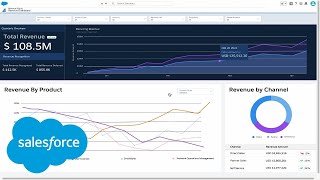
SmartBytes, a fictional company, uses Salesforce Revenue Cloud to centralize sales, quotes, invoicing, and payments in one place. The demo shows how to switch a subscription product to consumption-based pricing, sync prices with an ERP system, and give customers a self-service storefront. Pre-built dashboards track revenue and forecasts.
Chapters
The CRO at SmartBytes is responsible for managing and optimizing revenue across the company. This dashboard gives a CRO everything he or she needs to run the business effectively. Like many companies, SmartBytes began with a direct sales team and because Revenue Cloud touches more than just direct sales, they were able to create new routes to market fast. So they recently began selling through partners as well and they can keep track of the revenue from each channel right from in this view. As you can see from the bottom right hand part of the screen. Before Revenue Cloud smartbytes customer transactions took place across various systems, making it challenging to have a single source of truth for revenue. Now all revenue transactions take place on Salesforce, which makes it easy for SmartBytes to understand the health of their business at any time. This also empowers them to make strategic adjustments to their business to optimize and grow revenue. From the Revenue by Product chart that you see here in the bottom left, it looks like revenue is dropping for their user license subscription. Rather than asking their customers to pay a set amount to use the Software each month, SmartBytes decides to alter their selling model and offer it as consumption so their customers only pay for the total logins they use in a given month. Using Revenue Cloud, smartbytes can declaratively administer new products of any pricing or selling model fast. So they can quickly create the new monthly logins consumption based product along with its tiers and rates. As you can see here and it's all done with clicks and not code. And not only do they need to define these products once in Salesforce, but they also can synchronize them right away with their external product and price masters in ERP using MuleSoft. And because all products originate from the same price book on a unified platform, what used to take months now takes a matter of clicks. Not only are Smart Bytes Direct and Partner sales teams able to quote these products right away, but they've also opened up another channel and made some of their products available for customers as help serve. Let's take a look at what that experience looks like. So as you can see we've transitioned. We are viewing SmartBytes through the lens of a customer and with Revenue Cloud Smart Bites customers now have the digital self service buying experience they expect, complete with a branded B2B storefront that allows them to make certain purchases on their own time. Now as you can see here, this customer has already added several products to their cart, including the new monthly Logins product which you can see here near the bottom of the Screen, screen. Now this customer experiences seasonal fluctuations. They are thrilled to know that the software is now able to be purchased based on consumption, which simply means they only have to pay for what they use. They can even view the rates they will be charged for each tier of usage. Now this looks good, but this customer would like to reach out to their partner sales rep for a discount and they can do so right from their core from their cart by clicking the Submit Quote request button here in the bottom right hand part of the screen. Now as you can see here, we've transitioned again. Now I'm viewing this through the lens of a partner sales rep, but thanks to Revenue Cloud, both customer and partner experiences are built on Salesforce, which mean the partner is able to pick up from right where the customer left off. But they're in their own portal and experience as you can see here. And of course all of the guardrails and controls from CP are still in place which ensures that your partner quotes will always be accurate. From here the partner can take care of more complex solutions, offer strategic discounts or adjust payment terms. In this case they're entitled to add a 5% discount which as we can see is pre approved. And as time goes on, it's easy for the partner up to make sense of all the transactions that took place over time. With a brand new customer asset lifecycle management feature, every customer purchase is automatically converted and stored on the customer account. Now SmartBytes has a single view of everything their customers have purchased and how those assets have changed over time. From here they can also manage the entire lifecycle for subscription or time based products from the initial sale through every upsell and renewal. Now why don't we take a look at that monthly logins product that we've been following since the beginning of the demo. The partner rep notices that their customer is at risk of incurring overage fee as you can see in the middle of the screen, so they give them a call to upsell them to the next usage tier. Now historically contract changes were managed outside of Salesforce, making it time consuming and error prone. Now this function lives in CRM which makes it super easy for the partner rep to add a new usage tier as we see here. And because the customer now has this higher tier of usage, he avoids that dreaded overage fee. And at the end of the month he receives a single invoice with everything he's purchased inclusive of the number of logins his company has used in that month at the agreed upon rates, which you can see as the first line item on this invoice. Not only is he able to view his invoice from his customer portal, but he's also able to make his first payment today and enroll in autopay. This ensures that all future invoices are paid on time, and that is great news for Finance team. And lastly, we are so thrilled to have Tableau be a part of the Salesforce family and to bring Tableau and Revenue Cloud together with these new pre built tableau dashboards to help make sense of all revenue data and help finance teams forecast the health of their business with confidence. One last final thought. We believe that Revenue Cloud can help our customers know that we are here to support them as their business evolves with new products, new revenue streams, or new routes to market. And now, with all customer transactions taking place in the world's number one CRM, their businesses can work more efficiently to optimize revenue, all while providing an enhanced customer experience.