City of Hope Improves the Cancer Patient Experience With Salesforce
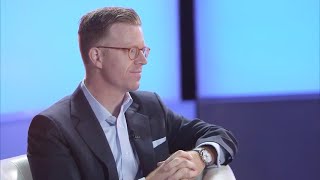
This is a recorded interview (YouTube) with Melissa Boyle (Salesforce) and Dr. Jim Lacy (City of Hope) describing how City of Hope used Salesforce CRM and mobile tools to support the California Teacher Study. The discussion covers the study's scale and goals (longitudinal follow-up and collection of 20,000 blood samples), operational challenges (logistics, hemolysis), how real‑time data and mobile-enabled phlebotomists improved protocol consistency and reduced sample loss, and plans to adopt Salesforce Health Cloud to enable more personalized, two‑way participant engagement.
Chapters
Hi, I'm Melissa Boyle, senior director on our healthcare industry team. And today we're talking to providers who are embracing CRM. No one doing that better than Dr. Jim Lacy from City of Hope. Jim, welcome.
Thank you.
You're doing really incredible work at City of Hope. But before we talk about that, I want you to tell everybody about yourself and a little bit about how special City of Hope is.
Yeah. I'm a cancer epidemiologist, which means I study what causes cancer, and we try to find clues to prevent it. City of Hope has been in the cancer business for over 100 years, and we're focused on trying to find new treatments, new cures, and overall improve the outcomes for patients with cancer.
And your study, in particular is really impactful. Tell me a little bit more about what you're doing.
Yeah. As an epidemiologist, I work on big studies that follow large populations for a long time. And if we collect data and then track who gets sick, who stays, well, we can get clues about what's causing disease.
So you're following patients for long periods of time.
Yep.
Well, why would you ever reach out to Salesforce? Salesforce is a sales company. Right.
I can't tell you how many times people have asked me that question. But what we did was realize that the nuts and bolts of us doing these kinds of studies of collecting and managing the data and sustaining those relationships with our participants is, in fact, very similar to what Salesforce has done for other customers, other clients, other businesses.
Yeah. And it's simply understanding these patients on a deeper level and building lifelong relationships with them. So tell me a little bit about your study, because it's not just City of Hope. There's multiple people involved in this study.
The California Teacher Study is a partnership between four institutions here across the state of California. University of Southern California, University of. University of California, Irvine, US At City of Hope, and then Cancer Prevention Institute of California, which is over in Fremont. And teams of Investigators at all four sites have been working together since 1995 to try to understand why teachers have a higher risk of breast cancer. And to do so, we invited a lot of teachers to tell us about their health, their lifestyle, what they eat, how much they exercise, their family history, things like that. We've been collecting those data and asking every couple years for the participants to give us updates on what they're doing.
Right. And now it came time in your study to go collect blood samples from 20,000 participants. Was that right?
Correct.
Well, that doesn't seem like an easy task.
It is logistically Very challenging. Yes. But it's essential if you think about it. We always knew that cancer was a combination of genes and environment. And we can measure the environment. And with the human genome being sequenced now, we're able to finally measure genes. We knew that information was hiding there in the blood. We just had to get it out. Question is, how can we do that in a big population of thousands of people spread across the whole state? Right.
So what did you do?
We decided we were going to go visit them individually. We're going to call up our individual participants and say, would you be kind enough to let us send a phlebotomist to your house so we can collect a blood sample and then put it in the freezer, and then we'll track information about you over time. And when the time is right, go pull that blood sample out of the freezer, test it for things like genetics, protein, immune markers, things that can help give us clues about what's causing cancer.
And you had a hunch. You always say that. I had a hunch. Salesforce would work, and essentially it did. You had a large population of patients. You had to go out and get their consent to go collect their blood samples. You had to drive productivity in collecting the samples because cost, right. The grant, you had to be aware of your cost. So you implemented Salesforce. And you didn't just implement Salesforce, you embraced mobile as well. I really want you to tell me a little bit more about your phlebotomist going out in the field with mobile.
Right. We're not the first group to do this kind of biobanking, and we're not the first study to do it. But when it was time for us to say, yes, we're going to do it, I looked out and said, how are other studies accomplishing this? And the answers weren't very good. And a lot of old methods, a lot of manual processes, a lot of different data at different sites, Bubble surveys. Bubble surveys, a lot of Excel spreadsheets, and a lot of duplication of activities at different sites. There's great power in having four sites partner and collaborate. You can get a better study, larger populations, more expertise.
Yeah.
A lot of that is undercut, though. If you turn those into data silos and you don't share information as much as you should and you don't utilize all that expertise. And I started off by saying, I want two things for the sake of our team and our participants. I want to have real time access to progress. I want to know, how many samples did we collect yesterday how many samples were processed today? How many samples do we need to collect tomorrow? And the old methods of how we used to do this were not sufficient. I thought, I can't wait weeks to find out what happened yesterday. The second thing I wanted was when we send our phlebotomists out to interact with our participants, wanted to use mobile to capture some key information about when the blood is collected, which tubes were used. Because all that is vital information that we want to attach to that blood sample and sort of keep with it as we use it over time. So simple thing, real time data and mobile to manage those individual interactions. Pretty simple.
Huge advantage. Real time data. Do you have a good example of using real time data and how it's impacted your study?
We do. It has allowed us to say that we can implement a similar consistent, high quality protocol at all four sites.
Yeah.
No matter which member of our team is out collecting blood, and no matter from whom she's collecting it, we can say that every blood sample is going to be collected the same way and processed the same way. That's essential. The long term scientific value of this resource comes from being able to say every blood sample is collected the same way. I cannot overstate how scientifically important that is and that's really what led us to embrace mobile, though.
One of my favorite stories you always share is that you're going out and every blood sample is really important to your study because you're trying to find out why women are getting cancer, breast cancer in particular. Every vial is important and you are coming back with the samples of high levels of hemolysis. You'll tell the story better than me. Provide me some details about that.
Sure. We chose to partner with a commercial laboratory so we could process more samples. We collect the blood during the day and then we put those blood samples on a FedEx plane and ship them to the lab on the East Coast. We need to get those blood samples to the lab within 24 hours. Because after 24 hours, some of the proteins and the biomarkers in the blood start to deteriorate. So really the clock is ticking from the moment we collect that blood sample. As you can imagine, if you take a tube of blood and we've got to send it all the way to the East Coast, a lot of things could happen. Hemolysis refers to the red blood cells breaking up. And when that happens, a lot of those biomarkers are no longer useful. And so from our standpoint, that's a waste of a sample. Now some hemolysis is inevitable. But what we saw when we first started collecting blood samples is the percentage of tubes with hemolyzed blood was much too high. I asked our team, because others had worked on similar projects before, said, what kind of hemolysis levels should we expect? And they said, we don't know. We'll check our notebooks.
Notebooks.
They really meant spiral notebooks, paper. And I said, I can't wait that long for an answer. I need to know now because we need to save tomorrow's sample. We ran all the analytics on the data we collect with our mobile app during those in person appointments, and we quickly identified what the source of the hemolysis was, changed the protocol, and within a matter of weeks, the percentage of hemolysis went from about 3% down to about half a percentage. And that's at the level we want it to be. We've been able to keep it there.
Simply because you had data in real time.
It highlights those two key reasons that I first wanted to make the move to Salesforce. Real time information and mobility. That gives us better data about what's happening out in the field.
Yep. So you've embraced CRM to automate manual processes to drive employee productivity. You're now providing consistency and getting that data. The most important thing where everyone's in healthcare is because that personalized interaction with the patient, it's always the most important thing. How has Salesforce and CRM in general allowed you to personalize every interaction with your patients?
It's such a common sense idea that it's a little bit embarrassing to think that we didn't realize it at first. But with CRM and mobile, we can take the data, the extensive data we've been collecting on these participants for 20 years, and put it in the hands of people who need it. We can put it on our phlebotomist hands. When they're interacting with our participants, we can show the participants what's happening. That kind of individual level data allows us to collect better data from the participants, allows us to answer their questions better, and allows us to customize the way we interact with them. Not every one of our participants needs to receive the same survey or answer the same questions. We want to ask different things from our women who are 70 years old versus those who are 40 years old. Having all that information in one place and mobile enabled finally lets us do that.
Well, you're in cancer research and this sounds like precision medicine. You've converted that to precision health. Is that an accurate statement?
It is.
What are the concepts that translate to.
Your study in particular, Precision medicine, is based on the idea that no longer are we going to treat everyone the same way. So a one size fits all approach just doesn't work in healthcare and it doesn't work in research and it doesn't work in the way we collect our data. The challenge with precision medicine is how do you take that and actually implement it? How do you take the data you have and enable yourself to have that customized interaction with the participants?
How does Salesforce do that for you?
It does it for us by giving us individual level views into each participant we're interacting with. When our phlebotomists are calling a participant saying, we know you've been in this study for a long time. Would you like to donate a blood sample? Having information about whether she's retired or still working helps us try to call the person at the right time.
Yeah.
Knowing when we last heard from that person can help us understand how much is this person still engaged in the study. Knowing where the person lives, what school she works at, things like that, they all help us just interact with our participants in a better way.
Deeper understanding of your patients like never before. That's incredible.
Absolutely.
Health Cloud is really appealing to you. I know your excitement because I know you well. HealthCloud's the Future of Salesforce and healthcare. How are you gonna embrace it? What are you envisioning?
Enthusiastically, yes, I'm gonna embrace it. As we started, we've been adding components to our use of Salesforce, saying, wouldn't it be nice if our team could see which one of our participants are retired versus still working? Wouldn't it be nice to see a little bit of information for them? And we've ended up with an org that has some of the components that Health Cloud now makes standard. And so it's a good sign that we were kind of on the right track. And also that you've jumped ahead and now provided us an even more comprehensive platform, being able to see how the participant fits into the network around her. Not just what that participant is doing today, but what she's done previously in the study and what might be coming up in the future. Yeah, all those things help us collect better data, decide what kind of data to collect, think about what our participant might want from us. The most fascinating part about this research is that believe it or not, we've always had a one way relationship with our participants. They give us data, we keep it, we use it. Obviously that's not sustainable and participants want more. They deserve better. Health Cloud. Salesforce finally lets us have a tool where we can provide more of that two way exchange, that two way interaction and make it a value to our participants.
So you had a hunch Salesforce would work, did it?
It worked better than I even thought. Yeah, absolutely.
Isn't that incredible? You're doing incredible work and we're very fortunate that you had a vision that Salesforce will work and that you've implemented. You're impacting lives, and it's a really passionate story. So thank you very much for sharing it and very fortunate to have you here today.
Thank you.
To learn more about Salesforce and Health Cloud in particular, go to salesforce.com healthcloud.









