Compassion in Action - Interview with Lars Ulrich and Marc Benioff | Salesforce
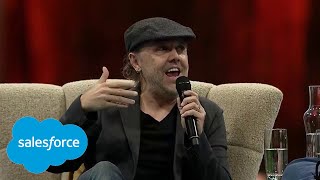
Marc Benioff and Lars Ulrich discuss a Bay Area benefit concert for 2017 California fire relief, which Benioff calls the worst California tragedy since 1906. Metallica anchored the concert at no charge, with band members personally affected by the fires. Ulrich reflects on the band's foundation All Within My Hands and what keeps them creative after decades together.
Questions this video answers
More than 6,000 homes destroyed; more than 100 businesses (including schools and hospitals) burned to the ground; more than 100,000 people affected.
All Within My Hands.
More than 35 years.
Between 18,000 and 23,000 per arena.
About 2,000 tickets available.
Chapters
Well, I want to start by just thanking our video team for putting together that beautiful video for tonight's concert. This fire has been on all of our minds since it started. It is the worst tragedy in the history of California. Since the 1906 earthquake, more than 6,000 homes have been destroyed. More than 100 businesses, including schools and hospitals, have been burned to the ground, and more than 100,000 people have been affected. It seems like it's out of sight, out of mind, because it's not on the 24 hour news cycle anymore. But for those people who are affected, it's not out of their mind, it's not out of their life. And we need to keep them in our minds and in our compassion. And that's why I think tonight's concert is so important. While the fire was still underway, and it wasn't clear when it was going to get controlled, we got a call from Rabbi Bauer at Temple Emmanuel who said we need to get all of the business leaders together in San Francisco and we need an organized response and we need to raise as much money and volunteerism as possible. And a group of us got together several times, and all of a sudden we had an idea that we could maybe have an organizing principle including this concert. And I was very fortunate to be able to send an email to Lars Ulrich, who, as you know, has been the head of Metallica for more than 35 years, our local Bay Area rock and roll band. And in fact, within a few seconds, I got an email back from Lars that said they were in. They would anchor the concert and completely at no charge, of course, but also that he was going to help organize other bands and he was going to do all this while he has been on a worldwide tour. In fact, he just got back on Monday from Europe after playing for the last three weeks on the road. And he wanted to come here this morning to share us his thoughts and his insights and his enlightenment on why this is so important to him. Please welcome Lars Ullrich of Metallica. Thank you.
This is just how we play in Europe, actually, for the last couple months in the round. So we're used to looking 360, so this is very cool.
Did you bring your drumsticks over there?
They're on the car.
All right.
Being warmed up for tonight.
Well, do you want to sit down? I would love to sit down a couple minutes.
I got to save my strength for tonight, so I'll definitely sit down.
Well, first of all, I just want to thank you so much for doing this volunteerism tonight and for playing for all these Bay Area families who have been affected by the fire. Let me ask you, how are you viewing this, you know, horrible tragedy that we're dealing with, and what's your perspective of where we are?
Well, I think, first of all, coming and playing for anything that happens in Northern California is an obligation. We all have to, you know, bond together. And, you know, we've been flying the flag for the Bay Area for, like you said, the better part of 35 years all over the world. And so when something happens in our backyard, it's an obligation to step up, to try to rally all the creative people that are here and get everybody together. The amazing thing about tonight is that we all pulled this off in, what, three weeks from. You and I sat there and talked about this and the emails went around. It's just about three weeks ago. And thank you to you for leaving the steel and the structure up at AT&T Park. So the costs have been significantly reduced for tonight. Obviously, I've had the disadvantage of being out of the country for the last couple of weeks, but you and I were in contact every day when the fires were going through their most devastating phase, and it was just horrible. There were so many people on our team, Metallica's team, that were affected. A lot of them live up in Sonoma and Nap and Mendocino, and so we got a chance to see that firsthand and other parents at the school where our kids go and so on. So it's been just horrible and like you said, the first or the worst of its kind since about 110 years ago, the San Francisco earthquake. But in the wake of these tragic events comes enlightenment and positivity, as you say. And I'm so proud of the Bay Area for everybody stepping up and rallying on the creative side, on the business side, and everybody just, you know, Daniel from Tipping Point, who's been one of the key people in organizing this, you know, the Live Nation people, the Another Planet people. And everybody's just rallied together, left their egos at the door, which is very important when you try to get people from all different worlds together. It can. Sometimes when these things happen, everybody's so eager to help, but there's a sort of a cluster beep that can happen in the wake of everybody just wanting to do good. And you really have to leave your egos out of this. And all the key people that have made tonight happen have done that. So I'm very, very. I came back 48 hours ago, like you said, but we're Honored to be part of this. And like I said, when we've been flying the flag for San Francisco for the better part of 35, all over the world, and this is. It's time to step up and help the communities.
Well, thank you for your generosity and your compassion, Lars. And, you know, I've known you now for quite a few years, and I've seen you get more generous and more compassionate every single day. I now. You also now have an integrated foundation.
That we do. Yeah. Well, I would say thanks to your great leadership, what you do for the city of San Francisco and your influence just seeps through everything that goes on in this wonderful city and all the surrounding communities. So as we've gotten to know each other and I've seen the generosity of the tech world and your cohorts and how selfless they are, we've for years, as we've traveled all over the world, we've tried to do as much as we could locally. We've worked a lot with food banks, we've worked a lot with local charities to try to give back in those particular communities where Metallica is fortunate enough to play. But just about a year ago, when we launched the new record, we decided that it was time to do a proper foundation. And it's basically up and running. That's called All Within My Hands. And we're just dealing with the last couple of practical elements of that. But we look forward to doing two things, giving back locally. So we just played shows in Belgium, for instance, last week. So there'll be a significant part of the tickets that will go back into the local communities and then doing stuff on a worldwide basis that the band members sort of decide are charities that the four of us can support in a collective.
Well, this has been a huge year for you. You've released an album and. Amazing. I mean, it's almost 40 years of Metallica, but you just released a number one album.
Just getting started. Yeah, it's been. It's been. Thank you. It's pretty crazy. 35 years in that. That people still care at the level that they do. It's. We just played, like you said, three weeks in Europe. We're playing, like I said, on a small in the round stage like this. And every single. And this is not to pat ourselves in the back, but more sort of the how dumbfounded we are about this stuff still happening in every single building. We just played in Europe in the last two, three weeks. We set a house attendance record because we get more people in because our.
State gives people Example, what are the size. What kind of sizes are we?
These are the big indoor arenas in sort of London, Birmingham, Glasgow, Belgium. They're all between 18 and 23,000. Their version of sort of the hockey and basketball arena. But it's pretty crazy that we continue to sort of set attendance records. And we're having the best year for Metallica in probably a quarter of a century. And it should be no secret that, you know, we're obviously quite as young as we used to be. But it's amazing that still at the concerts, there's half the audience that are down in the front rows are 14 years old, 12 years old. You know, they raise their hand when James R. Singer asks who's seeing Metallica for the first time? And it's amazing that half the audience are experiencing Metallica literally for the first time live. That is a crazy thing. It's like, do they not know that we're old enough to be their parents? And so we've had a lot of good fortune and we're very appreciative, humbled. And I think the one thing that happens to you as you get older, and you and I have talked about this many times, is that as you get older and you raise families yourself and so on, that's when you can really open your eyes and take it all in. Slow down long enough to realize the moments that you're in bringing people together, connecting people through music. You know, when we're 22 years old, I mean, we never stopped long enough to know what was going on. But now, 30 years later, you can really feel that impact that you're having on a global. On a global scale. So it's been an amazing, amazing year. And we still have about another year and a half of touring left. So, like I said, we are just getting started.
I want to ask you before we end, because we just had a great presentation by Larry Brilliant.
He's.
One of our incredible local leaders, has heart of gold. And Adam Grant, amazing psychologist, and has written so many amazing books. And what do you think the key is to enduring success? You know, here you are, it's almost 40 years of Metallica, number one in the world, filling these stadiums, tens of thousands of people, impacting people across every country and continent in the world. And you do it tirelessly. And you also can come back after just a couple hours and get back tonight. What is the key to this incredible, enduring success over so many decades?
I think it's twofold. Number one is that from a creative point of view, you have to be Willing to always look ahead rather than look behind. You have to turn over every rock, every stone, and open your eyes, open your ears, be inspired. Let those influences and all that great culture, you know, whether it's music, whether it's art, whether it's film, whatever it is, just take you. And you have to be open to letting the process take you where it's going to go. It becomes this sort of interesting dichotomy between sort of steering it, but also being open to letting, almost like hanging on, letting it kind of go where it's going and just making sure it doesn't derail like a train, kind of. So for 35 years, we've tried to never look back when we were making records, always try to challenge ourselves and see what else was out there that could inspire us to let the music take us someplace differently. Secondly, when you're in a group, when you're in a collective, you really have to know how to work with other people. You have to learn empathy. You have to learn when somebody else is staring, when you're going to take a backseat. And that balance point about. It's really important that this idea solidifies itself to somebody else in the band. Even though I may not personally agree with it 100% in terms of the balancing points of an internal dynamic that works in a group setting. And I think everybody in this room can. Can. Can relate to that, is you have to just know how to work with other people. You know, when you're 20 years old in a group, in a music group, that's like being in a gang, and that's easy. When you're 50 years old and everybody gets their own patterns. You talk to anybody, whether in the Rolling Stones or our friends in U2 or the red Hot Chili Peppers, any of the great bands that have been through Dreamforce in the last couple years, being in a collective, being in a group, being in a band in your 50s requires a lot of work. We spend more time internally in Metallica on just making the band function. We spend more time. We spend more resources on making the band function in terms of giving everybody the space they need. Somebody needs to take spring break, off to go their kids. We're not working that week. Somebody needs this, somebody needs that. It's. It's all an open door. Because the minute you do something that's going to put a band member in a position of doing something where he has something else in his head, that's the beginning of the end. So you've got to spend a lot of time Working on the collective and the group dynamics. And that is we somehow turned a corner maybe 10, 15 years ago, all grew up a little bit and we sort of reprioritized our outlook on Life. The first 20 years of Metallica, it was the band first and the individual and the family second. And about 10, 15 years ago we swapped the model and now it's the individual and the families first and Metallica second. And that has given us a functioning dynamic that is we're in better shape than we've ever been. And that's part of the reason I think we're enjoying the best time we've had in 25 years. It's a successful point of view.
So putting your yourself and your family first is the key to your long term career success, Is that what you're saying?
Yes, because you have to find, you have to find the balances. What we have is if you have happy band members, happy band members show up to the studio, happy band members show up at concerts and disgruntled and annoyed and unhappy band members, they don't go on tour. It's that simple.
Yeah, because there's very few bands that have been been able to stay together for 40 years.
And it's no picnic. I got to tell you, Mark, that is. It is the.
You have some unusual personalities, right? Is that right?
Well, unlike say. Yeah, I mean, I mean you're hitting the nail on the head there. Unlike say our friends and U2 who all grew up on the same street and all went to the same school. I'm from Denmark and I grew up in a very sort of bohemian, open social democratic society. James Hetfield is from Southern California. Very, very different first 20 years than I did. Kirk Hammond is local, spent most of his time in the Mission growing up in inner city. And Robert Trujillo is from Los Angeles and had also a very, once again, a very, very different rearing than the other three guys. So we're unlike say U2. We're four guys that pull in four different directions and it takes a lot of work.
Well, we can't wait for tonight. How many of you are coming tonight to the concert? Fantastic. There's still tickets available?
Just a couple. Yeah. I think.
What's that?
I think about 2,000 tickets available.
Yep, there's still tickets available. We have Metallica, Grateful Dead, Dave Matthews, G, Eazy Rancid. It's going to be an amazing show. And also if you can support us in Fire Relief, I know many people are watching us online right now. Please Text together to 20222 to donate to our fund, and I believe we're going to raise more than $20 million to.









