Content As Customer Journey Fuel | INBOUND 2024
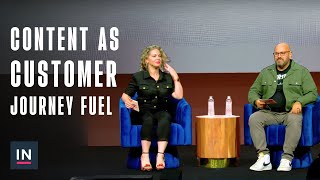
Elizabeth Boyer at Kelly Services moved five business units and 11 global websites to HubSpot's Content Hub. After migrating in four months for under $30,000, they saw 32% more users, 25% more sessions, and 63% more conversions. The company is now testing AI translation and content remix tools.
Questions this video answers
November 2021.
11 global websites.
Under $30,000 and within four months (project plan presented to transformation committee).
~32% increase in users; ~25% increase in sessions; ~63% increase in conversions.
VP of Business Unit Marketing; oversees the education division (largest provider of substitute teachers in the U.S.).
Chapters
Foreign. Good afternoon, inbound. Welcome to the hero stage. My name is Mark Hands. I work here at HubSpot as a professor at HubSpot Academy. Today I'm so excited to be joined on stage. If they made movies, Hallmark movies about marketing, this is the story you would see on tv. I'm here today with Elizabeth Boyer. She's the VP of, of business unit marketing at Kelly Services. They're a global leader in staffing Services, nearly a $5 billion company across the globe. Their mission is to connect people to work that enriches their lives. Welcome to the hero stage.
Thank you for having me, Mark. And thank you everyone.
Yeah, I'm excited. So again, we're talking, you know, jobs. We're talking about work. Do you remember your first job?
I do. Informally. I mowed lawns for my grandfather and then formally tax paying job. I worked at Macaroni Grill as a hostess. Shout out to the Penne Rustica if anyone sponsor next year. Right.
Awesome.
Yes. How about you?
Oh, I'm my first job that I got a paycheck for. I, I was paid by a shady DJ in the Chicagoland area to go to weddings in bar mitzvahs and do the running man and get grandmas to dance. And now that I said that in front of a live audience, I'm feeling awkward. So raise your hand if you remember your first job. Raise your, raise your hand if it was mowing lawns. Anybody mowing lawns? Fast food. Anybody? Fast food. Got to have those jobs. This is exciting stuff we're here to talk about today. Let's just jump into it. So I know you come from the world of startups, but you know, going to Kelly now. Tell me about your role at Kelly and about what brought Kelly to HubSpot.
Yeah, for just a quick second though, I do want to come back to the jobs thing.
Yeah.
Shout out to Dharmesh HubSpot cto. A couple years ago at Inbound, he actually told us that he got one of his first jobs working for Kelley as a temporary worker, which is pretty amazing. So had to give him a shout out. Yeah. So my role at Kelly, I'm a VP of business unit marketing, but I oversee the education division. So we're the largest provider of substitute teachers in the United States. And we sort of, you know, we've been using for HubSpot for about three years. We were attracted to HubSpot because we, you know, we really, the platform was going to help us fundamentally shift the way that we engage with our customers and prospects. So we Needed a tool that would help the entire team become best in class marketers and help Kelly become a more customer centric organization. And you know, marketing often plays a huge role in becoming the glue between operations and sales. But that can't happen unless you have a unified tech stack to help you. And that's why we turned to HubSpot.
Okay, so again, like I said, this is like a Hallmark movie. Things work out well in the end. But I now know you have now transitioned 11 global websites over to HubSpot. But it wasn't always that way. So what was it like before HubSpot?
Yeah, so before HubSpot, in about 2020, we were organized as one. One marketing organization, one global company. In 2020, we separated into five different business units and each with their own marketing leaders, each with their own marketing teams. And sort of what that did was it multiplied the demand on our central function. So, you know, rather than having to be focused on one central project or one central campaign, our central function was getting five times the request. And so it became unmanageable. So what we needed to do, we knew that to truly get things done, we had to push the work down to our business unit marketing teams. But unfortunately, maybe just the way that it was, some of those folks weren't the subject matter experts, right? They didn't have the experience in sending email, in building a landing page, setting up a workflow. Right. And so, so you need a tech stack that is going to work for. Or we needed a tech stack that would work for marketers who had limited experience and marketers who had crazy digital experience. It had to work for everyone on the team in order for us to get things done. And we needed systems and tools that would help us do that.
So you got this change to business units. There's more demand on marketers than ever before, which is cool. Marketers now get to market and, and everybody could do it. But now you gotta start to convince people that a change is eminent. We need to have a change. What does it look like to start talking about that change at Kelly?
Yeah. So honestly, it was fairly easy to convince our marketing org that we needed to make a change. You know, I talked about how it was a lot of demand on our central function, but the lag time to get anything done was crazy. Right? So for example, when I first started, we, you know, to get an email sent, right, you would put in a request, your central marketing function, they would write copy, you'd have to approve the copy, then it would go through design, you'd get a PDF copy of the design, then it would go to build, then you would actually get it sent out. We're talking weeks before something could even get out into the world. As a marketer, you want to be working on creative things. You don't want to be working on process and things that are going to drag you down. And so, you know, honestly, I think myself and others, we just always ask ourselves, what's the effort versus the return? And when you live in a world where it takes forever to get something done, 9 out of 10 times you're not going to try something new because it just takes too long to do it. And so that bar for trying something new is just so much higher when you have a cumbersome process or a cumbersome task tech stack. But when it's easier to launch, to test, to measure. Right. You get to try fun new things. And so making that argument to our marketers honestly wasn't hard. The question really was what should we change to? Right. Everybody had their own preferences, perhaps didn't know what other tools were out there. And so there was a little bit of condensing that that HubSpot was going to be the best choice for us.
You know, the change. People are on board with change. Now you're talking about, okay, HubSpot's the tool. You are a global enterprise. Right. You just talked an email. Takes like a month to get out. What does it look like to start letting people know that HubSpot's the choice and you want this transition. What does that look like for you?
Yeah. So you really do have to create buy in across your Oregon for. For like. Yes, within marketing. Sure. We had to do a bit of a roadshow to convince the marketers, which as I mentioned, wasn't all that hard of a lift. But in an organization like mine with thousands of employees, you have large IT organization, you have procurement. And so each of those departments that you have to work with to get a tech tool brought in, they all have their own goals, right? It is thinking about security and reliability. Procurement's thinking about cost savings and those things. Things don't always jive and they don't always jive with what marketing wants to get out of it. We want easy to use tools. We want tools that help us put forth best in class tactics. And to be frank, it doesn't always choose those types of tools. And we also have an official process at Kelly for putting a technical tool into the organization. It goes through an official ARC review with different teams that check it out for Security for safety, for reliability, all these different things. Right. So we had to get it bought in through that process. Meanwhile, you know, I'm doing road shows, one on one roadshows with folks across marketing, across it specific departments to really just have those one to one conversations to really convince them that, that this was the right tool for us.
Those roadshows. I think I'm still in therapy from tech adoption roadshows. I know what those are like. There's just so much involved in it. You're going around the business, you're talking with all of your diverse stakeholders, they all have different needs. You're pitching this as the solution. Who's the toughest one to convince that this is the tool that we should use?
Yeah. So that process I just mentioned really was just for Marketing Hub. But in roughly, you know, halfway into our current implementation, we decided we were going to transition our websites fully over or we wanted marketing wanted to transition our websites over to Content Hub, which was formerly CMS Hub. And the biggest kind of detractor in that situation was our head of web at the time. You know, that person, you know, they were used to, they were used to systems and tools that gave them more control. Right. HubSpot is, doesn't give you access to server side code. It's a SaaS platform. This person was a little skeptical on that. And it really just came down to though, what are the needs of your organization at this time? And that really should trump what one person's personal preferences really should be about what the organization needs.
If you're following along in the Hallmark movie marketing metaphor, this is a stage where the guy in the flannel shirt who's back at the hometown and the lady from the big city that comes back, they've got this moment where they have to make a decision.
Right.
And so you've got this challenge. Web wants to control the needs of the organization. To actually start using the tool to get marketing moving. This is a challenge. How do you balance the power of control versus the needs of the organization?
Yeah, I think you really do need to take a pulse of where your organization is at and how receptive it is to change. Fortunately for us, Kelly was going through what we were internally and even externally calling a complete transformation. Meaning the organization was looking at every department, every process, every procedure to figure out a way to make us more efficient, improve processes, improve the ways in which we work. Right. So we used this larger scale initiative at the organization to kind of bring CMS Hub or Content Hub to life. Right. So we through this transformation process, submitted a five year sort of plan to project cost savings to explain how HubSpot would make us more efficient. We presented this concept to an entire group of people that were part of this transformation committee. And luckily we had power. Piloted a website on CMS Hub the prior year. Right. So we had learnings, we had data, we had things we could bring to the table to show, hey, it worked really well for this business unit. We really should transition all of our global websites. And we did it within the span of four months. That was our sort of project plan to do it under $30,000 and within four months. And they sort of accepted the proposal. I mean, it was a pretty compelling propelling case. And they also had some IT specialists, external consultants looking at the tool, what it brought. And those folks were also bought in. So that was kind of nice to have that third party validation.
This is like success now, right? Everybody's bought in. How long is the process? Up until this point, how long do you think it's been from the moment we realize the change to the moment that we're going to go ahead with it? How long do you think it's been?
I mean, we, we, we inked our, our deal with HubSpot in November of 2021 and we started the CMS migration last summer. So yeah, just. What is that? 2023? Yeah. So, okay.
And you're doing your due diligence. What I'm hearing in this story is in this large organization, you're just doing your due diligence to make sure stakeholders get what they need. Everybody gets what they need. Now you've done the adoption, right? HubSpot is in house, things are popping off. What's the impact on the actual business? That this is what stakeholders want to know. What's the impact of business?
Yeah, I mean, it's given us the freedom to fail fast. And so I don't know if any of you all in the audience are struggling with that, but when you have a tool or tools, right. That let you get things out the door quickly, you're not really beholden to everybody, every, every campaign always being a winner, which actually makes it a lot easier as a marketer. Right. And a lot of times the things that your failures are the things that you learn the most from. So we should be celebrating failure. We should be getting things out the door. We should be testing and trying new things. And this has actually been a lot of freedom to fail fast. We used to spend six months on campaign planning. We would launch it, we'd Let it go out into the world, then we would reflect on it weeks later. And honestly, this has given us that freedom to fail fast. It's also really recentered, which is sort of the focus of this discussion, our marketing around content. So before we were building landing pages, we'd have ads, we'd direct those ads to the landing pages, we'd try to get leads and we would maybe follow up with those leads with a couple of emails. This has really completely changed the game in terms of content being at the center of all of our campaigns. Right. Top, middle and bottom of funnel content. We're meeting our customers and our prospects where they are. And I would say that has been a fundamental shift that wasn't possible, not because our marketers didn't want to do it. Right. I think we should give our marketers credit is that they didn't have the tools to do what they knew they needed to do.
So there's a lot of change in the way that the work is happening. What's the impact on the business? I know statistics, you got numbers, you're the numbers person. What does this look like?
So, tangibly speaking, I took a look at our Google Analytics. We're talking across the websites. We migrated since January of this year through late August. When we put together this slide, we're seeing a 32% increase in users, a 25% increase in sessions and a 63 increase, 63% increase in conversions, which is phenomenal. And a lot of that just has to do with HubSpot allowing us to put the fundamentals in place. And that's so crucial. Right. You can do fancy buzzwordy marketing, but if you don't have the fundamentals in place, none of that's going to work. Or it might work and you don't know how to measure it. Right. This really helped us put some strong fundamentals in place that, I mean, honestly, this is low hanging fruit, to be candid. Right? This low hanging fruit. And now we have so much more opportunity now that we have this fundamental groundwork laid.
Yeah. What I love about this story is it is a full circle transition, right? The transition to business units enabling marketers to like now really do the marketing. And then you find the tech stack, you find HubSpot, that's going to come in, enable you to move faster. You're doing the roadshows, you get the buy in, you implement it. Now we're seeing the actual results. Like, yeah, it's on screen. That's pretty cool. So you got the results in there. Now it's starting to change the way that you actually market. So what does content marketing look like now for you all?
Yeah, I mean, as I said, you know, content is now at the center of everything. Right. You know, we're exploring not be going beyond blogs, we're going beyond, you know, web pages, we're exploring new mediums, we're thinking about where our customers and prospects are and how they want to consume content. And we couldn't do that before because we were really beholden to very limited tech. All of our business units have launched newsletters, we're exploring podcasts. HubSpot actually has a new podcast feature in Content Hub that we're exploring. Three of our business units are launching podcasts this year. And so it's really, you know, just broaden what's possible and kind of like slice, dice and sprinkle is what one of my colleagues says all the time. Right. Take a piece of content, slice, dice and sprinkle it in different ways. Right. Adapt it for the medium. And we weren't doing that before. It's also given us the opportunity to collaborate across business units. So if you, whether you're structured like a business unit or you have different departments, right. When you work in a silo, it could be so easy to not think about the larger picture for your brand, the larger picture for your customers. Because we do a lot of cross selling and upselling across our business units. We actually have an annual rework report which is on the screen here, and it's essentially a global workforce survey of talent and customers. And it's an annual thing that we do every year. And HubSpot actually lets us collaborate together on how we're going to put it out into the world across our different business units. And not only that, but measure it. Right. We can see what our collective effort as joint business units is doing to get this really great, compelling piece of content out into the world, which has been awesome because before we were, I mean, it's so hard not to work in a silo, especially when you're structured as a business unit. So that has been awesome. Right? It's a unified approach. Even though we each have our own specific ways of approaching our customers and our segments.
It's interesting to hear, like with the business units, it brings us the opportunity for silos. Right? But now you're using the technology to actually bring us all back together. It's kind of like this full circle moment from where you started. What other tools are really exciting for you? All right? Now, within Content Hub, you talked about Kind of slicing and dicing, sprinkling and mixing. What's exciting you right now in constant hub.
Yeah. So I mean, some of it's really simple stuff. Right. We, in my division, we leverage the audio translation feature. If you're not Familiar with it, HubSpot will take a piece of content, translate it for you, put into an audio file, and then you can embed it on in your blog. Right. So we're thinking about, we've written a really compelling piece, like 1200 words. Not everybody has the time or capacity to read that. Right. And so we're, you know, putting audio on the top, not just for preference, but also for accessibility, which is really important to us, especially in education. Right. Making sure our content is accessible. And so that's one feature, pretty easy. But I mean, it probably takes like a minute to do, which is great. We weren't doing that before. And then, you know, Content Remix, you know, a handful of marketers are piloting and testing that out in our company. And this actually, you know, we fundamentally believe that, you know, humans should still be at the center of our content. Right. There's a lot out there that can, you know, AI, but are, you know, thinking humans really are. What's going to help you stand out? Right. Authenticity. But something like Content Remix lets you be an extension of the human. Right. I wrote a really compelling piece. I want to turn it into, you know, another format or put it out on social. Content Remix lets you sort of slice, dice and sprinkle as my, as I just mentioned. Right. And, but still have, have us be in control, which I think is really important in today's world.
I'm checking the clock. We made it about 21 minutes into this 30 minute talk without mentioning AI. That in and of itself is amazing. But let's talk about, tell me, what is AI looking like right now? To Kelly, and again, to preface this, this is a global company. Lots of different business unit, lots of different industries that you're serving. I know sometimes things can move fast, they can move slow. What is looking like for you all right now?
Yeah. So I mean, to be candid, like most companies right now, we're still figuring that out. So we have an AI task force at Kelly that's evaluating not just what different tools and products can do for us across our organization, but also looking at the security, the reliability, the ethical things around AI that you need to consider, which is really important for us because as a workforce solutions company, you know, our noble purpose. Right. Is putting people to work in ways that enrich their lives. And so. So leveraging tools that might negatively impact a workforce or somebody in the workforce, you know, we have to think really hard and critical about that. Right? So as I mentioned, keeping humans at the center, I would say, is still fundamentally like in our values. And so kind of just. We're still figuring it out like most people, if I had to be candid.
Yeah, that's the most honest and beautiful answer. I want to give you a professional hug. Is that so beautiful? As we start to wrap it up here, this is the story, right? This is you're going from this large global enterprise company, breaking into business units, figuring out you need technology, enabling marketers to do the marketing. You're utilizing it, you're seeing the benefits of it all. You've gone through this. You've got the scars to prove it, right? What are some of the big takeaways that others in the audience can start thinking about? If they're in large global organizations, they're starting to want to move quicker. What are the big takeaways for you?
Yeah, so I would say for us, approaching it like a startup, so important, right? Your company size doesn't have to dictate your approach. You can be really nimble and it doesn't have to be expensive. Right. I mentioned that we migrated these websites and with under $30,000, you know, and I'm happy to chat with you all about, about how we did that. Right. So, you know, we, you know, we don't need to wait for the stars to align to make a move, Right. A lot of people want to see the perfect plan or they want to have the budget in place. And yes, a lot of that is. Is important. But if you take iterative steps along the way to get to where you want to go, you know, a lot of enterprises don't sort of approach things that way. And I say have a startup mindset, right? There's a lot that startups can bring to the enterprise space, and I think that it needs to be received. Yeah, got it. And then, you know, I'd say lastly, though, is don't overcomplicate it, right. A lot of times, especially at an enterprise, you want the most sophisticated thing, the most complicated, but to get the work done, you need a Martech stack. That is just stupid simple, right? You need something that can be used by everybody, no matter what size your organization is.
So, yeah, great takeaways, great story. I want to thank you for taking the time to come here, folks. If there's any questions in the audience, we do have two microphones right there and right there. You can jump on up. I see some folks moving. If not can start to wrap up. And Elizabeth will be right over to the side here. Give a nice round of applause to Elizabeth Boyer. And also take a look at the screen. We've got a QR code. You can stand to take more look at Kelly Services and the great work that they did with HubSpot. Thank you all for coming out and enjoy inbound.









