DreamTX Welcome Day 2: Working in the New Normal | Dreamforce 2020 | Salesforce
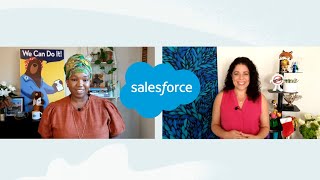
Becca and Iori host a Dreamforce session on digital transformation during COVID-19, featuring PayPal and Oakland Unified School District. They discuss Customer360, using data for insights, and five digital disciplines companies need to adapt to the new normal.
Chapters
That are currently commercially available. Now we know some of you are no doubt joining from your kitchen, your bedroom, maybe trying to multitask with your family or your pets or your roommates. And you've got your whole life happening around you. So thank you. Thank you for making the time in your day to come together with us to help me make this dreamtx experience special for you all. Allow me to introduce my amazing co emcee for the day, Iori Selassie.
Thank you, Becca. Hey. Let's try a virtual cheers with our coffee mugs. Happy holidays and good morning from my bedroom in Monterey, California. I I am Iori Selassie, senior product marketing manager of Salesforce Platform. I want to take a moment and amplify Becca's gratitude and say thank you all for joining and no thank you is complete without paying respect to the heroes of our world, the first responders, essential workers, volunteers and caregivers from every corner of the world who are so critical to our well being this year.
For all of us in 2020, we have had to make adjustments to our lives and some of those adjustments are here to stay into 2021 and beyond. So today we are focusing on working in the new normal. There's going to be a ton of useful information. And Iori, I don't know about you, but I'm a visual learner. I heard we have someone here who can help people like me.
Yep, Becca, we have our very own dreamtx visual artist capturing key themes, messages and ideas. I bet you can't wait to see what it looks like. So let's take a peek.
Picture this. Today it's more than just a phrase. We're joined by artists from ImageThink, the group bringing the visual aid you didn't know you needed. Nora and the artists of Imagethink illustrate the conversations in real time to help guide discussions and let the learning sink in deeper. They will help us visualize innovation and working in the new normal.
Please welcome our DreamTX visual artist, Nora. Are you ready to get started? Hi.
I am.
So great to be here today with Part of Dreams.
Love it. Love it. Thank you so much, Nora. We're going to jump into the full schedule today and talk about all the amazing stuff stories we have. So let's get started with the story of a true trailblazer PayPal. I can't wait to see what they have to share.
The number of unbanked people or people who don't have access to a significant chunk of the financial services industry is very huge.
Most people in the world have a mobile phone, but they may not have a bank account. So their ability to transact, to buy goods, to send money is how we think about being able to democratize financial services.
If you look at what makes a great company great, it's not just the products that you build, but also the kind of empathy and understanding with which you can treat your customers.
We are customer centric, we are innovative, and we want to do good.
I think there's a strong affinity between PayPal and Salesforce as to how we both think about our mission in the marketplace. It's been an unprecedented pandemic, but what we've seen is a very, very strong.
Adoption of the platform and their willingness to use digital payments has gone up. So we are seeing a significant uptick in the number of transactions per day.
People still need to buy goods, they need to send money to friends and family. They need to transact.
So we have put together very immediately an action plan to help those small and micro businesses that are using our services to pay the paycheck for their people.
A lot of shopping that went from physical retail to e commerce is probably never coming back.
This is the new status quo. I think even if we're past the pandemic, we'll be much more flexible in how we operate. How do you deliver experiences that delight people, that are easy so that all of that complexity goes away?
We will have a single source of truth that customer support agents can depend on when they are talking to customers.
We want our sales team to be artists and not mechanics.
We are using the Customer360 platform to remove the friction from the processes.
What Salesforce has helped us do is show the art of the possible.
Once you see it happening, it's like magic.
Wow, Iori. I love hearing These trailblazers at PayPal talk about being mission driven and using the customer360 to remove friction. One idea that hit home for me was bringing empathy into the way you treat your customers. That seems more relevant today than ever before.
Absolutely, Becca. You know, empathy is like the cheat codes to making a better world. But I think the real hard part is making sure every person in your organization is doing just that. It really ties back to what we heard Yesterday about the customer360 making sure everyone is operating from a single source of truth. PayPal has many different types of customers to support. I think about our household. You know, it could be me or my entrepreneurial teenager or our nanny who we rely on, but we're all, all using PayPal these days to move money around and we all want personalization and for things to work like magic.
It's totally true. And especially now that so many of us have spent so many months living in a digital first world, this whole digital commerce thing feels like now it's here to stay. I mean, I did all of my holiday shopping online this year. All of it. I've never done that before. And I live in an older 20 unit apartment building and these days there's a steady stream of packaging that show up in the lobby absolutely every single day. So I'm positive it's not just me that's leaning into digital shopping.
You're right, Becca. I mean, when I'm shopping for our toddler, I only want to see the items that are in stock for his development stage. And some older sites are always forgetting my settings. And it's so frustrating and time consuming, especially when Customer360 has all the tools to help customers of all sizes get personalization right.
So we just heard one story of how a trailblazer PayPal is transforming to work in our new normal. But the overarching question is how are you embracing the digital world to transform the challenge of this unprecedented moment into an opportunity to get us started on the right foot. Today we've brought together two people who spend a ton of time talking with our customers about transforming their businesses to become customer centric and succeed in in our new normal. They have tons of great insights and they're with us here today. Christina Jones, svp, Customer Marketing, Brand partnerships and C Suite Engagement, and Simon Mulcahy, Salesforce's Chief Innovation Officer, are here to sit down and discuss all of this and more in a Dreamtx exclusive Fireside chat between these two. They've got decades of experience between them. They thinking about digital transformation and really examining what it means to be customer centric in the way that we approach our businesses, our processes and the way that we talk about engaging and empowering all of our employees to connect with customers better. When they start talking about customer transformation. And if I'm climate, it's amazing. Go ahead.
Absolutely. And if I know Christina and Simon well, you know, they're not only going to get us on the right foot, they're going to get us on the good foot.
Join them.
Thank you, Becca and hello dreamtx. My name is Christina Jones and I lead our customer C Suite and media partnership teams here at Salesforce. I am thrilled to be joined today by my friend and our Chief Innovation Officer Simon Mulcahy to take a look at how Our customers have been adapting during this pandemic and growing and thriving as we start to emerge from it. Simon, there's one critical question that is on all of our minds, and it is related to one word, relevance. How are companies able to differentiate themselves and remain relevant during these times?
It's a great question. I think actually relevance is probably one of the hottest words in the business dictionary and has been since March. And the key thing is, are you relevant to your customers? And most companies, for all companies, they lost touch with their customers as soon as Covid happened. Everything went digital. And most people's primary engagement with their customers was physical, was analog. And we included ourselves. Everybody lost touch. And so I think the key thing that the most successful organizations did was that when they realized that they had to get back in touch with their customers, it was go back in and ask their customers, what is it that you now need? And what we've seen a lot, especially in the most successful customer centric companies, is that they don't presume to know what their customers need. They spend so much effort in actually asking and deeply understanding what the customer's needs are. At Salesforce, we call this the job to be done. Once you understand what your customers needs are, you can then really look at what the whole of your organization has to offer and then in many cases even change your offerings, your services, how you speak to your customers as the context changes. So that need to sense and respond, change is fundamental. And if you can't do that, if you don't have a systematic way of doing that, then you will slowly, over time, become less and less relevant. And that word has been maybe made even more important in Covid because Covid has just accelerated the trend towards becoming, moving from being product centric to being customer centric. And in that customer centric world that we're now seeing really evolve, relevance is the number one kind of key target.
It's interesting that you say that. You know what really jumps out at me again is listening. That's a superpower that we really need to leverage right now. We cannot assume anymore we need to invest time with our customers so that we can really understand what they need in order to be successful. But while everyone is rushing, are you finding that customers are open to creating space to have these deeper conversations, these deeper engagements right now?
Yes, absolutely. In fact, what we've seen is definitely kind of the story of the digital haves and digital have nots and those organizations who are connected with their customers and had a strategy towards digital. They accelerated that and they moved ahead, they accelerated away from those organizations who didn't have a digital strategy or were very, very slow to put one in place. And that digital gap has effectively been the area which has got so much attention over Covid. And that's what's really been driving Salesforce's business. And it's also been driving the phenomenal change in the conversations that Salesforce has been having with our customers. This is not about buying technology tactically, Salesforce as a vendor, this is definitely an environment where we're seeing Salesforce involved in these conversations with the CEO and the leadership team around how Salesforce can help as these companies go on their transformation journey. And that transformation journey is not measured in years. People have got these five year roadmaps that they've been really executing on in a matter of months.
That's a great point. But, you know, with listening comes data, and with data comes insights. And while that can be an opportunity to make smarter decisions, data can also really be overwhelming. I guess that's why people seem almost afraid of it. But why do you think that is?
Yeah, it's funny, the word data comes with its own, you know, especially people who are not technologists feel that the word data is somewhere kind of too techy. The fact is that many people are right when they say that data is the new oil. But the fact is that when you go out there and you listen to your customers, they're giving you data. It's lots and lots and lots and lots of insights. You need to bring that back in and synthesize it. Because through that synthesis, you arrive at the insights. And it's the insights which allow you to make better decisions. Now what the better decisions allow you to do then is to go and change, to create better experiences, improve your products, improve the way in which you engage with your customers, and even how you leverage your employees to do so. And what that does, it earns you more data. And then more data gets turned into more insights, gets turned into more action. It's a virtuous circle. Imagine this as a flywheel that's spinning and the organizations who can capture the data, turn it into insights, turn that into action and earn more data and create that flywheel and make that spin faster. Those organizations can make decisions faster. And the organizations who make better decisions faster are the ones that win. It's that simple. Now the problem is that a lot of people get that data and they put it into dashboards. And let's be honest, that's just a half thought through approach because on their own. Dashboards are not the answer. In many cases, dashboards are where data goes to die. So the question is, how do you get that data and turn it into really usable data visualizations that insights can be derived from? So that's the whole thing is that how do you take that data and make it easy to translate into insight?
You know, I love action leadership so much more than thought leadership. And with this type of data and insights, there's also an opportunity to use data to do good with our platforms. Can you tell me a little bit about how the companies you're interacting with are starting to use data to help with their sustainability efforts?
Yeah, and actually it's even broader. So once you start capturing data, your customers really quickly begin to feel that you're listening to them and they will share more things with you. And what we've definitely heard, and not even just during COVID but before COVID has certainly accelerated, this is that customers are simply not just evaluating a company purely on the basis of the quality and price of its products and services. They're also looking more broadly. Is this company recruiting and hiring diverse talent? Is this company espousing the same values that I have myself? Is this company a positive contributor to the world or not? And definitely there are many organizations who've fallen foul of that. But many organizations are really beginning to understand that in order to truly build trust with their customers, it's not just about the products and services, it is about more broadly being a participant in society. And it's your customers and your employees, if you listen to them, who will guide you on that journey as well as telling you what products to build and what services to perfect.
Yes. You know, I think what we've seen in this pandemic, it has truly accelerated customer employees expectations of companies. When you want to move fast, but you don't want to break things, how can companies execute quickly but in the right manner?
That's a great question. And actually I think a number of the sessions that, that we're offering to customers over this time we'll go into more detail, but there is no question that there's been an enormous acceleration in companies who are moving towards digital transformation. The question is, how do you do it? How do you really kind of attack the digital imperative? Well, what you don't do is buy technology, pour it over old thinking and step back and wait for some magic to happen. It won't. What we've really seen is that you've got to have this mindset to evolve your organization from being Product centric to being customer centric. And actually the great news is that Salesforce has got, has really derived from all of our work. Five clear disciplines that companies are. They're kind of like five muscles that companies who are doing this well are in every case building these muscles that they're building as they do this. And these are the five muscles, five digital imperatives. The first one is back to the point that Christina was making in the beginning. How do you make decisions? You need to really put in place this mechanism to sense and respond the markets. You're capturing customer information, turning that into insight and leveraging that interaction. But the second thing is that is how you engage customers, and that really is about customer centric business processes. You need to stop thinking about how you sell and think about how you create a better buying experience. How do you really design a better experience for the customers to get what they need as quickly and as easily as possible? And that really takes stepping back and looking at how you sell, how you service, how you market, reinventing it for this new world, which is truly digital first. But it won't be enough to just do that because you've also got to think about the third thing, how you engage your employees in a world that's customer centric. The people who are closest to your end customer, maybe even the more junior people in your company, are actually the most important. How do you empower them so that when they're talking to the customer, they can turn around and access the full power of the organization to serve that customer's needs? Not just the product, but your best expertise, your best technical people, your executives. How does that happen at scale and they say employees, how do you provide an environment for them to do their best work? And that's also as much about the psychological safety and the, the world in which they work. There's equal pay, is fair, it's diverse, etc. The fourth thing then is how do you leverage technology to really supercharge that? And every organization is becoming digital. Brian Moynihan, the CEO of bank of America, actually says that bank of America is actually a digital company wrapped around a great bank. Every business is a digital company wrapped around a great healthcare company, financial services company, retailer. How do you make the whole organization digital so that technology doesn't just happen in the IT department, but people across the business are able to build applications closer to the end customer. And if you do all of that, you will really make that change and become a digital company. But that's not all. In a world that that we're in today. It's also as much about how you serve society. And so for us, the fifth discipline is how you actually put in place the mechanisms to help your organization participate and be a better contributor to society, which includes maybe you're being on a journey towards net zero, being a more sustainable organization, being a more diverse and equal organization as well. So those five disciplines definitely kind of four key, five key areas that we kind of help companies get right as well on their digital journey.
I love that. I really love your thinking around the employees and how you're ensuring there's continuous learning and reskilling. There's a real opportunity here to stay relevant and not be afraid of technology. I think the companies that are accelerating are embracing all of their employees at every level to make sure they are ready for the next chapter.
Yeah, absolutely.
So as you have these conversations about jobs to be done in a new way of thinking, are you finding customers are open to having these conversations with brands instead of just the transactional ones?
Yes, absolutely. We're seeing this just incontrovertible proof of a major sea change. Leaders are really realizing that the old normal, that's gone and now they need to reinvent their business to be relevant. Relevant to their employees, relevant to their customers, and relevant to the society that we all live in and work in. And I think that really is driving everything. You can't be relevant if you don't earn trust. And so that. And so how do you do that? You do that by listening to your employees, listening to your customers and acting openly and transparently according to that needs.
Simon, I could talk to you about this all day, but sadly I think that that is all the time that we have for today. This pandemic has highlighted so many different crises facing our world today. Health, economic, racial. But I do feel a sense of hope when I think about all the potential for these organizations to really step up and become true platforms for change. This is not a time for thought leadership. This is absolutely a time for action leadership. I sincerely hope everyone tuning in enjoyed today's conversation. I know I did. Back to you.
Thanks, Christina. Hey everyone, Iori here, one of your two DreamTX MCs for the day. So first of all, that was dope and so relevant to DreamTX. I'm really glad Christina and Simon spent some time laying out the themes of the channels for for today. Check it out. Simon said data is the new oil. We couldn't agree more. That's why there is a channel on data and decisions. We've got four other channels lined up for you today with thought leadership on engaging customers, new trends and perspectives, embracing technology and the future of work. And Becca, did you check how Simon and Christina called out how important it is for us to lean into innovation? I couldn't agree more. Sticking to the old way of doing things is not the way forward.
It is not. Iori and I also loved how they called out how success is being shaped by our customers. To be successful, you need to listen to what your customers want today, which is probably a little bit different from what they wanted in the past. To kick start and refine your customer centric strategies, take a look at the transformation playbook here. It will help you put thoughtful structure into understanding your customers. And it's so critically important.
Absolutely. And it's so easy to lose track of what your customers want with the pressure of everything moving so fast. It's like you're rushing around at dinner time and trying to force your toddler to eat kale when all they ask for is a cracker. Good luck with that. And there it is. You see how the personal and professional advice is going to keep aligning here. For instance, in my personal life, the customer needs and wants that I have to consider are my kids. They need me in a different way than they have in the past. My teenager needs support expressing themselves in a virtual classroom. And my toddler has to learn that when mommy puts on the blue blazer, playtime is over for now.
Well, that sounds like some tough love, but I know you've got the cutest customers. Clearly, we're all dealing with a new normal. Kids and adults, businesses and schools, cities and towns. It's a challenge for organizations of all, all types.
Oh, yeah, it's a huge challenge. But we're trailblazers, right, Becca? We gotta stay positive when things get crazy and look for the opportunity to go from survive to thrive by embracing new tools and new ways of doing things.
That's right. We are not the only ones that are learning how to do new things here at dreamtx. There are organizations all over the world that are thinking about how to innovate and how to change in this new normal. To that point, let's learn about another one of those organizations, the Oakland Unified School District. They are also thinking about how to innovate, how to change, and how to embrace technology so that they can thrive in this very, very new normal that we're all living in. Let's take a look.
Using technology powered by Salesforce, a system that has all of the Things that you need to make an informed decision on. It's so much easier. Well, like, you can say, oh, you know, this kid never comes to school. And I'll be like, what? They never come to school? And then I go, look. And they have a 95% overall attendance rate, and it's, no, they don't go to your class. Like, that's different than not coming to school. Like, they're not going to your class. The root cause is now different. Like, what I'm looking for is, okay, are they. Is there illness? Is there, like, something that's causing them to avoid school? I don't know. I won't know until I ask. But my approach is more informed. And so the student knows that I'm coming from a place of truth, and it just saves time. I'm not like, going down the wrong path makes you like an investigator. I'm Jessica Fletcher.
Hey, everyone, it's Iori and Becca coming at you live throughout the day at Dreamtx. And wow. You know, Jamie's video took me way back to when I used to live around the corner from Frick, the school that Jamie is trailblazing for. I'm born and raised in Oakland, and I think it's so amazing that the students, families, and teachers are benefiting from technology in such a powerful way. Thank you, Jamie, for sharing your story with us.
You know, what's amazing is we've heard such similar stories, but we've heard them from two totally different worlds. A massive global financial services company like PayPal and a school district in California. Totally different environments, different ambitions, different workflows, different customers. But Salesforce allows them to accomplish the one goal they have in common. The need to know their customer better than ever before.
Absolutely. Jamie was able to drill in and see how every student is connecting with their teachers, their assignments, their peers, and what's happening in their life at home so that we're able to champion every child no matter where they come from.
And I don't think it was a coincidence. When we heard Jamie talking about empathy, we really heard how empathy can drive greater impact. Jamie said it was coming from a place of truth. She wanted to find genuine, true insights into her students. And it's basically the same message we heard from PayPal. The Salesforce platform is constantly being refined to give everyone in an organization a clear 360 degree view of their customer.
Absolutely, Becca. So let's talk about what else we're going to be seeing today. We have an amazing lineup of content for you. More than 30 episodes created to help you innovate and go from fast. We'll hear from some amazing people. We call them trailblazers. Trailblazers create opportunities to move forward in our business and in our lives. Trailblazers are leaders. They create paths that others can follow. And they're building a better world for all of us. So what else do we have going on today? Oh, yeah. Lots of fun. Becca, I need you to confirm a rumor that's been spreading. I heard we have Snoop Doggy Dog and Martha Stewart at the doe.
That is a true story. That's absolutely right. They'll be here for an exclusive cookie class only available live for our DreamTX audience. Okay, folks, if you're joining us on one of our social channels, it's that time again. Anyone watching us on social, Twitter, LinkedIn, YouTube, Facebook. Yes, I'm talking to you. The broadcast here will be ending momentarily, but you can stick with us all day on dreamforce.com and catch the rest of this relevant content there.
And that's because we're about to move into the next phase of the day. The first set of fantastic episodes we have lined up for you begin in just a few seconds and then stick with us live for the rest of the day for more fun.









