Driving Equity & Access Through College Admissions | Leading Through Change | Salesforce
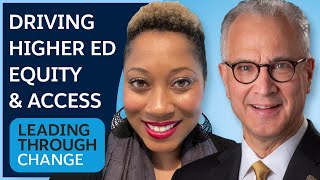
Leah McGowan, Dr. Crystal E. Newby, and President Mark Kennedy discuss how COVID-19 widened college access gaps, with declines in first-generation applicants. They explore K-12 partnerships and technology like Admissions Connect to improve recruitment and holistic review in admissions.
Questions this video answers
4.4%
Decreased by 3%
1937
A little more than 14,000 members
Close to 67,000 students
Chapters
When you embrace the collective power of our diversity, of each of us and all of us, you open the door to real innovation. At kpmg, we are committed to accelerating diversity and inclusion. Together with Thrive Global and our alliance partner, Salesforce.
Sam.
2 3.
The college admission process is seen as a rite of passage for some and a barrier to others. There are deep longstanding inequities when it comes to the admissions process, particularly for underrepresented and marginalized students. We know the power and access of a college degree brings. I personally know that privilege. I mean College graduates see 57% more job opportunities than non graduates. So the question is how can we reimagine this system to create access for everyone to have the best future possible and make real change? Good morning, I'm Leah McGowan here and welcome to another one of our live weekly conversations as part of our Leading Through Change series, a chance for you to hear from leaders around the world who are doing their best to navigate these challenging times and support their communities. Before I hand it over to my colleague Natalie, I want to preview the next hour. Natalie will be interviewing President Mark Kennedy from the University of Chicago of Colorado and Dr. Crystal E. Newby, Director of Diversity, Equity and Inclusion at the national association for College Admissions, counseling about the role of admissions and driving equity and access in higher education. We'll then dive into a special demo highlighting Admissions Connect, a new education cloud product built natively on the Salesforce platform that creates a unified experience for both applicants and admissions teams. Now before we start, I want to pause and acknowledge the horrific shootings that happened earlier this week in Atlanta. This was awful where eight people were killed and most were Asian women. In the midst of the rise of anti Asian racism and attacks, the Asian community is rightfully hurt and frightened and angry. We all need to be allies to the Asian community and do our part to build a more safe world. We must. It's a must. We work together to end racism and hate and fight for racial equality and justice for all. I'm grateful to Gary Ann Wong, the Global President of Asia Packed Force. She put together some actions we can all take to support and stand in solidarity with the Asian community. It's simple. Start by openly discussing anti Asian bias. Check in with your Asian employees and colleagues to see how they're doing and donate and support Asian owned organizations. Please check out the full blog at the link in the chat. Now, before we dive into the interview, I want to highlight a few sales a new Salesforce video series. Simply put, this series breaks down complex challenges of our customers and explains them simply. This is the new evolution of how to content combining clear advice, product demos, humor and the authentic voices of our customers. And it's hosted by Emmanuel Acho. Now let's preview season one. Streaming now featuring Elf Beauty.
I'm Emmanuel Acho and you're watching Simply put where we take complex business challenges and give them clear solutions. This season we're getting to know the team behind Elf Beauty well.
My role at ELF is really to create digital happiness. We're the number two Gen Z favorite brand. We're the number seven marketeer of the year. I am living my dream right now. But we don't want to just feel good about this year. How do we sharpen our swords to get ready for years to come? 90% of our ecosystem is powered by Salesforce. We couldn't do what we do without Salesforce with Customer360. All our digital touchpoints are telling a consistent story across the full digital ecosystem. Digital is not just about technology. At Elf, we're able to move incredibly quickly and we call that ELF Speed. In this season of Simply Put, you will see the most extraordinary women from elf beauty. Corey Marchisotto, our CMO.
I read a minimum of 2,000 comments per week.
Simply put emojis matter.
Molly Duffner, VP of E Commerce and Consumer Experience the way I like to.
Explain E commerce is its math.
And I know you love math.
Not this year. Gayathri Buderaja, VP of Brand for Elf.
Beauty it is no longer enough to just have a good product. Consumers expect brands to stand for something.
My challenge to everyone who's thinking about digital transformation is get ready to take some risks. You're going to be moving at a lot different pace than you ever did before.
Here's my guarantee. No jargon, no buzzword. You need steps to digital success, not Tomo.
I'm Ekta Chopra, Chief Digital Officer for E L F Beauty. And this is simply put, you know I'll be there.
Wow.
I'm super excited about that new series. Now it's my pleasure to kick it over to a conversation that Natalie hosted. Enjoy.
Thank you so much, Leah. And thanks to all of you for joining us today for this critical conversation. A lot of us might look back at 2020 and say that the pandemic changed education in many ways. We had to navigate learning and teaching over zoom and the entire student experience went virtual overnight. And while these are big changes, if we look closer, we can see that Covid truly exacerbated roadblocks to learner success. That existed well before the pandemic even started. And for many students, those roadblocks start preparing prior to ever stepping foot on a university campus. Recruitment and admissions is that very first step. And it's also where we start to see the opportunity gap begin to widen even more. In fact, we're seeing some alarming shifts happening in education that have been accelerated by the pandemic. Undergraduate enrollments fell by 4.4% last fall and the number of first generation applicants has decreased by 3%. This is a global issue and it's a societal issue. Because education creates pathways to social mobility and reaching and engaging diverse students and first generation populations is now more critical than ever before. At salesforce.org, we've started to take some initial steps to explore this issue via Impact Labs, a unique program focused on co designing innovative technology solutions that address the world's toughest social issues. The group's current project is focused on creating more inclusive onboarding experience for underrepresented learners, working in collaboration with leaders from historically black colleges, community colleges and more. So it's critical that we have these ongoing conversations not just for the education community, but for all of us who have been touched by education throughout our lives. That's why I couldn't be more excited for today's panel. We have two incredible leaders joining us who are leading the way on this important topic. Please welcome President Mark Kennedy from University of Colorado and Dr. Crystal E. Newby, Director of diversity, equity and Inclusion at the national association for College Admissions Counseling, otherwise known as NACAC. So Dr. Newby, I'd love to start off with you. Can you share a little bit about NACAC as well as your role in the organization?
Absolutely, Natalie. And first of all, thank you so much for having me here today to represent NACAC. And we've been around for over 80 years. We were founded in 1937 and currently our association has a little more than 14,000 members who are secondary school counselors, counselors, advisors, as well as community based organizations, our college admission professionals, as well as our independent educational consultants. And really our association is dedicated to working with our members and providing them with the tools and resources to assist students through the college admission process. It's really as simple as that. And so, you know, I'm biased, but I think we do good work and you know, and it's exciting to be able to do this work and with the members that we have because they are so passionate about helping students and especially around having an equitable admission process.
Thank you so much Dr. Newby and President Kennedy, a similar question for you. I know the University of Colorado system includes four campuses across the state. Can you talk a little bit about the students that you serve across the CU system as well as your unique background that led you into higher education?
Yes, we do have four great campuses across the state, including our flagship in Boulder, a fabulous medical campus, the Anschutz Medical campus in Aurora, but also in Denver and in Colorado Springs. And with our urban serving university in Denver, we're knocking on the door to being Hispanic serving with over half of our student population within that campus being from diverse backgrounds. But we are moving into a majority minority nation. And so we're really focused on how can we better serve and reach a broader cross section of our state. All of our growth over the last decade has been from less represented communities and from our Pell Grant students. My wife and I are both first generation college grads, so I very much understand what kind of a propelling impact having a college degree can be, and I'm passionate about extending that to more people. I've had the opportunity to spend time in both businesses being treasurer of what is Today Macy's in U.S. congress for three terms. But I find my work here within higher education for the last decade very satisfying because we are changing people's lives, need to change more people's lives.
Dr. Newby, I know you come from many years working in the admissions space and have spent time at quite a few different institutions before joining nacac. So I'd love to get your perspective on why recruitment and admissions is really so critical to solving equity and access in higher ed today.
Sure. I do have a background of 17 years in this profession altogether. And when we think about the recruitment piece for admissions, especially now, and you touched upon it earlier, Natalie, talking about how this pandemic has exacerbated everything. And so really getting on the ground and talking with students is providing access, access to colleges and universities students may not have even heard of before or have known about before. And it's important that students understand that they have options. So when colleges and universities are thinking about their recruitment plans, it's also important for them to consider those vulnerable populations. You know, you touched upon it a little bit earlier. You know, our first generation students who may not have the parental figures or the family members in their corners who have gone through this experience. And so they rely on the colleges and universities or maybe their school counselors when we're talking about the college experience. And also too, when I think about vulnerable populations, I think about our rural students, because we know that prior to Covid, it wasn't always equitable for students in rural schools and to seek colleges and universities come to their schools in person. There was a struggle there. And so it's even more important now during this pandemic to be more intentional about how colleges and universities are engaging with students through this process. And again, for me, it goes back to the access point. That's what it is. Students need to know that they have options and that college is possible. And so this is such a really a critical time for colleges and universities to really be mindful and intentional around their recruitment strategies so that they're able to reach even more students than they may have before.
So talk about reaching a lot of students. President Kennedy, you're the leader of a large public higher education system with close to 67,000 students. So I'm curious, you know, what is top of mind for you with regards to recruitment and admissions coming out of 2020? And maybe you could also speak to some of the changes in the funding models across the state of Colorado, as well as some of the evolving business models that maybe the CU system is investing in, like online learning that could help drive greater access into higher ed.
Yes, we do have a lot of changes. Our funding model here in Colorado, we've been in the bottom two or three of the states in the nation in terms of support for higher education. So we and other universities in the states have been both by necessity and design, focused on being efficient, but also being attuned to the needs of our students, of our employers. And the pandemic has really forced everybody to go digitally. But in many ways, what we were delivering was on campus, delivered digitally, mixed in with truly on campus and truly online, designed for that online experience. And I think what we see is there's going to be a further acceleration of all things digital post pandemic. It's changed consumer behaviors. We are great on campus and we're good online and working to be great. And that needs to be with that same wraparound services. You talked about the support that first generation and less represented populations need. We need to provide that same level of support, counseling, advising, career advice in both modalities. And so our system investment is helping us bring the best of all four campuses through one portal to make it easy for our students. I think in time, you're going to see online and on campus mixing within a course, within a degree, and hopefully that will allow us to achieve even more access for our students across the state, nation.
Yeah.
And I think certainly coming out of the pandemic, I think hybrid is here to stay. And so Dr. Newby, NACAC works with a lot of institutions across the globe and has been really a force in the profession for over 80 years, which is pretty incredible. We all know that a lot has changed over that period of time. So I'm curious, how do you see technology playing a role in not only creating more equitable experiences for prospective students, but also to help improve that process within the admissions office?
Really, I look at technology as an access point. Like we said, it's here to stay. And technology has evolved so much over the years. And I think of this especially because of this pandemic. We already knew there was a digital divide. We knew the haves and the haves nots. We knew that there were students who have access to technology or a laptop or a computer at home, but we also knew that there were students who didn't have this access at all. The only access they may have is their cell phone. And this pandemic, again, has widened that gap even more. When we're thinking about technology, I certainly urge colleges, universities, when they are providing services and resources to students, but also too, when we're even thinking about the application process, how are students able to access that? Are they able to use their phone? Now, we know you can only do so much on your cell phone when you're filling out a college application. You certainly don't want to necessarily be wr your personal statement or essay or something like that on your cell phone. But we have to meet students. Where they are is what it comes down to. And we know a lot of colleges and universities have utilized text messages as a way to keep in touch with students in addition to your traditional email and things like that. Because, let's be honest, students nowadays, email isn't necessarily their thing. They're looking to access information in different ways. And you know, that actually brings me to something really interest that I heard last week from some young ladies who were on a panel for us around test optional policies for standardized testing for colleges universities. And something that the young ladies mentioned were that they were going to other sites to validate information around test optional for colleges universities. They didn't necessarily believe that institutions meant test optional. When they said test optional, they were going to Reddit, they were going to YouTube, they were on TikTok listening to some influencers, you know, about this process because they were weary. And so I think in this time, it's really an opportunity for admission offices to even be more creative in how they utilize technology and reach students. You know, you may have to create a couple of TikTok videos or some videos on YouTube showing, you know, give it a little transparent look as to what your application review process looks like. Kind of give students that behind the scenes look because that is a great way to relate to them and they may have a little bit more trust then. So I was certainly surprised by those young ladies responses last week when they said they go to Reddit and YouTube to kind of validate some information. But I think it's also, you know, we have to reimagine how we are communicating with students and how we're reaching them. And technology certainly has the way to do that. And I'll finish up by saying, also thinking about access to our international students because we know this pandemic has had a great effect on international students as well. And so how can we utilize technology to keep them in the loop and to make sure that they're also not lost through the cracks of this process like some of our domestic students have been in this pandemic. So we just have to be creative in how we're using technology.
I love that, especially around meeting students where they are today and really sort of modernizing and improving that admissions process. And so President Kennedy, I know the University of Colorado has really a bold vision for using education cloud across your four campuses and throughout the student journey, really. And we're so excited to have two of the CU campuses as early adopters of admissions connect. And we're going to be seeing a demo of that just shortly. But what I really love about the CU story is that the process of digital transformation started with the student experience. So can you talk a little bit about why having unified data that starts at the beginning of the student journey is so critical?
Well, it's critical because you need to be able to connect with those students and be able to have the information about them to give them exactly what they're looking for, what they're listening for. Yes, we need to have everything be mobile friendly and platform aware. And I would just say to what the Dr. Newby was saying, we are seeing benefits in terms of access with being test optional. But as we're having those communications, they expect you to know every contact you've had with them. They expect you to know what interest you've expressed in this conversation with somebody else. And having that all available to them when you're contacting them, whether it's digitally or by voice or in person, really makes a difference in bringing them into the college experience. Because if you give them something unrelated, that's a junk text. If you give them something specifically targeting an interest they've already expressed to you, that's something that they will value. And we need to be a valued partner with them from the beginning and throughout their experience. And as we more and more get into a lifelong learning, that being one and done with a degree isn't just all you need. And you need to get that refresher update five years into your career, having that experience captured from a lifetime engagement with that student will allow you to better serve them as well.
Yeah. That aspect of lifelong learning is so critical. And so I'd love to close with just a few final questions for both of you. Speaking of lifelong learning, we talked a little bit today about the admissions process within higher education. But I think we can also agree that it's critical to think about K12 education, where lifelong learning really starts, as part of this discussion as well. So how are both of you working with schools and districts to ensure that path to higher ed is accessible as well?
Natalie, that's such a great question. I mean, especially with our organization at nacac, as I mentioned earlier, you know, our members include our secondary school counselors as well, and professionals. And so being able to work with our K12 members is so incredibly important. And we try to provide as many resources and tool and information as we can, especially when we're thinking about those school districts who have incredibly high student to counselor ratios. Because that's something we have to consider as well. Right? Our secondary school counselors and college counselors, they're doing the best that they can in this environment and with high student caseloads and trying to keep those touch points up with those students. And so some things that we are trying to do, some things a little bit newer, right. We had to do a lot of shifting. I feel like we have used that word that's like the word of 2020, and 2021 is pivoting. But that's what we've had to do. And for example, we used to host college fairs, our national college fairs in person around the country throughout the year. And we would have, you know, maybe 90 fairs plus, and we've now had to transition those to online. But what has been great about that is that we've been able to reach so many students and we've been able to use our online platforms for our virtual college fairs to provide even more access to information, and not just to our students, but also to our counselors. We have college counselors and school counselors and even parents that join these virtual college fairs and are able to chat with representatives from the admission offices from these institutions. And so we have our signature virtual college fairs that we're doing, but we also have our performance and visual arts specific college fairs as well as our STEM specific college fairs. And so students and counselors can certainly take advantages of those opportunities. But in addition, we also offer a variety of other online learning opportunities. We have our webinars, for example, every year we generally host a FAFSA updates webinar so that students and counselors and parents know what's happening with financial aid and what that process is going to look like. And so it's important that we're able to stay on top and ahead of the information that is out there and that we're providing the most up to date information for our counselors and our students too. And then I'll also add, as we're talking about equity and access and inclusion, we also recently launched our Anti Racist Education Institute. And it's for all of our members, whether you're a secondary school counselor or, or an admission professional and really trying to provide information and ways for our members to think about how are they centering DEI and the work that they do and when they're working with students. Because we have to understand our students have so many different identities and they come from so many different backgrounds and they have different needs. And so with that institute and some of our other resources and tools, we want to make sure again that we're providing the information that our members need to help our students again go through an equitable admission process.
Wonderful. Thank you. And Dr. Newby, you mentioned international students at one point, so maybe President Kennedy, I'll hand it to you. International student enrollment has been a major topic recently and I'd love to get your perspective on the changes that we're seeing in this area and how it might impact higher ed in the future.
Well, international students haven't been able to travel, period, which is put a crimp on it. And we've had some restrictions that have recently been implemented and thankfully rolled back that are making it hopefully more welcoming for international students to be here. I think they add so much to the university experience for everyone on campus. And so having a deliberate outreach for them, making sure we talked about onboarding, sometimes they need an extra special onboarding to understand what's America like and how do we engage within our education systems. We need to be providing that. But international is a key part. I would just say on the high school things reach. We have programs where we teach dual enrollment in the schools so they're getting a college credit at the same time they're getting high school credit. We also have pre collegiate programs investing even more in that. Go down to the middle school level and provide reach out to those that haven't even thought college was for them to help them understand, yes, it is for you and get you on a path from middle school on that will have you prepared for college. But also we're looking through the online to make sure we can reach out and if a school doesn't offer upper math, upper division math or science, to be able to deliver that to them online in tandem with the best qualified teacher within the the school district. So we have to do a lot because you're right, this is going to set us back this pandemic, particularly those that are less prepared and we need to make sure they are prepared for a college experience.
Yeah.
So maybe a final question for both of you. We'll end on a positive here. How do you see recruitment and admissions evolving over the next five to 10 years and what gets you excited about the opportunities ahead?
You know, to President Kennedy's point, yes, this pandemic is setting us back. Right. But now is the opportunity to make some real change. And you know, when I think about the admissions process in particular, you know, test optional. Right. A lot of colleges and universities decided to go test optional this year because students couldn't access testing sites for the SAT or the ACT or other standardized tests. They couldn't do that. But let's be honest, the SAT score does not tell everything about a student. And we know that admission processes are generally holistic. But you don't need a test score to attach to a student to understand their abilities. And so when we say test optional means test optional, that's what we mean. I'm excited about what the next five to 10 years looks like because this gives us, and I say us as a college admission profession, the opportunity to really reimagine our policies and our practices and how we can make the process even more accessible and equitable and inclusive for our students, especially those vulnerable populations. We really have to get away from our archaic thinking that we're just looking at your GPA and your test scores and maybe some of your extracurricular activities and things like that. We have to look at the bigger picture and at the whole picture. How can we put together a process to help prepare our students to be global citizens and to be contributors of society? And that's what I'm really excited about. We have the opportunity now to seize this moment.
I love that. And President Kennedy, I'll echo the notion of now is the time to make some fundamental change. So I'd love to hear your thoughts of what's exciting you about the path forward here.
I think three things are exciting me. First of all, technology is going to allow us to have a high tech, high touch, personalized approach to both recruiting and student success. That I think will allow us to both better connect with those students and better guide them on towards their ultimate degree or educational objective. Secondly, we're going to have more modalities to deliver to them wherever it fits in their lifestyle, on campus, online, some mix thereof. And so I think we can better fit in that way. I think the third thing that is coming is moving beyond degrees to non degree credentials, badges, other types of things that can stack through your lifetime and can help prepare you on that first rung on the career ladder and keep you at the top of the career ladder throughout your life. So lots of good things coming in education. I'm excited to be able to help however I can.
That's awesome. So thank you so much Dr. Newby and President Kennedy for this great conversation and we are so grateful to have you share your thoughts with our community today. And now I'm excited to hand it off to Kirsten Rauscher, Senior solution engineer@salesforce.org for a demo of Admissions Connect, a new education cloud product built natively on the Salesforce platform that creates a unified experience for both applicants and admissions team. Take it away Kirsten.
Thanks so much Natalie. As a first generation student and former admissions recruiter, I'm both excited and humbled to have the opportunity to demo Admissions Connect. But first, let's jump in and meet Connected You'd A public research university located in the San Francisco Bay Area struggling to meet enrollment goals, leadership at ConnectedU is eager to learn how to drive both desired and necessary change. With their next application deadline approaching, ConnectedU decides to focus on the population of applicants who aren't quite making it through the application process to see if their data can tell them a story. It becomes immediately evident that applicants who identify as first generation are making up a large percentage of this group. But there's more to this story. ConnectedU takes an even deeper dive and it looks like they are also not completing their financial aid applications. The challenges that these applicants are facing that are preventing them from completing the process are disproportionately impacting students of color. Empowered with These data insights Connected you'd can take swift action and adds these applicants to a marketing campaign with a mobile first strategy. This outreach is instrumental for applicants like Marla, a first generation student of color from a rural community who doesn't own a computer nor have access to reliable WI fi. So when Marla receives a text message from ConnectedU reminding her that she hasn't yet completed her application, she jumps straight into her applicant community from her mobile device to understand what's going on. Marla had submitted her application at ConnectEDU weeks ago via the Common app and assumed it was complete. Eager for answers, she checks in on her application Status with mascot connected you'd's 24.7chatbot mascot lets her know that connected you'd requires an additional essay for applicants who choose to major in computer science. Yikes. The deadline to complete her application is only days away, so Marla runs to the library and jumps on a computer where she writes a thoughtful essay about her career aspiration of becoming a quality assurance engineer. To ensure that technology is accessible to all, she's able to easily upload her essay and complete her application. She's made the deadline. On the receiving end of Marla's application is Rachel, a dedicated admissions counselor that supports applicants throughout the process. Rachel's been working with Marla for months and is thrilled to see that she submitted her application and does a quick check to make sure it's complete by navigating through her incomplete checklist, Rachel dives into Marla's high school transcript and uses the search function to check to see if Marla has completed a prerequisite for computer science majors. She's relieved to see Marla's tech writing course listed. After verifying this transcript is official, Rachel hits Accept, which automatically updates Marla's application checklist to 100% complete. She then marks her application as complete and ready for review. Marla's application is now in the hands of Regina, a member of the admissions committee. Since ConnectedU has gone test optional for applicants, Regina likes to ensure the review experience takes a holistic and fair approach to evaluation. For Regina, that means learning more about Marla in her own words, and she starts her review by jumping straight to Marla's personal essay. She's moved by Marla's story and makes note of Marla's inspiring motivation for wanting to major in computer science. She continues the review process by navigating through an endless scroll reader, evaluating both Marla's quantitative and qualitative potential for the rigor of the computer science program. While she makes note of some academic concerns, Regina is ready to make her final recommendation. She selects admit. Thrilled, Marla receives her long awaited admission to Connected University where her journey in overcoming the many obstacles in the enrollment process that first generation students like her face is only just beginning. To help ensure Marla's continued success, ConnectedU will leverage Salesforce Advisor Link so that Marla will be auto assigned customized success plans that will include checklist items to support her throughout the onboarding and enrollment process. At her fingertips, Marla will have access to relevant resources and a team of advisors she can easily schedule appointments with to help her succeed. Becoming a student won't be without its own set of unique personal and academic challenges. But with the help of her advisors who are empowered with data and insights from Salesforce, the next time we meet Marla Connected, you'd is confident that she will be thriving. Thank you so much for joining me on Marla's journey to Connected. You'd with Admissions Connect. Now back to you Leah.
Thank you Kirsten. That was great.
And thank you to all of you.
For joining us today. Now before we wrap up, one more reminder to learn more about Admissions Connect, please go to the link on your screen. And if you're part of the education community, I want to say thank you. Make sure to save the date for the education summit on June 16th. This salesforce.org event has been taking place for the past eight years and this year is definitely going to be one for the books. You can learn more about Education Summit by visiting the link on your screen. An amazing event you don't want to miss. Last week we shared that we were sponsoring a big benefit concert for Texas Storm Relief with Camilla and Matthew McConaughey Foundation. Just keep living. In case you missed the update on your social channels, the Weird Texas Charity event is streaming this Sunday, March 21st at 5pm Pacific and take a look at this lineup if you want to get involved personally. Donations are being accepted for the Just Keep Living Texas Relief Fund at the Foundation's website. Remember, any donations of 50 or more can be matched by Salesforce. And don't forget to check out Leading Through Change on the 360 blog for more information on Leading Through Change trailblazers, thought leaders and customers. We'll be back with our next Leading Through Change next Thursday at 10am Pacific to discuss how we can take action to address anti Asian racism and violence. We hope you'll join us for this important, very important conversation. Until then, please take care of yourself and each other. Behind every student applicant is a personal story.
Are you seeing the whole picture?
Admissions Connect helps you engage with applicants more deeply and streamlines application review all.
In one trusted place so you'll spend.
Less time on manual processes and more time building relationships. Bring your next class into focus with.
Admissions connect from salesforce.org when you embrace the collective power of our diversity, of each of us and all of us, you open the door to real innovation. At kpmg, we are committed to accelerating the diversity and inclusion. Together with Thrive Global and our alliance partner, Salesforce.









