Embracing Authenticity in your Career - #BossTalks FT. Ebony Beckwith
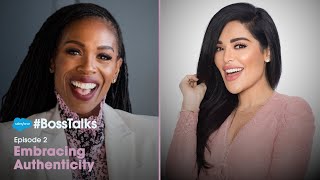
A recorded episode of Boss Talks (YouTube) in which host Ebony Beckwith interviews Mona Kattan about authenticity in career and the beauty industry. Mona recounts her background (Iraqi American, moved to Dubai in 2002), her early finance/banking career and decision to leave, and co-founding Huda Beauty (launched 2013). The conversation centers on why it's important to bring your full self to work, how the beauty industry is shifting toward individual representation, barriers people face when trying to fit in, the value of emotional sensitivity as a leadership strength, and practical advice for creating work environments that allow authenticity.
Questions this video answers
June 23, 2021
2013
Dubai
Iraqi American
Chapters
I got a feeling that you got a feeling that this is gonna be good. I got a feeling that you got a feeling that this is gonna be good.
Say hello to the new world winner.
I'm the Queen of America.
Hello, everyone, and welcome to another episode of Boss Talks, a new series featuring candid career conversations with people I admire and trust to keep it real. Today we're talking about authenticity. All the things that make you you. Most of us find it way easier to bring our full selves to our personal relationships. We feel more accepted and in the safe zone when we're hanging out with our friends, our family, our crew, our squad, whatever you want to call your people. But today we're going to talk about the incredible opportunity that exists when we show up as our authentic selves at work. Now, earlier in my career, I thought success was about fitting in. But it wasn't until I started embracing authenticity that my path became really clear and my career began to transform. Now I realize that authenticity is actually one of my superpowers. And that's what we're going to unpack in today's conversation. Now, there's no way I could do this alone, so I've invited my good friend, the queen of authenticity herself, Mona Kattan, also co founder and global president of Huda Beauty and Kayali fragrances. Mona, welcome to Boss Talks. Thank you so much for joining us today.
Thank you so much, Ebony. Honestly, I love you so much and your introduction was so great. Like, just so. Just the whole conversation about authenticity is so important. So thank you so much for having me.
Oh, I am so happy to have you here too. And you know, when I thought about unpacking this topic, authenticity, you immediately came to mind because of your candor, your willingness to be so open and honest about all aspects of your life, and really that ability you have to inspire others with your stories.
Hi, guys.
So I love watching you on YouTube. Not just for the great beauty tips, but also really for your heartfelt discussions on topics that your community really cares about.
Person breakups have always been really hard for me. If you are going through something like this, hopefully these tips will help you get through it a lot faster and easier. And hopefully you'll just understand yourself better. So let's get started.
So I have so many things to ask you. So we're going to just dive right on in with the first question. So first let's talk about how you got to where you are. You know, something we both have in common is that we both took very non traditional career paths. So I'd love for you to share your story with everyone. Sure.
So I am an Iraqi American. I was born and raised in the US to immigrant parents. They immigrated from Iraq to originally Pennsylvania, but then Oklahoma, then Tennessee, then Massachusetts. So they were kind of all over the place. Then we moved to Dubai in 2002 and I've been here ever since. And I studied here. I studied finance. Not my choice. It was the choice of my father. He was trying to push me into a more traditional, more stable, less risk career, which I did for him. And then I started my career in banking here in Dubai as well. I was in investment banking. And I didn't stay very long because I knew very much that it was not authentic to who I was or who I wanted to be in life. And I left and I started just venturing into self employment and entrepreneurship. And then we launched Huda Beauty with my sisters in 2013 and since then it's just been a crazy ride.
So, Mona, one of the reasons why I thought you'd be a great guest for this topic is because of your work in the beauty industry. And I love how you're breaking down barriers in an industry really traditionally associated with concealing or covering up our flaws and helping people really embrace what makes them unique. So will you share your point of view on how authenticity shows up in the beauty industry?
Yeah, I mean, I think that we're very lucky to be living during these times where things have finally started to change and people are embracing what makes them different and what makes them an individual. And I think it's, it's so important. I think that my entire life and probably all of our entire lives, we wanted to like, look like Barbie. We wanted to look like the girls in magazines and, you know, I don't look like Barbie. You know, you don't look like Barbie. Back then, thank God things have changed. But it's like it, we always felt like we didn't belong, like we didn't fit the standard. And it probably, I'm sure for you too, it just made me feel like I wasn't attractive and I didn't feel desired and it was really challenging to even just feel confident. But thankfully I'm just so grateful that things have finally changed. And I think it really is due to social media and I'm so grateful for social media. Like people finally have a voice to call people out and to say, we want to be represented no matter who you are. And I think that, you know, we kind of owe it to Instagram and other platforms who've really made it, made a change and given people a voice.
I could really relate to what you said about, you know, the bar. I loved Barbie. Still do it.
Me too. And I didn't look like any of them.
I didn't look like any of them. My hair wasn't the same texture, my body shape was different. I was told. And I don't, I was thinking about this before the show. I don't know where I learned some of the things I learned but you know, as a dark skinned girl, it was, my lips were too big. Now they're fashionable.
So fashionable.
I couldn't wear bright colors because I was too dark. I couldn't have my hair in certain styles because that was too ghetto. And I'm sure that certain people can relate to that. Just feeling other. And you don't even know where that came from. But I love, like you said that you're starting to see people and brands really representing all people and just the variety of differences that we have really just embracing that. So I guess that really leads us into our next question. So the beauty industry reaches such a broad mainstream audience and is really influential, but what more do you think needs to be done in the industry?
I mean, I think we just need to keep taking this further. I feel like we really need to be more. Not just. I don't think it should just be about being inclusive. I think it should be about being an individual. You know, I think that we should celebrate who each and every single one of us are because I think when we think too much about being inclusive, we almost become exclusive. We stop including everyone as an individual as who they are. So. So I think we need to take it a step further and just celebrate being Ebony. Like, who is Ebony? Tell us all about her. You know, like, let's celebrate every part of you. And I think that we need to do that for everybody so everybody realize how incredibly beautiful they are just being themselves. So I think let's keep doing what we're doing, but take it a few.
Levels up, pick it up a notch. We need to up level.
Yes, yes, absolutely.
I told this story a few times where earlier in my career when I worked in the banking industry, I used to wear boxy suits because I was young and everyone there were like, you know, older white guys. And sometimes I even wore fake glasses just so I appear to be older. Right. And looking back, I laugh at like thinking about what I did to fit in, but it was real for me at the time. So I love what you just said about just celebrating the Individual. Have you ever had moments like that? I'm sure our audience would love to know if you ever had a time where you tried to fit in at work and how'd that go for you?
I'm not going to lie, Ebony. I had the same exact experience when I was in finance. I also was wearing, like, the boxiest suits ever, and I wore glasses as well. I was trying to look more nerdy because I did still wear makeup at the time, and I still did my hair. And I actually felt like people looked at me as a girl who took care of herself, as someone who was less smart and. And who just wasn't as hardworking. But I just felt like, why do we need to change how obsessed we are with looking good and feeling good if you want to be respected in terms of just being a hard working person or someone who's passionate about your role? So I didn't feel like I fit in. So I did everything to try to fit in, and eventually I just left because I realized I really didn't fit in. But it was way more than just how I looked. It was just also, it was not the right calling for me as well.
I know for me, it was super exhausting. It was just so exhausting to think about that and trying to hide and cover up as opposed to just being the real me. So for you, do you think that story you just told, was that a turning point for you where you figured out it was just gonna be easier to be yourself? Tell us what you gained from that experience, personally and professionally, because that was kind of like a launching point.
If there is anybody else who is in a career that they do love, but they don't look like everybody else, and they feel that kind of pressure to try and conform. I would say if you love what you're doing, don't conform. Just be yourself. And, you know, I think that we're lucky. We're in times where people have to allow people to be themselves, because it's a shame not to allow people to be themselves. There's magic from being yourself. If you truly just are who you are, that's when we get the beauty of the world and of a team as well. I think diversity of culture is so important.
It's interesting because I hear from so many people that they feel like it's so much easier, so much more comfortable for them to be themselves with their friends, but it's so much harder to be that person at work. And I even have to remind myself that I'm the same person in both Environments. There's not a home ebony and a work ebony. There's just one, actually. One of my mentors, always. She's like, there's just one ebony. Yes, you're right. Like, I can't compartmentalize everything. What do you think about that and what advice do you have for others on authenticity?
I think it's really important to be yourself all the time. And like you said, we have different facets of who we are. So of course you're gonna have your more professional side, more fun and goofy side, your more relaxed side. And you're going to have the part of you that's probably super driven and a crazy workaholic, because I know you are. But then there's the side of you that wants to, like, watch Netflix and chill on a weekend, which you deserve. You deserve to switch off. But I think that it's really important in all of those different areas of your life to still remain who you are. And I do think it's important to have a working environment where you allow people to be themselves and be less formal. I think there's a difference between being professional and unprofessional and being formal and informal. Like at Huda Beauty, we've tried to create an environment where people can be super informal but extremely professional. And to be honest, I think that's where you get the highest standard of people, because they're relaxed, they treat each other like family members. We really do have. We are a family. Like everybody in my team and the company, I consider them family. I would do anything for them, and I think they would do anything for me, too. We have such a strong bond, but at the same time, we hold each other accountable. There's a super high standard of just, you know, paying attention to the details. So I think you've got to try to create the right environment for people to be themselves.
Yeah. Why do you think people may hold back, Mona?
I think people hold back because we're scared. You know, I think that we're taught to be afraid of being ourselves. We're afraid to make mistakes. We made mistakes, and then we're afraid of, like, repeated repeating that. Those mistakes again. And I think through experience. I don't know about you, but I feel like the older I become, unless I tell myself not to, I do become a lot more scared and more reserved and less creative because of all the mistakes we make along the right way. We just, you know, I think the more mistakes you make, the more scared you are, and that's. That's not good. So I Try to challenge myself. I'm like, think like a kid. What would the child version of Mona say? Like, creating a solution for this problem? Because I think that children are the most creative people ever. And it's because they haven't failed so much. So they're fearless.
They really are. So that goes to my next question. Is there any advice that you wish you would have gotten earlier about how to bring your full self to work or in business, or what advice would you give to people looking to be their full selves?
There is so much advice I would give, but if I had to pick one thing in particular, I would say, be in touch with your feelings. And don't think that just because you're going to go to work and you need to be professional, you should be less emotional. I think emotions are so powerful and so important. And for the longest time, I feel like I switched off my emotions because I'm a very sensitive person and I feel like I get emotional. So I thought that maybe that made me less professional. But I realized, like, my emotions are, like, what guides me, and I think they guide everyone. They're really your compass. So get in touch with your feelings and stay connected. They really help you make the best decisions. When you're really in touch and they're guiding light, they really are.
What you just said, though, Mona, requires a lot of vulnerability, and it can even just to show up and be emotional, whatever that looks like for you to bring your emotions, your feelings into the conversation or into the professional space. It can also be a little intimidating, especially for women. But how can bringing our authentic selves to work help us professionally?
I just think that we got to think of the cost of, what if we don't? What if we don't show up authentically? You know, we're not going to be making change. Like, if we don't, if we're not who we are meant to be, we're not going to create an impact in this world. And the only way we can make true change that's actually going to count is by being authentic and sharing our magic that we have within ourselves. And I think every single person in this world who's alive is here for a reason. You know, I think every single person has impact that they are meant to bring to this world. And until you just look at yourself and figure out what that is and you live authentically, you're just not doing yourself justice or the world. Like, we all need to just think, like, what am I here for? And you can't do that. If you're not vulnerable if you're not authentic. So. So I think it's a must.
So you're telling people don't hold back your gifts from the world.
Exactly. And they're within everybody, every single person. If you have a pulse, you're here for a reason.
That's right. So sometimes being authentic means you're the first or the only person to do something. And I know I can relate to that, as I'm sure you can. Can you talk to us about that and any guidance on how to get over that? Only ism or first.
It's scary to be the first in anything because you don't really have a blueprint, so you can't really study people as much and you don't really have as many role models to look up to to do exactly what they did. So you're kind of like creating your own path and you're paving the way for the future. And, you know, I do feel like we did that to some extent, being the first Middle Eastern beauty bloggers who really went on a global level and then to launch our own brand. Back at the time, back in the time, it was very rare. And we're kind of the first influencer brand that created a brand on a global level in those times. Now it's a lot more common, but back then it wasn't very common, so we were kind of paving the way and it was scary. But, you know, I think just take lessons from everyone in different areas, because even if you're. If you're creating something completely new, you can learn from everybody's story. So I was just on Google 247 looking at different people's stories, different people's success stories, and finding inspiration from people from many different paths. And there's lessons everywhere. So I think just keep learning from everyone. Everyone that you meet can teach you something.
Well, Mona, we have come to our final question, and I'm so sad because I could talk to you forever and I miss talking to you. I am asking everyone about their superpower. What is your superpower? I feel like I have to plug authenticity today, which can be anyone's superpower, as long as you tap into that. What do you feel like your special superpower is?
I would probably say feeling people's feelings. I'm kind of. I would say when I looked up empath and there's like even a special kind of empath, it was like hieroke empath. It's someone who's like, overly sensitive. I kind of related to the description a lot I was like, oh, my God, I think this is me. And for the longest time, I tried to deny that, and I didn't want to be that sensitive, but I realized it's really an amazing way to just connect with people, to feel their feelings. And I think using that ability to help find solutions for what people are going through is my superpower. So I want to use it to cause good.
I love that. Well, Mona, thank you so much for joining us and bringing your energy and authenticity, your passion. I just loved it, and I'm sure many people watch did too. So thank you so much for being here with us today.
Thank you for having me. And it's always so good to speak to you. You are one of the most authentic, beautiful humans I've ever met, and I love you so much. And I'm here to do. To connect with you anytime you want.
Thanks, Mona. Well, Mona is as authentic as it gets. I love what she shared about embracing authenticity. And now I want to hear from you. You sent in your questions, so let's hear what you have to say. Hi, Ebony. My question is, how do you authentically lead through a lens of equity, diversity, and inclusion? And how do you promote your core values in staying authentic in the workplace? Hi, Tim, and thank you for that question. Really, to me, leading through a lens of equality and inclusion starts with listening. And I think for so many, myself included, we have the initial instinct to move straight to action when we hear a troubling story because, you know, it's hard to hear people who are suffering. What I've learned is that in order for me to take action, that I actually need to pause and listen so I can fully understand the issues and the experiences of other people. Now, to answer that second part of your question about promoting my core values at work, I'm really grateful that at Salesforce, we have something called the V2 mom, which stands for vision, values, methods, obstacles, and measures. Everyone in the company has one from our CEO all the way down, and they're public so that everyone can see what my values are and what's important to me. And I really love this exercise. I've actually even replicated in other areas of my life. I even made one for my wedding, unbeknownst to my husband. But we were on track, and it was an amazing experience. So you don't have to have an entire V2 mom, but I do think that it's really helpful to write down your vision and values as a way to define what's authentic to you. So thank you so much for sending us in your questions. I will definitely include some each episode, so please add your questions to the comments on our LinkedIn page or send me a tweet @ebonybeckwith using Boss Talks I hope you all enjoyed today's conversation. To continue building valuable skills for your career, head on over to Trailhead Salesforce's free online learning platform that helps anyone skill up for in demand jobs in the Salesforce ecosystem. With that, I'm Ebony Beckwith. Thank you for tuning in to Boss Talks.









