Emotional and Spiritual Wellbeing
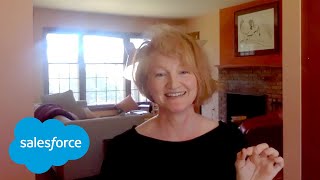
Transcript of a live conversation hosted on the ‘Be Well Together’ series featuring Krista Tippett. Tippett defines spiritual life as “befriending reality,” discusses emotional and spiritual practices during crisis (naming grief/fear, cultivating solitude, body-centered practices, ritual and poetry), recommends readings, and answers audience questions about sustaining spiritual life and listening with curiosity. The conversation emphasizes embodiment, community responsibility, and distinguishing essential vs. non-essential in this moment.
Chapters
Hello.
Welcome again to another great edition of Be well Together. I am just so delighted that you continue to prioritize your own wellbeing. This is amazing. And we are going to have just an incredible conversation today. I really want to acknowledge that our guest today is partly coming to us through our great partnership with our equality group, Faithforce, and give an extremely warm, warm welcome to our guest, Krista Tippett. For those of you who do not know Christa, she is a Peabody Award winning broadcaster. She is a New York Times best selling author. She is the founder and CEO of the On Being project. And where I am kind of geeked out on her for she is the creator and host of radio show and podcasts On Being and Becoming Wise. And if that is just not enough to like, really add a pep in your step for being able to participate in this conversation today. She also was awarded the National Humanities Medal by then President Barack Obama.
So.
Wow. And so today she's going to be talking to us about emotional and spiritual well being in a time of crisis. And so, Krista, we just could not be more delighted to welcome you today.
Thank you, Jodi. And I was so delighted by this invitation and so impressed by the thoughtfulness of the program and honored to be with all of you. I wanted to actually start by talking about what my definition of spiritual life is, which is actually befriending reality. I don't think that's necessarily the image of spirituality people have. And you know, sometimes it's a mountaintop experience and sometimes it's a mystical experience. But for me, what is interesting and meaningful about this part of life is how it, how it works in and through the raw materials of our lives. And those raw materials right now are extraordinary, right? Extreme, intense. We're all living with, we're all living with fear. Whether we're consciously carrying that or not. Many of us are living with grief. And if we're not living with grief of particular people we love who are ill or dying, I think for speaking for myself, I'm living with grief for the world and for people I don't know every day, you know, these days kind of flow into each other. I literally forgot what day of the week it was like last week. They have ups and downs, often in the same day. And I think many of us also feel like we're working harder than ever before in a moment in which everything ahead feels uncertain. And I guess I want to say that I think a big piece of the spiritual work right now is letting all of that be true. Like Naming it, letting it be true. We haven't been very good in this culture kind of in modernity and in our complicated lives at not needing to put on a good. Needing to, you know, not needing to put on a good face of really telling the truth about how messy and uneven reality is. And one thing I've learned from my conversations with wise spiritual teachers across the years is that there's this layer of stress we add, which is the layer of the stress of wishing this were not true, wishing this would go away, and that there is actually a peace and sovereignty to be found in dwelling with reality as it is and not as we wish it to be. But that's really a muscle we have to learn in this culture. And so I want to talk about. I just kind of have three ways to lean into that that feel very simple, but they're about. And in some ways they're about remembering things that we've always known to be true in our bodies, if not consciously, but that memory is kind of a practice. And one of those things is that, yes, we are all in this together, which is an extraordinary experience. And we're all in this alone. We're all alone in this. And that is true if you are living alone. And it's true if you are living with four children and an aging parent and a partner and three dogs. We have all through this virus then sent inside. And that is literally physically. And it is also sent inside ourselves. And this is also an unfamiliar place for us to dwell in this culture where we are so busy and where we so focus on and get so rewarded on what we do. And I think one of the great, you know, it's actually something I feel we're forced to do, but a great opportunity of now is to tend our inner lives. You know, some lovely ways to speak about this, I think are, you know, becoming at home in yourself, becoming at ease in aloneness. Solitude and aloneness have always been wellsprings of human well being, of creativity. And so, you know, and it's true, and it's true for me too, even living alone, that these days are very busy and crowded on the one hand. But I think it's more important than ever before to try to create some space to tend your inner life, to tend that you at home in yourself. I know Buddhist teachers and practices in meditation are very much out there right now. One reason for that is that Buddhism as a tradition has had this laser focus on us being quiet and becoming at home with ourselves, making friends with our minds. But I'm Also really aware that for many people, that's not your mother tongue or homeland, even though that mother tongue might be rusty. And I think there's so many ways that we can tend this with rituals, with reading, with breathing. Whether you call that a meditation session or just your breath connects your body and your mind. And even if you can take five minutes, even if you can take three breaths, in and out, there's something about the out breath, the teachers say, that kind of reveals the peace. What is the language, the kind of ordinary piece of your mind. And just to feel that, to do three breaths. Poetry is something that people are reading and rediscovering all over the Internet. And I also think that one reason for that is that poetry is also something that connects our minds and our bodies and our spirits. It speaks to us in that place where those things are an interplay. And you can find poetry everywhere. And there's a reason that the sacred traditions have always had poetry at their heart. So. And then the other thing that we're. I think a lot of us are learning and that I really want to affirm. Well, let me just say this, that I think there are two lines of wisdom that are with me as I think about that. And one is from John o', Donoghue, who was a poet and a theologian, who said is a line of a blessing he has, which I've been remembering at as be exceedingly kind to yourself. I just looked it up and actually what he said is be excessively gentle with yourself, whichever one. That is something I've been carrying around with me. And that also tends to the fruitfulness of our aloneness and to the worthiness of tending to that. Another line that I've been carrying around with me is a line of poetry from Mary Oliver, which may sound much less spiritual, but let the soft animal of your body love what it loves. I think one thing a lot of us are also experiencing is that it is in physical activities like gardening, like walking, just being outside. I don't know. I'm also really looking forward to my very sweaty workouts at 6pm every day that I do in my living room. And I want to say that one thing that has surprised me in delving into this part of life that we call spiritual in these recent years is how it is absolutely always comes back to our bodies. I'm not really interested in spirituality anymore. That's not embodied. And this is another bedrock reality that we have had a lot of inventive ways in this culture to forget that everything begins and ends in our bodies. And this virus, this crisis, is just bringing us back to this truth. I thought I might read a paragraph or two from something I wrote about this in the book I wrote a couple of years ago. Becoming Wise. Our bodies tell us the truth of life. That our minds can deny that we are in any moment as much about softness as fortitude, always in need of care and tenderness. Life is fluid, evanescent, evolving in every cell, in every breath, never perfect. To be alive is by definition messy, always leaning towards disorder and surprise. How we open our clothes to the reality that we will never arrive at safe, enduring stasis is the matter, the raw material of wisdom. So many of the wise teachers among us apprehend truths of life from an edge of illness or crisis. I have heard this story in so many forms across the years where the view is suddenly so stark and so clear. They come back wounded and more whole than before, all at the same time. Not cured, but healing and embodying mystical ideas that seemed strange as abstractions and turn out to be common sense. The core of life is about losses and deaths, both subtle and catastrophic, over and over again, and also about loving and rising again. The cancer, the car accident. These are extreme experiences of other trajectories we're on. Aging, the loss of love, the death of dreams, the child leaving home, grief and gladness. Sickness and health are not separate passages, they're entwined. And they grow from and through each other, planting us if we'll let them more profoundly in our bodies, in all their flaws and their grace. And I think that's a trajectory again that we are all on now, together and alone, with an intensity that is extraordinary and terrifying and will change us and will potentially change us, I think, in this way to become more whole. I want to finally just offer that I think in terms of leaning into this work of befriending reality, very taken with this language we're learning in our culture about essential and non essential, right? And it's an economic distinction we're making. I think it's a civilizational distinction we're making. And I think it's a spiritual distinction we're making. It's so important that, you know, I believe we are going to have to remake the world after this. I think we're going to remake our companies after this. And I think that one of the. I think that our investment in this time intending in befriending reality and becoming at home in ourselves and part of that in being our own personal exercise of distinguishing between essential and non essential what are we learning about being whole right now, about what actually matters and really carrying that question of what we're learning right now that we want to hang on to on the other side of this, I think the other important thing is really to let yourself experience it, it to be true that whatever you are doing, whatever you are going through, however you are holding it together is enough right now. That's your part. I want to read a poem before then we open it up. I don't know if this is the right poem to read, but I think this poem speaks to how we haven't necessarily taught ourselves or our children that difference between essential and non essential and the opportunity we have to remember that. And I like using the word remember in two ways also including putting a hyphen between that re and that member. And that speaks to the fact that it's our spirits and our bodies with which we put these things back together. This is a poem by Brad Aaron Maudlin, who I think is from Missouri. It's called what yout Missed that Day when youn were absent from fourth grade. Mrs. Nelson explained how to stand still and listen to the wind. How to find meaning in pumping gas, how peeling potatoes can be a form of prayer. She took questions on how not to feel lost in the dark. After lunch she distributed worksheets that covered ways to remember your grandfather's voice. Then the class discussed falling asleep without feeling you had forgotten to do something else, something important. And how to believe the house you wake in is your home. This prompted Mrs. Nelson to draw a chalkboard diagram detailing how to chant the psalms during cigarette breaks and how not to squirm for sound when your own thoughts are all you hear. Also that you have enough. The English lesson was that I am is a complete sentence. And just before the afternoon bell she made the math equation look easy. The one that proves that hundreds of questions and feeling cold and all those nights spent looking for whatever it was you lost and one person add up to something.
I love that. Tell me again who, where, what, what was that?
It's Brad Aaron Maudlin. M O D L I N and the poem is called what you missed that day you were absent from fourth Grade. And here's the thing, we all miss that in fourth grade. And the deeper reality behind this poem is that the truest and most life giving things we always have to learn on our own. But I think we could do a better job of stressing and indulging in what is essential versus what is non essential.
I mean, Krista, one of the Things I love so much about your podcast is all of the art and the literature and the poetry that you bring into it. And you know, that feeling that people have been thinking and ruminating on this for centuries. This is not ours to just try to shoulder ourselves, that we can really lean into those, those writings. And boy, as the mom of a fourth grader and apparently the someone who also missed that day in school, that's a really powerful reading. I'm curious to know what are you reading right now because you always have such great, amazing recommendations. And what other readings might you recommend to our audience?
Well, I'm reading. I want to say that I read very beautifully literary, well written murder mysteries to take my mind away.
Okay, good.
I want a world without murder, but not without murder mysteries.
Understood.
We have to have our creature comforts. And for me, a good mystery is one of those great. The soft hand all over my body. Loves that. I also have been reading. I'm always rereading Pema Chodron's book, When Things Fall Apart, which I very much recommend because things are always falling apart. Like we really know it right now. But in fact it happens in large ways and small all the time. It's in a fantastic book. I was also reading that because I just did an interview with somebody where we just read passages, our favorite passages to each other and we'll put that out on the air. I was reading Jane Goodall because I was supposed to interview her. And one of the really amazing things that felt. I'm sure I wouldn't have noticed reading her if we weren't in this crisis. This may sound funny, but when she talks about one of the things we learned about primates, our ancestors, is the importance of grooming. And, you know, I think, you know, one really mundane way a lot of us are rediscovering our bodies is like rediscovering our hair color. Also what I'm realizing, like, I also think like these. We were on the verge and we'll get back to the verge somehow of this thing that I said about, you know, our spirituality is also in our bodies. And it's what we have, you know, our yoga studios and our exercise studios and getting your nails done and getting your hair done and getting massages. You know, when you read about the animal kingdom, this is also social touch. So that feels very poignant right now to think about and how are we going to do that after social distancing and how long is that going to last? But I don't know if that surprises you about what I'm saying, But to me, those are spiritual questions, too.
Yeah.
No, I think that's about who we are to each other as well as what it means to be human. And those two inquiries, which we live every day are absolutely interrelated. And this virus is also bringing that home in a new, strange, unexpected way. Yeah.
I've really appreciated through all of this how it's really rekindling our need to reconsider our relationship with the planet. And, you know, it's. This is hep. Tomorrow is Earth Day. And, you know, the narratives are high around environmentalism and activism already. But, yes, being able to hear from people like Jane Goodall and others is very powerful. You know, a slightly different direction. But something I'm very curious to get your take on is I feel like people's fears and their anxieties, they. You know, it can really bring out greater divides among us about understanding what is really true. Who do we really want to be? And I was really struck this weekend by a lot of the protests that were happening around the United States and about how do you think about the need to kind of reconcile the needs for individual rights and beliefs in a time when I feel like so much of this, so much of us, our success and getting through this and getting to the other side is really dependent upon community. And it's just kind of an interesting thing. And I'm curious to hear from you, from a belief in a spirituality and how we reconcile the individual path and the community.
Yeah, well, there are so many questions there, and this is the way I think about that and try to orient myself to that and try to think about what a response would be. I think, you know, we think about our spiritual traditions being about God or transcendence, but they actually are these incredible repositories of very sophisticated wisdom about the human condition, how complicated we are, and what I see, what I. What I try to ground myself in when I see that, you know, anger is what fear looks like when it shows itself in public. We have not. We don't allow ourselves. We don't carry fear on our sleeves, like, to make it strong, to make it respectable, to make it heard, we turn it into anger. And I actually think this practice, this developing this new muscle, first of all, taking a breath and trying to actually feel the fear that is underneath a lot of ways that we act out, actually just trying to feel that fear, that. That element. Right.
Kind of getting back to what you were saying about getting home in your.
Body and imagining and understanding that in people who are out there with their fists raised. And I have to remind myself that a lot of those people are absolutely terrified of losing their jobs if they haven't already. And I'm not saying that that doesn't resolve this issue, but I actually feel civilizationally and spiritually, if we don't let that be in the room and let that be part of our analysis and our response, also in terms of policy, but also one human being to another, we will not. We will not rise. We will not evolve beyond that.
Yeah, yeah.
And it's also a way to watch that, I think, and not get as angry yourself if what you realize you're watching is raw fear that has no way to show itself and be taken seriously or feels that way.
I think something that you do better than just about anyone is you're just such a great listener. I feel like a lot of this divide and the fears and the anxiety, I think, and the fact that we are all going through this alone, alone and together, but alone. I'm curious, maybe some thoughts that you would have about how we can all evolve into being better listeners and to being more empathetic for one another.
You know, listening has curiosity at its heart. And I don't think. I don't think I was raised to listen. I actually don't think we've been raising people to listen. We've raised ourselves to be advocates. We've raised ourselves to be good presenters. And there's a need for that. But, you know, if I think about what I learned in fourth grade and in 12th grade and in college about listening, it was being quiet while the other person says what they want to say so I can get around to saying what I have to say. And I don't actually think. I think quiet is a byproduct of listening. Listening is about being present. It has real curiosity at its heart, and it has a willingness to be surprised at its heart. And you can't fake those things, but I think they're virtues. And so I think part of us becoming better listeners is in any situation like this, you know, talking about things or people we may react to. What does it take for you to get quiet in yourself and actually get curious? Really get curious, really want to. Really want to know what's going on inside them, really be willing for them to surprise you with their. With how they show up? Those are the muscles. It's almost. It's like. It's not. We just need to go back behind the listening and flex some of those muscles to start to be present to each other. The one thing I know is that, you know, it's also the quality of your questions. My experience is that answers rise or fall to the character of the question that's asked. And if it's combative question, if it's inflammatory, if it's an embarrassing question, you will get a corresponding response. So what does it mean? Even in especially intense situations, we're really confused to ask a generous question and with that invite a generous response.
I love that.
Thank you, Katherine. Do we have any questions?
Can we squeeze another one in here?
Yes. So I have a question from Farah Siddiqui, who's actually the president and co founder of our Faithful quality group at Salesforce. And she asks. There's a lot of religious holidays in April that people are observing in ways that they never have before. And it's been hard on a lot of people's spirits. So do you have any tips on maintaining spiritual well being and connection during this time of isolation and anxiety?
Yeah, I really think finding carving out some space in your day, in your everyday and as I say, what is your mother tongue? What is your spiritual homeland? And it can be poetry. And I think it needs to have the feeling of ritual. And I think that ritual is actually something that we meet as creatures and that's one thing that our traditions have carried forward for us, this intelligence about us. And of course that communal ritual is not possible now, but making some rituals and you know, the thing about spiritual practice is it's not about succeeding or failing. And you may sit there for 10 minutes to read or to be quiet and breathe or to do a headspace meditation or whatever it, you know, I don't know, lighting a candle and you may be distracted and feel terrible the whole time and that doesn't matter, right? It's about turning up, it's about giving yourself that time and it will work on you from the inside for the rest of your day, even if you feel that nothing happened. So that's just a tiny, like preserving and really go back to those sacred texts that mean something to you, those teachers who mean something to you. They're there. As you said a minute ago, Jodi, like the teachers across the ages are there for us. And all of this task of being human in this technicolor moment is now ours to make our own, to add to that wisdom, to that story, to what is possible.
Amazing. Thank you so much for your time. This has been such a gift to us. We are very, very grateful for you.
It's a pleasure and an honor. So I wish Everybody sounds so trite to say a good day.
Yes.
No, it can mean today. I wish.
Whatever that means for today. Yes. I always say be happy, be healthy and be well. And we will talk to you again soon.
It's enough. Whatever it is, it's enough.
It's enough. It's enough. And this has been enough.
Okay, thank you everyone. Bye Bye. Bye, Sa.









