Equality at Salesforce w/ BOLDForce UK | Leading Through Change
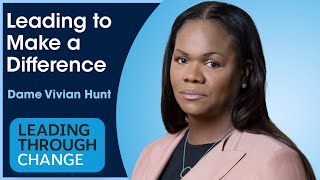
Dame Vivian Hunt from McKinsey discusses how data and platforms drive systemic change in racial equity. Corinne Bailey Rae talks about her creative process and challenges as a Black woman in music, with a performance of "Put Your Records On."
Chapters
Sa.
This is Nisha. This is her customer Beth. And this is where Neisha goes to focus. She calls it her Beth tub.
But this is.
Sorry.
Pretty distracting.
I have to sh. Sorry, sorry, sorry, sorry.
That's why Salesforce Customer360 helps you focus with a single view of your customer like Beth.
Hi. Black History Month is an annual celebration and observance originating from the United States of America in the early 1970s. Throughout time, governments across the world have come to recognize its importance, resulting in its becoming an official month in the UK in October in 1987. Since then, it has been observed and celebrated every October in the uk. Black History Month is a time to shine a light on our shared British history and is also a time to look forward and celebrate the here and now and the future possibilities. Hello everyone and welcome. I'm Sinead and welcome to another one of our leading Through Change episodes. This is a series that we launched way back in March of 2020 as the world was shutting down due to the effects of COVID 19 pandemic. In the 18 months since then, we have endured not just a health crisis and an economic crisis, but a racial equality crisis as well, institutionalized by racism that has just been laid bare with young black men stopped and searched 20,000 times in London alone during the coronavirus lockdown, along with black MPs, black barristers, senior police officers, sports people and many more. According to the official figures published on the London.gov website. Following the murder of George Floyd, Black Lives Matter protests around the world sparked a commitment among many individuals and organisations to educate themselves about black history heritage culture as part of understanding the racism and standing in solidarity against it all. This is a special episode brought to you in collaboration with boldforce uk, a community dedicated to creating an inclusive environment for Salesforce's black employees through community building, mentorship, advocacy and engaging our allies. Before I hand it over to our amazing President and Chief Revenue Officer Gavin, I want to preview the next hour. Gavin will be interviewing Dame Vivian Hunt, senior partner at McKinsey where we will learn about ways we can lead and make a difference during these unpredictable times. We will then be treated to a special conversation and musical performance with the incredible two time award winning Grammy singer songwriter Corinne Bailey Ray. That's so exciting. I can't wait to watch her perform as we do at Salesforce. We are passionate about giving back. That's why we are so proud to support Teach First UK which is a UK charity, an education charity with a mission to build a fair education for all through a range of school leadership programs. The charity supports teachers, leaders and schools facing the biggest challenges serving the most disadvantaged communities across England. The charity has now recruited over 18,000 teachers and leaders, has over 85 head teachers in their alumni and has supported over a million pupils. We would love you to join us where you can to donate@teachfirst.org now without further ado, it is with great pleasure to hand over to Gavin, our host. Over to you, Gavin.
Thank you so much, Sinead. I'm delighted you are here to introduce this session as a representative of Boldforce uk and I'm particularly excited to be here today in my role as executive sponsor of Boldforce UK this year, I've spent time with the team to listen to and understand the challenges that black British communities face. I've also been working with the team to learn more about the mission of Boldforce UK and the opportunities we can embrace as a company. I'm proud to be an ally and I believe today it's never been more important to be a strong and vocal ally for our minority communities. I'm also honored to be able to introduce Dame Vivian Hunt as our guest today. These conversations are designed for each of us to learn from each other and lead through these challenging times. This past year has tested all of us in so many different ways and there is no one better qualified than Dame Vivian to help us navigate and understand these challenges. Dame Vivian Hunt's professional journey has taken her from expanding midwifery services in Senegal to help private, public and third sector leaders across the globe strategize and transform during extraordinary times. She is also a powerful advocate for non traditional voices in the corporate world and is a leading voice on stakeholder capitalism and a firm believer that the future of business lies in its leaders learning from and responding to the unique needs of all of its stakeholders, not just its shareholders. We have all lived through a period of extraordinary change since the pandemic impacted all of our lives more than a year ago. Today I want to ask one of the business world's leading thinkers for her perspective on all of this. Dame Vivian, thank you for joining us and welcome.
Gavin, it's a pleasure to be with you and thank you for your generous effusive introduction. I am really looking forward to our conversation.
I'm honored and delighted to have you here today and it's fantastic that I can not just get a chance to interview you, but I'm absolutely proud to call you one of my friends.
Absolutely.
I'm going to start talking about your early career if that's okay. Now, in those early days, I think you had such a fascinating start to your career. After university, you joined the Peace Corps and worked as a midwife in West Africa. So I'm particularly interested to learn how those early experiences shaped your subsequent career path and outlook.
I do think learning about choices that you make early in your life or influences on your development really do matter because they shape your values, they shape your motivation. And when I finished uni, I was exhausted. I had worked really hard in school and delivered great grades, Had a really fun experience, probably too much fun, if I'm honest, but it really was intense. And so, you know, I was 18, 19, 20 years old, but felt like I had just a world of responsibility on my shoulders. And I thought that the world of work would be there whenever I got to it. So my motivation for going to the Peace Corps or the Corps volunteer, you know, wasn't terribly noble. You know, I was not trying to save the world with my two hands. I just wanted to live and work in a culture that was predominantly a black and ethnic minority. My education was very high quality, but it was in majority white mainstream organizations. I wanted to learn a new language, and I did, you know, speaking Wolof and French and the other many dialects that are spoken in Senegal. And I just wanted freedom, probably in a cultural sense, to do things differently. Now, of course, when you make those choices, you end up getting much more from the experience than you put in, because I was qualified to do nothing, midwifery least of all. But what I did learn from the overwhelming gap in services that you saw on the ground for mothers and children, my own lack of skill, but the medical system as well, a centralized hospital system when you needed to be decentralized for home births, which is where 80, 90% of children are born in Senegal. And so it was a really tough two or three years, but I learned a lot about how important it was to have changes at scale, that you could do an incredible amount of good work with your two hands, but it would not change the system. Or at least in my case, it did not change the system. It was only when I worked with other volunteers, with our team of infirmiers and doctors, with the government that was the major payer for health care services there, as it is here in the uk, that we were able to make some really big changes. And so by the end of that experience, I wasn't, you know, as my grandmother would say, birthing any babies. I was working on health system change and ended up working in health care and the social sector for the next, I would say 15 or 20 years. It really, really shaped my choices, but it gave me a dose of reality and humility that I doubt anything else could have done.
I want to talk a little bit more about something you've talked to me about before, which is about driving positive change. You've always lived with a sense of purpose, which is something I so admire in you. And you've previously spoken about the civil rights movement, your godmother, Mimi Jones, and her belief in Good Trouble, which is such a fabulous expression. Actions, not words, driving positive change. So talk to us more about that.
Well, my godmother Mimi, of course was my parents choice. You know, you think about if you have kids or younger people you're looking after or mentoring when you choose a godparent, or you think about the friends you expose them to, those are the other adult influences you want in their lives. Maybe they can say and do the things that you can't as a parent. And so my parents choice of Mimi was very wise. She was extremely active in the civil rights movement in Georgia. She left school at 16 to participate in that in the 60s. Good trouble is the biography of John Lewis, the representative who passed away last year. And she was a peer of his and was really just on the front line. And I always so admired her courage at such a young age. But my parents were also very, I think you would even say activist and militant. You know, they were black first generation university graduates who dealt with all of the racism and barriers that comes with that. My father had a good career in the military, but it wasn't a great career. And he faced a lot of racism and barriers in his life experience. And so our parents never wanted us to be complacent about the fact that just because we had better opportunities than they did, that those were to be taken for granted or were not won through real battles and challenges. I mean the voting rights legislation in the US as an example only came into being in the late 60s. So my grandmother only voted for the first time in her 40s. And so our household was one where they took academic performance and excellence very seriously. My dad was, and my parents were super strict that the minimum they expected was, you know, excellence in what you applied yourself to. But equally important that you didn't just do one thing, you couldn't just deliver your grades and not do your chores. So as a professional, I've always thought of myself as working on multiple arenas at the same time. I'm not going to wait till I'm 50 or 60 or 70 to begin doing good in the world. You had to do it all along first, because tomorrow's not guaranteed. You could be just hit by a truck tomorrow and what would you want people to say about what you've done? And two is the privilege of the opportunities we'd been able to tap primarily because of our education and having seen the world through my dad's travels as a military family, that we just had an obligation to give back. And so my parents just really instilled that in both my brothers as well as me. And so as a professional, I don't think of it as doing, you know, it's not to me, it's just trying to. Well, I suppose just trying to shape and contribute to multiple arenas at the same time.
Let's talk more about equality and opportunity now. Now we've seen during this pandemic how the conversation about racial equality has really come to the forefront. How do you think this conversation has changed in the last 18 months?
Well, I mean the a murder of George Floyd, the globalization of that event and the ability for all of us to look at that injustice and be empathetic with the individual and the family, be empathetic with the basic power imbalance between the police and those who are subject to their responsibilities. And you think about what's happening in the UK with Sarah Everard and the injustices around how women are treated, it's the same issue. It's about power and institutions and how do underrepresented groups or poorly understood groups navigate. And I just really think there was a global empathy and response and care that the brutality of his murder, which was later obviously validated in the court case, was something that none of us could turn away from. And I literally would see my son, you know, who is about six, three, he's about George Floyd's complexion and if you turn his face towards the wheel of a tire and put, you know, something on his back, that could easily be my brother or son or neighbor or colleague. And so all of us saw that humanity. And so it was a terrible event, but a hugely important. It is a. It's a loss that will change the world because it allowed business leaders a vocabulary, a responsibility to commit around inclusion and anti racism in a way that they simply hadn't done before. I first published research about women in the workplace in 2007 and ethnic minorities at a McKinsey Institute scale, sort of global research in 2015. And back then, Gavin, I would say half of companies would say that they had some responsibilities for social purpose. And that included the environment, by the way. Fortunately, Salesforce was one of the companies that was and has always been leading in that area. But not every company has. Today that's over 90% of companies, no matter what geography or context they're in. So the conversation that we had whilst also together in this shared pandemic, I think just gave business leaders a responsibility, but an opportunity to commit in new ways. The second big thing that we had in 202021 that we didn't have in the 1960s or the 1980s was data. We had the ability to look at what system effects are happening with black British experience with ethnic minorities around the world. We could compare them very quickly. And so when you took the dis, well, when you took the uneven Covid effects that we were seeing for frontline workers, women impact on white collar jobs versus blue collar jobs as examples, and you overlaid ethnicity and economic background, poverty and ethnicity on top of that, it told a really startling story. You combine that with the injustice of, let's say, uneven or unfair policing and I just think everyone said this can't continue this way. None of us, Gavin, not you or me, are the generation that created these biases. But I think it collectively woke us up that we actually have to take some responsibility for addressing them.
So true. I want to talk more about the dual role of doing a good job and doing good in the world as the world starts to reopen. Just how actively is business leveraging this unique reset moment in history to drive a purposeful change and a quick follow up as well? How can we as individuals and leaders be excellent in our jobs and also be good?
Well, let's start with the institutions because as the previous examples illustrate, the context you're in really matters. What school you went to, your health status, underlying health connections, school skill positions, things that are, yes, some things you can contribute to, but they really impact how you're received in work. And therefore companies have a responsibility and can impact those outcomes. And it's important because you know, Gavin, as business leaders, you don't want to work on something that you can't make progress on and deliver a goal. So if you take one of McKinsey's objectives, we want to double black leadership over the next four years, or you take representation of veterans or people of different abilities in the workforce. If we work on it for five years and we don't make any progress, we're going to stop working on it. And I think this issue of equity of outcomes in the workplace felt like something that was just too big to handle at work or it didn't have anything to do with the professional environment, you know, that was about your home life or maybe your background. And what we're learning is where you live, where you were educated, your health status has a huge impact on your outcomes at work. So I'm not saying that you don't focus on these issues because they're the right thing to do. You should. And some companies frankly always have. But now I don't think any CEO or business leader would say that there's not some aspect of their environment, social media or governance agenda that is trying to have better outcomes for at minimum their employees and their broader community of customers, supply chains and the broader community. And that's why the TED talk that I did on stakeholder capitalism, which was just a year ago this month, really tried to talk about how we can use data and insight to understand stakeholders so that you can manage it, so that business leaders can actually deliver on or honestly Gavin, just make progress. You're not going to be perfect but try and make progress on some of these things using data and not feel so overwhelmed by this weird combination of an extremely worthy, worthwhile goal which can be a little overwhelming for a business leader and no idea about how to make progress against it. Today we know that there are ways to de bias and help with let's say promotions to have more diverse appointments and leadership progression, to actively build in more role models, to use platform to get more reach. So we know there's a lot we can do as businesses. I'll come back to the question about individuals in our conversation but I just want the members of Salesforce and Bold Force in particular to be very confident that when business leaders put these things into initiatives within Salesforce within their operations, that's when you see the progress. Now for a company like Salesforce that has always been very purpose led and yourself, Gavin, in a global context and certainly in the UK and Marc Benioff on a global stage, have always been leaders around issues of multi stakeholder capitalism and that businesses should do good if I put it really simply. But if you look at the companies and business in the community, bitc, which is one of the first organizations that really organized business around what we used to call social engagement. We've been working that for 40 years. Some companies have already been in this space and have the muscle and the experience to give other companies confidence. When a Salesforce leads and the cloud and platform business area, it tells me that other technology companies can lead. When Starbucks innovates around its hiring and economic metrics and performance metrics for its executives as an example, it tells other retailers and merchandisers that they can do it as well. Companies who lead play a particularly important role. Leaders in their sector as well as leading on performance gives the rest of the industry confidence that they can do it as well.
Can I follow up on that question? As you say, it's not about compromising, it's about driving financial results and a positive business agenda hand in hand. So how aware do you think boards are of this, in particular senior leaders? Is there still a major shift that's required in people's mindset?
Well, I would say yes and no. We look at a five year data set and when you ask CEOs and business executives, I think five years ago 40% of them would say equity and diversity and inclusion as a business issue mattered. Today that's over 90%. You look at what has happened on sustainability and the environment, you know, that's transformed and is now really going to almost a market forces, you know, a market influence level as we'll see in COP26, where we're trying to build it into all aspects investment, business operations, outcomes. And so personally, I think diversity, equity, inclusion is going to take a similar journey that the environment has that it will be recognized as a business issue. There'll be evidence against that. But the magic comes in matching what you do as a company with an element of the business agenda. And a really good example of that is PayPal that simply picks when it separated from its previous parent five years ago, it simply picked its employees. You know, really delighting its employees and being first choice in their space. And from that a really big insight was revealed that many of their employees were not making great savings and investments, even working for a fast growth company like PayPal, even those who had stock and that they could do a much better job at helping support household income. And that one idea has led to multiple initiatives. So again, it's just an example that you can make it concrete by focusing on one or two specific areas.
So my final question, Vivian's about platforms and the ability to scale. Now this is something you and I have spoken about before and how to create real impact. We need to be able to scale digital platforms themselves provide us with this opportunity, no question about that. And technology can be a great equalizer. So how are you thinking about this and what opportunity do you see?
As I said right at the start, one of the things I learned really early was that you could have more impact working through systems and institutions. If you channel them towards good business approaches and good outcomes. And that could be a way to reach more people and just do more good. The same is true with businesses and this responsibility that we have to think about what is our purpose, how are we delivering on that, of course profitably for our shareholders, but also effectively for stakeholders whose needs are going to change. And so technology platforms in a way provide the base environment on which we have to make decisions about what businesses outcomes issues we're going to follow. Being on a platform in and of itself doesn't change the world. It's what conversation do you have on that platform, what outcomes do you deliver? And so I really like the idea of businesses thinking about scaling their initiatives around business productivity, business impact in the community and positive outcomes around E, S and G, but using much more leveraged capabilities, not just big businesses, but ones you can really reach. And that's why technology platforms are such critical enablers of hopefully good outcomes, but we also know they could be bad outcomes. The second point is there are some problems that you can't fix on your own. If you think about the UN Development Goals, they are specifically speaking to issues that are so cross cutting and foundational. Food poverty, food waste, technology access, access to minimum standards in health care, clean water, justice for women's representation. They're speaking to issues that frankly no one company can solve. And instead of thinking, oh, this is too big for me to solve, even as a leading company, you get together with your friends. If you've got a piece of furniture, Gavin, that's too heavy for you to lift on your own, you call a few mates and you guys lift it together or we do it together. And the same thing's true with platforms. So some things you scale and platform through your own business with particular responsibility for leading businesses. But then other problems that you need to solve, we have to get together and solve them as a system. And Paul Polman has a really interesting organization called Imagine, which really tries to get together sections of supply chains to work on problems around materials used, waste, etc. Similarly, business in the community in the UK, which you chair and we work on together and have worked on for many years, is specifically organized around, for example, skills improvement. How can we systematically improve skills for people who are trying to find their way into work, whether it be at 16, 26 or 66. And so that is the other point I'd make about platforms, that not only can we use our businesses more effectively with technology enabled platforms, moving to cloud, hybrid cloud, but scaling our capabilities, but also we can work more easily with other players in our industries and across the supply chain to do things that we never could do before. And I just find that very motivating and exciting if we make the right choices.
Well, that's all we've got time for today. So thank you, Dame Vivian, for taking the time to be with us and for sharing your insight and perspective. And so it's back to you, Sinead, to take us to the next part of the program.
Thanks, Gavin. Thank you, Dame Vivian Hunt, for that insightful conversation. Today gets better and better. Not only did Dame Vivian Hunt bless us with her expertise, we have the cherry on top with hearing from the amazing Corinne Bailey Ray. Now, you all know the drill. If you want to see today's musical performance and interview, please go to Salesforce Live right now. That's salesforce.com live. So if you're watching us on Twitter, head on over to Salesforce Live right now. To Repeat, it is salesforce.com live. So we'll be waiting for you there.
Sa.
Welcome back, everyone. And guess who we have today. So we have Corinne. Welcome, Corinne. And thank you so much for joining us on today's special episode of Leading Through Change. I would really love to chat a little with you about your journey before you bless us with your pre recorded performance today. So let's kick things off. How are you today?
I'm very well, Sinead. Thanks so much for having me and thanks for letting me be part of this amazing event.
Thank you so much for joining us. And I just the first question that really comes to mind is all around inspiration. Right? So, you know, what inspired you to branch out into your career? You know, where did you find the love of music and at what age did you realize you had a gift of songwriting?
Well, I've always loved music. You know, to me, music was this way of being myself but also being a sort of freer version of myself. You know, I got to play in orchestras. You get to meet people and you get to go places you've never been to before. And, you know, it just gives you these kind, these wings, I guess, music, you know, So I was in orchestras, I played the violin. Then I was in choirs. Then I started a band. And I love that thing of having an idea and it being inside my head and then sharing it with our small group and being, you know, inspired by one another and seeing what the possibilities could be. It seemed to be this exponential thing where, like me plus a bunch of people made it so much bigger than I could imagine. And then having the energy of being in front of an audience and seeing their response. I think I caught the bug of that when I was really young, you know, sort of doing things, town hall concerts or school performances. And then with my bands, you know, I could play in pubs and clubs. And that was the start of it when I really thought, I would love to do this as my job if it's possible.
And it's just so amazing because here you are today, you're living that dream. And I suppose, like off the back of that, then, so, like, how did you navigate through the music industry? Especially, of course, also being a woman of color. Like, what challenges would you say you had to overcome, if any, during that journey?
Well, I mean, it's funny because the music industry, in terms of in front of the camera, in front of the microphone, obviously, is a very well explored space for women and black women especially. So I found amongst my peers lots of allies and friends and mentors. I guess a more lonely place for me would be sort of in boardroom meetings or in meetings where it was a place for me to work on my career and make decisions. You know, I was very often the only woman in the room. I was very often the only black person in the room. And of course, many, many times I was the only sort of black woman in the room. And, you know, I didn't really question it. That was just what the music industry sort of looked like when I first started, especially because I was with a label that was regarded, you know, as EMI as like the home of the Beatles. It was very much like it was sort of rock music. And, you know, we were hearing Dame and Vivian talk again about overlaying different figures and statistics. And I always felt, you know, very often I was someone who was working class in a background where most people weren't, or someone who was a woman where most people weren't. Someone who's black. Most people weren't. So I felt like I was always, I guess, subconsciously sort of proving myself. And I really took that for granted. It's only been maybe in the last sort of five years that things have started to look a little bit different. And also probably that I've started to feel like I haven't got anything to prove necessarily. Like I have done some work. But, yeah, behind the scenes it's kind of there are less people that look like me. And obviously in front of the camera, there's many people to ask advice of and who've gone before and laid the foundations of, you know, how to really engage with an Audience and write songs and shine and, you know, be yourself.
It is. And that's so wonderful to know. In terms of, like, you mentioned, you have your allies. You have a lot of people to lean on left and right. And that's really important because you're actually paving the way for the next generation that are looking to follow their dreams as well. And the album, the Heart Speaks in Whispers, so it really encourages people to listen to their inner voice. So, like, are there any key moments in your life where you've listened to your inner voice, which has enabled you to become the person you are today?
I definitely think writing the album was important for me because I had to think about, you know, how do I want it to sound? You know, I am a songwriter, I am a producer, and I think there's definitely pressure in the music industry to, like, work with this hot guy and work with this producer and work with this writer. And I've always really wanted to do it myself. To me, that's all the fun is like, making the music, making it wrong, changing it, getting the chorus wrong, getting the chorus right. So the fun of it really is that for me, so I guess that's another time when I'm making music, I have to listen to myself. But just through various challenges in life, you know, I think I'm someone who has to protect a lot of my sort of mind health and also my. My privacy. So I guess I'm someone who doesn't share a lot of things from my life. You know, I'm not someone who's on Instagram showing all these different moments of my life. And I think that makes you. It doesn't help to sort of drive your popularity, but for me, it's really important to. The thing that I share is my music and my heart, and I give 100% when I'm on stage, and I like to share when I'm in interviews, and then I like to just, you know, sort of close the door and retreat. And that's where I make, and that's where I make my art, and that's where I, you know, think about my life and grow as a person. So that's another important thing for me. Just, like, listening to my instincts in terms of what I share and what I don't share. And, yeah, I think all through my various challenges in life, it's been really important to just tune in and work out, you know, what does the heart want and what's the right thing to do in this situation?
Thank you. That's just such a beautiful answer. And it really encourages me to listen to my internal voice as well and follow what my heart is saying. So thank you very much. And I suppose just before we go off into the performance, just a quick one. Is there anything that you're really excited about over the next coming months? You know, anything that you would like to share with your fans? Because we're always waiting for something to come out from you. So this is your show.
Thank you. Well, yeah, I mean, I'm always working on new music because I'm a writer. I'm always like, if I'm on a train, look out the window, or I'm flying or I'm going for a walk, I'm always writing. So I'm close to the end of a recording that I've been making. That's a really different project for me. It's sort of in response to this art archive in Chicago. And so it's going to be like almost like a side project, but it feels very much where I am in my journey, which is allowing the things that truly interest and excite me to inform my work. So this record's not just about my experiences and my feelings. It's about how I feel when I look at a piece of art. What does this sculpture from, this black archive that's made from the floorboards from a prison cell in Chicago, what does that tell me when I'm looking at it? And all these different objects, I feel like they've had their own story. And I've been having a bit of a conversation with them. So it's been really fantastic to write work that doesn't come sort of start with me as a center. So I'm making that. And the main thing I'm looking forward to as well is just playing live in front of people. It's been a pleasure. It was a real pleasure to record the performance for you guys, because I haven't really done any online performances in all this period. So I feel like I've just got so much inside and there's so much I want to do and connect. And just before we started our md Acupunplay was like, no, just imagine all this team and everyone sat there and people sat in their homes and people getting ready. And I think it's important when you're a musician to allow yourself to get caught up in the moment. And that's when I do. That's what I do when I'm on stage. I let everything kind of fall away and, you know, I close my eyes and I just feel sort of transformed by music. That's really the reason that I got into it is it's a place for me that's kind of outside of time and outside of space and that's just full of kind of joy and inspiration and instinct. And whether I'm on stage in person or as I was when we recorded this performance, I just feel like I let the music take me and take me on a journey and hopefully the performance will be able to take you guys on a journey too.
Thank you so much. Thanks for your openness and for sharing these insights. I'm so excited to go on this journey. And yeah, we're ready for the pre recorded performance now, so hold on tight, guys.
Hey Salesforce, this is Corinne, Bailey, Ray and it's a pleasure to be with you. This song is called Put yout Records On.
Three little birds sat on my window and they told me I don't need to worry Summer came like cinnamon so sweet little girls they will dutch on the co concrete yeah maybe sometimes we got it wrong but it's all right the more things seem to change.
Why.
They stay the same oh don't you hesitate girl put your record on tell me your favorite song song you go ahead let your head down Stop firing faded jeans I hope you get your dreams Just go ahead let your head down you're going to find yourself somewhere somehow Blue as the sky sunb lonely 17 above the roadside Just relax, just relax don't you let those other boys you gotta love that afro handle. Yeah maybe sometimes we feel afraid but in so many all right. The more you stay the same all things seem to change ooh don't you think it's strange Girl put your record on tell me your favorite song you go ahead let your head down. I hope you get your dreams Just go ahead let your head down you're gonna find yourself somewhere somehow was more than I could take it's even really sake Some nights get me awakened I thought that I was stronger when you gonna realize that you don't even love to try any longer do what you want to girl put your records on say that you go ahead let your hair down 7ft of jeans I hope you get your dreams just go ahead head down baby let your head down. Just go ahead let your head down you're going to find yourself somewhere. Somehow. Thank you.
This song is for anyone who's ever fallen in love with a best friend.
Seems like everyone else had a love just for them. I don't mind we had such a good time. My best friend but sometimes I wish we could be more than friends. Tell me, do you know? Tell me, do you know? I get so breathless when you call my name. I've often wonder do you feel Feel the same? There is an energy chemistry I think when we're all alone. So don't tell me you can't see what I'm thinking of. I can understand that you don't want to cross the line. And you know I can't promise you things I'll turn out fine. But I have to be honest. I want you to be mine. Tell me, do you know? Tell me, do you know? I get so pre when you call my name. I walk on wonder. Do you feel the same? There's this camera chemistry energy A synchronicity when we're all alone. So don't tell me you can't see. Oh. Cause I tried to do this right in my own time. I've been telling you with my eyes, my heart's. Why don't you relax? Tell me, do you know? Tell me, do you know? I get so bright. Do you feel the same? There is a chemistry energy I think Felicity when we're all alone. So don't sell me you can't see what I'm thinking. Do you feel the same? There is a chemistry energy of synchronicity. So don't tell me you can't see what I'm thinking. That. When you call. My name. Name.
Thank you.
Sa. I wonder why. Just like a star across my sky. Just like an angel of the page. You have appeared to my life. Feel like I'll never be the same. Just like a song in my heart. Just like oil on my hands. O. Still I wanna my. I don't argue like this with anyone but you. We do it all the time. Blowing up my mind. You got this look I can describe you make me feel I'm alive when everything else is. O fade without a doubt you're on my side. Heaven has been away too long. Can't find the words to write this song. Oh your love. Still I wonder why it is. I don't argue like this with anyone but you. We do it all the time. Blowing out my mind, yeah. Sing it one more time. And now I've come to understand. The way it is is not a secret anymore. Cause we've been through that before. From tonight I know that you're the only one. I've been confused in the dark now I understand. Yeah. I wonder why this. I don't argue like this with anyone. I wonder why it is. I will let my God down for anyone but you. When do it all the time time blowing out my mind. Just like a star cross my sky Just like an angel of the page you have appeared to my life Feel like I'll never be the same Just like a song in my heart Just like oil on my hand.
Thank you. Thank you guys. Thank you. Thank you, Salesforce. Thank you for everyone. Thank you for being here with us. Hope you enjoyed it. And yeah, maybe we'll meet in the real world soon. Okay, thanks.
Bye. Thank you, Corinne, for that beautiful performance. It truly has taken my breath away. Wow. Thank you all for joining us today. I hope you enjoyed tuning in. You can find more of our leading through change stories@salesforce.com blog. Now, before we wrap up, one more reminder to join us in supporting the mission to build a fair education for all serving the most disadvantaged communities across England. If you can go to teachfirst.co.uk, and donate in helping this cause, that would really be appreciated. Until then, please take care of yourself and each other.
And now a mini meditation.
Inhale, serenity.
Exhale.
Whatever's happening here now bring your focus.
Back to your customer. Tom.
Tom.
Salesforce Customer 360 helps you focus with a single view of your customer.
Like Tom.
Who's Tom?
Sam.









