Equality, Inclusivity, and Speaking Out with Megan Rapinoe | B-Well Together | Salesforce
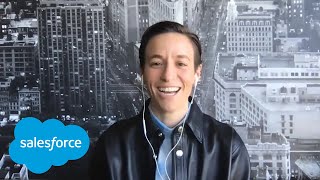
Megan Rapinoe talks wellness beyond the physical: mental, emotional, societal, and environmental health all matter. She discusses what it takes to sustain activism and the responsibility that comes with being a visible advocate for change.
Chapters
Foreign.
Hello, good morning, good afternoon, and welcome to Be well Together. Omg. We have a superstar with us today. You are going to score some serious time insights and wisdom with American professional soccer phenom Megan Ropinow.
Crowd goes wild.
Megan has claimed four FIFA World cup titles. She's helped the United States to a gold medal in the 2012 London Olympics. She is an unbelievable advocate and fighter and ally for all things around. Women's equal pay, gender equality, lgbtq. She's been inducted into the National Gay and Lesbian Sports hall of Fame. She's a co founder of awesome fluid sports street brand wear. She's amazing. She's all those things and more. And today she's here joining us on Be well to share her passions around equality and inclusiveness and really standing up and speaking out for what you believe in. I'm also really thrilled today that Gino Ramos has joined us. Gino is the senior manager of equality programs within the Office of Equality and he also co founded Out Force. So huzzah for these two coming together. And with that, I'd love to just hear from you, Megan. Welcome to Be well Together. Thank you for joining us.
Oh, my gosh. Thank you for having me. I mean, I'm bringing you everywhere with me. This is like ultimate, ultimate hype team. I'm just like going to the grocery store, going like, Jodi, go first. Tell them Megan's looking for eggs. Exactly, Exactly.
Yeah.
Thank you so much for having me on here. I feel like it's always surreal and always an honor and a privilege to be able to speak on such a platform like this or to have a platform myself and just be able to talk to people about my experiences. I say surreal because I just feel like everyone else, it does feel normal. I'm like, I don't really know why they want to here. For me, I know the things that I've done, but for me, I just feel like we're all sort of in this world together and people do different things and have different lanes that they're in. And I never take for granted the privilege that I have and the very special and exciting life that I've been able to live. This is really cool, though, to be able to talk about wellness. Such a. Such a hot word. I feel like such like a hot button word or like a trendy word. But like, what does that actually mean? I've been thinking a lot about that, particularly as the pandemic has hit. Wellness has sort of been kind of turned on its head in so many ways. I think a Lot of times when we think about wellness, you know, it's like a kale smoothie. It's like some yoga. Obviously, I'm a professional athlete, so for me, it's eating healthy, it's working out. You know, it might be going on like a gratitude walk or, you know, just like all these, you know, sort of, I don't know, hippie kind of crunchy, new age sort of things. But I had the absolute honor to speak with Deepak Chopra. It was about a month and a half ago. I mean, he's like a living guru, so that was just incredible in and of itself. But he talked about wellness in this way that I never really heard it before. And it's made me think a lot. So when I think about wellness, like there's multiple planes happening at the same time, right? You have your physical body. So that is going to involve, you know, eating well and exercising. And maybe you're doing a meditation or a yoga or breathing practice or some stillness or nature walks or whatever. So there's kind of those different elements to it. And even within your own physical body, there's these different planes. There's mental wellness. So how are we taking care of our mental health? Do we have a mental illness? Do we have something that maybe we need a little bit extra care in? Or are you just taking time to set aside this specifically for your kind of psyche? And that's the sort of yoga and meditation, and maybe that's therapy and maybe that's the people you hang around or the people that are closest to you in your life. So you have sort of the mental aspect of your personal physical wellness. And then you have obviously your physical wellness, your working out, the taking time for yourself to keep in your body healthy. And then you have this like emotional kind of wellness. And that, I feel like, is a little bit trickier. And this time has really kind of come to the forefront. So what does that really mean? Are you feeling anxious? Are you feeling a little bit more anxiety ridden? Or are you unsure about the future? Because everybody's unsure about the future. Are you scared right now? Are you feeling inspired? Are you feeling energized? All of those things. So there's all that and then there's like, you're. You kind of take yourself out of your body and then there's like, you know, all of society, right? So how is the collective psyche at this time, like, mentally, what is our collective mental health of the country and of the world sort of at large? And that's a little bit more worrying. I Think we have. Frankly, we don't even know how to really talk about mental health and address mental health in our country. And I think in the world, you're seeing an uptick in, you know, children who are committing suicide or people who are committing suicide, mental health issues. We talk about screen time and social media and all of that. The world has exploded into this globalization, and how do we sort of deal with that? So there's sort of societal, mental health systems, societal physical health. We're in a global pandemic like we've never seen. You know, there's very few people on this earth that were around for the Spanish flu. We've never seen anything like this. So we're going through a collective physical health pandemic.
Right.
And then you dig into that a little bit more. Some of our communities, black and brown communities particular, are going through disproportionate deaths and infection rates in that. So what does that. What does that mean to our physical health and how did we get there? It's not just that, you know, the virus jumped to Queens and, you know, decided to settle in. It's much more than that. Then we're going to talk about environmental racism and, you know, food deserts and lack of health care, Black and brown communities, you know, lack of access to health care, all of that. So we can talk about that sort of in our physical health. And then there's the emotional health that we're all sort of grappling with right now as a. As a collective. The national uprising, long, I mean, probably 400 years overdue, to be frank, around, you know, the death of George Floyd and Breonna Taylor, Ahmaud Arbery. And the list could go on and on. And people are wondering and sort of asking themselves, am I part of the problem? Am I the problem? Am I part of the solution? What can I do? You know, what is going to happen? But I feel like there's this sort of collective feeling emotionally, and sometimes we don't know how to put words on it, but, like, it's not working for everyone. This country and what it was founded on and what we want to say, do unto others as you would like to do unto yourself. And what we tell our kids, you know, be nice and treat people how you want to be treated. There's a sense that that's not really happening for people in general. And then you sort of extract out of that and you can go into, like, environmental wellness. And as soon as the pandemic hit, the environment sort of like, flourished in this way. Cause we stopped trampling on it so much. Right. So you were seeing, I don't know, fish come back in the Venice canals, and you're seeing wildlife, you know, in the streets and Yosemite. There's, you know, brown bears and black bears walking the streets. And it's like, I bring it back to Deepak Chopra, because what he was saying about wellness is you can't have wellness until you have balance. And if something's out of balance, it might not be an immediate problem that you see or sort of an immediate symptom, but eventually the world will get itself back in balance. And I think nature and the environment is the perfect example of that. It obviously was out of balance. And so the pandemic hit, right? So we probably shouldn't be having the global supply chains of food that we have, or maybe the way that we grow our food or treat our animals or whatever it is, it's like, out of balance. So global pandemic. Obviously, you know, the numbers of the population are going to go down because people are dying, unfortunately. But maybe that helps put natural causes in Mother Nature back in balance. And then I take that to, like, our humanity. And, like, we're not imbalance in our humanity. We have collective stress, we have collective anxiety, we have collective inequality. We have collective health issues. We have all of these things. So I feel like this moment is, like, it's. It's blowing me away in so many different ways. How do we actually achieve true wellness and balance in our society? And it's equality. It's like. It's freedom. It's liberation from all of these, you know, systems that work for basically one specific subset of people. And it's very wealthy, pretty much white people and white males in particular. So until we really address the imbalance within our society, it's gonna be hard to have that. That overall societal wellness. And then I think if you bring it down to your personal level, I mean, I feel like for me, the way that I find wellness is sort of knowing that, like, whatever I would do for myself, I will also do for someone else. Because if they don't have balance, if they don't have wellness, if they don't have equality, I don't either. Because if I walk down the street and see a homeless person say, that has a mental health issue, and I just walk by and just leave them there. Like, I can just leave them there and go back to my apartment. I have a really nice apartment. I have a really great life. But, like, they're gonna be in here. We're gonna know that and we're gonna know that emotionally and we're gonna kind of grapple with that and we're gonna be uncomfortable with that. And like that's gonna sort of stay with us. And so until we, I think as a society really truly understand that when I do well, you do well, that's when we have wellness. And I think we're starting to see that now. And it can be sort of an overwhelming kind of thing to even think about. And I think sometimes that that sort of being overwhelmed paralyzes people. But I think the other thing to realize with the balance of that is like, you can't solve it all on your own, but we can all solve it for each other together. And so where are those moments where we can do it together and we can have that collective conscience and we can have that collective emotional feeling and that collective physical feeling where it's like we're going to extend that hand to someone to create that balance in the world. And so that's kind of how that's sort of a long, rambling, deep on multi levels kind of thing. But like, it's just sort of the idea that as much as you would take care of yourself, you should want to take care of your community, you should want to take care of the world, you should want to take care of the environment. All of those things I think really do lead to like a true sense of wellness where like you can definitely still have your kale smoothie and like do your yoga. And I think that's important because your physical health is very important in protecting your energy and like really paying attention to you physically. So you can then go back out into the world and help protect other people's energy and help restore that balance in the world.
Oh my gosh.
Okay.
So super heady. And also I'm like giving you lots of amens here because I love the way that you're framing all of this up and I love that idea of kind of starting with thyself and then kind of moving out through the various layers and spheres of influence that you can have. So something that I think that I'm really interested to hear from you because of your role in the world, your role as an athlete, your role as an ally is around endurance and obstacles, right? Because it is just an unprecedented amount of frankly crap that we're trying to, to sort through and to deal with. And I think in all walks of your life you have had to have setbacks and have really big obstacles that you have to get over. Whether that's in a game or in a campaign for what's right and what's just. And I'm questioning and wanting to learn about how you find the endurance to not just do it once, to not just do it this week, to not just do it for a month, but for years. For years to find the strength and to be able to go back to the. To the. Well, how do you. What can you talk to or advice can you give us around not depleting ourselves and, you know, celebrating small wins and like, being able to do this for an extended period of time?
Mm, that's a great question. There's a. There's a few things that I do. I think I very much feel that I am walking in a path that other people have walked in and that they have helped clear for me and, like, they were able to do it. So we're talking about activist leaders, we're talking about my old teammates, you know, players on the national team that fought for so long. We're talking about, you know, the Audre Lords and Gloria Steinem and those type of people. So it's like, we are here now in this moment, but in a. We're one in a long history of people who have fought for really what this country was supposed to be founded on, which is, you know, life, liberty, pursuit of happiness, freedom for all people, and inequality. So I gained strength from that. I'm like, well, it has been done, and people found the strength. And so I think I can too. Another thing, which I got this from some of the leaders in this movement. You know, black women talk a lot about sort of protecting your energy. Tarana Burke talks a lot about this. Rachel Carvel talks a lot about this protecting your energy. Like, if I go 100%, full bore for as long as I can, I mean, maybe I have a lot of endurance. Maybe I can go two, three, four years. Maybe I can go five years. Maybe I can give 10 years. But, like, eventually, like, you're gonna burn out. You can't just give, give, give, give, give. We're not machines. No matter how powerful you are, no matter how much passion you have for it, eventually, like, there is a sense of almost like a selfish well being of, like, this is a. Is a physical body. This is one brain. This is one body. This is one heart. This is one sort of emotional being that does need to be fed. So as much as you give, you have to feed yourself. It's okay to take time for yourself. And actually it's necessary and really important to whatever it is fill yourself back up. If that's a weekend retreat in the woods, if that's just sitting on your couch and vegging out, if that's talking to your family or whatever it is. We have to allow people to be their full selves. I think that's. That's something. I think it's a little tough for people or a little mixed up in the messages is like, if you're not out here fighting for equality every second of your life, like, you're not committed. And it's like, no, I'm committed to my whole self, as well as being committed to a movement or whatever it may be. And I think also the shift from. From, like, having an endpoint in mind or like, the fight kind of implies that, like, someone will win and someone will lose and there's gonna be an end point. And I don't think about it like that. Like, I think about it as if this is my life and this is a daily practice in my life. And, like, every day I'm gonna wake up and I need to, like, eat food every day I need to breathe every day I need to do whatever it is. But, like, that's just kind of part of who I am. And so I don't see an end date on this. I see it as part of life. And so I think when you have that sort of perspective, you get to approach every day of, like, what can I do today? Where's my energy? You know, where is my endurance and my stamina today? Maybe this is what I can give today and tomorrow will be something different. But it's sort of part of our daily practice of growing as a human being and being one of many in this and understanding certain people are going to be out front more or certain people are going to be having more energy one day or whatever it is, but kind of looking at it as a lifestyle and as like a part of your everyday life, rather than, like, I'm going to commit all my energy until we get this done. It's like, you're going to be tired really quick.
I love that. And I feel like, you know, that alignment, that is great insight. And I really do feel like that aligns so authentically now. I feel like I have a better understanding of how you're able to be such a great ally for so many causes, you know, and that it is like, every day you wake up, you do something to help someone else. You speak up and stand up for someone to do something else. And so you're planting seeds everywhere. So, you know, in the beginning of May, when the US District judge ruled against the women's soccer team getting equal pay. That was a setback. That was a setback. But it was one seed, and you keep moving forward. And then this week, we had the unbelievable Supreme Court ruling, and that was like two.
The one who came down today, too.
Yeah. Yes, yes, yes. So two. Okay, so this is a good week.
Right?
But you have to just kind of keep planting these seeds and watching what blooms and kind of tending to that garden. That's fantastic. I haven't really heard anybody talk about that From a sense, from a place of well being. Right. That this is part of your well being practice, that you put something out there and plant a seed every day and give what you can. It's wonderful. That's exactly it. Yeah. That's wonderful. I love it. I love it. Gino. I mean, Megan's on Be well Together right now. Do you have some questions that you'd like to ask her?
Well, yeah, no, it was very interesting because it totally resonates with, like, the work that I do in equality. Right. Like having to be able to divide and conquer, but also take care of myself, which I've noticed as well. And I think it's very interesting that, you know, you have a platform now, and a lot of young women, a lot of girls, a lot of folks of all genders, especially in LGBTQ community, look up to you now. And some of my colleagues have quoted you as a heartthrob, so it's a good thing. But knowing that you talk about these platforms, Right. And knowing that equality is at top of mind for you too, the platforms of knowing that your representation actually matters. Right. And knowing that you have endurance, to Jody's point, to have to carry that through, you know, like, what kind of impact has that made for you in your life? Knowing that you're now a role model to so many. And how do you, like, navigate that in your life now? Kind of tending to what you were saying earlier in terms of plant the seed, reap what you said.
Yeah. I would say that that idea of being like a global role model is. That's heavy.
It's a lot.
Yeah, it's kind of weird. It's pretty weird, to be honest. I mean, I feel like in the. In the same vein of what I was talking about, like, almost like I'm a bloom of someone. Right? So someone planted a seed before me, and that's. That's me. I'm that flower. I'm that. I'm that person. I think, too I try to just, like, keep it very real and keep it, like, really honest. Like, there's a lot of factors that have brought me to this place. I'm white. That helps, right? I play on the women's national team, so. So not only do I get to play a sport in a country that glorifies sport, I get to pull on a shirt that has the flag, right? So I get to represent America all the time. So we play most of our games at home. We have the spotlight. We're on national tv. There are a few things in America people love more than America and people playing sports for America. So that's kind of part of our history and our culture. And then, you know, just sort of the idea around, you know, our country kind of glorifying athletes and asking them oftentimes to be that role model. I think that they didn't quite realize that some of the things I was talking about maybe wasn't what they were talking about. But I was like, you did ask me to be the role model, and now, like, now I'm doing it, so I don't know what's happening, but I feel like I have so. Such an incredible privilege being able to be on the team and be who I am. And, like, there's so many amazing things that come with, you know, with being me and being able to be in the spotlight. And so I feel like it would be so selfish, and it would really would be an injustice to whoever planted my seed for me to come in and be like, oh, well, I'm just, like, you know, great at sports, and so that's why I'm here. And so I really do feel a responsibility to give back and to give credit to what I believe has gotten me here and all the people that have gotten here. Even, like, if we talk specifically about, you know, kneeling, like, I didn't build that platform around kneeling. I actually just took literally the words that Colin was saying and said the same thing. I took the action that he did the same, that he planted and did the very same thing. And even when we get in this moment, you know, activists like the Black Lives Matter movement, Patrisse Cullors, and Opal Tometi, and Alicia Garza, like, these are their words, and we are taking them and amplifying them. And Marsha P. Johnson, like, she was, like, at the forefront of me now being able to go to pride normally and, like, oh, I'm just gonna have fun and, like, be in a Speedo and, like, just, you know, let my hair out. Like, I get to let my hair out because she fought. And so I feel like just for everything, I sort of think about it like that. And, like, I still see the injustices today. They're better than what they were. And I'm like, I have to make them better for the next generation to come. And you're already seeing that. Like, these kids are, like, so woke. It's wild. They're, like, so far ahead of the game than what we were and imagining and reimagining the society. And I just feel like I'm so lucky to be in the position that I am. And the amount of people that have just come up to me and said thank you, and if all I have to do is say I'm gay too, and then that makes you okay, and that makes you feel comfortable talking to your family or being okay with who you are. I don't know. I just feel like the sense of being comfortable with who you are, I think sometimes is taken for granted for people who maybe are straight or are wide or whatever it is. But, like, to feel comfortable in your own skin, to have that sort of wellness, is the greatest gift in the whole world. And I think if we allowed everybody to be their full selves, like, our society would be better. So I honestly feel like it's the least that I can do to use the platform and the megaphone that I have to scream that from the rooftops.
And it's working.
Yes.
It'S working, girl.
Is it working?
Oh, my God. People are listening.
I know, I know. My poor mom. She's always like, I mean, this is so amazing what you're doing, but, like, do you have to do everything? Like, you have to take everything on? And I'm like, well, I don't know. I'm just out here doing it.
Mom, I'm just gardening. Come on.
I know, I know, right?
I'm just planting seeds. Amazing. Well, Gino, do you have anything else? We're coming up here at the half hour, and so I want to be mindful of Megan's time.
Yeah, I actually just have a rapid fire session real quick for you. Like one minute, One minute, ten questions, quick answers. And I know it's a wellness session. I'm sorry I'm putting hair on you, but you're ready.
Did you stretch? Did you stretch? Are you ready?
Get it up. Work it out. Okay, she's ready.
All right, ready. What's your favorite hair dye color you've done?
Ooh, light pink.
What hair dye color do you hope to do in the future?
Like an Aqua green.
Ooh, what's your typical breakfast?
An egg sandwich on an English muffin.
And then opposite of that, what's your go to cheat meal?
Oh, anything. Fried chicken of any kind. Like wings sandwich. Like all. I want it all.
What's your all time favorite sneaker?
Ooh, actually this latest sakai waffle mix is just like. I'm not like, a huge, like, sneaker head. Totally. But those ones are, like, so classy.
Cute. What's your typical outfit you'd slap on when you're in a rush?
Ooh, definitely some sort of, like, vintage tee with either, like, a blazer and jeans or dress pants and like, a leather jacket. Something.
I love it. And then final one. If there was one message you would want our queer community to know today, what would it be?
I mean, being gay is awesome.
Oh, my God. You get a 10 out of 10.
I love that clubhorn.
Oh, my God. Okay, Gina, first of all, I need to learn how to do that.
I'll teach you later. I'll teach you later.
That is a special skill that would come in very handy in this household. All right, well, thank you. My goodness, Megan, what a wonderful, wonderful gift you've given all of us with the gift of your time. We really appreciate you coming on here, and I hope that we'll see you again soon. And to everyone out there, remember, just be happy, be healthy, and be well, and we will see you back here again soon.
Thank you so much. Bye, everyone.









