Fearless Authenticity: A Conversation with Dascha Polanco
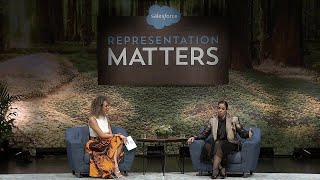
Dascha Polanco, who moved from healthcare to acting on Orange Is the New Black, talks about her Dominican immigrant background and advocacy work with incarcerated women and mental health organizations. She pushes for more Latinx and Black writers, casting directors, and network leaders in Hollywood, and frames acting as a business where she can open doors for others.
Chapters
Please welcome to the stage Dasha Polanco, award winning actress and activist and moderator, Alexandra Legend Siegel, head of Equality content Salesforce. Sharp. Let's get a little sharp in here. Forgot I had this little microphone on.
I'm really excited they can hear you.
I love that. I love to be heard. Well, what is it? Good morning.
Good morning.
Yes, good morning, good brunch and good afternoon. How's everybody doing?
How are you all doing?
We're going to get this party started.
Yes.
Because I was hearing a little gems back at the green room. Just gems being dropped. Yes.
So many gems. We're about to have even more gems right now. So thank you so much for being here with us today. Dasha, we're super excited to have you. You're personal hero of myself and so many in the room. Right.
Thank you. Thank you.
And you are the epitome of what it means when we say representation matters. But you didn't always start out as an award winning actress and activist. Tell us where it all began.
Immigrant. I was born in the Dominican Republic and I was brought here by my parents. And so that's where this journey began in the United States of America. So I am an immigrant and I'm very grateful for the opportunity to be here, but also have worked very hard at understanding as an immigrant when you're not part of society or feel like you're not being included in every aspect. I mean, this happens across the board is not only in the industry of Hollywood and the entertainment. Diversity is something that now has become a topic or something that people are looking onto, you know, especially in a capitalist country as we are. So for me, it all started as that as a young girl brought here looking for the better opportunity of education or whatever I set my mind to. And I had very supportive parents that have always supported me along the way. But things, you know, life happens and priorities happen and opportunities happen. Some of us have more opportunities than others and we are very aware of that. The same opportunities I might have, not someone else might have the door extended and open or come from a generation of families that have been in the business and have those opportunities. I did not know that this was. I knew in my heart spiritually that I'm an artist and I was here to do that and to be in some form connecting with others beyond race and ethnicity. And so I always wanted to act, sing, dance, and that's what I was. But I come from a health field, the health fields. For eight years, I was an operating room central sterile manager. I got my Degrees. Yes, degrees. Teen mom. You know, I was a teenager, got a little wild, got a teen parent, but did put myself through college. And things happen. Things happen. Resilience, determination. There was nothing that I could not do. And it applies across the board. You don't have to be an actor to understand, or you don't have to be in the field of the health field to understand that there's so much going against you at times, but that should not determine where you're going. And I knew that, well, being an artist and being an actress, I might not have the same probability, but it was always behind in the back of my mind. And I said, you know what? I'm going to take that risk and I'm going to continue to audition. And I did. And in a pivotal point of my life where I was working three jobs, I was going for my bachelor's in nursing. This is my second bachelor's in nurse and master's in nursing. Opportunity of Orange came along. I didn't know what it would do. It was just that chance, and I took it. And that's when everything started.
Wow.
When I started questioning, you know, when you're around, when you come from a field where you're so secure and you know you're gonna get your paycheck, you work certain hours and your paycheck is coming, that's what happens, right? But when you enter the artist field or the industry that I'm in, you don't understand how people survive. You're like, well, what do you do? And some of my co stars would say, well, I'm an actor. And I'm like, oh, okay, that's cool. I'm a manager at an operating room and I have to leave here and get here, so we gotta get this going. So for me, it was like, oh, okay. So people actually do this as a career. And it wasn't until Orange premiered the first season that I was able to start letting things go and being a little bit even more of a risk taker and saying, you know what? I could probably let a job or two go. All right, maybe one or two.
Maybe one.
And then I was fired from my main job. I was let go. And not because I was a great employee. I'm like a nerd. I'm like a good girl. I don't like to break rules. And it was just, times are changing, things happen. But it was the best thing to happen to me at that point. I was crying. I was like, I can't believe they let me go. And then I got the calls. Remember we used to work here. No, I don't. So many jobs. What remind me again. But at that point, I was a little sad, but now I'm good.
Good. I think you're doing okay.
I think so.
So. So much of that tenacity that you talked about, that resilience shines through in your character on Orange is a New Black. Yeah. And your character in that show has done so much to raise awareness about women in the prison system, especially women of color, which we know is one of the largest populations in the prison system, unfortunately. Can you tell us about some of your advocacy you've done in this space?
Well, I've done a lot. One of the things is just learn about that and realize that it has been a population that, although we come across, whether it's your family or whether someone you know and it's in our communities, is prominent in our communities. We don't really understand, not logistics per se, but how it really functions in there. And I learned a lot about that from this character from the wpa, which is a women's prison association. And Piper Kerman was very involved behind the scenes and the authenticity of what consisted within those walls. And of course, we use stories and we use comedic elements for entertainment purposes, but there's a lot of things in there that I admire from the humans and people and across the board that are confined and how we survive when we're confined and when our freedom is stripped away. And sometimes not necessarily because we choose to do these bad things. We fall into these circumstances, and we could all do. We can all fall under circumstances. It's just that one decision away from making the bad one right and doing that type of work and meeting women that were once in those predicaments and now are doing so well for themselves because of the support of organizations like the wpa. Ours is another organization that I work with in Queens, and they provide housing and career training and resume building, which at this point you would think like, oh, no, we don't need it. But we still need those basic functions to survive today. Whether it's typing, whether it's like computer anything, tools. Because that's the problem. We tend to not understand that if you're giving tools, you can give tools, but if you don't teach them how to use the tools, then it defeats the purpose. And if the person doesn't want to use the tools. And it also. It's like, what's that saying? You could bring the horse to the water, but if they don't want to drink It. They will dehydrate. That's what it is. So, you know, I'm all about. Sometimes I'm learning myself now that as a. Outside of being Dasha Polanco, the actress, you know, I'm Dasha Polanco, the Dominican woman in New York, surviving. Right. And becoming a woman and going through her own personal things. And I realized I. I overextend myself with good intentions sometimes to help and assist. But what I'm learning from that is that if we each take the opportunity to just lend a hand, and it could be something so small, even acknowledging, listening to somebody, you could really influence and impact them in such a way that you have no idea. And this is my first time in San Francisco, and I'm noticing a lot of things, like similarities from New York. Like, it's like the financial district in New York. I'm noticing a lot of things that I hear and what I see. And it just makes me aware of, like, the epidemic and the mass problem that we have throughout this country that has always existed. But luckily now we're more woke. We're more aware of what's going on. And it's just having opportunities to come to conferences like this that I've never heard of in my life. Right. Because communities are not really informed of resources. The word is not spread within our communities. This is essential. These conversations are important. I mean, yes, you invited me, but I'm just saying, in general, let's not forget, you have me here, so you're gonna get quality. Those are the things that we need to hear. So girls like me, when we're in a situation, women that are incarcerated, all these issues, homelessness, mental health, you know, and just a mere child that has a dream of doing something, but they feel like they can't. Like, these are the things that are necessary. Communication, conversation, that guidance.
Well. And you remind me, and you may not know this, but many of us have heard this, that at Salesforce, we believe that businesses are powerful platforms for change. But media is also such a powerful platform for change. It shapes who we are, who we become, what society is. So how do you feel Hollywood is doing at being a platform for change? And who are some of the people that inspire you who are doing this super well?
Well, I'm going to tell you this. Being an actress and being in Hollywood doesn't distinguish me from being a business owner. I am a business. And dealing in Hollywood, it has to be a business first. And so I was thrown in with the opportunity and the blessing to become an actress. But along the way, I treat it as my business. I am an entity. And I've had to learn how it works financially, have had to know the logistics of it, of how we run a business, as a woman, as a CEO, of she Is Dash Inc. Because it is what it is. This isn't much separate than the corporate world and the salesforce. I have to sell myself every day. When I go into an audition, I have to sell myself. Contractually, I have to have the right team, lawyers, employees that I have to direct and say, this is where I'm going. This is where I need to go. And at times, we do have to micromanage. I have to micromanage. I have to ask, well, why this? Why not? Where am I going? What should I do next? Because I don't. When you own a business, you have to understand as a woman that you're not taught how to run your business. Okay? In Hollywood, you're not taught what you're supposed to do, what contract you have to sign. It's okay to ask for what you're worth. You're not taught that. You're not taught equal pay. You're not taught about that. You know, these are things that I've had to learn by making my mistakes along the way and saying, well, you need me. I don't understand why I have to be embarrassed to ask for more pay. Because you need me.
Let them know.
Well, we have to. And it has to be. It has to come from us, too, because we have to support when we see someone like me. And it's not because me. When you see someone like me or anyone else, we have to show that we are profitable. But you're not the only one that will make that profit. We're going to make profit, baby, together. You understand? Because you can't use me as a vehicle and let me drive without gas. It's not going to work that way. So these are the things that I've had to learn, and I'm still learning every day. Well, this can happen. Well, that can't happen. Well, what's going on? Well, I mean, taxes, like, across the board. As a business owner, you're not taught that. You're taught like, oh, here, you're an actor. Learn the script, okay? But what happens after? Because you're a corporate network and I see that you're making a lot of profit off my art. So what are we going to do about that? So those are the type of things that I'm learning now that I can't be scared. I can't be fearful. I can't be afraid to ask what I deserve and to own that and say, you know what? I am here because I'm talented. One maybe not. Some of us are not. Some of us are just there they have the opportunity because that's the truth. I'm not saying call it shade if you want to, but it is what it is. But let me get into that room. Don't think that because I was told so long that I'm too urban. I was told so long that what is she? Well, you know, not physically. But see, this is the thing and I'm sure that it happens in the business world as well. I'm like, if I audition for something and I don't get the role, I'm like, that's fine. But when I see that you casted somebody that's a size 0, looks nothing like me and is the same individual that I've seen on the last 10 projects in the last 10 years, don't tell me it's because I'm not adequate for the job, okay? It's logic. I've had two encounters in San Francisco and we might go off speech, but I don't like, you know, and I don't like plans. I don't like plans. I like to like really talk in the moment and express what you feel in the moment. I've had two encounters in San Francisco from two in Gentlemen, one from my Uber ride and one at this little store. I don't know if it's Chinatown or like it's by the Stinking Rose.
Yeah.
And I met this guy and they were giving me some information, like some valuable information. I love talking to older people and people that I would never like hang out with but that I would have a conversation with. And you know, they were telling me about how there's certain individuals in life. Like, we have people that are logical thinkers, we have people that are great with math, we have people that are great with language. We have people that are great, like just the different learners and then what we're experiencing now. And I'm going to probably catch you guys all crazy, but just follow me. It's like a puzzle. I'm great at puzzles. I'll tell you how it's connected. And I was listening to them, I'm like, you know, these are people that have lived here, both immigrants that have lived here in San Francisco that have experienced X amount of trial and tribulations. And here they are, here they are with so much knowledge and so much adequate timing to take the time to speak to me without knowing me, without, like, just to provide that knowledge and share that power and that connectivity that I'm like. Every day we stand here and we get oppression, and we come across moments where we're like, why is it so hard for me? Why can't this just work? I have a plan. I'm doing everything correctly. Sometimes is not planned. Sometimes is not doing the right thing it takes for you to live in that moment. Be aware, listen, step out of line, Break the plan, fall back, breathe, Go through the emotions and say, you know what? These are all elements. So that tomorrow, when everything comes together, I have the foundation, I'm strong enough. I have the. The roots to make me strong and grow. And that's what I think about every day. These are just all elements to make me as strong as I stand to grow.
Yes.
Okay, beautiful.
Well, and as you've been growing, you have been a part of some incredible projects. The Emmys just happened, and I would be remiss to not mention when they see us, which I think is arguably one of the most important pieces of TV for our communities, of our time. What was it like to be a part of that project?
Look, I was in New York when that happened, but I was too little to remember anything that was going on. And of course, we weren't hearing about that. When I met Ava, I made her a year before at the Essence Fest, and I was like, I want to work with you. What's up? Yo? Hi. How you doing? We took the pic, and I heard that that was going on, and I was like, damn, I want to be somehow involved. And I was like, ava, what's up? And she's like, hey, you're not available. Because I was filming Orange at the time, which was great. It's a great blessing. Like, these are good problems, you know, like, oh, I'm not available to do that, because I'm doing that. Fantastic. And I was like, well, I am. Let's make it happen. And she gave me, you know, auditions for it, obviously. And I read for the wife of John Leguizamo. I did not know at that time that I was going to be his wife. And even that, for me, was really surreal because you see him all your life, right? I'm like, yo, I'm his girlfriend. When they see it, that's the superficial part. And then you do your research. And I started learning more about that. Central Park Five and the Gentleman and the Exonerated five. And there were moments, right, they did a little, like, behind the scenes That I just could not resist and break down. I have moments of where I'm, like, super emotional. I'm sure you all have those moments, right? We cry. It's good. It's healthy. And being part of that set where I saw diversity from the crew to the cast, and I saw a director lead everyone in such a trusting way where it was like, doctor, just do your thing. Look, do this, do that, and do your thing. It's so empowering. People might think that it's so small, but it's so empowering. When you see yourself, when you see the grip, when you see electrical, when you see people, you're like, oh, yo, Jose, what's up? Like, your people. I was like, this is magical. Everyone there gave their 150%. Ava was there. She, like, spoke about it. We just connected. Everyone was. And those moments, you don't come across a lot because everybody has their own agenda and everybody's on their own time. And that's understood. We have to understand that. But moments like that are special. Those are moments that in my career, I will always have. Like, I remember when I. When I was part of. When they see us and being at the Emmys and we all need validation. Like, Jerome did an excellent job. They all did. We all did. And it made me very proud. I jumped off my seat with my big sleeves, and I was like, yeah, Dominican, you know, me, myself, and I. But what I realized is that sometimes people are not ready to acknowledge certain stories and certain truths and they'll let you get as far. And so we start changing the people that are making those decisions. We're always just get as far as. Because we advocate. We need more diversity, and we only speak about actors, but we need diversity across the board. We need diversity in the writing rooms, casting directors, we need diversity. Head of networks, we need diversity. When it comes to the academies, that's where we need to see the diversity, because those are the people that ultimately make the decisions and have been making the decisions for X amount of time. So. So when you tell me, well, do you see change in Hollywood? Yeah, I see change in Hollywood. There's progression little by little, step by step, but there's a lot of catching up to do because the people that have been in the position are still in the position that have made those decisions before and that have kept it very exclusive. So until we start diffusing that, we still have a lot of work to do.
Very well said.
Thank you. Not rehearsed. What's that?
Not rehearsed at all. And I Want to pivot to an issue that's super near and dear to my heart and also to you, which is mental health. And we're sitting in a room filled with these amazing talent of color. And we know that in our communities of color, there's a huge stigma around mental health.
Yes.
Why is it so important for you to use your platform to speak about this issue?
Well, I mean, because I experience mental health issues with family members and myself doesn't mean that I necessarily have to care about it. It's an issue that we have in America, and we should all be involved. Because a lot of the things, when ignored, they become a bigger issue. Right. What do you call it? It rollerballs. What is it snowballs into something bigger. I have. This is personal. Maybe I'm violating my own hip hop rights, but I know my stuff. I mean, you know, hip hop violate. I know it. I know it. I suffer from depression, and I have a brother that I work with, Community Access organization in New York that helps people that are mentally ill to be independent and survive and be able to work in society. Because you're mentally ill does not mean that you can coexist in society. It has to be. It's a stigma to think that because you're mentally ill, you have to be put away. That's not the solution. The solution is to how we coexist, how do we treat it? And I have a brother that was recently diagnosed with schizophrenia, and he's now working. I'm working with organization, but he is in this program, and they help him get a job, seek therapy. They have artist exhibitions where they could also, like, be involved, living, housing, providing that. And so those type of organizations are the ones that I want to be part of that actually are doing and are actively in the communities and involved in reaching out to the communities and providing them with information. And I think that that's a huge issue, not only personally, but across, because it's something that we don't understand. Right. We feel like, ah, you know, in the. In the Latin community, it's super taboo. It's like, you know, it's like, oh, she crazy. It's not, you know, we all are a little crazy.
Right.
But these are real. This is a real issue. It's so disappointing. And it breaks my heart when I see that we don't have empathy or compassion for people that express that. Right. That you could see behaviors. I mean, across the board, we see it with autism. We see it with parents enabling their kid or feeling that because they're acknowledging that Their kid has issues, that it's a bad thing. And the first step is acknowledging it and educating yourself and knowing, you know what, there's help for this and talking about it. It's just talking. It really comes from talking. Well, how do you feel? Do you feel like you're sad every day? Well, then that's not what it should be. Let's exercise. That's why I like to work out. I like to eat, I like to work out, I like to feel good. The moments that I don't feel down, I see my therapist, I speak about things. And I want to live a healthy life first before anything. Because if we're not healthy, we can't have businesses, we can't have the sales force, we can't have Hollywood. We got to all be mentally stable and healthy. And I just want to make one thing clear, that mental illness does not discriminate like any other illness. It happens across the board. Just because we hear it more in some societies, the doesn't mean it's socially acceptable. More in some ethnicities and races doesn't mean that it's not happening across the board.
So, yeah, thank you for saying that. Thank you. And it's courageous to use your platform to speak about issues that are so personal and also that are so stigmatized. And I think that's why so many people admire you because you are 100% authentically yourself. Where does that come from?
I must say that I appreciate that you guys admire me and that you view me as authentic as possible. Because I've been told so long and not anymore because I put my foot down in this business oriented life of mine. You gotta be more classy or tone it down. I'm not gonna be suppressed. I've been oppressed and I'm not gonna be supposed. We could turn it off. We could turn it on. I could sit in a room full of surgeons and have a real, real medical terminology conversation, you know, full of medical terminologies, have this whole conversation about their brickula's oculi and so forth and so forth and the instrumentation you need for your procedure. But I'm also from Brooklyn and I'm Dominican and I embrace my culture. And I know that this is not bad. Being urban is not bad. I grew up in an earth. Doesn't make who I am. And I will probably be more resourceful and impactful than anyone that chooses to be. Classic.
I love it. So tell me, what is your dream role? Have you already had it or is it still around the corner?
Can you believe that I'm actually guys. Like, honestly, I don't walk around here like, hey, I'm like, I'm. I have to remind myself every day I'm doing what I love to do. Like, I'm an actress, yo. That's crazy. I used to pray every day because I was raised in a Catholic church, but now I'm, like, straight spiritual. And I used to pray every day and say my. Our Father, Hail Mary. I'd be like.
You know, and I.
Would just do that every day when I was a little girl, right before bed. And then when I was like, I don't want. I'm scared. I just want to be in my bed. Then I would be under my bed and praying, praying, praying, praying. This is getting somewhere. Praying, praying, praying, praying, praying. And now I'm doing it. Like, how. Like, how am I here for whatever reason now that I am here? And then I'm songwriting and I'm recording and I'm doing all these things, and I'm like, wow, I just got to keep on going. I just got to keep on going. I want to be a superhero. I want to have a role where I'm, like, part of, like, a franchise, have to work all the time. You know what I mean? But I thought my dream role was just being a superhero, but my dream role is to be able to build. Position myself in a place where I could open the doors for others the right way and not just one at a time. And we're seeing it done, but I need to do it and do it for my Latin America and do it in a way where we're not just having to label ourselves and, you know, in such different. Like, I have to explain myself that I embrace my blackness. I embrace my Taino ness. I embrace my Europeanness, and to explain myself that that's where I come from. Come from an island where it was the first island where, you know, the slaves were brought and where the Europeans, you know, violated the natives that were there. And we really, like. I cannot ignore that. And so for me, that's my dream role. To be consistent in what I do, to grow as I do it, and to be open to open the doors across the board, you know, like, truly open the door.
Yes.
That when you look at me and you look at my team like, oh, she has the important ones that she has to have for the important decisions, but she also has. Is a community that's with her.
Well, I have to say, I love the idea of you being a superhero. I'm definitely going to see that Movie. Yes. So later today, we do have Ryan Coogler, who directed Black Panther.
Oh, I know. I saw it. And Issa. I met Issa. Issa's my friend.
Okay. A little name drop.
I could do that now. Not like Dr. Schwartz. I'm sorry. Issa Rae. Yeah, she's my friend.
Yeah. Yep.
And also Ava has covered that.
So your friend Ryan is coming through later today. So Black Panther was such an important movie for the black community because it showed us for every.
It wasn't only the black community, it was for us, like, you know, black and Latin. We need to realize that we're in the same group, just in case you didn't know. Just letting you know, don't get scared. But it was for everyone worldwide.
Yes. But for the allies who are listening, those who maybe aren't in the community and didn't understand that magic.
Right.
Explain in your words why having you or just someone different being a superhero is so powerful, especially for young people of color.
Well, I think that, for one, we see superheroes that don't shape this curvy. And so if those that are Marvel, or. What is it? Dc.
Dc.
Thank you for being aware. I was testing you guys to see how much. I'm glad I'm keeping you guys up. Listen, being a hero and being part of, like, this mystical and, you know, full of power world that have been created, we tend to always shape women and what is it? Interpret women in just one single way as if we all look that way. And I have a huge issue because I feel that I'm sexy the way that I am. And I feel like there's a lot of sexy women that are bigger than me, that are. They exude. And then I realize, like, are you really just focusing on the. How sexy we are to portray a superhero? Because we're superheroes. Like, there should be no definition. Like, to me, that's a huge problem. We see the same people playing superheroes, and then they cast somebody else, and it's the same type of person. And I'm like, whoa, whoa. Hello. Hi. I can run. I can squat.215. You know what I mean? I could pretend like I can't see and use my hands and see.
Like.
I can do it. So, yeah, hopefully they're like, oh, yeah, we need to get her in a tight suit and give her some mystical powers.
Yeah.
Here. Hi. So, yeah.
Yes.
Even animated, I could do a voice, too, and just use somebody else's body.
Hopefully one of the hundreds of thousands of people listening is a director of A.
Okay. Salesforce comes up with their own superheroes. Talk about. Let's talk about it. I am connected in Hollywood.
I have a little bit after this.
After this.
Yeah. With our friends Ryan and.
Yes, yes, we're here.
Yes. So for this 700 plus superheroes sitting in the audience and watching online, the hundreds of thousands watching online, what advice do you have for them, particularly the young people of color who are building their own legacy?
I am. So this is what I'm going to tell you guys. You have access to so much information that I had to look through nine encyclopedias or read the paper. Use that information and use the access to get the most, the most valuable knowledge and access to power that you can is only by that use that information. I know we're on social media and I know that a lot of us have risen and are now more aware. And that is the beauty of what's going on today. The problems have always been there. This just didn't happen yesterday. So now that we have access to that, what I suggest you to do is to use that information and keep yourself very well informed. And let me tell you something. It's okay for us to gather, it's okay for us to talk. It's essential, it's necessary. We should be out there. Yes. Activism, yes. But if you yourself are a hypocrite to what you say, it's not going to work. So start with you. Start with you. If you're an activist for climate change, then if you're using plastic bottles, don't talk to me. If you're an activist for, like your eating habits, if you want to be vegan, respect that. I'm not. Okay? We're going to get somewhere if we learn how to coexist and respect. And another thing is, another thing is learn how to turn it on and turn it off. Okay? Because Latinx color diversity is not going nowhere. It's not a trend. We're growing in the masses, so watch out. Thank you.
So speaking of which, where do you hope Hollywood or even the world, our society ends up the next five years when we think about racial equality and diversity? Easy question.
It is easy. I just like to always, you know, make it true to me. How can I make it easy to understand? You know, what I hope for Hollywood is that we're not so busy fixing the problems that have always been, but I know that there always will be, that we continue to advocate for equal pay, that we continue to advocate for diversity, that we continue to have conversation about what's tolerant and what's not tolerant in the workforce. That these conversations are not limited only to the corporate America, but also to Hollywood. What's hostility in the workforce, what's equality in the workforce, what's considered harassment in the workforce. That we have these type of conversations and that everything, those impositions, as I said before, of making the decisions that have slowly but surely help have been phased out and we see more of ourselves in those positions.
What's gonna get us there?
This. This is what's gonna get us there. Not tomorrow, though, I'm gonna tell you that we're gonna have to work at it. But the more that we have this and we talk about it and the more that, you know, you inspire and you go to these, you know, you could go back home and tell your child like I tell my kids, hey, you could write, write that and still like that. You need a battery. You need to put the battery in someone's back. You know that saying, you need to put the battery in someone's back. Oh, you like to write. Write a story about yourself. Write a story, write it. Why don't you write a script Like I tell somebody, I'm always telling somebody, yo, why don't you write this? Why don't you do that? Yo, you can make a business out of this. Why don't you take like potatoes and make a whole bunch of different potato, whatever it is, ignite ideas, inspire, support. Plant that seed, give it the water, give it the light it needs so that it could grow simple. Nature tells us all the answers there. I'm learning how to be one with nature. I'm learning so it's there. That's what we need to do. When you have the opportunity to lead, a true leader is not going to be threatened by showing the next person or a subordinate how they can become or evolved beyond that doesn't take your leadership away. And that's one thing that in Hollywood we need to work on. Because you're in a position where you're an icon. Your insecurities affect the way you co you come across to others. And I've had that experience as well. This is why I say how important it is when you meet an icon in Hollywood that has the power and they feel threatened because you're coming along and all you want to do is support and say, hey, you're there because I supported you along the way. Reality it is, and you see that, they turn their back on you. It's not only disappoint, it's not only disappointing and it does hurt. But it also helps you realize that that's not the leader I want to be. I don't want to be an icon in Hollywood, where I feel threatened because the youth is coming along and because there's somebody that has talent and the opportunity to become what I am.
Powerful.
Yeah.
So I want to close with this. I know we're at the end of our time, and we don't want you to leave, but all good things must end. And so I want to close with. We're in the midst of Hispanic Heritage Month.
Yes.
And I could ask you about.
Yeah, I should have ended with a little, you know, merenguito salsa. A little.
You know, we would love a class for everyone.
Little Juan Gabriel. You know what I'm saying?
So I could ask you about Latinx trailblazers that have impacted you, but I want to ask you, what is it like to be a Latina trailblazer yourself and to be a role model to others?
I love. I love. I love. I'm just. I'm thankful that I was born Dominican. Yo. I'm very patriotic. Like, I know I wasn't raised there, but I love my Latin. Like, I just love it. I embrace it. I love my music. I love that I can have a platform that I have that flavor and that swag. I love it. I love it. It makes me feel home. When I go back to my. When I step on that soil, I'm like, oh, my God, it feels so good, the energy, besides the weather, but I'm just saying. And the food, but it feels so good, and it feels so good to also have the. The. The American experience as well, because I'm able to, like. It's a fusion. It's a beautiful fusion. I remember that when I was little. And we're gonna end with this, right? My brother and my sister look more like. They have, like. My brother looks like my father. My sister looks like my mother. And I was always like, well, what about me? You know, I was a little much, you know, the oldest, you know, And I remember that I used to, like, tell myself, you know, what I am? I'm that perfect combination. I'm that fusion of so many things together, and I'm first, and I have that. Like, that follow me. I'm guiding, and that's just what I am. And so, as a Latina that has had the opportunity to have this platform and connect across the board and celebrate our culture and be able to understand, like, you know, the dynamics, and for it to not be seen on TV is my due diligence. That as an actor, I want our real conversations that we have in our household and why we do certain things that people feel like, what is that? Like, when you bring certain food to school? And I'm like, I don't know. It's like, you know, I'm sure it happens. Like, if you. At that time, everything was question about what was my experience growing up, because people don't understand it, because I just don't eat pancakes. I eat rice and beans and meat and stuff. Like that is my due diligence to actually, like, truly represent that and speak about that and have this type of opportunity. I really enjoy this. And not for nothing, but you guys are amazing, are attentive. The energy that you portray, not only here, but when I was listening to you back there, you guys are really listening. And when you leave here today, just do one thing, one thing. Whether it's like, on yourself, like, for yourself, or when you meet someone, take that one time to do something, a gem that anybody dropped here. And that will cause the domino effect we need. It's the beginning of as cliche as it might sound. But trust me that there's something about that. There's something rewarding and there's something impactful that you give back just by doing that. So thank you guys for just being here and really listening, laughing at my jokes, laughing at my joke.
Thank you so much.
Doctor, thank you.
Thank you for celebrating with us. Thank you for preaching to us, and thank you for just sharing this time with us.
Amen. And we could catwalk out of here, right? I'm gonna give you a little catwalk when we leave. Music, maestro.
I don't know if they have music for us.
We're turning.
Silent catwalk.
Yes.
Silent catwalk.
Thank you, guys. Thank you.









