Finding Your Leadership Style with Manish Chandra #BossTalks | Salesforce
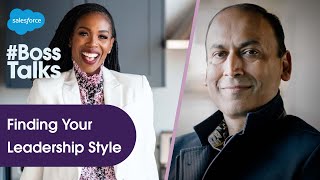
Manish Chandra, CEO of Poshmark, talks about building a leadership style rooted in empathy and humility. He credits his grandfather's lessons and mentors for shaping how he handles the toughest people problems. Chandra uses case-study interviews to hire for complementary skills and sees leadership as a learnable skill that shifts with each situation.
Questions this video answers
Manish Chandra, CEO of Poshmark.
India (summers in his grandfather's pharmaceutical shop in a busy Delhi market).
The Alchemist (Paulo Coelho); Leadership and the One Minute Manager; Good Strategy, Bad Strategy; Shoe Dog (Phil Knight); The Book of Joy (Dalai Lama & Desmond Tutu).
General counsel candidates were given a case study about legal ways to create an Australian entity for Poshmark's Australia launch.
Chapters
I got a feeling that you got a feeling that this is gonna be good. I got a feeling that you got a feeling that this is gonna be good. Say hello.
Hello, everyone, and welcome to Boss Talks, a series featuring candid queer conversations with some of the best in business. Today's episode is dedicated to finding your leadership style. Now, I get a ton of questions on this topic from our Boss Talks community. So this episode is brought to you by popular demand. Now, I can tell you that my leadership style happen overnight. It has taken years and years of practice and trying new things for me to grow into a style that really felt authentic to me, because being a leader is not about adopting someone else's style or doing things exactly the way they did it. It's all about embracing your superpowers and leading from a place of truth and authenticity. So today, I've invited a leader that I've learned so much from, and that's Poshmark CEO Manish Chandra. Manish, welcome to Boss Talks.
Hi, Ebony. Great to see you, and thank you for having me.
When I thought about who I wanted on the show for this episode, I thought about you and your career journey because it's so inspiring. I love how you talk about growing up with that entrepreneur spirit and how that experience really charted your path. So tell us more about that.
Sure. Yeah. I grew up in India, and my summers were spent in my grandfather's pharmaceutical shop in one of the busiest markets in Delhi. And what I saw growing up was people transacting, interacting, talking to each other, deal making. And I was all of, like, 9 and 10 years old. So it left a very deep impression on how shopping, commerce, business should be done. And above all, my grandfather was a man of intense integrity. So that was the other aspect that I learned through that journey. And he was a man who treated everyone with a lot of respect and care. So those are all the values that have sort of been part of what I learned with and what I grew up with. And, you know, hopefully I embrace in my journey today.
I think that's definitely authentic to you, and I love that. That same inspiration, that same entrepreneurial mindset that you grew up with is the. Is the mindset that you create and really are looking for. At Poshmark, you encourage every employee to be an entrepreneur in their role and in their career. So tell us why you think that spirit is key to leadership today.
As we go through our career, every five or 10 years, technology is changing, the world is changing, and we need to evolve with it. And to me, all of that boils down to one single principle, which is there is superpower and strength inside of you that is uniquely yours. And if you can partner with the right leadership, with the right external circumstances, have that passion for growth, you can become anything. And I really mean it in a very direct way. We have people in our team who've gone from, you know, doing something that they love, which was serving executives and working as an executive partner. And today they run teams of 200, 300 people leading in a very different way. We have people who've gone from working in customer service to leading marketing teams, to then becoming technologists. And so I feel like that journey, I mean, your journey itself is sort of so interesting in terms of how, how we can reinvent ourselves and truly find that strength.
And I love that you brought in your team here because you've developed a really strong team. And we know we just talked about entrepreneurship as a great leadership quality, but I imagine some people are thinking, what are some other characteristics of strong leaders? What is your opinion on that?
Well, I think first thing is to really have some level of empathy and caring for the people you're working with. I think the second dimension is humility. A group leader is always learning. And third is, I think situational leadership. To me, one of the most powerful thing is if I'm talking to someone, they are at a different sort of evolution in their career and how I talk to them, if I talk to other person who's maybe at a different evolution, not just in their career overall, but in the specific role that they are playing. My guidance can be very directive or can be very inspirational, can be very goal oriented. But if I mismanage it, if someone who needs direction, I give them goal orientation, or someone who needs goal orientation, I give them direction, they'll be dissatisfied, confused, and may not even achieve what I want them to achieve and ultimately leave me. So that's the mark of a true leader, is to be very situation specific, empathetic, and then ultimately very authentic and true and humble.
So Manish, those characteristics don't develop overnight, right? I know for me, like I mentioned earlier, it's taken me some time to really hone in on my leadership style. So what are your tips for finding that leadership style or grooming and growing yourself into that leader that you want to be?
I think one tip I have is mentors. I think we all need people that we can learn from. I still continue to have different kinds of mentors who you grow from. And I feel like to really grow, you need someone else who can be your partner. And in early life, our mentors can be people we know, our family members teach us. But later on in life, as you're evolving from, finding and grooming those mentors is really, really important because that partnership can actually help identify superpowers inside of you that you don't know, help bring out a leadership style that you might think is a weakness and it could be one of your biggest strength. And then ultimately also teach you new things. Because I think we always have to be learning as a leader and as a, as sort of just as a human being.
That's right. You know, I think it's really important to acknowledge that our leadership style style can change as we grow as leaders or take on new roles like that. You definitely mentioned that situational leadership or even as our teams change. So how do you adapt your leadership style to new situations in a way that's still authentic to you?
That is a really good observation. And it's very true that our leadership style has to evolve, has to change. Even though some of the essential elements should remain through that whole process changing. And they also have to be circumstantial. Right. Like a leader who's leading this, their organization, their team, through a crisis situation has to behave very differently. They call it peacetime leaders and wartime leaders. And their behavior has to be different. There is early stage leaders, later stage leaders, and that has to evolve. One of the things I sort of have used as a rubric is when you level up or are taking a new role, you have to think like four years in college, you play a role. Let's say if you think of my journey, I became an early stage CEO 10, 15 years back. Took me a few years to learn. And then I say I graduated from that early stage CEO role. You know, I became a senior, graduated, but then I started to get to a larger company, different sort of management challenges, and I became a freshman yet again. So if you use that rubric, then you're learning new skills and sort of changing your leadership style to use that situation. And so if you explicitly acknowledge that I'm now a freshman class of something, then it gives you the freedom to make mistakes, to learn and reevaluate your leadership style in a different set of circumstances.
Aneesh, I'm going to throw a question in here on you. You are the CEO of an amazing company, obviously. I think so. And leadership is not for the faint of heart. And as a CEO and a leader of leaders, what's it like being a CEO? I think many people have Aspirations of, I want to be a CEO one day, but what's it really like? Can you give us kind of like the behind the scenes?
Sure, sure. I would say a few things. I think one is a lot of times as a CEO, at any situation, what you're dealing with is a lot of the toughest issues in the business. So, you know, the issues that can be solved by your leaders don't typically come to you. It's always the toughest issue. So that's one dimension. Second is a lot of issues you're dealing with. Are people related? Because at the end of the day, if you're a leader of leaders, your superpower is to work with people, to resolve people issues, recruit them, help intermediate, et cetera. And the third piece is continuing to simplify whatever you're doing for you and around you. And that to me is the most evolutionary challenge. Because the first two things, you know, you learn over time, but in different sort of situations, in different things as the world is changing, the CEO's job or the leader's job is to simplify and have that perspective, which is simple for the whole organization. And that's something you have to constantly keep building and refining. And great leaders can do that. You know, adapt to that circumstances. You know, you. You may think of it as vision, but it's really much more about translating the world in a way that's simple and allows the organization to function.
And, you know, I like to describe that as being comfortable, getting uncomfortable. You have to learn how to be comfortable with being uncomfortable and like that adaptability that you just talked about. And I think that a lot of times that takes courage, like self courage, self analyzation. So how do you find the courage to lead?
That is, I think, a belief that you have to develop in yourself. And something that I would say to everyone who's listening to your show and, you know, thinking of my journey and your journey, at each stages, we've had to take courage because we've had to go to places that either we were pioneers or sort of were following examples that were different. I mean, even our conversations I remember as we've partnered together, it's been taken courage on all sides. So to me, I think that courage goes to the belief that you are capable of anything. And the only limitation is in your mind. So the example I love to give, and I'm going to repeat it on your show, is that your ambition, your vision, and your delivery of anything about you, about an idea is limited by your imagination. Because when you think of a Coffee cup. Somebody looks at a coffee cup and just drinks it. Another person looks at a coffee cup and can imagine, hey, I could start a coffee card business. Another person looks at that coffee cup and says, hey, maybe I could open up a coffee shop, maybe a couple of coffee shops. But somebody looked at that coffee cup and started Starbucks. So if you think about it, how did that coffee cup become Starbucks, which was against all the naysayers, et cetera. And you think about our journey. We looked at a closet and from there created Poshmark. So it is really your belief in yourself that you can reinvent and you figure it out. I think one of the leaders says that you're building a plane and you're sort of jumping off in your career, in your life, and you're figuring it all out. It's not that any of us know what's next. So that's courage comes from faith and faith in yourself, but faith in also the universe and people around you.
I couldn't agree more. So to help us develop these skills, I know for me personally, I read a ton, and sometimes I can't physically read. I do a lot of listening to audibles and books like that way, probably like three to five books a week. I keep a long list and I share my favorites with people as often as I can just because there's so much to learn on this topic. As you mentioned, everyone is different, and we need, you know, different things. So I'm wondering if you could tell us maybe some of your favorite books or tools that you use.
Absolutely. And I'll give you two kinds of books. One is more on the spiritual side. So I think one of the books that for me has always been fantastic as a source of inspiration and that inner courage is Alchemist by Paulo Colo. And it's sort of such a powerful book because it tells you that no matter what you're seeking, you find it inside of you. And so it is really very much about finding that courage. But then in terms of more practical management and sort of leadership things, I think Leadership and the One Minute Manager is one of my favorites. Around situational leadership, around thinking about bigger topics. Good Strategy, Bad Strategy is one of my favorite books. Then when you think of sort of autobiographies or you think of it from that perspective, Shoe Dog by Phil Knight is absolutely entertaining to read and particularly for all of you who love sneakers, it's just so fun to read. And then if you think of how do you get in the minds of two of the biggest spiritual leaders of our Times. There's a book called the Book of Joy with Dalai Lama and Bishop Desmond Tutu and their frank conversations. It is a pretty unique perspective on how these great spiritual leaders think, interact, joyfully interact and bring that. So to me, these are some of the books that I enjoy reading and find a lot of courage and inspiration.
Those are great tips and great books. Thank you for sharing them. Now, we've all heard the saying that great leaders build great teams, but I also think, and I just posted on this recently, that the reverse is true. Like great teams build great leaders. It's a very symbiotic relationship between the two. And I'm so grateful to my team for everything that they've done to really help me grow as a leader. So how do you approach hiring and building your teams?
You know, I think your first statement I completely believe in that, is great teams build great leaders. And one of the things I always look for, especially when I'm doing a leadership hire, which is a lot of the times, is can they teach me something in the interview? And almost everyone, I mean everyone that I've ever hired, I learned something in the interview and continue to learn from them as they join the company and continue to teach and evolve me. And I hopefully partner with them. The other thing to me is complementary, right? Like if you build cookie cutter. You know, we talk about diversity, but diversity to me is diversity of thought, diversity of skills, diversity of styles. You know, some people are very empathetic, some people are very aggressive. You need all that stuff. It's not. If your culture becomes very monochromatic, it's very hard to sort of evolve your business and grow. And many times, actually you'll find, and I find it, that when your business is not growing, you have to evolve leadership and bring diverse leadership with a lens to not just diversity in terms of, you know, ethnicity and other things, but diversity of really strong point of view so that you can embrace and grow that. That too. So that's the second thing. And third thing we do very consistently with our leadership hires is what we call a case study or like ad job interviews. They get a real life case study that they have to work on and then present it.
Really.
For example, yeah, when we were doing our general counsel hiring last year, the case study was all around what are the legal ways in which you would create the Australian entity? Because we are about to launch the Australian business. And what we find is that many times our ranking of candidates can change quite dynamically pre and post case studies. So it's a very Pivotal part of the interview process for us.
We have a lot of first time people, managers that tune into boss talks. So I want to make sure that we get some advice that's really specific and fine tuned for them. So what advice do you have for people who are just beginning to practice these skills? Skills?
Yes. Three. Three small tips. Again, one is, number one is just really find a mentor. Like make sure you acknowledge that you're in the freshman class of people management. So don't be scared. You know, it's kind of like the freshman year. You have to start, you're learning something new. Acknowledge it and be open to it, but also know that these people are relying on you. Second is, I think ask before you tell. And that is sort of really a powerful thing, which is listening before speaking is such a key skill and it's a hard skill to inculcate because you sort of know it. And then the third thing is to remember that you got to that place because you demonstrated expertise and competency, whatever discipline you were in and you sort of showed your skill set and now you've been given charge of managing the people. But the time it took for you to build that skill, these people may or may not have gotten there. So remembering that they are also on a journey and your goal is to support that journey is very important, even though you may have deadlines and pressures. So being that buffer is important. This is a tall ask and it takes time to learn. So I go back to the first principle. You're still in the freshman class, so you are free to make mistakes.
I love this. This is so practical and tangible. I love the way your mind works and how you think about this and so why you are the perfect guest to talk about this topic. So I'm so sad that we've come to the final question, but it is actually one of my most favorite questions that I ask all my guests. So I'm really excited to hear your answer on this one. So, Manish, what is your superpower?
I think my superpower is, I would call it empathy or really helping you realize your superpower. So for me, I kind of look at everyone and try to understand like what is really the best thing about them. Sometimes, you know, I'm misunderstood in that context. But to me, my goal is to really help you succeed because in your success lies my success. So that's sort of, I feel like one of the things that I hopefully do well and hopefully people around me might agree with that, but. But that's what I've tried to do.
I think that everyone watching this who knows you is probably shaking their heads right now thinking, yeah, that's as was it superpower. So, Manish, thank you for sharing that. Thank you for joining us and thank you for sharing so many wonderful tips for finding our leadership style. We are all I know feeling so inspired. So thank you so much for being here with us today.
Thank you for having me and thank you for doing this thing. I know so many people who watch it avidly.
Thank you. I know this is a popular topic with all of you, so let's hear your questions. Hi Ebony, my name is Carrie. I have a question. With respect to bringing your whole self to work when you're in a leadership position, is that something that while trending, you would encourage when you're in a senior capacity within an organization? Thanks so much. Hi Carrie. I love that question. I love the while trending part. I know it can feel intimidating to bring your full self to work, but it's really, really is a game changer for you and your career no matter what level you're at. I can tell you from my own personal experience that holding back or trying to fit in with everything and everyone is completely exhausting. And on the flip side, it really takes vulnerability and courage to bring your whole self to work. And we need more of that in leadership. Just think about, like the leaders that you identify with. They're the ones that are unabashedly ashamed of being themselves. They speak up, they speak out. They're maybe quiet leaders. They're just true to themselves. So I would say whatever your leadership style is, please don't be afraid to be you. I hope you all enjoyed today's conversation. For more boss talks, be sure to check back here on Salesforce plus so you never miss an episode. And to continue boss building, head on over to trailblazer.salesforce.com to join millions of trailblazers who are learning relevant skills, connecting to fellow trailblazers, and giving back with the Trailblazer community. With that, thank you so much for tuning in and I'll see you all next time.









