Future of Work: Leading in the New Era | Salesforce
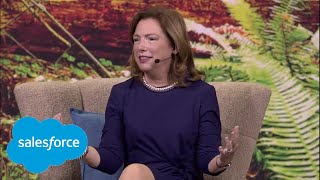
Anil Bhusri, Barbara Humpton, and Keith Block discuss how AI and low-code tools are creating "new collar" jobs that require reskilling. They argue companies and governments need public-private partnerships to close the opportunity gap through training programs like Trailhead, career-technical education, and veteran hiring initiatives.
Questions this video answers
Dreamforce panel video — Nov 21, 2019 (YouTube).
Lisa Edwards (moderator, Salesforce), Anil Bhusri (Workday CEO/co-founder), Barbara Humpton (Siemens USA CEO), Keith Block (Salesforce Co-CEO).
4.2 million new jobs associated with Salesforce technology by 2025 (cited source: IDC).
About 5 million open IT jobs in the US (spoken estimate by Anil Bhusri).
Described as a 170-year-old Fortune 100 company (Barbara Humpton).
Chapters
Please welcome evp strategic engagement and operations salesforce lisa edwards. Welcome everyone to day two of Dreamforce. We are so excited. It's another full day of programming and there's going to be a ton of fun stuff to do. So look at your agendas and make sure you hit everything that's important to you. Today we're here to talk about the future of work. In any business of any size, talent can be a major challenge. Especially now in the fourth Industrial revolution. Technology is rapidly changing today's jobs and also creating new jobs. And as a result, it's on all of us to really rethink how we're educating students and how we're training our workers. In fact, this new reality is why CEOs globally have ranked attracting and retaining talent as their number one internal concern. We know that these talent challenges are not going away. In fact, they will only intensify. And organizations like all of ours need to constantly re examine how they're attracting and retaining the best and brightest and how we are preparing the next generation workforce. Today we're going to go a little bit deeper on this topic with three executives who I'm really excited to introduce to you who are focusing on this topic not just for their own business, but really thinking about this in the context of, of the broader community. Please help me welcome to the stage Workday co founder and CEO Anil Bhusri, Siemens USA CEO Barbara Humpton and Salesforce Co CEO Keith Block. Welcome everyone. Thanks for coming. Good to have you at Dreamforce. So, Barbara, let me start with you. Siemens is a 170-year-old Fortune 100 company, has seen a lot of change, has seen a couple of industrial revolutions. We're now in the fourth Industrial revolution and you've talked a lot about, you know, the changes in the past were blue collar jobs to white collar jobs and now you're talking about these new collar jobs. So tell us a little bit about that.
Yeah. Well, first of all, what a privilege to be here with all of you. Yes. Siemens has been part of every industrial revolution. And you know, you think about the electrification of the world and the stages we've come through, we are now here in the fourth Industrial revolution in the midst of something that's very different from anything that's been experienced before. This is the moment where we begin to bring the infrastructure of the globe online. So the technologies that began close to here are now being used to help us communicate with transportation systems and bringing the electrification or low carbon future. We've got the factories of the future being built, we now have local grids being developed with two way flows, all because we have the digital tools. So Siemens has had this know how in building the physical world, is now working on the digital integration, bringing all of that online. And what this means is there's a gap, there's a critical skill gap that needs to be filled in, where we actually basically look for folks with the know how in the physical world, the digital skills as well. And that's what we're talking about. These are the new collar jobs of the future. Now it's interesting, we just don't think there are going to be enough people to fill all the jobs that are available to us in the future. And so one of the key things we're looking for is how we can make technology more accessible. So the idea of, for instance, the acquisition of Mendix, the low code platform that is going to allow us to turn average citizens into software developers, these are game changers for that new collar workforce that we're helping to build.
That's great. We are big fans of low code, no code here at Salesforce, so totally appreciate that. Anil companies like yours, like Salesforce, like Siemens, all of us are sort of embracing this move to robotics and AI and machine learning. But obviously, you know, this has a, has a big impact. Tell us a little bit about how you think about how these technologies are going to impact your company and the future.
Yeah, well, first of all, it's great to be here. I think this is my 13th or 14th Dream Force.
Welcome.
So I think at the highest level, machine learning is the most profound technology we've seen since cloud computing. I really think there's a lot of things that have happened since then, but machine learning is that important. And what it really does is give you the ability to sift through all the massive amounts of data you've captured in your business and look for patterns, look for predictions. And if you think about what that means, human beings are not great at making predictions. We're great at making judgments. If you're told that it's going to rain and machines are really good at predictions, you're told it's going to rain. You know what to do, you bring an umbrella. And I think this partnership between machines and humans is on the cusp of being really, really powerful. Where technologies like Workday and, and Salesforce, we go from automating business processes to predicting business outcomes. And humans taking advantage of that prediction from the data, applying value, applying their judgment to it, and hopefully that leads you to a better business decision. Which should lead you to a better business outcome. So I think over the next five years you're going to see this massive investment in trying to understand all the power of your data.
Yeah, I like that. The people using, you know, using some judgment in it too. Some people talk about augmented intelligence rather than artificial intelligence and I think that really kind of hits on some of that.
Yeah. I think the reality is computers are not going to have judgment anytime soon, probably not in our lifetime. They are good at sifting through massive amounts of data and looking for patterns that would take humans years. They can do it in seconds. And I'd recommend this book if you're into understanding the impact of machine learning. It's called Prediction Machines, written by three very bright professors at University of Toronto. And it really shows how machines and humans can work together in a really productive way.
Like it. I'll put it on the list. So, Keith, you talk a lot about technology for good, but, you know, technology's been in the press quite a bit lately and been given a little bit of a black eye. So tell us how you're thinking about that.
Yeah, so first I want to say, Anil and Barbara, thanks for joining us and certainly to all of our customers and partners in the community and the audience. But, you know, this is a hot topic and to a certain extent I think it's a little bit politicized because we're coming up on an election year. But it, it is a real issue. And I do believe that technology is a force for good. Some people make this very, very binary. They think it. We've heard people talk about, you know, technology creates Armageddon. Think about what happened in the retail industry and the amount of disruption in the retail industry because of technology or what large tech is doing. And look, I think at the end of the day, you could look back on history and say that technology has actually turned out to create jobs. You know, to Barbara's point, those jobs may have changed over time, which is, you know, a whole different challenge that we have to deal with in terms of reskilling the workforce and workforce management and the implications of technology. But I do believe this is an and, and it is a man slash woman and machine situation and not an or. But I think we have to have the vision around this. We have to have the policies around this with our government. We have to have cultures inside of our organizations that accept this technology and understand what the downstream implications are of the technology, including the ethical use of technology. But I think the world has become more complicated. There's a lot going on, I think we would all agree. And this is not something that the government alone should be expected to handle in terms of policy, nor should we expect corporations to handle this by themselves. And it really becomes a handshake, a public, private sector handshake between the government and corporations around how do we use technology? How do we tackle some of these difficult issues around ethical use of technology? What do we do about workforce development? What sort of things do we need to focus on in terms of education? You know, is this STEM education as we think about children? But what about people who don't go to college? What sort of education will they get? What about corporations that are going through enormous digital transformations like I'm sure many in this audience are going through? What will we do? What is our obligation to think about what those companies need to do to reskill the workforce? So I think at the end of the day, this is a good thing. But it will only become a good thing if there is that partnership. There has to be that partnership. The government needs to understand technology. We need as tech leaders to help them understand that technology. And as tech leaders, we can't just be thinking about ourselves. We have to be thinking about making the world better and changing what we're doing out there.
Yeah, agreed. Trust has never been more important. And I think we can all agree that technology is a thing. It's neither good nor bad, and it's how you use it and how you choose to put it out into the world. So let's keep on this topic a little bit. These are tumultuous times, Anil, and it becomes very, very critical to show strong leadership. So for you, what is the role of the CEO in providing that leadership and reskilling this workforce?
So it is a complicated world. And just adding on to what Keith said, I just think that what's important for business leaders is first of all, be true to their core values to do what's right. As we think about this new set of technologies, it has a chance to create this digital divide. We've talked about the haves and the have nots, and that's just unacceptable, whether it's in your own company or whether it's in society. So as a leader, we try to partner with government, but if we can't, we'll just do it on. We'll do it on our own. We've created this program called Opportunity on Ramps, where we'll take military veterans, we'll take caregivers who might have been out of the workforce for a number of years will take underserved young adults. And we'll train them in skills like workday, like salesforce, and get them jobs in the society. And that's really important. It's not going to be a great place for a few. It has to be a great place for all or it will start falling apart. And you see it in our politics right now. We have to bring everybody along. And I think that's the job of leaders in today's complicated business world.
Yeah. Keith, you have been very involved with our vet force, now called military force as well, also looking at bringing vets into business.
Yeah. Look, there are so many groups, community members of our community, that it is important for them to have access, to have opportunity to participate. And technology should be breaking down all those barriers and providing opportunity for everybody. I mean, really is. As CEOs and leaders, we should be thinking about that. You know, technology is a force. Again, to my earlier comment, it is a force for good. Now, I'm very, very passionate about the veterans. That's why I'm wearing a vet force pin, if you can see it.
I got my us.
He's got his T shirts in.
I have my blaze service socks on.
Yeah, that's too much information there. So anyway, just kidding. But, you know, reskilling these veterans. I don't know how many veterans we have in the audience. If you're a veteran, could you raise your hand? Can we give them a round of applause that we have some veterans? You know, we have an obligation to help the veterans. The veterans are serving our country. They're doing the right thing. They lay their lives on the line every single day. And we should be honoring them and we should be allowing them by providing them with incredible opportunities, just like for many, by reskilling them as they come back into the workforce. If you watch the keynote yesterday, we had Sheldon Simmons, who was part of Merivus is a great organization. We should all be doing that. We should all be hiring veterans. We should all be giving people opportunity. And again, technology breaks down those walls. And I think we have to think of it that way.
Yeah, it's about inclusion, really. And I think, you know, Anil said it too. Bringing underrepresented minorities veterans. We're going to need people from every aspect of society to come along with us. So it just. It couldn't be more important. You know, on that note, if I.
Could just add, just picking up on what Keith said, I spent a lot of time with veterans. This is a dynamic group. They have a ton of talent and it just needs to be unleashed. And I've been so amazed by what they're able to do in a short amount of time. And it shouldn't be surprised they got great training in the military. But I would encourage all of you that are hiring, just give them a chance.
Yeah.
There was a great line by Sheldon yesterday for those of you who didn't see the keynote. He said something like, I've been to war, so doing a little project management is not going to really get me stressed out.
Yeah, actually, let me jump in here too, because I think one of the most valuable things about Dreamforce is getting to hear other people's stories and maybe getting some ideas that you can take home too. So I'll share a couple of things we're doing at Siemens. You know, we do have software. We're the largest industrial software company in the world. What we've done is we conduct trainings across the country and we've made seats available to veterans at no cost. So if someone transitioning back into a US Based job wants to come to one of our training locations, they can learn how to use the products, the digital industry software that will help them engage in an engineering or a design job, be productive on the manufacturing floor, et cetera. And then I'll share with you that we've discovered that because we're in big infrastructure, we have some tough jobs that need to be done. And take for example, the wind turbine farms that are out there across windy and remote parts of the US what kind of character does it take to be willing to climb a tower and work alone in a dangerous situation? Turns out about 25% of the employees we've been hiring are actually military veterans.
It's amazing. If I could just add one more comment on this because I think we're all passionate about veterans. But look, generally speaking, when you think about what a world technology can bring, we have this amazing statistic and we tout this. We're very proud of the Salesforce economy. 4.2 million new jobs associated with our technology will be created by 2025. Now this is according to IDC. Now think about this. You have the CEO of Workday, you have the CEO of Siemens North America and Salesforce. How many jobs will these three companies create and where will these people come from? So in my mind, there will be a technology and opportunity rich environment in the coming years if we're able to navigate this very successfully. Again, public sector, private sector partnerships. So I'm very, very optimistic about what the two of you said. So I Feel good today. So thank you for doing that.
Like it.
So diversity can take many forms and oftentimes I think we think about racial diversity, we think about gender diversity. But Barbara, one of the things that you've been passionate about is this sort of generational diversity. We have a whole generation that has grown up as digital natives, but then we have other generations in the workforce too. So how do you think about that?
Oh, well, first of all, key question, how long will our lifetimes last? Will we have artificial intelligence judgment in our lifetimes? Well, wisdom has it that the person who will live to be 150the first has already been born. How long will a career last under those circumstances? I'm going to tell you, I think that the days of the 25 or 30 years and a gold watch and retirement are long gone. And in fact at Siemens we often celebrate anniversaries of 40 or recently even 50 years. I mean, it's stunning that we can and should be working later and later into our lives. I myself, I'm a grandmother, I intend to keep going and I'm looking forward to what the next phase of my career might be. I want to offer that as part of, of the culture of the environment we're building now. Think about this I shared with you. We're working with technologies that are part of the built infrastructure and many of them actually persist, survive, are used for decades. You know, we've got equipment that was installed in the 1970s and people are still maintaining it. So knowing that there's real value in the long term, know how, of how the physical world works, but also recognizing that there's this amazing new component where digital natives can come into say, an environment that has changed very little over the last few decades and can just be integrated into a team. Start asking questions, start playing with data that's now produced by the equipment that we've now put sensors on. And what we're finding is that these multi generational teams can, can produce some really rich outcomes for customers. So I'm bullish on the idea of building teams that take advantage of long term knowledge as well as newfangled techniques. Now by the way, you don't have to pin people's interests on their age, right? What we've done, one of the things we've done within the Siemens Corporation is build a little rubric, a digital readiness check, which by the way, I took myself because the key question is, am I well equipped to handle the kinds of topics we're going to be using within our business over the coming Decade. And it's that sort of health check that lets us all then understand, where are we on the journey, and what technological sort of bootstrapping do we need to do ourselves? I'm finding that the two key ingredients for success in our workforce development are curiosity and initiative. I don't care how old or young the folks are. If they've got curiosity and initiative, they're driving their careers in really exciting ways.
That's great, Keith. I know this is a priority for you, too, the future of work and work in technology and technology and society. And you recently made this a little bit more personal. You and your wife Suzanne founded the Block center at Carnegie Mellon. So what's the Block Center?
Well, you know, I'm very, very passionate about this. And really, the impetus for this was my wife Suzanne and I. We have five children, and they are growing up in this world that is rapidly changing with, you know, we all know it's a complex world, and there's a lot of things going on, and this is an opportunity for us to give back. Now, you know, shameless plug for my alma mater, Carnegie Mellon. But one of the things that I love about that school is that it is, in my opinion, a place where there is an intersection between technology and society. And Suzanne and I were talking one day about. Because we're both in technology, in the technology industry, and we're talking about what can we do? And what is this going to mean for our five children and many other people? So we put our money where our mouth was, and we founded this center at CMU to. To focus on the intersection of technology and policy and study the effects of how technology is being used. So you think about topics like workforce development and reskilling the workforce and the displacement of workers. You know, the. And. And the. Or conversation that we had earlier. What. What is the ethical use of technology? What does that mean around artificial intelligence? Things like mobility in the workforce? And. And this center was formed to not just do research and development, but to affect policy. So to actually bring academia and public policy and the private sector together. And just to give you a very, very small example, in the city of Pittsburgh, there are areas that are. Unfortunately, they're just. They're underserved. They're basically forgotten. And there's virtually no public transportation. And there was a study done through the Block center, in partnership with Uber, around providing mobility to people who lived in the community because there is no public transportation. Those people can't find jobs. They can't leave their homes. They have no transportation to go to other parts of the city to find employment. So they studied the effect of Uber giving free rides to people who lived in these communities where there was no public transportation. And over time, how the economy was lifted up. And guess what happened? Crime rate went down. Right? Well, being went up, health went up. You know, this is about a year long study. And that was just one small example of bringing the private sector and academia together to affect policy. So now what they're looking at, the mayor of Pittsburgh is looking at subsidizing, as is the state of Pennsylvania, subsidies, substitution, those communities with transportation vouchers through Uber and other providers. So it's really important. And we can all do this. You know, we can do it with our own time. We can do it through leadership positions and our influence. We can do it by working within our corporations, we can do it in our community. We can talk to our folks in Congress and around the world, not just in the United States, but we can have an effect. And that's why Suzanne and I said, you know, we've had enough. We want to see something happen. We want to affect policy. We don't want this to just be research so that we're really passionate about it. So thank you for asking.
That's great. Anil, I know you have a side hustle of being on the board of trustees of Stanford too. Are these conversations happening at Stanford as well?
I imagine, absolutely. Absolutely. And it's not just for the Stanford students. It's much more about the community that we all live in. And I think what Keith is doing is fantastic. And what I see right now with a fairly dysfunctional government is that leaders like Keith and companies like Salesforce are stepping in to fill the void and universities are too. And it's that frankly, that partnership between business and universities are thriving.
That's great. You know, Keith alluded to it a little bit. I think some people call this, you know, there's this big upcoming talent gap. But several of you have mentioned this as more of an opportunity gap. Barbara, why don't we start with you? What do you mean by opportunity gap?
Well, it's exactly what we've just been talking about. Think about it. Talent is pretty well evenly distributed across humanity. People have talent and are looking for ways to use it. And so the real opportunity gap is who's got the access, who has the ability to get a. Get to where the jobs are, get to where the education is. Now we think about this in a variety of ways. Actually, one of the things that I'm really pleased about, government Doing is, and I would say workforce development has got to be the number one bipartisan issue right here in the U.S. and so I've been proud to be working with the American Workforce Policy Advisory Board, helping the Department of Commerce and the White House talk about the ways that we can promote workforce development. How do we close that opportunity gap? Well, number one is thinking about multiple pathways to the American dream, right? It used to be that you had to climb the ivory tower, right? It used to be that you had to go to a four year university and that that would be your ticket. But think about how many pathways there are. Now what we're focused on are things like career technical education, two year programs, maybe a little bit of extra education after high school. But how many people could come straight out of high school into these new technical roles and actually have everything they need to begin their lifelong learning? This is what I love about Trailhead right now, right? Offering folks access to curriculum that is going to help them determine what their paths could be. Now, my favorite example of this kind of access and opportunity actually comes from Huntsville, Alabama. If you haven't heard the story of Ashley Kimball, a 17 year old high school student who had access to our Solid Edge software. She had heard about a Marine who had lost his leg in combat and a neighbor had asked her, hey, could you help my friend? She downloaded the tools herself. She designed a new prosthetic foot and built it.
Wow.
Yeah. A 17 year old has the capabilities of what might have taken in the past, a whole department of engineers and a completely different set of access to tools and manufacturing. This is the world we're entering. And by closing the opportunity gap with the kinds of things we've been talking about here, I think we're going to tap into all kinds of new talent that we don't even know about today.
Neil, how are you thinking about the opportunity gap?
Well, I think it's an opportunity gap because the talent's already there and it's creating opportunities for people that are really talented but don't have access. And so it's a lot to do with education. It's a lot to with do with tapping into this potential and giving them the opportunity. We have, I think 5 million open IT jobs in the US alone. I mean, and I know the talent's out there. We just, we have to work a little harder to get to some of the talent that's not coming through the traditional channels of four year colleges or through, you know, the 17 year old story. We got to figure out how to get to Those folks, frankly, a lot of these digital natives growing up, they're not going to go to college, but they're going to be very. They're going to be very productive in society.
How do we.
How do we onboard them? How do we make them part of our companies? Yeah.
How do we draw them in and make them welcome and even just let them know that these tools are out there and available to them? Keith, do you have any thoughts on that one?
No, I'm just listening to this and I'm thinking that, look, we. There is talent out there. We just have to. We have to break down the walls of how we traditionally think about education. Actually, I'm on the board of trustees at cmu. I know you're on Stanford. Barbara's involved with educational institutions and policies. It is really rethinking education. And too often we find ourselves trapped by thinking the way that we thought in the past because it's a comfort zone for us. It's the only way that we know. And you have to have a beginner's mind. And that applies to every segment of society. And certainly with education, I'm confident there are enough learning platforms. You know, certainly we love Trailhead, so thank you for the plug. But there are enough learning platforms and there's enough desire and opportunity to bridge this gap. So, again, I've used the word optimism three times, but I do believe that we can do this. But it will take collective leadership. It's not on the three of us alone. It's all of us. And I think we can do it.
Well, can I add another thought here? You know, a lot of folks have thought that technology was somewhat inaccessible.
Right.
And it's true. I mean, by the way, I'm one of the original programmers. I started my career in software development in 1983, before it was cool. And, you know, there were a lot of folks who sort of said along the way, I gotta keep up with technology. Keep up with technology. I actually think there's something else going on now which is making technology much more accessible. Accessible.
Right.
And what if our engineering tools felt more like playing a video game? Wouldn't that be a game changer? Wouldn't it be cool if the esports stars that are emerging today are actually the people who have skills that can come into an engineering environment and actually help us design the transportation systems of the future?
Right.
I think that is about to happen. And. And so making things more accessible is a key part of being able to reach people, especially those who are going to be extending their careers into their sixth decade. Right. And when people ask me these days, well, you know, have I missed the train? I keep saying, no, just stand on the platform, the next train is coming to you and is going to bring you some tools that you can now use because they're going to find feel so much more intuitive.
Yeah, I think there's a couple, if I may, I think there's a couple of areas that we really need to keep our eyes on. And I think your point is spot on. Number one, again, going back to education. So if you think about, we all walk around with our mobile devices, we have an expectation that the way that we interact with our mobile device is the way that we should interact with everybody, both socially and in the business world. And I think there is a generation coming up now that is so tech savvy that this will not be a problem. Right. But the two areas I do worry about, number one is the young people who are in the underserved communities where the education systems are candidly flawed and broken. You know, I do a lot of work in the Boston public schools and volunteering when I get the chance to go back to the East Coast. And I am always shocked at what I see at the lack of infrastructure, not the lack of desire, but the lack of infrastructure and technology available to these young people because they need to learn. They don't have mobile devices, they can't afford it. But this is their opportunity to be exposed to these technologies so they can participate. The other area that I get concerned about is, you know, we have this wave of digital transformation that is coming around the world. We all, we're all in this field, we all see it, we're all advising our customers and our clients on how to deal with it. And as we go through this wave of digital transformation, it could be a bumpy road as we think about workers that may be looking to do different things with different skills that they're not comfortable with because they haven't had to use technology. I mean, if you were to pick an industry, you can think about wealth management. So there is a huge push with artificial intelligence around the Robo Advisor. But if you're a traditional wealth manager and you're in your 30s or 40s or 50s, and this is the wave of where things are going. What will your future look like if you don't embrace the technology? It could be an ant, but you may also find yourself in a position where you may be looking in a different position inside your industry, but still with a different position because you're going to need different technology skills. And we have to make sure that those reskilling opportunities are available to those folks as well. Well, I think too often we focus on, and rightly so, but too often we focus on, well, the driverless truck will displace the driver. The reality is that that will actually create jobs because people will still have to remotely drive those trucks and people will have to unload those trucks. So those opportunities may not go away, they may shift a little bit. But I think we focus sometimes on the wrong areas and we're not anticipating what the areas of disruption will be.
Yeah, I think it's a great point. And I think it brings up another interesting thing, which is technology is changing so fast that there's sort of this new need for flexibility. So, Neil, there's talk of in the next three to five years, 50% of jobs will change materially. So how in that context do you think about keeping your workforce fresh and reskilling the workforce?
Yeah, I think it's not just reskilling, it's just making sure you stay current.
Yeah.
And you know how we think about it at workday, and I think how all of you should think about it is you can't get stale. And I think skills is the right framework over the next five years. What skills do you need to develop to stay relevant and stay current? And so a big part of what we do is we're working on those skills workdays in the HR world. So we have a learning platform. And that learning platform is more like a corporate YouTube. It's short form, digestible content. So Barbara's constantly advancing, constantly advancing your skills. And what I do every year at the end of the year, I look back and say, what new skills have I learned this year? And it has that made me more relevant to what's happening in the world. I encourage all of you to think about what skills over the next three to five years you need. And there is so much good content available. And it's not. You don't have to sit there in front of a computer for a year to learn it. You can do it over short form, on demand learning. And I think that's the future. And if you're not doing it, you're going to be left behind.
Anil, I think you're absolutely right. I think the whole concept that employees really own their careers today and into the future and you giving us the tools that employ empower that, I think that's important to all of us. Getting that ownership culture injected into an organization is vital. For being able to get over that hump when we recognize that things are going to change. What if the real skill needed for the future is to be good at change? You actually do things differently. If that's actually you're not changing to get to a new end state, you're just constantly going to be changing. That's where I think folks are getting to that frame of mind now. And the workforce, the old who can stop the change? How do you make the merry go round stop, get on the merry go round? That's not the question.
So do you think about hiring differently for that? Looking for people who are flexible?
Well, I mean, it is important that we seek out folks who have shown that kind of agility and flexibility. It's true that those are the people who are most successful in our organization right now. The question is, can you teach that? And I actually think you can. Right. I think a whole, a big aspect of this is removing the fear factor and creating a culture where then this is not a scary proposition. We know that there are going to be some rough patches. We know there are going to be starts and stops. But creating first, creating the ownership culture where folks know that it is their responsibility and they have the tools to go do this, and then giving them the safe and trusting culture that enables them, that's important.
That's great. So maybe we have a couple minutes left. Maybe one final thought on, you know, there. We've talked about a lot of change. We've talked about the way that technology is changing the workforce. It feels bigger than a technology problem. You know, Keith, why don't I start with you? How do you think about is this a societal problem? Is it a government problem? Is it a technology company problem? Like whose problem is this to solve?
Well, if you think about digital transformation. So I guess I'll answer the question starting with there. I think there's really three elements to digital transformation. One is classically in this time period, there is a technology transformation. We have a bunch of new technologies that are coming online, you know, movements to the public cloud, artificial intelligence, machine learning, all that good stuff. And companies need to understand what, what are the implications of those technologies, how do they absorb those technologies? So they have to be in a learning mode. The whole company needs to be in a learning mode. The second element of digital transformation is the business model change. We see companies leveraging these technologies and reinventing themselves. I mean, honestly, it is a world of disruptor be disrupted and you have to get ahead of this and you have to have a plan and A strategy for digital transformation. And we see companies all over the world and all sorts, every industry reinventing. You know, retail has been reinvented, financial services being reinvented, aerospace and defense, hardcore manufacturing being reinvented, leveraging these technologies. So there are profound business model shifts. That's really the second wave of digital transformation, and probably I would argue the third and most important is the cultural transformation associated with digital transformation. And that really starts right at the top. And, you know, one of the things that I try to advise other CEOs with is to say you, you as the CEO, you are the chief Transformation officer. If this is not important to you, it will not be important for the rest of your organization. You have to set the tone for the culture. And of course, you. You have people working for you and around you who are agents of change. But this is really where you take that, that first step forward. And I, you know, I'm. I'm proud to be with a couple of leaders here who do this in their organizations here on stage. But taking that step and understanding what is the ethical use of this technology? How will we deploy it in the workforce? What are the downstream implications in terms of reskilling? What obligation do we have to our community because of this digital transformation? These are all part of that cultural transformation associated with digital transformation. And I'll just tell you a quick story, because I know my colleagues up here are going to want to say something too. You know, we have a customer at Salesforce who is a Fortune 50 customer, and they're headquartered in the middle of the country in Illinois, in a very small town. And for all intents and purposes, they are that town. And they have gone through an incredible technology transformation, business model transformation, and now they're going through the cultural transformation because their workforce is going to change. It's just a reality. And, you know, look, we at Salesforce, we try to do the right thing. We're big believers in stakeholder theory. I think you all know that. But we sat down with the CEO of that company and said, listen, we know that there will be changes in your workforce, so we will offer up to reskill these people, because you are two hours from Chicago, you are two hours from Kansas City, you are two hours from St. Louis. So now you can all up pick, figure out what town it is. You can go on your GPS and provide these people with an opportunity to do something else should they choose to leave your corporation. And I think as members of technology companies, we have an obligation because our companies are benefiting from selling and Deploying these technologies to all these companies as they embrace digital transformation. And it doesn't stop there. That's really the beginning. The next stage of this is how do we help you as you think about your future workforce? What can we do to help you transform your skills in your workforce? Because those people may be forced to do other jobs, just like the financial services example that I gave. So I think it is again, a technology shift. It is a business model shift in this transformation. But it is very, very much a cultural shift. And we have to think differently and we have to anticipate things that right now we're not thinking about.
Yeah, there really is no end to that is going to be left untouched by all these changes. Barbara, you've already terrified me with the idea of living to 150 and working for 120 years. But what are your final thoughts? Right.
Keith, I love the way you framed that. And at Siemens, we are a business to society company. I think about the things we do. We work on large things that require a large organization to be able to do it. And people, people often ask me, how do I move up in the organization? I think one of the things we've learned from watching the digital transformation is the future is networked. The future is networked. So each one of us needs to decide which way is up for us. Do I want to be out with customers? Do I want to be deep in my area of technical expertise? Okay. Do I want to move up and be involved in the management of a large organization? When people figure that out and get aligned, it's remarkable what they can accomplish. The other thing we've learned from the digital transformation is look what's happened as we've created platforms. Well, what if this societal impact were a platform? Businesses taking responsibility for their impact on society, but recognizing they're working within an ecosystem of others, creating opportunity, creating jobs, and not just trying to create their own mountain, but actually creating a foundation that lifts up a community.
That's great, Anil.
Well, I'd pick up on what Keith said earlier about every company is a tech company. And either you're a technology company like the three of our companies, or you're a technology enabled company. There's no third category. You're one of those two. And I think about some of the retailers that are big workday customers like Kohl's and Target and Walmart. Each of those companies has thousands of software engineers digitally enabling those companies. And people wouldn't have thought about retailers like that 10 years ago. So for all of you in the audience over the next five years, your organizations just have to become tech companies. And this idea of cultural change, the idea of technology transformation, it just has to be part of your everyday thinking because everybody is going to become a tech company. It's hard, I think about financial services, banking and online is now they're tech enabled. Everything is tech enabled.
Yeah, that's great. Well, I'm going to wrap it up here. I want to give a big thank you to our panel. Really appreciate the insights. And I think, you know, the takeaway for me is, you know, this is really truly, it's a societal obligation. It's a shared obligation. But there's also tremendous opportunity out there for our companies, for your companies and for all of us to remember to reach back and pull up everyone with us and get everyone skilled up for the future. So with that, I will thank you and wish you a fantastic rest of your day. Adrenaline force. There are many, many opportunities for reskilling right here if you would like to do it. So hit those if you're interested and thanks again. Have a wonderful day.









