Getting Your Foot in the Door with Michael Ellison | #BossTalks | Salesforce
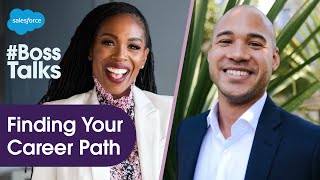
Michael Ellison, founder of CodePath, shares how to break into tech without traditional credentials. He recommends four moves: fix your mindset, build community with mentors, develop skills through free programs, and network aggressively to turn skills into jobs. Internships and apprenticeships matter more than degrees.
Questions this video answers
Michael Ellison, founder and CEO of CodePath.
November 18, 2021.
He said one of his companies was acquired for a little over $3 billion (described as occurring 'just last year').
He describes CodePath as completely free and teaching thousands of students.
Chapters
I gotta feel like you gotta feeling that this is gonna be good. Hello, everyone, and welcome to a brand new season of Boss Talks, a series featuring candid career conversations with people who are changing the game in their respective industries. Today's episode centers on something I am incredibly passionate about, and that's embracing the career path less traveled. And what I mean by that is not everyone goes the traditional route from high school to college or from college directly into the workforce or even to college at all. There's more than one path to success, and that's a good thing. So to help me explore this topic, I've invited Michael Ellison, founder and CEO of CodePath. CodePath is redesigning college programs to help underrepresented students land coveted jobs. Michael, welcome to BossDocs.
Oh, thanks. Thanks for having me. I'm excited, too.
Now, you have such a unique background, and I want to give everyone a chance to get to know you just a little bit better. Can you take us back to the early days of growing up with a single mom, to your experience in school and then eventually getting into tech?
Yeah, well, you know, I was low income Romaine when I was 5 years old. My father was incarcerated. My parents split up. We became homeless for a time. And it was, you know, the type of situation you wear the same clothes every day you're going to school. You know, we do pop Tarts. Sometimes I talk about as pop Tart pour pop tarts for breakfast, lunch, and dinner. Or, you know, I think the thing that was most challenging was maybe sometimes you have good teachers, sometimes you don't. You know, I was a fairly good student, you know, despite everything, got into college, was excited about majoring in computer science because people told me it might be something I could be good at. And unfortunately, I just didn't feel prepared. But I was also a pretty ambitious young person. I didn't want my past to predict my future. And so I started a first nonprofit when I was 19 years old. And then I started two additional nonprofits and then three tech companies, including one that was acquired for a little over $3 billion just last year. So, you know, my experience, I think it's proof that it doesn't really matter where you start. It's about where you finish that really matters. And that's what is the reason why Copath exists. You know, I don't want to hear stories about how if you're an underrepresented minority in tech that has made it and been successful, you had to get lucky. Instead, we want to redesign the pathways so that by default, underrepresented minorities and people from low income first generation backgrounds are able to reach their full potential and feel like there's a place for them to thrive in tech and you know, any top industry.
Thank you so much for sharing your story with us, Michael. I would love to hear your advice. For those on a similar non traditional path who are trying to get their foot in the door, what advice do you have for them?
So I have, I have four key pieces that I think about in the order that I'd recommend. One is to start with your own psychology. Start with yourself, invest in yourself. What are the daily weekly habits that you're doing that help to build your confidence? What are the stories that you're telling yourself? There's different exercises I like a lot. Like I like to do a morning meditation, I like to do right. A gratitude exercise, A daily gratitude of what I'm grateful for. I think also very important is to reprogram how you think about past. You know, sometimes a lot of people can be very self critical. So I do this acknowledgement exercise and I say I give myself credit for things I did well, you know, the day before. And there's a way of reprogramming yourself. I think it starts there with your psychology, how you're treating yourself, how you're helping to be. Prepare yourself to do something really hard. And then I think this next step, number two is about community. Find mentors, find teachers, find peers. It's like if you're going to the gym, you're more likely to stick if you have your gym buddy. So that's incredibly important. That community piece, like how are you going to sit, how are you going to keep going for this big change that you want to make. Find people who are also trying to be on this journey with you. And then number three, skills. Technology is hard, especially trying to get to the level that's going to give you the upward mobility you want and, and so you want to. There's lots of great programs out there. I'll mention Trailhead is one program, one opportunity to get some of the skills. And then I'd say there's a last piece where you can have the skills but you don't have the opportunity. You're still invisible to employers. So that last part of after you have the skills, you put in the time, you put in the work, you have the community. Be aggressive as you possibly can to connect with people who are already in the door at the places that you want to go to. You'll be shocked by how friendly and supportive people will be that you've never met if you just share your story.
I really want to get tactical about what people need to do to get a job in tech or really in any industry, especially if you're not coming through traditional pipelines with that four year degree. So what are the courses or programs you'd recommend or even organizations or groups you recommend people join?
I'm very biased in favor of free educational opportunities because there's so many fantastic opportunities. Anything from like a free code camp. I did mention Trailhead earlier, so I want to sing your praises as well. Of course, copath. We're completely free and teach thousands and thousands of students as well. I want to give a shout out to Career Karma because I mentioned Career Karma is a tech startup that they're really focused on just community from a coding standpoint and they don't charge anything as being part of this community. So I love the programs that are going to get you connected and meet with peers and have that positivity from day one to help you to keep going. Practically speaking, though, just to be real, you have to be. I mentioned aggressive earlier, but I'll give you an example. From early in my career, so started that nonprofit when I was 19, didn't know anyone, didn't have any connections. We literally googled how do you raise money on Google? That was our plan, that was our strategy. Google that. And then we heard that Goldman Sachs is a lot of money. So we're like, all right, we're going to call Goldman Sachs. I was dialing on the phone. I'm like, hey, my name is Michael Ellison. I'm calling from. And you know, we were dialing. The dial number is like, you know, olden days a little bit. Dialing the dial number. And we eventually just got to some random VP that was confused, gave us tickets to a conference that we weren't supposed to have. And then I end up pitching the chairman of the board at Goldman Sachs at the event I'm not supposed to go to because I pretend that I have a ticket. So when I talk about aggressive, I'm talking about like, find a way to get into the room. Find a way to. I mean, you're gonna embarrass yourself, but you have to like, go anyways. I also see, you know, meetups. Oh my gosh. Like, I see so many people that come to Silicon Valley, they just show up at a meetup and there's all these engineers and there's like angel investors or there are all these people who are there and I see people go from not knowing anyone to suddenly there's a community and there's support. So, you know, I think learning, commitment, there is an emotional connection you need to have start there. And then wherever your community, wherever your tribe is bringing you, follow them and make sure you surround yourself with people who are the most talented people you can possibly find.
That's right. I love that you got to sharpen your elbows a little bit sometimes to get on in there and pry that door open. So now you've got your foot in the door, then what? Getting a job is really the first step. Then the work becomes about advancing people in leadership roles or potentially founding your own company. Can you share more about your perspective on this? I know you have one.
One thing I've been pretty good at is distinguishing different types of supporters and being very intentional. So I think of mentors and sponsors and champions. I think of those three different types and I think of the people who are my mentors as they're giving me advice, they're giving me the pointers, I'm regularly checking in with them. I think of the people who are the champions, who are. They're singing my praises. They're, they're doing different introductions. And then I think of the sponsors and these are people who you're, you're in your role. They're like, hey, I'm going to put you here so that you get that promotion. I'm going to. You're an entrepreneur. I'm the one who's going to give you that deal. I'm like, how much? 200. 200K recurring contract. Great. I'm the one. You need to have all three of these and you need to be very intentional. You don't need one. You need an army of all of them. And if you're in an organization or you're starting a startup or whatever, build your army of supporters. And don't just think of them in terms of like, you know, I need their advice. I need. They're my mentor, whatever. Think of them as like, we're going to collaborate. I'm going to add value as well. With every interaction.
This audience knows I have a bone to pick about the pipeline issue in tech. And for those less familiar, I'm referring to the fact that black workers make up only 2 to 6% of of the workforce at a lot of tech companies. But Michael, I love your optimism and how you say that if the pipeline doesn't exist, we simply need to rebuild it. So what are things we can do to help create it?
What gives me optimism is that I see if companies invest more in rebuilding the pipeline, it seems to be an unfair competitive advantage from a talent standpoint. And what I'm talking about is some of the organizations that we've worked that have invested heavily in early career programs or programs where are helping to train based on the technologies that the companies are focused on. They've seen that if they do an effective enough job of designing that end to end program, providing the right support in the right way, then now they have this captive audience that is extremely biased in their favor. And so, you know, getting people to the level where they'll be able to be talented, be a good fit for your workforce, but then also from a, you know, it's a competitive war on talent. So being able to compete, but you know, it comes with meeting those individuals part way. Give them an opportunity to be able to prove that they are as exceptional as they are and you know, people will surprise you.
Right. And that grit and determination is what so many companies are looking for in their ideal worker. So it's really a win win for both and we can make that happen. I want to zoom out and talk about the impact on a bigger scale. How does welcoming untapped talent help companies and our broader society begin to address deeper systemic issues of racial equality and inclusion? And I understand this is like a really big topic, so we might even need a part two to this. But what are your thoughts on it?
Actually, I think this is like a really clear cut. I think in a way, when I think of racial equity, I think a company's talking about racial equity, then there's one question like, are you creating pathways to power influence for marginalized communities? Are you doing that? Are you creating those pathways? Because if inside of your company you're creating these pathways for upward mobility, if you're creating the inroads into your company, then the way that you're going to change the culture and the way that you're going to change it to be a more inclusive workspace is by having these people from underrepresented communities and disadvantaged backgrounds have the pathway to be in the decision making seat. You know, from the board, you know, to different executive team to whatever, these pathways are critical. And so I would, I would say, you know, letting in this untapped talent is the recipe for you changing the leadership and the dynamics and for mill management and whatnot. And the better an organization is at doing this, the better, the faster they're going to transform things. They're gonna transform what the SaaS quote looks like. So I'm completely all about this. Untapped talent is going to be your tool and your opportunity to change your culture from within.
Michael, I get this question a lot from friends and family and on my LinkedIn, where people just, they want to be in tech, they want to start coding, and they just don't know where to start or if it's even too late. Do you ever think it's too late to pursue a new path or to get started in tech?
No way. The tech industry reinvents itself, like, every five years. Every time you hear a new buzzword, a new technology, you hear about blockchain, you hear about what, like what? Mark Zuckerberg said something about the metaverse recently. Metaverse. Every time you hear a new buzzword, that means that there's a new opportunity for learning skills quickly go out of date in tech, which is a bad thing. But it's a great opportunity for those that are brand new because it means a new technology comes along and you just dive into that, and then you can start to become part of that in group, that Illuminati, those people who actually know what they're talking about and what they're doing. So it's definitely not too old. And especially want to impress that there is a world of different opportunities. There's a, you know, I'm. I'm more artistic, I really care about. If you look at the impact tech has had on culture, on movies, on music, there are so many different areas that you could be very excited about that you might not even know exist. You might be like, I'm not a coder. It's this one thing. No, no, no. There's so many different types of programmers out there. So I think anyone could find an area that they would probably at least be a little bit excited about.
I know our boss talks, audience is going to love that. I know there are probably some people out there going to thank goodness it's not too late. And I just love your optimism about it. And I think it's real. There's so many opportunities available. So, Michael, we've been talking a lot about tech today. Do you think the same ideas apply to all industries?
100%. 100%. The way things happen. I'm thinking about my second startup company, where I was actually still pretty young, I was still in school, and it's. I was trying to figure out what to do. I didn't know what I wanted to do. I was just like, I need to do something. I did this nonprofit. What's gonna be this thing, which somehow gives me a way to have the leg up or to stand out or to get ahead or what can I do? And I actually found somebody my brother was following on Twitter who was really interesting. He had been head of corporate social responsibility for Nike. He started MTV's pro social programming, won multiple Emmy awards, was head of talent for the Obama campaign. There's all this stuff. I was like, oh, my gosh, this is amazing. The intersection of all these things. And so I reached out to him on Twitter. It was kind of annoying. And then he eventually was like, yeah, sure, I'll meet with you. I'm, you know, I'm heading to Boston and we can grab dinner or something. And so I met with him. I'm like, this is my shot. And so we had dinner, and. And I pitched him, like. And he's like. He's like, cute, cute. Experience with your nonprofit. Like, sounds great. Look, I don't need you. I don't even know what you would do. You don't have any skills. I mean, you're kind of early in your career. And he kind of left it at that. He was like, okay, I'm going back to New York. He goes back to New York, and then for the next month, I just start working for him without his permission. So I just. I'm like, let's see. He's busy. He doesn't have time. What things could I do that he doesn't have time for? I'm like, I'll do some research for him. Hey, I think I heard he was meeting with this company. I'll just kind of anticipate something that he might need to be done. So he's like, stop, you're annoying. What are you doing? Stop it. I'm not going to work with you. But after a month, he was like, okay, fine, I'll invite you to some meeting to take notes, but I don't really need you. It's just that, you know, that seems like it could be useful. So he invites me to the meeting. And in the meeting, there's. This is the tech intersection. There's a bunch of developers that are on the call, they hired at this design firm. And I just ended up, like, taking notes and organizing things. And then he kind of realized that he hated to do something that I actually like to do. And that gave me my end. And then after a couple more weeks of working with him, he's like, okay, you're kind of valuable. Move to New York. You can be my partner. And then kind of the rest was history. But all of that was a non technical thing that was just like, how do I figure out how to add value and how do I get my foot in the door? So I think the hustle, the intentionality, the figuring out where you can leverage what you already can do is extremely important.
I could not agree more. I tell the folks I mentor all the times, like, find the gaps, finding. Find the thing that your boss doesn't want to do. You will always have a job. If you figure out, be useful, get in there. I think that's such great advice. Thanks for sharing that story. So my final question, and this is my favorite question, because we ask it of all of our guests. Michael, what is your superpower?
Yeah. Yeah. So, you know, I think I just, I'm very authentic. Like, it's hard for me to not just be myself, my personality, my this, my passion. And I think that leads to trust with lots of different parties. And trust, I think is one of the most important things that you can have or you can be good at, that you can leverage. Say you have a big idea and the right people trust you. I mean, you can literally just change the world. What's the difference between raising $5,000 or raising $5,000,000? It's those people trusting you. You know, what about someone influential lending their name to your cause? Game changing. But they have to trust you. They have to be like, okay, well that's like, I will do that for you. Or even, you know, you know, nowadays talking with billion dollar companies to try to convince them to do something they haven't done in the past. Well, if they trust us, they were like, yeah, it's a crazy thing, but yeah, I think you can do it. Then you can just move mountains. So I think of that authenticity as the core and then resulting in trust over the long term. Hey, we're going to be there next year, we're going to be there the year after. Look at where we were, look at where we're going. I think that I consider that my superpower.
Yeah, you definitely nailed that one. Michael, thank you so much for being so open and authentic about your purpose, personal experience, and then the experiences of your students. It's really delightful to hear. The path to success is not always linear. And I know this helps all of us understand and really appreciate that. So thank you for joining us today.
Thank you.
I know this is a popular topic with all of you, so let's hear your questions.
It's my understanding that you need one internship, often multiple internships actually, to break into that professional world. Is that the case?
Hi Max, Great question. I am a huge fan of internships and apprenticeships and as a hiring manager I can tell you that seeing an internship on a resume is so valuable. It lets me know that you spent time in a corporate environment. Time developing what I like to call workplace survival skills. Skills like communicating with colleagues and executives, networking, critical thinking or just keeping up in a fast paced environment. These skills are so important now. Can you break into the professional world without an internship? Yes, absolutely. But having that experience is not only beneficial to the hiring manager, it's also helpful to the intern. Nothing helps validate your skills or makes you feel confident in your career path of choice like real world experience. So if you can get it, take it. I hope you all enjoyed today's conversation. For more Boss Talks, be sure to check back here on Salesforce plus so you never miss an episode. And to continue boss building, head on over to trailblazer.salesforce.com to join millions of trailblazers who are learning relevant skills and giving back with the Trailblazer community. With that, thank you for tuning in to Boss Talks and see you all next time. Sam.









