Go for your goals with Kara Goldin, Founder and CEO, Hint, Inc. | B-Well Together | Salesforce
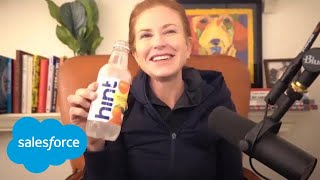
Kara Goldin left tech to start Hint water after quitting diet soda and losing 20 pounds in 2.5 weeks. She talks about building the brand from her kitchen to 20+ flavors in Whole Foods, staying mission-driven when people doubted her, and balancing business with parenting.
Questions this video answers
She says she lost over 20 pounds in about two and a half weeks.
She states 'today is about 45% of the population has type 2 diabetes or pre diabetes.'
October 20 (book launch date mentioned).
undauntedthebook.com (redirects to Hint site) — purchase currently includes a free case of Hint.
Sheryl Sandberg will interview her on Facebook Live at 12 PST / 3 EST; they plan a Guinness World Record for largest book launch streaming on Facebook.
Chapters
Hello. Hello, and welcome back to another edition of Be well Together. So excited that we could be here with you again today. And man, we have someone really special here today, someone who is literally going to quench our thirst for. For some good wellbeing tips. It is my pleasure to introduce you to the entrepreneur and health activist Kara Golden. Yay. A crowd goes wild. Hello, Kara. So, people who may not know you, Kara is the founder and CEO of Hint, Inc. Which is, of course, the delicious fruit infused water. And she developed this. Oh, what flavor are you drinking this morning?
Clementine.
Clementine, yes. Kara, of course, invented this in her kitchen as just a little concoction and a ploy, as I understand it, to get your children to drink more water. Was that correct?
Yeah. And myself. And myself. And yourself. And yourself.
Always good to put yourself out there first. Kara also hosts the Unstoppable podcast, which I love. She has really great conversations with industry disruptors and innovators. And she is the author of a book that I believe is coming out next week called Undaunted. So this is very exciting. So, Kara, just welcome to Be well Together. This is a little show that we started in my bedroom when we went into lockdown, and we've done over 100 episodes. And so we're just delighted that you could be here with us today.
I'm a huge fan of the show. So it's. Yeah, I saw Arianna Huffington the other day and it was amazing.
Yes, well, it's amazing. She's a great woman and so are you. And so I want you to share a little bit about your story. Like, just give everyone the kind of the background into how you've kind of come to, you know, you were an executive and then you kind of shifted gears and you became an entrepreneur. So give us a little bit about your background.
Yeah, so I was actually in tech prior to starting this company, Hint, and decided to take a couple years off. I live in the Bay Area and this was, you know, a little over 15 years ago. And during that time I had three children and I was taking some time to spend some time with them. But also I decided to get healthy. Like, that's what you do when you are in between jobs, right? You start working out. This new store, Whole Foods, had just opened in San Francisco, and I started shopping there a lot more. And what I realized is that the sort of sticking point for me around health was really my energy levels were significantly lower and I really couldn't figure out, like, I wasn't working. I thought, there's no Reason, I've got little kids, but, you know, I should be able to manage this. But I had also developed terrible adult acne. And I had gained a lot of weight over the course of having these three kids that I just could not take off. And so as I'm running and chopping and eating healthy, what I realized is that I was focusing on the ingredients that I was putting into my body in the food. And then one day, I looked down at my soda can, that was my diet soda can that I had been drinking forever. And it had more than 30 ingredients that I didn't understand. And that's when I really decided that I should just put the diet soda off to the side and kind of see what happens. Not really thinking that it was going to make any difference, but again, I was on this program of really reading labels. And that's when, two and a half weeks later, after just totally giving up diet soda, Diet Coke in particular, I lost over 20 pounds. And my acne cleared up and my energy levels went up. And so, you know, really got me thinking that it really wasn't that difficult to, you know, get what I wanted by just making this one change yet. I had been fooled for so many years to think that diet soda was actually healthy. And I started questioning, like, why I believed that diet was actually better for me. And so I was, you know, humming along, drinking water. I had swapped out plain water for my diet soda, but I realized that it was really a chore for me, and that's why I had been drinking something other than water. And I really looked at the industry, and again, I had never worked in elite, you know, beverage or soda or any. Any of this. And I really started looking at this industry as something that, you know, if it wasn't diet, it was. Also, friends of mine were drinking this drink called Vitamin Water that was extremely popular. And again, it was water and it had vitamins. And I just couldn't understand how, like, it had more sugar in it and calories than a can of Coke. And I couldn't understand, like, why people actually thought it was healthy. And then I really realized that it was just really the vocabulary and the words that were used to ultimately fool the consumer, you know, and really, these were healthy perception products versus healthy reality. So again, I'm super bored with the water. I started slicing up my own fruit in my kitchen and throwing it in the water, and then, you know, realizing that that was all I needed. I needed something that just gave it a little bit of, you know, kick. And. And so that was when I started looking for this product in stores, and again, was recognizing that there were all these healthy perception products out there that really weren't healthy. I looked in some of the best stores that I could find, including the Whole Foods, and they weren't carrying a product that was just still water, you know, with fruit in it. And then, you know, also went down this path of actually figuring out what was in a lot of these flavorings, including, you know, cockroach wings, which are all natural.
Oh, my God.
Bone marrow, other stuff. And that's when I was really, you know, I was thinking, I should just go and develop this product. I didn't even call it a company. I really said, you know, I'm just. I just think it'd be really fun to just get a product on the shelf at Whole Foods. And that's when, you know, I had three flavors. I was, you know, making my kitchen. I was living in San Francisco at the time. For those of you who live in San Francisco, I used to live right across the street from the town school. And I knew that at 8:30 in the morning, there was like, a kid lineup. I knew a lot of those parents that were dropping their kids off. So I'd be like, oh, I got to be there by 8:30 so I can get them to try this flavor. We didn't do focus groups. I mean, people are like, that's so cool that you started a company. I'm like, is this a company? Like, I don't know if it's a company. I mean, I've got three flavors that I'm like, you know, I make it in my kitchen. Like, I had worked at, you know, AOL and time and cnn. Those are companies. Like, I had not, you know, I really didn't even view this as a company. But when I ultimately got it on the shelf at Whole Foods, and, you know, customers started writing me immediately and calling me on my, you know, bottle. I put little customer service 800 number. People were sharing their stories of how like, oh, thank goodness you developed this product. I mean, it's really helping me to drink water. It's helping me to control this new disease that had come out, which is called type 2 diabetes, which today is about 45% of the population has type 2 diabetes or pre diabetes. And so what I realized is that just by launching something so simple, I. It got people to drink water, but it also really helped people a lot. And I like helping people. Who doesn't? Right? Like, helping people.
That's the best motivation of them all.
Right.
Helping people is the best. And, well, I mean, first of all, I cannot tell you how excited I was when I had my kids with me and I was in a store one day and they were like, we want to drink. We want a drink. And we are like, we are notoriously the sugar police in our circle. Like, that is what all of our friends refer to us as. The kids don't necessarily want to come over to our house for snack time. And gosh, it was so refreshing when I was like, what's this? I remember the first time that I saw Hint and I was like, you can have any of these. All of these. Pick a flavor. And the kids were thrilled. Right. So just personally, thank you.
But I guess I want to, like.
What you did is really remarkable. And, you know, your book is called Undaunted. And I want to just kind of double click in there in. It does seem daunting. Like, you know, you went from being curious and, you know, providing, you know, a beverage to the kids in line trying to get in school to starting a company, I mean, which didn't seem like a company at the time, but just, I don't know, how do you. How do you get there? Like, how do you go from like, hey, this is a fun hobby. This is a fun idea. This is something I just enjoy doing to massive bottle manufacturing and distribution and, you know, financing and, you know, product modeling. I just. It's just from where I sit, it does seem daunting and it does seem like, I don't know that I would ever start my own company.
Yeah.
How do you get over that kind of hump?
Yeah, I think, like, the key thing for me was, you know, I was at a place, frankly, in my career. I was at AOL when it was pretty young, and I had launch the shopping and E commerce partnerships and was running that for seven years. And I think that the challenge for me was that I built this great business that I loved and was super exciting, but I didn't feel like I was learning. I got to a level where I was, like, I was managing, everything was going fine. We were. We were not at that hockey stick where, you know, we had been earlier on, but I was doing a ton of travel. I didn't really want to be there. And then when I figured out, like, what I was really most focused on was my health, like, I just said like this, I need to hit reset. And so when I, like when I started really thinking about this stuff every single day, that's when I. And ultimately, like, why I decided Just to kind of launch this. And again, not really thinking of it as a company. People ask me all the time, did you always know you wanted to be an entrepreneur? And I'm like, no, I wanted to solve a problem, which is kind of what working in a crazy company that is growing like a salesforce, or how AOL was back then was where, you know, you're constantly solving problems inside and, like, making things work. And so for me, I had been used to doing that kind of role. But this was something that when I started to think about, you know, where I ultimately want to work, I just saw this problem right in front of me as something that I could do. And, you know, as you mentioned, my book is called Overcoming Doubts and Doubters. What I found in speaking over the years is that people will kind of preface their questions by saying, of course, you seem very confident. You've never had any doubts. You've never had any failures or fears. I'm like, oh, no, I had all of that. That is not true at all. In fact, I think most leaders, most entrepreneurs, most professional athletes have all of those things, too. The difference between me is that I go try, right? And I'm okay with ultimately failing. I am, you know, constantly encouraging myself to not fear things. And so. And clearly, I had my own doubts. Everybody's got doubts. I had doubters. There's stories, you know, in the. In the book about, you know, an encounter with a Coca Cola exec who. At one point, I reached out to get some thoughts and advice through a friend, and he called me. He said, sweetie, Americans love sweet. This product isn't going anywhere. And I thought, wait, did he just call me sweetie on the phone? You know, kind of crazy. Which, of course, you know, he had a lot more experience than I did and was, you know, really telling me that my idea was terrible. Most people have. When I've shared that story, most people have said, but wouldn't that cause you to just, like, shut your whole idea down? Shut the company down? It was about a year old at that point. And I said, what I realized was that I was listening to somebody who wasn't focused on the same thing that I was, which is improving consumer health.
Yeah.
And, you know, he was more concerned about how many bottles am I gonna sell and how do we trick the consumer? And I was on a very, very different mission. And so I think that, you know, part of the. Part of, you know, the reason and, you know, clearly when I'm. When I'm sharing my stories, my hope is, is that by Telling my stories of just going and trying and encountering some of these, you know, people that clearly doubted me along the way, that I think that it will inspire people, hopefully, to actually go and figure out what they want to do every single day. And no better time to do that, I think, than now.
It's so beautiful, your story. I love it for so many reasons. It really brings together a lot of different themes that I've been hearing in the last couple of episodes and an episode that I'm assuming we're going to hear about more on next week. So we had. Greg McKeown was on a couple weeks ago, and he was talking about essentialism. Right. And really focusing on what's important and how much energy that can give you. So aligning your work to your passion, you know, and making sure that your values were completely aligned and then being able to be excited about the opportunity of learning and, you know, and let that fuel you as well is really. Is really powerful. It just kind of shows how all of that can really trump any fears that you have or the doubters in the case of what you had, what you were experiencing from that other guy.
Absolutely. And I think, you know, I also started this company when I had four kids under the age of six. I mean, you know, it was nuts.
I mean, that in and unto itself is daunting. Just that statement alone is enough.
Right. But just as an example, I wasn't in a hurry to get this company to have distribution across the US tomorrow. Or I really thought of, I want to have a family. I want to be present. Clearly, I had help along the way to help me build this, watch my family, so that I could build it. But I also feel like, you know, fast forward many years, too, that I've also, you know, taught my kids, who are now a bit older now, how to like some really, really important lessons, including, you know, if you're passionate about what you're doing, then, you know, that allows you to work really hard. Right. And in a joyous way, I wish.
I have to say, I think that is one of the most important lessons we can be teaching our kids. I remember when I was going back to work after mine that somebody said to me, you know, every day when I go to work, I don't say, mommy has to go to work now. I say, mommy gets to go to work now. Yeah, you get to go to school, and then we're going to come home, we're going to talk about each other's days. And I was just like, what a different mindset yeah.
And also as a, you know, as my son, another story I share in the book when I think Sheryl Sandberg was talking about lean in on TV and my son, when he was 12, saw her and said, mom, I just realized that women aren't CEOs of companies. And I thought, okay, where are we going with this conversation? And then he said, but you've always been the CEO of a company, so why is that, that women aren't CEOs of companies? And, you know, and so, you know, I said, I don't know. Like. Right. And I. And he said, well, like, I don't. I don't get it. And, you know, and so I feel like there's a. I'm a role model for this next generation just by doing what I do every single day. And I think that that's, you know, another piece of this, that, you know, what I've learned about building a company along the way, too, that your, you know, your sons, your daughters can also see that as well. So what.
Let's, let's just double click on that. So what do you think? What advice would you give to someone around that fear element? And I guess the thing that I'd like to double click on, I don't want to just say women, because I think, you know, as long as we're only having a conversation about women in the workplace, it's never really equally parenting. Right. So what do you say to parents who are afraid of, like, this dream that they have of starting something bigger or starting something from scratch, that is what their real passion is and the ability to balance having a family. Like, how do you. What? Because that's a real fear for a lot of people that you see them just kind of holding back. Because I don't want to mess up my family.
Yeah. Well, I think that there's a few different elements there. First of all, I think the idea of living with fear is not a good thing. Right. And so I think that if you continue to kind of build up this wall in front of you that says that I can't do something because I'm afraid of something else, why can't you figure out a way to do something in a smaller way and. Or, you know, as I mentioned earlier, also take your time. Right. To do it. I mean, there's plenty of examples where people also actually did, you know, I guess now they call it side hustles, where they've got this passion and they start to kind of test the waters over on the side in order to see whether or not it's even a viable business. And so I think there's a lot of different opportunities there. I feel like so often when people talk about, you know, the reason why I can't build what I ultimately want to do is because they, you know, feel like they have to quit their job. They have to, you know, go, and it has to be successful tomorrow. And they're also afraid of kind of what ultimately could happen, which is failing. And so, you know, I think that that's another conversation that I talk about in the book, too, where, you know, I believe that every single one of our failures ultimately make us stronger to be able to tackle the next hard thing that we come encounter we, you know, have an encounter with. And so that's another piece of, you know, why we should actually be embracing challenging times in our life so that we can actually. We know that it's all part of this journey that we're on, and ultimately that makes us stronger. And so plenty of people have talked to me about COVID and sort of how I'm still the. I'll always be the founder, but I'm still the CEO of Hintwater. And lots of decisions needed to be made as a leader walking into that, including, we're an essential product. And so we've got a team of not as big as Salesforce, but over 200 people that are out and working virtually. And a lot of our company was already virtual with Salesforce all over the country. But it's interesting, I think, that there are points along the way in building this company, including the 2009 financial crisis, that really helped us to, although it's very different than a pandemic, really helped us to kind of do the right things and act a lot quicker than we did in 2009. And I think that, again, I didn't wish. I didn't see 2009 coming. I didn't wish it upon anyone, but it was a really challenging time. I wouldn't say it was a failure, but it wasn't good. But as a leader, I, you know, have those times when maybe I didn't do everything that I should have done, where this one, you know, I was like, you know, we were in pretty, you know, good shape in terms of reacting to things along the way. And so, again, I believe, like, telling those stories, too, it's what people need to hear that, you know, instead of, like, dwelling on something, you know, that happened or went wrong or whatever, keep moving forward, keep trying. And that's the most important message out of that.
Well, I Love that. And I think if you were to look at, like, what you've learned this time around, like you mentioned 2009 and things that you learned from that, what do you think your big lessons will be from this? Like, what are you taking away from this experience as a leader about how to adapt quickly and how to, you know, keep moving forward and not becoming. Being undaunted?
I guess. Yeah. I mean, I would say that the biggest thing that I've learned is take care of your people and make sure that everybody's doing okay and continuing to be doing well. Also focus on what's working and understand that there will be challenges during times that, whether it's a financial crisis or Covid or whatever, and do what you can ultimately to help areas that seem obviously in need. So just as an example, I mean, we've always been very charitable towards first responders, but that was something that we saw immediately, and we probably acted much quicker than a lot of other companies. And again, like, for us, obviously, it's easy because it's water. I mean, you know, of course they're gonna, you know, take water, but, you know, it's amazing how many companies, like, just don't do that kind of stuff. That. That's just not part of their overall mission. But I think that that really is, you know, a key piece of just leading during a crisis as well, is trying to figure out, you know, what can you do that also makes your company and your employees happy to be a part of a company like that. I think that that's super, super key. But more than anything, I feel like we're going through a time, a reset right now, and that really is. It's challenging for people. But I think it's also a time when a lot of people are trying to figure out, maybe they're furloughed or they've got friends that are furloughed or laid off, and people are really trying to figure out, like, what do I really want to be doing, you know, And I think that a book like this really, you know, resets a lot of people, from what I've heard from many who got a preview, that it's like, helps them think about, you know, what's next. And maybe I shouldn't be saying just because I don't have experience in that industry or, you know, I have kids at home and I can't do this. I, you know, always share with people. You actually can do what you ultimately want to do. You just need to, like, knock that wall down, get out of your own way first and start trying. And because also you may start to go down a certain path and think, gosh, this really isn't for me too.
Such a timely, beautiful message. I am just so excited for you because this really is what this piece, period, this moment in time is all about. You know, we have to reevaluate. We have to reevaluate what's important to us. We have to reevaluate our relationship with the Earth. We have to reevaluate well being. And, you know, sometimes this. Sometimes I think about this pause that we're in, as, you know, the universe, kind of giving you permission to just say what's important. What do I want? And I'm just so excited for you and this book and to be able to read it and to think about what it really means for our future if we all were to be a little more undaunted in how we approached our learnings from this period.
Definitely.
How do we order the book? Sorry to interrupt you. No, no, no. How do we get this book?
Yeah, so actually, if you go on to our website and do undauntedthebook.com you can actually, it will take you to the drinkint.com site. And right now we're offering, if you purchase the book, you get a free case of Hint as well. So, like, why wouldn't you?
Everybody hear that? Get in on that.
Yeah. Undauntedthebook.com it will take you over to that. And then of course, it's available on Amazon, too. There's another book out, but you got.
To go the other. You got to go Undaunted.
I mean, why?
Because you get the water.
Exactly. You get the free case of water sent to your home as well. And if you buy it through Amazon, that's a. There's another book called Undaunted written by the head of the CIA. So different book.
Not that one.
Don't get the free book. Very different book. Mine has a picture on the front of it. It looks like this. So.
Okay, got it.
Watching it.
So.
But you want to get the free case a hint too, anyway.
Well, okay, well, tell me. I mean, this will have to be my last question because I think we're at time, but I mean, if I'm going to get a free case of water, tell me, you know, from the top, the woman who's done it all, Kara, what is the best flavor of hint water?
What is what? Oh, my God, there's so many. Well, there's over 20 flavors.
I know. So what's your favorite? You got one. I got one box to order.
Well, clementine is pretty darn nice. The cherry or the BlackBerry? They're older flavors, but they're so good. Lemon. I mean, you need to try a few of them.
They're fantastic. And cherry and BlackBerry have long been a favorite in this household, but I haven't had the clementine, so I think I'm gonna order some clementine with mine.
Super, super yummy. So. And the book launches on October 20th. We're actually, for those of you interested next Tuesday, Sheryl Sandberg is interviewing me on Lean in Facebook Live. Amazing. Yeah. And we're actually. Get ready for this. We're going for a Guinness world record for largest book book launch streaming on Facebook.
Okay.
So it's at 12 PST 3 EST.
So we can all hydrate. We can all be a part of a Guinness Book world record, which, I mean, what else have you got to do in the pandemic?
I know.
It's like, get yourself in some world record. That's amazing.
I know. I know. I think it's pretty great, so.
Well, I'm excited. I think I'm her. I think I'm your opening act. I think I just opened for you. You did. Which is for a Guinness Book of world record. I mean, be well together is just going places. This is amazing.
Exactly. So we're very excited.
Well, Kara, we are thrilled that you were able to give us some of your time today. Thank you. Thank you. Thank you for being here. What an inspiring story.
Thank you. And you guys, please visit me on social Aragolden. I please read the book, and I'd love to hear your thoughts on it as well. And super great to be here. Thank you so much.
You are so welcome. And so to everyone who has once again done a good job prioritizing yourself and carving out a little time to just think about who you are now and who you want to be on the other side of this. I say thank you and just be happy, be healthy, and just be well. Goodbye, Sa.









