How Can AI Agents Transform Nonprofits? | Salesforce CIO Corner
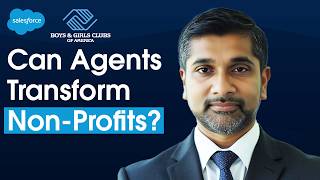
Matt Matthews, former CIO of Boys and Girls Club of America, explains how nonprofits can use AI agents to personalize donor and volunteer engagement at scale. He recommends starting with small projects like internal Q&A systems, ensuring data quality and security first, and positioning agents as tools that amplify fundraisers rather than replace them.
Chapters
Typically, nonprofits are agnostic. You know, race, gender, nationality, shouldn't matter in terms of who we serve. Ensuring that the AI isn't biased is really important that we're using our truths, the data that we have, versus pulling in other information that may be ill informed or inaccurate.
Hello, everyone. Welcome to CIO Corner. Today I'm joined by Matt Matthews, great friend and the former CIO of the Boys and Girls Club of America, one of the largest nonprofit organizations that supports after school programs for more than 4.6 million young people. Matt, thanks for joining me.
Thank you for having me.
Today I want to really focus our discussion and our conversation on the role of AI agents and how these agents can play into. In helping nonprofits carry out their operations. What have been some of the key operational challenges, some of the inefficiencies that you have hoped AI can address while you were the CIO at the Boys.
And Girls Club in terms of AI at a nonprofit? So we have different areas we can explore. First, how can we improve programming and support of those whom we serve? How can we stay engaged with the communities that. That we serve? And then let's get into the brass tacks of it. There are volunteers that come to our organization. Maybe it's every day, maybe it's once a year, but there's also donors. How do we stay in touch with them? Let's say you host an auction or some type of a dinner. Typically it's somebody who is already on your board. It's a trustee that's. That's the host of one of the tables. They've invited people that they would like to get involved in this organization. Well, how good are we at following up with them? It can be as simple as, thank you for attending. Here are our next few events, but also here are some opportunities for you to volunteer and give. When you talk about an event that maybe has 5, 600 people and your fundraising team is five people, how do we get to everyone that night? It's so important when there's so much choice in this world, philanthropic choice in this world, you. You really look towards those that are gonna stay in constant communication, but in a personal way and not just to overwhelm you with spam. And that's where I think differentiates AI from just canned emails. It's gonna help us personalize our communications.
That is really interesting. You actually brought up something I had not thought about in preparation for the session today, and that is the use of agent technology in supporting contributors to the Boys and Girls Club for fundraising. I'm assuming today that nonprofits have lots of people sending mailers or perhaps reaching out to people on the phone, trying to make a connection, multiple events to do that as well. I think that agents could actually help support a lot of those processes. Right?
You're absolutely right, Juan. I think there's a couple of things you just touched on. There's people, right? We're dependent on the people. But what happens if somebody gets ill or, you know, just needs to take a break for something? What happens to that portfolio and that relationship? The agent can help pick things up. And also our donors and our volunteers have questions. And how do you respond to all those emails? You know, as a good practice, you want to respond to these important people within 24 hours. Maybe an agent can help us out in that regard as well.
You know, Matt, I think as you described it, the. The way to actually connect with more people, engage with more people, be able to do it efficiently, the use of agents can be very effective in accomplishing that. When you think about AI, agentic AI, where now you have these agents that not only are performing basic tasks, but also can take action based on the user's responses, based on the data that it's provided to them. It makes it a very powerful solution to have this technology be smarter than the basic chatbot and really be in a position where the responses that are created for the specific, in this case donors, are more specific to their needs, more specific to what they need to know and understand about the organizations that they're wanting to support.
So, Juan, this is all everyone wants to talk about and specifically talk to you about. Salesforce has released a new agentic AI product. It's called agentforce. And why is it more powerful than the other AI solutions we might be working with today?
I think it's the first time I've seen a platform where you can go in, not only manage your CRM processes like Salesforce's clouds allow you to do, but also be in a place where you can build AI capabilities, tools, technologies for the organization much quicker with trusted data, with data that is only yours, and that can ultimately help you automate and simplify multiple business processes. It's quite exciting. And one of the best parts of these agents is that they're not just simply, you know, basic chatbots. These are agents that can understand context, that can understand content, that can understand history, and ultimately be able to bring all that data together to take actions on behalf of the users.
I love that.
Thank you.
And I think you're starting to explain how it's not a chatbot, and it's not actually replacing the fundraiser or the salesperson, if you will, It's a companion. Right. It's how we can maybe rephrase something or I think we've even seen situations where people in roles like yours have also asked this kind of question. So it's a partner, really, in fundraising. It amplifies your team.
I agree. Now, one of the things that we all as technologists need to continue to realize and recognize is that with any new technology, there are new challenges, there are new opportunities, but there are new risks that we need to address and definitely assess and prepare for. When I think about the nonprofit world, Matt, and the implementation of these technologies that can touch so many people, in many cases people in need, how do we make sure that these technologies work, that the data is effective, that the security of that data is correct, that the ethical implications of this technology are taken into account, and that we ultimately provide the leadership of the company, the organization that we work with, with the assurance that this is going to work as intended?
Well, that's a really complicated answer that I think almost starts with its non technical. It's coming up with the policy and understanding your mission first. And I think you're touching on some big important parts for nonprofits is ethics. Ethics and AI. Those who we serve are often unable to protect themselves and definitely not protect their information. So we are accountable for that. And it's not just the data that we might be collecting or analyzing, but we also have to be careful as an organization internally, making sure, we call it privileged access management within security, but making sure the right people have the access to the information they are entitled to, but not all of the information. So that's going to be something that I think everyone will be curious about is how do I protect not just those whom I serve, but how do I protect our company, how do I or our organization and the data within to make sure there aren't information leaks.
How do you think if you were to give a lecture to nonprofits on the implementation of AI, how would you approach the discussion towards getting all of these folks from different backgrounds, different areas, all aligned towards using this technology to their benefit?
Sometimes the best thing a technologist can do is not actually talk about the technology. We want to talk about the outcomes. And so we really need to understand the business. So when we talk to a disparate group, we don't want to, you know, there's that old term, you know, textplate. We don't want to text Blaine anything. We Want to note how we understand what they are trying to achieve. And there are ways to make what their processes are more efficient. There are ways that they can get more insights. When you talk about their problems, not your problems, and definitely not how you're solving their problems, you're going to talk about how they can solve their problems much more efficiently and to explain how the business is going to get better, how we'll raise more funds, we can serve more people. That's what's important.
I love it. Focus on the outcomes, right? How, how do you think about aligning with the right partners to bring AI technologies forward into your business operations?
You know, typically we look for a partner who's got a lot of experience in this space. But you know, agentic and AI itself is, I would say, still relatively new. And even in nonprofits, just the implementation has been difficult. So what I look for in partners are let's have some small wins. I sometimes call them beachheads. Let's find a very specific example and ideally test it out internally. So give you a good example. What we did is many of us use SharePoint. Well, how about on the technology page, a brand new employee at the organization comes and says, well, what kind of discounts can I get on mobile devices and which companies can I work with? These are very simple things that we can test out. But it's a small project. Don't try to overhaul your entire RD environment as your first AI endeavor. So find those partners that can do these smaller effort wins and then you can grow with them. Because honestly, we're all learning at the same time.
I think that's a really good point. One of the things that we've been able to see here at Salesforce is how we've been able to bring agent, agent AI into our platform to really help our customers do exactly what you said. Start with small cases, begin with some proof of concepts using the platform, and then expand into more elaborate agents that can take on many more actions for you and for your organization. And that's the way that we've approached it inside of Salesforce as well. Matt, it's been really interesting to see how we've started with simple use cases and now using our own technology, we're building into more complex cases that are all now connected with supporting our customers through help.salesforce.com so I a lot more to come in that space.
You know, our CEOs, they want to know what can I see immediately as a return? What is my return on investment? And you know, what are those kind of conversations you're having today with CEOs and CIOs in terms of talking about what to look for, what does success look like in the AI and agentix space?
The way that I am approaching the discussion is comes in multiple places. The first one is I asked you the question around partners and aligning with the right partners. I think it's really important to do that. As CIOs, we are exposed to so many different shiny objects out there. If you pursue every single one of them, you'll spend a lot of money and get very little return at the end of the day. So it's important that you focus on working with the right partners that will help you get answers, solutions, these new capabilities implemented in a way that will minimize friction and will help you get to a return on investment as quickly as possible. The second one, I've always been a believer of investing in technology in support of the business strategy, not in investing in technology in support of a technology strategy. So I really think it's important that we focus on implementing AI, that it's going to support the business strategy and align with those things that can happen, have the most impact in the organization. I do fear that at some point in time we'll have lots of little AI implementations sitting out there, but they will be unsupported, unmanageable, and eventually they will become a big issue for the IT organization. One of those areas that we at Salesforce believe is really powerful is the customer support area of the business. And my customer support partner and of course my BT team, they're working jointly in building technology that can support us handling more cases through the use of agents, the use of agentic AI. And of course that's going to provide meaningful benefit to the organization. So that's another one. And then the last one that I would say is let's make sure that we do implement technology the way that we know how to implement it, with good change management, with a good change approach, so that we train people, we communicate to people effectively on how these agents, how these AI technologies can help them be better at what they do and create even more satisfaction in the way that they do their jobs.
Now maybe if I can jump into the little bit of the weeds in terms of implementation. So you touched on some amazing things. Change management, partnerships, how do we get started? So I sometimes use this analogy of, of technology, kind of like looking for your first home. Do we build, do we buy or do we renovate what we have? What are some thoughts that you have around that area, starting from scratch to modifying what you already have.
It's a really good question. The way I view it is it's situational, right? It depends on the situation that you're in. There are specific areas of your business where if you have a platform like Salesforce already running and supporting multiple business processes, with the work that we're doing to bring AI into those platforms, the implementation of AI becomes more manageable. And I think that's, to me, one of those first areas of opportunity that we need to tackle and take advantage of. Then you have other business processes that are using existing technologies today that are not conducive to the implementation of AI. Gotta really think hard as to whether those areas should be taken advantage of some type of AI based application. Got to be careful because you don't want to create a lot of friction in the way that people do work. And anything that you, you benefit from, the implementation of those agents is overtaken by inefficiencies in the way that people use that technology. One of the things that I was thinking about in your specific prior area of business was budgets. You have to manage a very constrained budget because nonprofits are not known, or having lots and lots of money available to work and experiment with all kinds of things for people in the nonprofit space, Matt, that are having to really prioritize how they go about managing these budgets, how they go about allocating money to the most important things. What are some of the things that you would suggest to them, they think about in how they plan for next year.
You're talking about something that's such a, you know, big burden for a lot of technology practitioners in a nonprofit. And, you know, we're still in a situation where, you know, tech is considered a cost center versus a business enabler. And I think many organizations have made that, that switch to understanding how technology can be a part of it and how it isn't just, you know, laptops and phones. But one of the things that we have to do, and I was going to ask you something related to it, is. But we need training and some of that comes on the individual themselves to get out there. I know I'm talking to Salesforce. I think you all have an exceptional, great trailhead course on AI and generative AI. You can start there. But I'd be maybe in a similar way ask you, how do we as technologists bring ourselves even forward? We're excited about this technology, but where do we start? How do we learn in terms of training?
For me, certainly as the CIO of the company. And I would make the argument that for many of our business leaders, my team members, the senior leadership of the IT organization, we are using AI ourselves. I am using Genai for multiple parts of what I do. A lot of summarization, a lot of finding data points that can make me, help me make better decisions, certainly finding critical data points related to how we're buying things, how we're allocating our time, how we're allocating our budget. And it's becoming now part of what I use to do my job. And it's forced me to learn more about how this technology works. And in time it's going to help me also use those learnings to drive the way that we use these technologies across the enterprise. And then lastly, to your point before we have a tremendous amount of material here, being Salesforce and driving the implementation of agentic AI in the enterprise, we are definitely doing a lot to train ourselves so that we can sell and position these products in front of our customers. Like you, one of the areas that I think we need to keep getting better at is understanding the risks and the challenges around agentic AI. What are some of the agent type challenges that concern you the most?
The agents, the agentic resources are pulling from data that we already have. How do we ensure that we are properly standardizing the data? How do we even make sure we have enough data so that the agent is actually informing us? Because at the end of the day, you know, we're talking about not just us as internal consumers, but maybe those who we serve are going to be engaging in an agentic way. How do we know and how can we confirm that that's the right kind of information coming out?
Look, there's no easy answer here. We've been working on data strategies for a long, long time. Matt, as you well know, there's no easy implementation of a solid and robust data strategy. But I think this is the time, if you had not done it before in your enterprises, to really focus on data, have a solid data strategy, have a solid data governance mechanism in the company so that as data is used in support of all these different applications of agents in the enterprise, that you can rest assured that that data is usable, it's accurate, it's validated, it's protected, and we can ultimately trust the results that will come from our agentic AI. And then lastly, I would say that having the right technology to bring all this data together is very, very important. And one of the tools and technologies we have here at Salesforce to help us with that is Data Cloud. I'm a huge fan of Data Cloud because it allows us with basically zero copy, to bring data from multiple sources, trusted data from trusted systems to be able to use them in the way that we can trust the AI outputs from Agent Force. So excited about how that is going to play out. Well Matt, thank you so much for joining me today. It's always a pleasure to speak with you. You are a great friend, a great partner and I want to tell everybody today to please check out the links in the description below and be sure to stay tuned for more episodes of CIO Cor.









