How Honeywell’s Digital Transformation Drives Customer Success | Leading Through Change | Salesforce
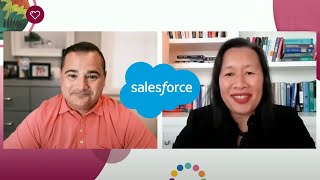
Q. Dallera, CEO of Honeywell Connected Enterprise, talks digital transformation and how the company accelerated customer initiatives during COVID-19. A demo shows Salesforce Customer360 Field Service in action: from case to work order, AI-powered part recommendations, and mobile technician apps with safety checklists.
Chapters
Sam.
When I think of Honeywell, I think of their innovative fans that I need to stay cool during the summer as well as their air purifiers. But there's a lot more to this company. With over 110,000 employees around the world, Honeywell is reimagining and reinventing not just the work they do, but how they do it. Good morning. I'm Leah McGowan Hare and welcome to another one of our live weekly conversations as part of our Leading Through Change series, a chance for you to hear from leaders around the world who are doing their best to navigate these challenging times as well as support their communities. Now, before I hand it over to our amazing host, Bill Patterson, I want to give a quick preview of the next hour. Bill will be interviewing Q. Dallera, who for the last six months has been using lessons from her own personal journey to lead the company through change as the president and CEO of Honeywell Connected Enterprise. Now in that role, she is overseeing Honeywell's digital transformation and equipping its sales service and field service teams with a single view of every customer. With the help of Salesforce Customer 360, we'll then dive into a live demo highlighting the power of field service on the customer360. And after that, we'll close with a very special performance from Anthony Ramos. Now, as we do every week on Leading Through Change, we want to help those who need it the most. This year we are commemorating the 30th anniversary of the Americans with Disability Act. Now, to celebrate progress towards ensuring equal access for all, Salesforce and the Muscular Dystrophy association are teaming up to show strength for mda. Now you can be part of this movement, join that movement and wellness campaign. And listen in later to this episode to hear MDA CEO Lynn o' Connor Voss, who is bringing the famous NDA Telethon on October 24th. Totally reimagined for the digital age. And get this, get ready to laugh featuring Kevin Hart and friends. Now to get involved, please visit the link you see on your screen right now and help support this year's NDA telethon. Our own Bill Patterson had the chance to sit down the other day and with Q to talk about how she's doing at Honeywell. Here's that conversation.
Thank you so much, Leah. I am so pleased to be here today with Q. Q, thanks for taking the time to connect.
My pleasure. It's good to see you again, Bill.
Yeah, you as well. You know, I've been asking everybody, especially in this time, how are you doing in this moment in time that we're all in?
I have to catch a breath sometimes. You know, I'm used to working like you really hard, and there's moments where it's really, really intense and it's fun and it goes away and you get back to a normal level. But I feel like since March, I put on my seatbelt, I shifted to ludicrous mode, and it's been one breathless ride, and in some ways exhausting, but in other ways, really inspiring, because what I'm seeing with my customers is they're trying to compress years of digital transformation in, like, months. And despite the pandemic happening, people are just resilient and inventive about how do they achieve the things they want to achieve with what's going on.
Well, you've been getting a lot of incredible press around the exciting changes you're driving at Honeywell, but before we get into that, maybe you could share just a little bit about your personal journey and the lessons you've learned along the way as a leader.
Well, Bill, like lots of people's lives, it's full of twists and turns. And I don't know if many of your audience know this, but in the late 70s, there was a phenomena with the boat people that left Vietnam after Vietnam War. So my daughter Isla, when she was 5, likes to tell this story. She likes to ask me what was my story like when I was five. And the way she tells it, you know that from my Australian accent, that, you know, I didn't grow up here, I grew up in Australia, but I was born in Vietnam around the time of. Just a few years before the Vietnam War. And the way Ayla likes to tell the story is she says that, you know, we. She makes it very romantic and says, we left under the COVID of darkness in a river cargo boat, and we tricked the bad men who were chasing us by shoving them off a pier. And they chased us and, you know, destroyed all the navigational equipment, and we were left adrift for about a month in the South China Sea. And then, if things weren't bad enough, we got shipwrecked in this tiny tropical island in the Filipino archipelago. So, fortunately, we finally made it to Australia due to the generosity of the Australian people. And I grew up there. Australia, of course, is called the Lucky country, so I feel very lucky about it. Now, the real story is a little different from the way that Isla tells it, but there's a couple lessons there for me that I've used through my whole life. One is that you know, there's ups and downs in life and we shouldn't let those things hold us back, pandemic included, even though it may seem very bleak at the time. And you know, one of the biggest lessons I took out from that experience is actually not the treacherous boat journey itself, but what happened when I got to Australia. And I really believe that life gives you a set of tools depending on how you grow up. And you know, when you grow up poor, you get a lot of tools. And poverty really inspired me at a very young age when I was 16 to set up my own business. I converted the whole family house was like 1500 square feet into a three room classroom. And I taught classes and I had, I started from one student. I got 100 students, five employees. And so I learned entrepreneurship that way, how to make payroll, how to manage cash flow, how to manage people. And I really fell in love with technology because technology help you do things a lot faster, a lot cheaper. And so the three lessons are I never give up. I tell my competitors that I never give up. Two is I love working hard. I want to go to bed every day knowing that I gave it everything during the day. And the last one is aim high. I mean, why not? So now I tell my kids when they say, well, what do you do everyday, mommy? And I say, well, I like to slay dragons and fight giants. So they think working at Honeywell is a very exciting place.
I mean, such incredible lessons you learned throughout and incredible resilience you've seen as a through your journeys and through your leadership. Can you talk to us a little bit about maybe the last six months at Honeywell and how you've applied the same lessons to much of the changes you're driving every day in your current role?
I actually think the business problems haven't changed that much, Bill. I think companies looking for growth and they're looking for productivity now as they were 10 years ago and six months ago. I think the difference is that everyone's looking for those things, but it's got a lot harder. I mean, if you're trying to drive say 5% productivity in sales, you had a lot of ways of doing it. You can buy salesforce.com, you can implement a commercial excellence program or Lean program, but now companies are trying to do that with 40% less fixed cost. And so that's a massively different problem to solve. And so I guess it's a, we all feel a little poorer now given what Covid has done. And so it's forcing us to reimagine and reinvent not just the work we do, but how we do it. And I think it's what's inspiring about that is it's forcing all of us to think about new ways of doing things to achieve those same goals.
Well, you hold the title of CEO of the Connected Enterprise Group at Honeywell. How does the Connected Enterprise Group help Honeywell's customers lead through change during this time?
Well, actually, Honeywell has a lot that it shares in common with its customers, a lot of characteristics. We have one of everything when it comes to software in the enterprise. We have a lot of assets. We have a lot of frontline workers. We have a lot of procedures and processes because we were in critical infrastructure like aviation and manufacturing. And so I think one of the things that we provide customers is we're actually very empathetic to the problem they go through because we go through them. And I think it helps us understand the nature of the operational world and what it has to go through. When you think about digital, and then we're able to translate that empathy into software that works in the production environment. I mean, this is. We're not fad surfing. We really want to help our customers build deep capabilities in the operations space. And building software that does that when there's a dearth of that type of technology in the operations world has been. The reaction has been really amazing, Bill.
You know, when I talk to leaders, especially as they make the transition to digital, one of the biggest traits of digital that everyone kind of universally talks about is this notion of going digital fast. Can you talk about the role of speed and how going fast has really helped you at Honeywell and your clients at this time really reframe the problems of innovation that many are facing.
It's amazing how when you go to business school and there's all these cases of companies don't do anything, even though it's obvious in hindsight there's a crisis. And it always takes a crisis to really be the shot in the arm for you to do something. And I think Covid we had to completely. We had a plan coming into January, and that plan got completely redone in about two weeks. I don't know what was like for you, Bill, but it was just a dramatic change. And you also. We also live with a lot of uncertainty. I mean, uncertainty. It wasn't as if we had and we knew there was a certain cadence and progress we're going to make, but how long was this going to take? And parts of the business where we've Got exposure in aviation and oil and gas. There was a lot of uncertainty. So how do you manage through that? So the ability, I think, to be, I mean, I know agile is kind of a cliched word, but the ability to be flexible enough to adjust to look at signs and indicators as well as customer contact, I think were things that helped us make adjustments. You know, we built a factory to make ppe, you know, when the nation needed us in six weeks. I mean, that would have been a year to build a factory from scratch to make ppe. And so it's scary on one hand, but it's also exhilarating to be able to see what you're really made of when a generational test like this falls on your lap.
I love what you said about this concept of leaning in with customers, because I think you're right. Our plans also were quite impacted because it is my first pandemic I've ever lived through. But leaning into that value of customer success and customer intimacy I think is incredibly important. And I'm just curious, you know, speaking of that customer success moment, how, you know, have the partnership in your eyes with Honeywell and Salesforce come together to really, you know, echo and amplify that moment of customer success for your business?
Well, I think Bill Honeywell at Salesforce has been working together for many years now, and I think, you know, our organizations know each other really well, and there's a good, trusting relationship. And so I would say two things that I draw out of what we've done over the years. One is Salesforce is a great inspiration for what could be possible in the OT world. I mean, as a company, you guys have been tremendously successful in CRM, in sales automation, marketing. I mean, these are just a handful of things, and I think we want to copy you. I mean, we want to be like you guys in the OT world, especially around the connected worker. I mean, I think what's fascinating is that the frontline workers have had so few tools available to them to do their work safely and productively, whereas knowledge workers, I mean, there's a bazillion things you can choose from. So I think there's a massive opportunity for us to work with the billions of frontline workers out there that our customers have and help them be operate more safely, more productively. So that's one hand is I think you're an inspiration for us when we think about what could be possible there. I think the other part is we've been working closely with you on strategic accounts. We don't have a global sales team. In HoneyWell, we have 40 sales teams and they operate slightly differently. And I think you've been very helpful with experts, account based marketing, how to use Salesforce in a better way so that we can start to grow our own muscles around strategic account management and things like that. So this is a little bit of a journey. This is not something that we're going to conquer overnight. But as Honeywell builds capability, you guys have been awesome partners in helping us along that journey.
Well, I mean, the partnership goes both ways. And like you said, it's a partnership, you know, kind of at the center is focused on trust and trust with one another and trust that we can really deliver and kind of create value for our customers. I think one area that often comes to mind for me is where trust gets really put to the test is in the area of service and service delivery. Can you talk a little bit about service delivery at Honeywell and why service is so important now more than ever?
It's funny, if you go back a couple of years ago and when I talked to customers, a lot of them were doing two things. One was they were trying a lot of different technologies with lots of startups and different companies, and that's good. It's good to experiment. It was hard for them to see those things, even if that was a successful proof of concept to get to scale and in production. The other behavior we saw was a lot of RFPs. So it was still very transactional in our world. It was, oh, we want this. And so here's all the requirements. And I kind of think of digital as a bit of a journey. And when you're on a journey, especially in early days, it really matters who you work with, because partnership matters when things go wrong. I mean, who's going to be there with you when things go wrong? And that's how I think about service. And as you know, Bill, Honeywell has a large service business and so we have a reputation with our customers that we're going to be there with them no matter what when things go wrong. And the better we are at that, the more differentiated we will be to them. So. And you know, I think it's also a source of a lot of new ideas that we have in terms of opportunities that come about. And I'll give you an example. One is the industrial world has always been safety first. You know, you never start a meeting unless you talk about safety and review that. But in the commercial world, no one thinks about that really. And Covid's made that completely change. Now wellness and safety is something you have to care about before you even get to the office. So that's a switch. And then on the other hand, you see digital tools in the knowledge worker space, always been there for decades. The IT industry has done a tremendous job with innovation there. But in the OT world, a dearth of availability of tools. And so that's sort of. So you see a bit of convergence between the OT world and the IT world. And I think the linkage there is going to come from service, customer success and seeing those opportunities come up and as you say, Bill, the sort of speed and agility needed to bring those things to market.
There's so many lessons that we all can learn in this moment in time. Like you talk about the convergence of categories and opportunities really to lean in and drive action. What other advice might you have for leaders attending this call today for lessons that you're going to continue to incorporate into your strategy moving forward?
Some of the observations that I've had beyond the last couple of years, I think of when I think about the business problems. They haven't really changed. They're there and ever present. And so when executives look at digital tools as a way to help them, I sort of see three forms. One is some people try to maybe implement a tool, whether it's marketing or sales or supply chain, and that's good. It's good to think about automation and how tools can help your workforce achieve that. You see some companies, you know, build data lakes, they'll have a digital team and they'll try and do ad hoc analysis and that's good. They're trying to get end to end visibility across the enterprise, which is, you know, very difficult problem to get to. And then the third way, which is you don't really see very much. And I do think that Honeywell is one of the few companies doing this, is we're actually trying to virtualize the physical layer just as it. Just as in the IT world, we virtualize the server and networking and all of that in order to have do more with less. That's what we're doing with control systems so that we believe one day you can not just have analytics, but how do you drive southbound and actually drive the analytics into action, into the physical layer? And so that's pretty exciting. And it's been, we had a really great reception around some of these concepts with our customers this year. So I'm super excited about what's ahead. As much as this year's been one breathless ride.
Well, you're an incredible partner, you're an incredible inspiration and also you're an incredible friend for sending me this wonderful Honeywell mask for me to stay safe in this moment in time. I want to thank you for all that you continue to do and leaning in and innovating both on the spirit of our partnership, but on behalf of all the customers that you serve. With that I'm going to go ahead and turn it Back to Liam McGowan here. Thank you.
What a great conversation. Thank you Bill. Thank you.
Q.
You know I loved hearing about how digital transformation is happening at Honeywell and really I love the last part that you talked about taking those visualizations and actually putting implement them into the physical. So always trailblazing and I too want to get one of those masks. So Bill, I'm gonna need you to hook me up. So now I'm super excited to share with you exciting demo by Dana Cherry that's going to show you how field service, excuse me solutions work on the customer360.
Thank you Leah. It is so great to see you. Now before I jump into a demo, I'd like to share a quick story. I have two young kids at home and about three months into the pandemic my washing machine broke. Now with everything going on and everyone sheltering in place and social distancing, companies pretty much stopped doing field service. They pretty much stopped going into homes and workplaces to deliver support. But guess what? Those jobs still needed to be done. I still needed a professional to come in and install a new washing machine, but that made me nervous. I needed to be sure that that appliance company was going to be doing everything possible to keep my family safe. This is why it's so important that teams have the right information, skills and tools to deliver service in the field. And Salesforce provides that. We provide a single platform, the Customer 360 to help companies deliver that efficient, fast, trusted and safe support that we are all looking for. How about we see a demo? Let's see a demo of how a medical device company would use the Salesforce Customer360 and field service to deliver that safe, trusted support that I just spoke about. A CT scanner at Ohana Medical center is a connected device and it recognized that there was a battery issue so it generated a case that our agent at Cirrus Tech can see right here in the service console. This case requires support from a technician so the agent has gone ahead and created a work order. Now, to deliver on site support and avoid repeat visits, field service teams need to have the right information and tools to complete the job, which is exactly what we see here on the work order. Over on the right, Additional parts are being recommended for this job because Einstein recommendation builder is looking at parts that were used on past work orders and is making AI powered suggestions for parts to add. This is new in field service. The agent accepts that suggestion, which instantly adds it to our products required list so the technician can have the right equipment to safely complete this job. Now, let's take a closer look at the asset details. Here we have rich data about this CT scanner. We can even see that it's no longer under warranty. In the middle of this view, there's a timeline and it's showing us everything that's been happening with this asset. With asset360, which will be available in November, we'll empower teams to further streamline complex asset management processes which will improve asset uptime and thereby save you money. Now, scrolling down further, next best action is intelligently recommending that we offer this customer a maintenance plan. This will help them prevent costly repairs and increase the reliability of the asset. Since it's no longer under warranty, the agent can route this to an account executive to generate the maintenance plan opportunity. And because we have the customer360, we can seamlessly turn service into the sales opportunity. Now, once that job is scheduled, it appears on our gantt chart here in the dispatcher console. This is where our dispatcher has a complete view of all the jobs that field service employees are assigned to, even across different regions. In this case, San Francisco and Los Angeles. Now, it looks like there are a few jobs at risk in la, but we need to ensure that we're honoring our commitments to the customer. To do this, we're going to run in day optimization, which will reshuffle all of those jobs to ensure that they're all covered. Now, something like this could usually take hours to do manually, but this lets companies do it in minutes. Let's take a look back at the CT scanner job, and when our technician is on her way, she updates the job status. And we see that change reflected on the gantt. The appointment just changed color. This action also triggers a message to be sent to the customer with a link to more information about the status of this appointment and the current location of that technician. This is going to give our customers, your customers, time to prepare before the technician arrives, creating a safe environment for everyone. Salesforce is helping companies do this at scale. Now, what's that experience like for our technician? Well, she's using the field service mobile app to see all the relevant information about the appointment in the palm of her hand. From here, she can tap on a button in the center of the screen or which is going to bring her to this configurable menu. Safety is paramount. So the first thing she'll do is complete a safety checklist to ensure that she's following all the new protocols to keep herself and the customer safe. Now she can get back to replacing that battery. She has all the asset details here at her fingertips and she can access the relevant knowledge articles if she needs help along the way. Now once she completes that job, she instantly generates a PDF service report and emails it to the customer right from the app. This is going to ensure that she's providing that truly contactless field service experience. Folks, we have the most complete platform for service and this was just a sneak peek into how businesses can digitize their field service operation to deliver that fast, trusted, mission critical support that your customers and that we all are looking for now more than ever. That is the power of the customer.360 platform. With that, thank you. And back to you Leah.
That was wonderful Dana. Thank you so much. I get literally choked up when I talk about field service. If you want to get choked up and get hands on and learn about field service, check out this trail mix right here. SFDC co fieldservicetrailmix and you too can learn about the power of field service and get hands on.









