How Leaders Scale Growth on HubSpot
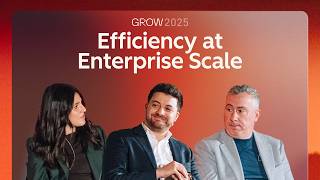
Panel discussion (Devnee moderating) with Haitham (Head of Growth Marketing & Data Intelligence, Your Next Corporate Solutions) and Michael Byrne (Head of Marketing, Empower Business Solutions, part of E.ON) about consolidating tech stacks on HubSpot to unify data, improve lead management and sales-marketing alignment, and experiment with AI. Key themes: data unification across marketing, sales, service and product usage data; building adoption (HubSpot Heroes, business case); treating the initiative as a data project (dedicated CRM/data team); AI experiments (content enrichment, data enrichment, automated sales outreach, customer agents); and practical challenges (data hygiene, federated systems, guardrails).
Questions this video answers
2019
Over 400 users (he said 'you consolidated under HubSpot and you brought over 400 users to the platform').
7,000 customers (he referenced 'this is a key advantage for us with our 7,000 customers').
Head of Growth Marketing and Data Intelligence at 'Your Next Corporate Solutions' (as stated in the transcript).
Michael Byrne, Head of Marketing for Empower Business Solutions, a B2B energy company (a division of E.ON).
Chapters
Hello everyone and welcome. Welcome to this session where we are going to talk about how leaders scale with HubSpot. We have two incredible customers here today that have a ton of experience scaling with HubSpot and we're going to get through some interesting questions that I think are going to add a lot of value to your business and hopefully will help you bring some ideas to life in your own organization. Let's get started.
Yeah. Looking forward to it.
Awesome.
Heydam, I'm gonna start with you. You consolidated under HubSpot and you brought over 400 users to the platform. Can you give a very quick overview to the audience of what the journey has been like and a little bit of how you're using HubSpot?
Thanks so much. So I'm Haitham, I'm head of growth marketing and data intelligence at your next corporate Solutions. I'm running two teams, the growth marketing team and the CRM and data intelligence team. So so since we started this journey 2019, the idea was simple is to create a platform that we are able to track from the visit to the euro. So we started by the growth marketing team, the marketing team with the full integration, then the sales team, then the service desk and customer success team. And right now we managed to brought external data sources like the data, the consumption of our software solution, our product, and also data from external sources like Sales Navigator and so on so that we can have in one single place all our corporate data that is connected with our business data stack and will allow us to empower and detect a lot of new business opportunities.
We talked a lot about unification of data earlier today in the keynote session. So I'm going to dig into that in a moment. But Michael.
Yes.
You have also consolidated your tech stack with HubSpot. You've actually migrated from Salesforce into HubSpot. Tell us a little bit about how you're using.
Hi everybody, my name is Michael Byrne. I'm the head of marketing for Empower Business Solutions. So we're a B2B energy company, a division of E on so quite a small use case in terms of 17,000 customers but 5 billion in turnover. So our use cases are quite kind of niche in terms of compared to some other clients that you might see. The tech stack that we had was really confusing. There was a separate platform for our website, very expensive. We used hootsuite email marketing platforms. The customer journey was confusing and it was impossible to get marketing attribution. So we had to do something and something had to change and that's where we started our Journey.
Yeah. And we're gonna dig a little bit into like that. The specific use cases that you have. You said you use HubSpot in a little bit of a different way than other people. But I'll go back to Haitham first. You talked about unification of data. Tell me, what are some of the decisions that you can now do with your business? Because you have that data unified.
Yeah. So having all the data that is unified, we get access to a new form of decisions and information that are really advanced. For example, our lead management and lead treatment, for example, we can set the rule. If it is a bottom funnel lead, the treatment must be done within the hours. If it is a mid funnel lead, it is done within the days. And it allows us to see really how our inbound leads, because we are in an inbound lead model, are treated in a very good way. And what is the time taken from the lead generation until the first sales meeting, the first opportunity created and finally when it is closed won. And this is just one example. Another example is when we got the usage of our Software data inside HubSpot. Our account managers right now detect immediately if, for each account if there is an upselling opportunity following also the whole path. If he visited the website, if he interacted with the social media, if another sales contacted him for another opportunity. This cross journey where you have all your data points, allows you really to target your customer at the right moment with the right message. And this is a key advantage for us with our 7,000 customers.
In fact, yeah, we hear that a lot from customers. This sentence, targeting the right customer with the right message at the right time, and it being such a complex thing to do because of the number of channels your customer has. Heydama, stay with you for a moment because I know that your business has grown through acquisitions.
Yes.
And you're trying to build this integrated tech stack in the middle of actually bringing new businesses into your organization and integrating their tech stacks and their data. Talk to us a little bit about how you approach that.
Okay. In any. This is a deal situation. The deal situation is that you need to give something. What we gave is a full inbound led sales approach where the inbound is contributing at 90%. This means when you go to the sales and tell them, guys, I give you 95% of your deals coming from inbound. It's very simple, but you need to use my tools so that we can get the best of it. And within bound LED approach, the sales, they just calculate and see. Okay, so no cold calling anymore. The marketing team is creating for me the automated sequences, the nurturing workflows, suggesting for me the right leads generating tens of thousands of leads per year. So that's a very good deal. And once you get the sales there, the next step is you create your customer database, master data inside the tool. And then it becomes easy for the service desk to, okay, all the customers are in one place. Okay, let's manage the tickets inside HubSpot. And after that you get the product data and so on. So you do a better account management. So the trigger was the extensive inbound LED model. And then of course, if there is any resistance, you just bring it into the reality and tell them, okay, instead of cold calling, I give you tens, thousands of leads. What do you want more? And then finally they accept.
Yeah, that sounds like an appealing prospect for a sales rep being told that they're going to get their leads on their inbox and they're going to be easier, faster, better qualified. Michael, I'm going to turn to you because talking about sales, you are bringing hundreds of sales reps into HubSpot. And we know adoption can be a challenge. Talk to us a little bit about a how did you build the business case for this migration and also how are you actually executing on it?
Well, the business case was actually fairly simple. We've got four main sales channels and all of those four sales channels, believe it or not, don't talk to each other. Some are using spreadsheets, some are using part of Salesforce. So it's a really confused and federated situation. We can see that there's hundreds of millions of pounds of leads that have just dribbled away out of our CRM over the past kind of 10 years. So making that case to senior leadership team was really simple, I think where we've come across more challenging conversations and I don't know if anybody in the audience has the same is that I represent marketing and marketing technology. And sometimes or quite a lot of times we're butting heads against a central digital or IT team who think that they know how to sell or how to market. So they think they know what's best. And that's been the real struggle to get HubSpot adopted and then get sales hub adopted because sales and marketing should be in the same platform.
Yeah, well, we believe that they should and we believe that you actually get Gartner also does.
So they say 2.7 times more results when sales and marketing are in the same platform. So I use that as well within the pitch I did to the board.
And I think that those data points are actually very valuable to make those business cases. Tell us a little bit of like, how are you, you made the business case. How are you going back to prove the value of HubSpot now?
Well, I think some of the sales areas that we've kind of integrated are already kind of using HubSpot quite significantly. So anybody now can see a real time the pipeline, the value of the pipeline, the next best action. So it's real, it's visible, it's transparent. And I think that transparency has been a bit of a game changer for us as a business. We've still got some naysayers to kind of get on board and we've got to change culture. But I think the real time nature of sales and where those pipelines are has really kind of made people stop up and take notice.
We always find this inside HubSpot as well, that sometimes when you are going through this big change, you have early adopters, people that join in, they see the value early, they understand the vision, and when we focus on how is it added value to them and how is helping them get better, they can become champions and pass on that message. And the team members actually listen more when they speak than when you speak. Are you finding that's true in your organization as well?
Yes. One of the first things we did was we knew that the project to put all of sales Hub onto our sales community was just done by myself and a colleague who reported to me. We've had amazing support from our HubSpot partner, which is the marketing pod, and they've really helped us kind of give us the confidence and the structure to ensure that we've got a plan. And then we created what we called HubSpot Heroes. So kind of people in the sales community who were early adopters who wanted to help us that saw the benefits and maybe had been down a different platform in the past and found it quite difficult. So the intuitive nature of SalesHub and the the platform has meant that it really empowered people to really manage their own platform. So they wanted to get involved and it's been fantastic so far.
Anybody marketing HubSpot in the audience to trademark HubSpot heroes. I love that.
Yes, just get me a coffee.
So when we talk about unified data from a strategy standpoint, it makes sense, right? You talk about next best action and right message at the right time. But. But we actually know that the reality of making unified data can be very difficult. So Haydem, I want to turn back to you, especially as you think about harmonizing data across different businesses that are coming into HubSpot, et cetera. How do you do that? Do you have a team that's responsible for data? Do you use partners? Do you have a system? How are you making this a reality?
Well, the first thing is that we approached it from day one as a data project. And the idea is to make sure that the data is connected in a very good way. And this is since 2019. So we recruited, we started recruiting a dedicated team for CRM and data. And this team is making sure that all our data pipelines from the inbound, from the marketing, from the sales, from all the channels are flowing, flowing in the right way and orchestrated really in a very good manner so that HubSpot becomes a kind of pivotal for our business data stack. So in a practical words, the inbound marketing and all this lead flow and all these interactions qualifies better the leads and show really and make them progress in the funnel. I'm referring to the panel discussion that we had. And once you have them in the funnel and you bring them in the right moment to the sales and you use these data points to tell, okay, he visited this, he interacted with this, he interacted with this, his company is moving into this direction. That's a good moment. And also, not only from company perspective, but also from contact perspective, does he change his job and all these points and therefore by having these combined, when you have the right team tagging the sales, give them the right opportunity, the first successes will bring a trend in the company. And this trend will allow all the sales to follow you, to follow your lead in fact, in that area, because they see, okay, there is a success stories with some colleagues, so let's follow that. And they end up all be integrated in the approach.
Sounds like you made that upfront investment on really figuring out your data pipeline, your data hygiene. I know a lot of people struggle with data cleanliness and hygiene and keeping things up to date, especially as their organizations mature. Because you have years and years of data that are building upon each other. Michael, turning to you a little bit like, how do you make this a reality, data unification and cleanliness in your organization when you have 400 people interacting with the system?
We're on a journey, so we're not there yet. Sales and marketing, we were the first time in the history of our company that all that data will be in one place. I'd say about 50% of customer touch points now come from HubSpot, but we've still got another 50%. So we're going to try and integrate Outlook into HubSpot for, for all people so they get those customer touch points. But we have a billing and pricing engine called Juniper and that sends out event based comms so our data is still federated. And that's the next battle on my hands to get all comms from HubSpot so that we can run real time NPS and some of the sentiment analysis tools. So yeah, we're not there yet by any stretch of the imagination. I'm not going to say that we're kind of leading the way, but that's the vision to get all data into one place so that we can start to uncover new products and services and cross selling to existing clients.
Yeah, thank you for being honest about that. I think sometimes we can sit in panels like this and it seems like everybody has gotten it all figured out.
Everyone's better than you. They've all done more. No, it's not like that at all.
Yeah, it's awesome to hear that you're going through this journey and you, you're sharing that with us. What I would love to understand, you know, you're both in marketing, but we talked a little bit about unification, the sales also being a big part for your business. Like how do marketing and sales collaborate right now in your organization? Michael?
So we're quite close to the sales community and different salespeople need different types of support. So we have desk based salespeople who need kind of more impulse led, traditional, kind of give us a lead that's qualified and we'll sell it to people where contracts are kind of 15 to 20 years. So much more content marketing, much more about kind of that webinar journey, the content that you've read. And that then leads to automatic lead scoring which we have within HubSpot. So we're quickly looking at all of the interactions and really hiring off those people that are super engaged into kind of early conversations with the sales team. So that's how we're kind of really working across different areas to support the sales effort.
Thank you. Let's talk about AI, the big word. We can't have a talk or a panel without talking about AI. And you are both early adopters of AI Haydem. I'm going to turn to you specifically because I know you have a lot of experiments going on right now with AI. I think you have over 40 betas, you're in roll two in HubSpot. So tell us, like what are some of these experiments that you're running?
Okay. Regarding AI, we we started really early and we started with the basic case which is the normal LLM case, which is content enrichment and content translation and everything related to content. So it allows us really to scale a lot of this content, to personalize it and to make it really better and to reduce the cost of content creation for our site and to test more lead generation approach with very fast approach. This is the first thing. Second thing is data enrichment. Data enrichment related essentially to leads as contacts and as companies because some of these data points, like for example the industry, the number of employees and so on are really essential in the qualification. And the third point was really what we call automated sales outreach where in fact based on the inbound action we notify the sales and give him okay, this is your first email. And this email was AI generated based on the total journey of this lead, even if it is an existing customer or a new lead, for example. So this is the third option. The fourth experimentation that we are doing is essentially how from a piece of content I create a full campaign, a landing page, the social media and so on. This one is not that we are not that conclusive in that in that area because AI in design side still not that mature comparing to managing words. And as LLMs do the best. And right now we are experimenting the agents and this is quite interesting to see really especially the customer agent.
Yeah, the customer agent is probably one of these places where we're having such powerful results and a lot of success with customers getting their resolution rate up HubSpot we use customer agent ourselves and we're seeing some incredible, incredible results. Is one of the things that I always recommend customers to go and try and stay start playing with even if it's your out of office or out of our support. That's a good place to start with that kind of stuff. How about you Michael?
Well, until kind of February this year, AI was something that was on the list but we weren't quite getting to. And I went to the HubSpot AI conference and the message from that conference was don't be afraid of it, just experiment with it. Good is good enough, just start using it. So that's exactly what we did. So we created a personality EVA Energy virtual assistant on our website. We're trying to kind of understand, really experiment how do B2B energy audiences want to interact, do they want to interact with an AI agent? We've also linked it to live chat. So if the AI agent can't answer, you've got a real person. And we've been really, really pleasantly Surprised about the interaction with eva. So we're kind of just monitoring now. We're probably in about our second month, but we can always have a vision for how we want to expand and we're going to pop some personality in. Maybe if anybody asks us what a joke is, we'll put some of that kind of good stuff in. But we just really want to kind of bring it to life and personalize the experience. But it's there to assist people, not to take away human contact because behaviorally there are some people that still want to phone a person up, but there are many, many people who just want to conduct everything online. So we're really seeing that trend come through in the behavioral analysis.
And since you've implemented eva, have you iterated, has it changed? Have you learned things about it now that you've been experiencing? Experimenting for a while?
Yeah, I think there's been a few silly questions that's been asked of it. But on the whole, what have been interesting is people have really used it for that customer service. Not even logging onto our service portal, but actually wanting immediate, quick answers to everyday service questions and not wanting to ring into the call center. So the call center that we do have, the team, I've been really surprised about the amount of calls it's taken away from demand, even in its early stages. So we're going to significantly expand it with some APIs into the back end of it from our billing. So essentially it's going to be a one stop shop going forward.
Yeah, people talk a lot about the handover between the AI and the human team. How are you finding that with eva?
Really, really straightforward. The live chat team are there. It's a simple click of a button to get with live chat or even will suggest to talk to a live chat. And the very few kind of questions to the live chat team have gone on to become proper service tickets. So it's cutting that demand off straight away. And it's only now six weeks or eight weeks of launch.
That's incredible. Hayden, turning to you, I want to talk a little bit about guardrails, people. When we talk about AI bots, people get worried a little bit around the guardrails that they need to set in order to put something in front of their customers. So how do you think about that?
Right. First of all, we analyze these objections. Let's see them. Really what they are. Some of the objections are objective, like there are real risk. And some of these objections are essentially psychological. They are not related with any facts. It's just what If. What if, what if? So at a certain point, you need to tell them very clearly this what IF probability is 0.001%, which is in fact lower than a human mistake. So at a certain point, you try to bring these objections into the field of reality and then you do some tests. Test and learn is the. It gives you the ground to prove your point. And especially after treating with, for example, one of the. Like an AI generated content, for example, and you see the feedback from the customer. That's an amazing piece of content. And then you know that it was created through, yes, a sophisticated prompting, but very fast. So this is exactly the approach I'm trying to use, is always to bring these objections into the field of reality. Try to eliminate as much as you can the psychological objections, do small tests and then scale.
How about you, Michael, what guardrails have you put in place, especially now? EVA obviously interact direct with customers.
Well, we've done a lot of context testing in the back of it, so that it only answers questions where we want it to go in terms of subject matter. And that's obviously been a learning process as we've gone through it as a regulated energy company. We have to complete a register of anything that we do with AI. So it's all kind of centrally managed and registered, but there's a central AI team within Eon, which we're part of. And as long as you've got the. The proof of concepts and the documentation, they're really supportive in order to kind of enhance and allow you to kind of experiment. I think we're leading in some aspects of EON at the moment and been nothing but supportive. So I think for us it's just test and learn, come back, analyze. But we're already thinking of either 2.0 and 2.5, so we're keen to progress it further. And I think one of the issues is that we're maybe struggling to keep pace with the change that's happening. There are so many new products in beta as well. So it's actually having a bit of a strategy. Okay, we've done this, this has worked. Where are we going with it? And I think we're at that point now where we just need to kind of just kind of have a think and then over the kind of Christmas period, have a proper AI strategy.
You talked about having a specific team responsible for AI, Adam, do you have something like that in your organization?
Not a specific team for the AI, but it's the CRM and that the team has developed also in parallel. And Expertise in developing, in implementing AI, AI model, AI engine, sometime reverse engineering some, some AI cheaper chats for example, for the AI, the smart sales outreach that we created. And to be honest, it's evolving so fast to the point that you need almost put yourself on a constant learning mode on a daily basis and try to discuss with a lot of business leaders to read about, use cases and see what is relevant for your business and try to test and implement.
Yeah, I think the theme of this entire AI piece of the conversation is test, experiment, don't be afraid, learn, iterate.
Yeah.
So thank you for that. We have only a few minutes left so I wanted to wrap us up asking you if you, you know, you're in the middle of this journey with HubSpot, you're probably far further out than many people in the audience here, maybe a little behind than other people. But what is an advice that you have for people that are in this journey of integrating, unifying, bringing business units into HubSpot? Maybe Hayden, do you want to start? And then we come to Michael.
Okay, the cost of fragmenting tools is higher than the cost of onboarding and building new process. This is a sentence that I use as a statement and you need as a person. My advice is first of all convince yourself by it and then build the case to convince technically your management about it. Because literally right now we are reaching a world where data integration that's behind us right now we are how to extract such intelligence from this, from this data using AI tools that makes the cost of intelligence cheap. Getting right analysis from your data is becoming cheap before you, before you needed to recruit, I don't know a data scientist team, data engineering at some point right now you use, for example, I don't know, Claude or something like this. You get very advanced data analytics that can really lead you to some critical decisions, for example, and we have tested that. So I think that living in a very fragmented way, you will not really benefit from AI in a very good way, let's say it.
Yeah, I think we heard earlier today that 80% of your data is actually unstructured and it's trapped unless you bring that into the CRM, unless you have a smart CRM. So I think that goes for all the structured data that you have, but also that wealth of information that many companies haven't used in the past. How about you, Michael?
Yeah, very similar. I think if you think about customer journeys, how can you have true customer journeys across different kind of social media formats, website, email, unless it's in one place, how can you personalize unless you can analyze that data? So we often kind of get excited by the technology, but there's a real customer at the end of it, and we're really spending a lot of time understanding those journeys and personalizing as much as we can do. Our data isn't in one place at the moment. Our comms are fragmented. So the next job for us is to get all of those comms in with the marketing and we can truly do that sentiment analysis, those journeys and real time nps, which is a real passion of mine, to get that insight so we can build a better customer journey for our customers in the future.
Yeah, you talk to us a little bit of where you're going next. Now I want to ask Hayden, where are you going next with HubSpot?
Next, we are launching our first customer portal, and inside it, we will put a our customer, the customer agent. So this means that we will expose HubSpot customer agent in front of thousands of customer at once. That's a big scale experimentation and that's why we need to be careful. But that's fun.
Wow, that's exciting. Well, first of all, let me wrap us up by thanking you so much for your business with HubSpot, for your trust in us, for exposing our technology to hundreds of customers, thousands of customers, for partnering with us in this journey. Because as you all talked about, it is about experimenting and building together. So thank you so much for that and thank you for your time today.
Thank you.
Thank you, Devnee. Thank you.
Thank you.









