How Marriott Is Reimagining Service to Reignite Travel | Leading Through Change | Salesforce
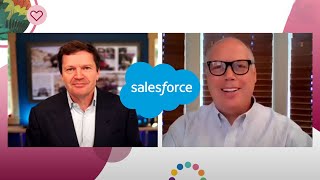
Brian King, Marriott's Global Officer, discusses how the hotel chain pivoted during COVID-19 with contactless check-in, QR menus, and mobile-first service. Marriott built these changes on J.W. Marriott's 1927 principle that taking care of employees means they take care of guests, and partnered across the industry on the "Let's Go There" campaign to rebuild consumer confidence in travel.
Questions this video answers
September 22, 2020
30 brands
About 750,000 associates
About 330 million people (≈ one in 10 jobs globally)
Almost 2,600 corporations, brands, and destinations
Chapters
3652 days. That's how many days I've been married. Seeing as how Today is my 10 year anniversary. And while my love for him is the same, my expectations for him and our marriage have definitely evolved given the changing circumstances, experiences and priorities, like our growing family. Similarly, when I think about my travel experience from a honeymoon 10 years ago to now, my expectations as a customer have evolved as a result of changing priorities, experiences and circumstances, most notably this pandemic. So I'm really excited to hear from a leader in the travel industry that's blazing trails in accordance with the needs of evolving travelers like myself. Good morning, I'm Monica Roberts and welcome to another one of our live weekly conversations as part of our Leading Through Change series. It's a chance for you to hear from leaders who are doing their best to get through this challenging time and support their communities. Before I hand it over to today's host, Salesforce's own Peter Doolin, I want to preview our next hour. Peter will be interviewing Marriott's Brian King. Brian is currently the Global Officer for Digital Distribution, Revenue Strategy and Global Sales at Marriott and in January he'll be moving into a new role as the President of the Caribbean and Latin American regions. Amidst this pandemic, Brian and his colleagues at Marriott have been reimagining what service means in the midst of this crisis in helping the company to meet customer needs and restart the travel industry. After that conversation, we'll dive into a live demo highlighting the power of service cloud. And after that, we'll close with a special performance from Angelique Kidjo. So for those of you that are watching on social channels, you're going to want to join us at Salesforce live, that's salesforce.com live to see that portion of the show. Now, as we do every week on Leading Through Change, we want to help those that need it most. Millions of people already rely on the United Nations World Food Program for the food that they need to survive and COVID 19 is making conditions worse. This pandemic could double the number of people that are suffering from severe hunger by the end of the year. To help prevent a hunger pandemic, the World Food Program is scaling up to reach 138 million people across 83 countries with life saving support. If you can, please go to salesforce.com wfp and join us in ensuring that the world's most vulnerable people have enough to eat during this critical time. Through September 30th, Salesforce will be matching donations up to 150,000 again, that's 150,000. So go to salesforce.com wfp with. It's my pleasure to welcome our host for today, Peter Doolin. Hi, Peter.
Hi, Monica. Thank you very much. Thank you, everyone, for joining us as well Today, leading through change is all about how we learn from each other and lead through these challenging times. These are certainly being challenging times, and no more so than for the travel industry. In March, the world came to a screeching halt. And while some countries have reopened, the industry is going to take years to recover. And during this pandemic, our guest today has been helping Marriott reimagine what great services look like, what guests need, and what will make people comfortable to travel once more. Please welcome. It's my great privilege, please welcome global Officer of Marriott, Mr. Brian King. Brian, welcome to the show.
Hello, Peter. Hello, everyone. Good to see all of you today.
So, Brian, you're a bit of a lifer at Marriott, I seem to remember, and your first job was at Marriott's Great America park in Illinois. There were two, and that was one of the two that opened up that year. When you started back then, did you ever imagine working at Marriott all these years later and where you've ended up today?
You know, no. Everyone has a first job. We have to start somewhere. But I was really, really lucky because very quickly I discovered a culture that spoke to me as a human being. And when you find a company that matches your value system, you really hit a home run. And I was always enamored with the leadership and, and really the core value of the company, which was established by our founder in 1927, J.W. marriott, who said, take great care of your associates. They'll take great care of the guests. The guests will come back time and time again. That one quote has served us almost 93 years and probably more so than ever before through this pandemic. So there is nothing stronger in a company than its culture. And when you're lucky enough to find a culture that matches your own values, you really have hit a home run. And I was lucky at 17.
Wow. Yes. I mean, I think about the Marriott culture, something that's really struck a chord in myself and anyone who stayed at a Marriott, around the associates and how they take care of their guests. Now, think about it for a moment. Cast your mind back to the spring. Travel all of a sudden comes to a halt. We don't know when that will change going into the future. At what point did you start to have those big, difficult conversations around how to reimagine what a guest experience would look like.
Well, let me give you a little context too, for the company. So we currently today have 30 brands and we have about 750,000 associates around the globe that wear the Marriott name badge. And frankly, I've worn that name badge since I've been 17. And people in this industry, they really lead from the heart. You're in the service industry and nothing makes us happier than we can delight our customers. So here we were. The company was doing incredibly well. We just completed a very complicated integration with Starwood Hotels, now the largest lodging provider in the world. And we were on a trajectory that was really unbeatable. We were at the top of our game. One of the largest loyalty programs in the world. Customer satisfaction was rising month after month. It was amazing. And then Covid hit and sadly, it was the most stunning fall I've ever seen in revenue in my career. So much so I kept checking the numbers because I couldn't believe they were right. Literally watching revenue just wash away. And the thing that was the most disheartening was in any business without revenue, the first thought all of us had was about employment. These are more than just associates. These are members who are my friends at Marriott. It's very much a familiar family culture and it was frankly, gut wrenching and earth shattering. The most important thing we had to think about was taking care of our guests and then taking care of our associates in what has been the greatest crisis in the lodging and tourism industry's history. It's four times worse than, I believe, nine, 11. And that was a bit of a kind of a V. There was a bounce back. This unfortunately feels like a swoosh. The recovery will be long and extended. So I can tell you from a leadership perspective, it was literally like having the carpet pulled out from underneath you. And when you go through such a change and frankly such a crisis, you've got to step back and quickly assess kind of your own emotions so you can start to lead your team. And I will tell you without hesitation, I went through a moment of grief where I just saw all the hard work start to vanish and think about all the associates who depend on us to feed their families. Then I was angry. I'm like, what could we have done as a society, as government entities, to find a way to stop this, to prevent this or respond to it quickly? And then it was resolved. The most important thing I can do as a leader today is have resolve to get through this and demonstrate that we will survive this. It will not be easy. There will be moments that you feel like you're stepping backwards versus forward. But if you don't have resolve as a leader, your team doesn't know where to look or how to respond. And I will tell you what's interesting about the travel and tourism business. It's large. There's about 330 million people in this industry around the globe. Basically one out of every 10 jobs in the world to travel and tourism. So a huge industry making up almost 3% of GDP globally. And the estimates have been as high as almost 200 million people unemployed because the pandemic in this space. So we are disproportionately hurt more than any other industry. So when you think about having that kind of weight on our entire leadership team, it can be challenging to get through. So making sure the resolve is there, because one thing I do know about travel and tourism, we're not going to be victims of this. We will be victorious. And we're fighters and we're scrappy. And you've got to maintain that mentality knowing you have that DNA. You've got to couple with what innovations can we quickly, quickly come up with to help stabilize the industry and most importantly, get our teams back to work. So that's a little bit about kind of the emotional journey I think personally I went through as a leader and I'm certainly in stage three, which is resolved now. We will get through this.
Well, I can tell you that just listening to you, Brian, gives us an incredible insight into your leadership and into the resilience and tenacity of the leaders at Marriott. So for employing so many people around the world, thank you. And for being so tenacious about getting us back to work, back to travel, back to play, back to experiences. Thank you very much for that. It's a powerful message. So if I think then about your point around quick, no regrets. Decisions move quickly. COVID 19 is an extraordinary accelerant for business transformation, especially digital transformation. Everything is now accelerating in the digital realm. As you think about business leaders that you're working with, both inside Marriott, maybe also outside. The importance of being digital and how you grow is going to be really important. So how are you thinking about that return back to the new normal post COVID 19.
So one thing, and we had started our digital transformation many years ago. And I've always said digital is hospitable. I think sometimes people think technology is this kind of dark enemy sitting in the corner that's gonna maybe take jobs away, but that's not really true. This is a way to Evolve society and evolve your own skill set. So even teaching some of our entry level associates digital skills that will serve them well, well into the future is important to us. So our digital transformation about making our experience as hospitable as possible, that the technology is in the background, it's an enabler that it will never get in between us and a great customer, human interaction and human experience. Because at the end of the day, you know, technology powers us, right? And Salesforce has been a great, great partner. Hospitality is powered by people and Salesforce powers our people. So we've worked very closely with your team to make sure that that has a feeling of true warmth in any digital type of interaction. But we had to step back because of this pandemic and in some ways clean the slate and say the game has changed and not incrementally drastically. We looked at the entire guest journey, every touch point that a customer would experience because the thing that they thought about, implicitly trusted about us was cleanliness. In Marriott, we always say, be brilliant at the basics. A great bed, super clean and crisp, fold on the sheet, hot food, hot, cold food, cold. Customers don't need to think about that. Well, now suddenly cleanliness, health and safety was the lead actor in this drama. So what we always kind of just did out of course of business and our DNA subtly had to be in the forefront. So let me give you a real example of this. Recently, I stayed at one of our hotels and I had dinner in the restaurant, approached the host stand, and instead of them handing me the menu, there was a QR code so I could scan that to be completely contactless. Of course, she's in gloves and a mask as I am as a customer. I walk over to our table and we're seated. She takes out of a sealed bag, the tablecloth and opens the bag and puts the cloth down immediately signaling to me, no one has touched this linen except for you, Mr. King. So this idea of kind of the theater of cleanliness, now that's a small example. Digitally, we've dived in quickly to make it as contactless as an experience as possible with mobile, check in, chat with the front desk if you don't want to pick up the phone. Any possible way to make sure that it's contactless, even removing decorative pillows in the guest rooms. So anything that could give the perception of not being clean or did someone use that, we've taken that out of the entire equation and we had to do that quickly. And the guests have noticed, they've been very impressed with our Ability to quickly pivot and make sure that that is their most important thing is cleanliness and health and well being at this point.
Wow, that's amazing. That's an amazing example. Thank you for that one. And you, you know, one of the great parts of Marriott's culture is around like empowering the associates. And if you do the right thing by the associate, they'll do the right thing by the customer. That beautiful sort of flow down of empathy that you do from the employee, the associate into the customer, the guest. Now, you've used lots of tools to empower these associates over the years and you're helping your associates just get closer to the customers, especially with real time information, real time decision making. How are those investments and that strategy now going to help you as you sort of accelerate out of the current situation?
It really comes down to culture is everything. A company without a small, without a strong culture is just a boat that's adrift in the ocean. We know who we are, we know what we stand for. We know how important is the people that we serve our customers. And we also know how important it is that we serve our associates. So when the world feels like you're crumbling, it's crumbling around you. In March, it certainly felt like that at least grab onto those anchors which were those cultural norms of our company about caretaking. And I'll tell you, that gave me both comfort and hope. So if I'm any business leader today that has not been able to take the time, and it does take time to clearly articulate what you stand for and how you actually bring what you stand for, how it manifests itself in life, in your business practices, I think it's a lot harder. So as difficult as this was, it's our culture and the strength of the Marriott family who's been there, been with us every step of the way. We actually had Mr. Marriott do a video saying about our cleanliness practices. He's a voice that's reassuring, that's trusting and that's established not just to our customers, but to our associates as well. So as a leader, that's your job, is to make sure that those cultural norms are first and foremost. Because when times get rough, that's what you're going to grab onto first. And you better hope that there otherwise you just do feel adrift.
Thank you for that, Brian. I mean, it's great to get an insight into the Marriott culture. It's deep and it's powerful and it connects both your employees, your associates and the guests together. Let me pivot Slightly, because Mario's a part of a big, as you mentioned earlier, a big movement around travel, hospitality and experiences. And we're in uncertain times at the moment. And you're leading a campaign with the U.S. travel association and partnership with lots of other companies around, leading hospitality out of the current situation we're in through the let's Go There campaign. Can you tell us a little bit about the campaign?
Yeah. So this is a great example of what I'll call Partner to prosper. So we compete with lots of the hospitality brands. We obviously work closely with the airlines, with destination management companies like San Francisco Travel or New York and company everywhere around the world, there's destination companies that are producing, promoting, I should say, their destinations. So first of all, we had to shore up the health and safety messaging across the entire industry, that entire travel journey from air to car to hotel to attractions, large attractions that people want to go to and experience. So that was job one. Each of the brands have that responsibility. We worked together in our association to say, here's what you should expect as a customer on health and safety. The next thing that we needed to do as part of the U.S. travel association was to get travel back in the consideration set of customers. Right now, no one was thinking about travel at all, right? And people were locked in their homes for all the right reasons and following government mandates, as they should. But there's a point where it's going to go from cabin fever to travel fever. And when you're ready to travel, we'll be ready for you. And that's an individual choice. So we did some interesting research with customers as early as May, early June, I should say late May, early June, trying to understand what they were thinking about with travel. And three things came out of it. One, I miss it greatly. Two, I've taken it for granted. I always say I never took my loved ones for granted during this pandemic, but my access to them I've taken for granted. And three, I just have nothing to look forward to. And that was the insight that was the moment that said, people need something to look forward to. Book that great trip with your family. Maybe it's six months, maybe it's a year from now. Get that on the calendar. So the whole campaign is, when you're ready, we're ready for you. Let's go there. Features great destinations, great outdoor experiences. And we came together as an industry, not as competitors, because our number one job, number one job is to save jobs, right? And get people working again. And if that's your motivation, you put down your competitive arms and you figure out how we can work together to get this economy moving safely and to save our industry. So it's been an amazing journey. I've partnered very closely with my co chair from Disney Corporation along with 71 other travel brands. And now we have almost 2,600 folks, corporations, brands, destinations who are part of this coalition. And I want to be honest, there wasn't a lot of money for brand advertising. So we pitched in and talked to partners who've been able to help us and get the word out there that it's okay to think about travel again, get something booked. In addition, we also spoke to an expert in happiness and she fielded research that showed people have a trip booked. It does give them hope and something to look forward to, that magical time of being together with your family. So it's been really successful and really well received. And we know that statistically when we launched the campaign, let's fine line we're in the middle of a pandemic and you want people to travel. What we want people to do is make plans. And 97% of all the social postings we've received about the campaign have been overwhelmingly positive. I lost my wanderlust. Actually, I have time. This is a good time to search and book a trip. We, we've always wanted to go X. We can now take the time to talk about it as a family because we're all home together. So it really has really helped the American psyche about travel and it certainly is going to help our people have jobs, come back when demand comes back.
I think this is a really powerful call to action. I think it's so simple. What you're saying is let's book a trip a year from now, let's book a trip, let's. And so if you would help us understand because you're giving me quite a lot of excitement, I'm going to sit down tonight with my family and we're going to book a trip. We're going to go through the planning process. I'm excited thinking about just a planning process like understanding where we're going to go, having wanderlust to see where we should go to and exploring places online to then book the hotel and the flights, et cetera. Tell us a little bit more about how you feel this will help restore travelers excitement about travel.
Well, I think first and foremost no one was thinking about travel and the only headlines that were out there was that travel's been decimated. You know, the entire industry is cratered. So when you hear something like that, you kind of move on to the next thing. We want to bring people back into the fold and really get travel and the travel experience back in their consideration set. And it doesn't have to be, you know, a long trip. It could be 200 miles. You want to get out to the great outdoors. There's so many things that you can do. And we are seeing that. We saw it right away with drive vacations. So the great American road trip is back this summer. Families felt very safe getting their cars, seeing some of the great national parks, that we have some amazing things in our country that I think in a way it caused, at least in the United States, Americans to rediscover their own backyard, which was kind of exciting. So we were excited about that. The other thing I think that it did for folks is it made them realize I could sit at home. I've been sitting, I've kind of locked in. But what can I be doing other than the routine, right? You know, even my own family, we became a little bit kind of the routine. I called it forage for food, Friday, sanitation, Saturday, Sunday Funday. That's what we've been doing since March, every Friday and Saturday, shopping and cleaning. There's more to life than that. So travel is a great way to get your head in the game and also educationally for kids too, as people are. Some folks are doing homeschooling. This is a great way to pick some destinations and make it a family educational opportunity for your children as well, too. So really, really exciting. And I think it has motivated people to put travel back in their considerations.
I love it. Look, and we all need a. A good story, we need a good emotion, and this is a great emotion to have. To plan, to think, to dream is a fantastic emotion. And thank you, by the way, for leading that charge with the U.S. travel Association. It's called the let's Go There initiative and campaign. And it's a great idea. Just book a travel book something out a year from now, six months from now, but go ahead and start thinking about it. I love the idea. It's going to give me a lot of excitement doing it myself. So let me pivot to another topic. I know Brian is very near and dear to your heart, which is Marriott's Love Travels initiative, a sort of a marketing campaign that you've had for about five, six more years. Mario's got tremendous commitment to inclusion and making everyone valued, every person valued, no matter the race, gender, religion or sexual orientation. That's a very powerful part of The Marriott brand that we've all been exposed to. And this is a real passion for you. So tell us a little bit about the initiative and about how Marriott has evolved over the years.
Diversity and inclusion for us has been important for many, many years. We are a diverse workforce, both culturally. I think we're a diverse workforce emotionally. From every possible walk of life, we have a merit associate, which is the magic of our rainbow. As a member of the LGBTQ community, my company was one of the first companies to actually offer partner benefits, and that goes back 20 years ago. We were on the forefront of that. So making sure that Love Travels for us was the consumer manifestation of that. So you can love whoever you want in this world. And no matter where you travel, Marriott is there to take care of you. Our. Our doors, our lobbies, our hearts are open and welcome. So that campaign was really the manifestation of that, which was super exciting.
Well, I think it's very powerful. Another manifestation of the powerful Marriott brand and the culture. And we've experienced this as we've helped support Marriott over the last few years. Salesforce, it's been a privilege to go on this journey with you and with. With the Marriott team. Speaking of journeys, we're heading forward into the post Covid world, if I could dare say that. We're thinking about what the future will look like. And more than anything else, travel and the experiences are going to change. How do you see, Brian? What does it look like? Look into your crystal ball for a moment for me. Tell me what you think the travel industry looks like.
You know, I think it does come back to that insight. I think we've always taken movement and the ability to go places for granted. I think Covid has changed that for all of us. I think trips will become more special. I think the emotional thrust of when we take a vacation and see new things, this generation will never take that for granted again. And to your point, I hope this passes sooner rather than later. But I think in the short term, it has been a bit of a reset for all of us emotionally, of what's really, really important. And travel has the magic that can bring people together with shared experiences. So I think what you'll see from Marriott and other travel companies is really leaning in as much as we have in the experience economy, more so than ever before, about how precious these moments really are. And our job is to create that magic, that surprise, that delight, those moments we'll talk about as a family or with friends or colleagues when business meetings come back. You know, digital technology is wonderful. But I think we all have a yearning to see our customers again. We miss our guests. We really want to host them. And let's face it, we are communal creatures. From the moment the cavemen came out from the cave and gathered around the fire at night, the need to commune, to share community, to listen and hear and learn from each other, that's the magic of travel. When you travel, you discover new things and it changes your frame of reference. The more traveled you are, I think the better worldview you have. And I think your sensitivity to humanity and your empathy grows exponentially. And that's why I love this business I'm in. A business that really helps humanity be better than they were the day before.
Wow. That's a great way to think about the business you're in and the great company that you represent. And I know that there's a lot of change coming inside Marriott and how you're serving customers going forward and you're thinking deeply about that new change. And I know of course, that you use some really important Salesforce capabilities, especially our Service cloud, to help you with that. Can you tell us a little bit about how you're thinking about using Salesforce specifically as you go forward into this moment of change?
Yeah, absolutely. I think the idea that we can deliver those guest needs and fulfill fill them through the Salesforce cloud is absolutely sacrosanct to us. We're able to use the technology and the amazing cloud to instantaneously get the guest request into the hand of that associate who can deliver it. I mean, it has been a game changer for us and we are using Service cloud across the entire journey. The idea to know our customers deeply and understand what their preferences are intimately and deliver upon those, that is the magic of travel. I know I've been successful with my customers when they never have to ask. And thanks to Salesforce, you're helping us deliver on that promise and that dream.
Awesome. I really appreciate that. I know that when we use the Marriott app and we're able to interact now directly with the property that we're traveling is a great sense of connection to the brand and to the people that are in the property. And I know that it's going to be very powerful for us to do so. I know we're getting close to the end of our time. Brian, is there any other last call outs or any other last statement, especially around the let's Go There campaign that you want to share with our audience today?
Well, I think everyone should make the decision when they feel comfortable traveling on their own terms. But I will tell you this. I have been on planes, hotels, I've been everywhere. And it is a great experience again. And what I've seen from customers is once they try it, they're like, oh, I can do this, I can have a great trip, I can have a vacation. And I feel safe and confident. But again, always on the customer's terms, never on our terms. So when you're ready, get out there. We'll be ready for you.
Awesome. I know you will be. And thank you very much, Brian. I greatly appreciate your time you spent with us, not just today, but with us. All the years we've been working together. It's been a privilege and an honor to work with the Marriott team over the last few years and sort of watch the extraordinary transformation that's taking place across Marriott. Well, with that, ladies and gentlemen, thank you so much for Brian, for your time, for sharing with us your thoughts and for your insights, especially for what's happening going forward into the future and especially the let's Go campaign about let's have some fun, let's get together as a family tonight, let's sit around, let's book something out there, let's lean in and think about the future in a very bright and harmonious way. And I think it's going to be really powerful for all of us. Okay, so with that I'm going to now thank Brian. I'm now going to hand back over to you, Monica. Take it away.
Thank you so much Peter and Brian. That was an amazing conversation. It was an amazing message of transparency, hope and leading with your values and culture. Marriott clearly values their customers and associates the way the Salesforce values its employees and full ohana ecosystem. In addition to both companies alignment on valuing diversity and inclusion. And I personally can also tell you that this conversation has definitely put travel back in the consideration set for me as I'm in dire need of a break from my own backyard. Literally. I may book a trip just to.
Give me more hope.
I'm also super inspired that Marriott was able to leverage the investment to aid in reigniting travel for their guests. So now I'm excited to hand off to Amanda west for a very special demo of the power of Service Cloud.
Thanks Monica. Covid has been a catalyst for digital transformation. Let's jump into a demo and see how Service Cloud can help you scale your business while offering those personal experiences every step of the way. Now in this demo, Alina is a restaurant owner and she's struggling to keep her business open. Anticipating her needs her insurance provider, Bright Insurance sends her off an email around refunds. Now, Alina is relieved, so she clicks right on that link and she's directed right to Bright Insurance's portal. Now, as you can see, this customer portal has been personalized for Alina so that she can find her answers quickly. Now she's reviewing the knowledge article on refunds and she wonders if it applies to her because she wants to open up for takeout. Well, right inside that knowledge article, she can ask her question on the channel of her choice. With one click, she is connected to WhatsApp. Once there, she's connected to Bright Bot. BrightBot is Bright Insurance's automated chatbot advisor. As you can see, Bright Bot is hard at work populating information like her name and her policy information. This is automation at scale. Bots can help you answer some of the most commonly asked questions from your customers. Bots can also surface up relevant knowledge articles. And bots can actually collect information just in case you need to escalate to an agent. What's great about bots is that once you build that bot, you can deploy across multiple channels and also multiple languages. We'll look at that. Alaina still qualifies for the refund and she didn't even need to make a phone call, saving both her and Bright Insurance precious time. Well, let's go to the future since we can in this virtual world. And tomorrow is a big day for takeout. Now, Leah wants to know if her personal plan also applies to her business. So she double checks by making a call to Bright Insurance. When she does, she's connected to Chris who is an agent at Bright Insurance. He's available and also has the right skill set to answer her question. Now, as you can see, all the channels are in one place for Chris. Now, when he opens and accepts this case, he can see all the information on a single pane of glass. Here we're looking at the service cloud console. It is chock full with agent productivity tools to help you close the cases quickly. On the left hand side he has a complete customer profile of Alina thanks to the customer360 and data that's pulled in from multiple resources. Now, in the center of the screen you'll notice that IVR information has been taken in so that Chris can jump right into that conversation without missing a beat. Now, on the right hand side is a recommended knowledge article and that's because AI in real time has been reviewing the phone transcript and finding that right knowledge article for Chris, making it easy for him so he doesn't have to search for answers and instead can personalize that customer experience. Good news. Alina's business is covered for tomorrow, but now she wants to go ahead and add roadside assistance to her plan. And AI is recommending a workflow so that Chris can easily add it to her plan. Now, workflows are great because they can automate your business processes within your organization. It does that by serving up steps to save time and make it super easy for your employees. Think about how workflows can help your organization, especially when it comes to new employees and new business processes. Well, okay, Alina is all set. She is ready to roll for takeout tomorrow. This was just one example of how companies can use service cloud to scale their business while offering personal experiences every step of the way so customers like Alina can focus on what matters the most, building their business and their tacos. For more information, join the conversation@salesforce.com ServiceInsiders.









