How PwC Reimagined Its Business Around Trust | Salesforce
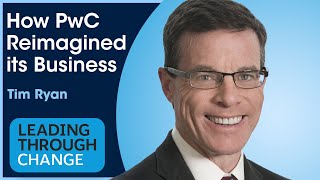
This is a Salesforce-hosted episode of Leading Through Change (YouTube, Oct 5, 2021) that opens with program news and a sponsor plug, features an in-depth interview with Tim Ryan (PwC US Chair) about leadership, the role of trust, and PwC’s new strategy called the New Equation (focused on helping clients with trust and sustained outcomes), includes a PwC demo of a microlearning platform for Salesforce with short ‘‘learning units,’’ and concludes with an interview and live songs from Of Monsters and Men reflecting on touring, inspiration from Iceland, and a 10-year anniversary celebration for their breakthrough album.
Questions this video answers
October 5, 2021.
Helping clients with trust and with sustained outcomes.
Over $125 million across three years to take 10,000 people through the Trust Leadership Institute.
Designed as 1–3 minutes each.
Seven types (video, quick tips, job aid, knowledge check, quiz, pulse check, calibration).
Chapters
It's been nearly a year and a half since we launched Leading Through Change. And when we began, we thought it was something special. A unique opportunity to maintain a connection with one another as we all figured out how to be in what was to become our new reality. But I don't think any of us ever imagined the success or the reach of the program. I am beyond thrilled to announce that Leading Through Change has been named the best program in the 2021 Content Marketing Awards. Gotta celebrate. Hold on. What an honor and what a privilege it has been to be a part of something so very special. Let me move this. Good morning. I'm Lia McGowan here and welcome to another one of our episodes of Leading Through Change, a chance for you to hear from leaders who are doing their best to get through these challenging times and support their communities. Before I hand it over to my colleague, Amy Weaver, I want to preview the next hour. Amy will be interviewing US chairman and senior partner for PwC, Tim Ryan, to discuss leadership, the importance of building trust, and PwC's new strategy. After that, we'll see a demo by PwC and then we'll be treated to a very special conversation and musical performance by Of Monsters and Men. Before we get to the next part of the show, I want to give a very special thank you to PwC for their partnership. We've all been told that one plus one adds up to two. But when a community of solvers comes together in unexpected ways, then it can be something greater. At PwC, it adds up to the new equation. Learn more@thenewequation.com as we do every week on Leading Through Change, we want to uplift and empower others. With the pandemic still rearing its ugly head, we all have an urgent responsibility to act today. We want to bring the full power of our community to help in the fight against the virus. We are partnering with Go Give one to take steps to advance vaccine and equity globally. If you can, Please go to gogive1.org coalition to join the effort today. Now it is my pleasure to kick it over to a conversation that Amy hosted the other day. Enjoy.
Thanks, Leah. I am thrilled to be joined today by PwC US Chair and Senior partner, Tim Ryan. Tim, this is great. I've been looking forward to talking to you. There is so much for us to go over, but let's just. We're going to talk about trust. We're going to talk about what you're hearing from CEOs around the world. But let's start kind of with a base question in this new world, are you kind of an optimist or a pessimist?
Thanks, Amy. First, it's great to be here with you. Thanks for the time and to everybody, it's great to be with you. I. Without a doubt, Amy, I'm an optimist. I will acknowledge, like you look at our world over the last 18 months, it has been challenging. There are so many things going on. When you think about COVID 19, changing work, loved ones, family members, what's happening around divisiveness around our country. And I will acknowledge those are out there. But when I look at the human spirit, when I look at the innovation that's happening, when I look at the entrepreneurship and the resiliency that people have showed and the compassion, I'm an optimist. Like, my money is on our world. My money is on our people. My money is on our future. And so I think it's okay to be vulnerable. I think it's okay to say there's days you get down, but I think there's so much more good than there is bad out there. And I'm excited about our future. My biggest regret is I wish. I Wish I was 22 again, because I look at the opportunities out there around big things that people are going to solve, and we'll solve them. So I'm excited.
Tim, I love hearing that, just that sense of optimism. I think there really is a feeling that we are emerging into a new world and that we've got the opportunity right now to shape that probably in a way that's never happened in our lifetimes. So your role is so unique, and I think one of the things that defines it is the fact that you meet with probably literally Hundreds of Fortune 100 or Fortune 1000 CEOs every year. What are you hearing from them? Are you hearing the same optimism?
Yeah, it's a great question. I tell people, amy, I have one of the most privileged jobs in the world. I get to meet with really smart people. I don't need to be smart. I just need to listen really carefully and then aggregate themes and. And give a perspective. I would say, without a doubt that when I talk to CEOs, both virtually and physically now, because I've been traveling again, there is a sense of optimism, but it is realistic. So CEOs are really excited about, as we go back to work, as we begin to collaborate differently, both in person and technology. They're excited about new ways of working. They're excited about the opportunity to take big issues like Climate on. They're excited about the opportunity to see what globalization 2.0 looks like. So I would say without a doubt they are optimistic. But I would say maybe more importantly, they're excited to lead a different way. Many CEOs realize that the way they led in the past, like all in the office, maybe a little bit more top down. They know that's changing and I think they're excited about trying a new way. They're excited about hybrid work models, they're excited about better well being. They're excited about putting more power in the employees hands and letting them innovate and solve these problems and go after it. So I would say it's a little bit of nervous excitement, but there is excitement and opportunistic opportunities for people out there right now.
So let's talk more about PwC and specifically how you see that changing your world. And I know you recently unveiled a new strategy which I believe is the new equation. What is the new equation and how do you see this influencing where PwC goes over the next decade?
Yeah, Amy, thanks for asking. I am really excited about the new equation. Every, if I take you back backwards, every 10 years we look at our strategy and ask ourselves, is it fit for purpose? We begin relooking at our strategy as we would every 10 years before COVID And I think that's an important point. Before COVID we talked to thousands of our clients, we talked to hundreds of investors, stakeholders, regulators, people on the street, academics, and we asked them where do they see the world as going? And when we had those discussions, two big topics came up at the end of the day and then Covid did nothing but accelerate those two topics. But the two big topics that came up, one is what we call trust. Like it was very clear that when we talk to those different stakeholders that there will be a premium placed on being trusted, being trustworthy and frankly a big price to pay if you're not trustworthy. And we'll talk about what that means maybe in a second. But it was very clear and that the issue of trust was on people's minds in businesses minds, employees minds, investors minds, customers minds. And the other big one is sustained outcomes. Like our world is competitive. Like companies operate, they compete for capital, they compete for talent, they compete for investment, they compete for debt ratings. And if a company isn't in this transformation that the world is going on, transformation around technology, transformation around digital. If a company is not successful in that transformation, they run the risk of not producing the returns that are the price of admission with investors. So for us, new equation is about two things. Helping our clients with trust and helping our clients with sustained outcomes. And that's what we're focused on. And that will drive our strategy going forward. Where we invest, how we develop our talent, the types of talents that we need, our transparency, and how we behave as a firm.
I love how you described fit for purpose as you're starting lineup at Salesforce, we talk a lot about relevance. How in this new world do we ensure that what we're doing is absolutely the most relevant thing for our customers and making sure we're meeting their needs? But I want to go back to the word trust. So I found the last three or four years, there's been a growing sense that trust is what matters most to people. And really for companies, it has shifted. If you look at the Edelman survey over years, people are really looking to companies to be their trusted partner, to learn how to be a trusted enterprise. But I do find that people use the term trust very differently. How are you defining trust? What do you think of when you want to be a trusted company or trusted partner?
Yeah, Amy, it's such a great question and it's in the eye of beholder. I'll give you my perspective. And the first thing I would say is I am massively proud of the business community for what they've done through Covid over the last 18, 19 months. And I think it is important to acknowledge the businesses stepped up. They took care of their employees. Many got their employees safe, whether they had to keep working because they were essential workers and they found ways to do it safely. They invested in safety and distancing and training and new policies, new procedures, medication testing. And we kept in the United States over 60 million workers safe in manufacturing and banks and consumer packaged goods companies, utilities, hospitals did such a great job. And for those like PwC and Salesforce, we brought our people home safely. We leveraged technology and met our clients needs, and we did it digitally and kept people safe. And I think one of the reasons businesses are the most trusted institution under Edelman is because business is stepping up. Now with that as a backdrop. What do I think? What do I think trust is? As one person who gets the privilege to listen to a lot of other people. I think trust is about doing what you say you're going to do on all fronts. Now, that should not be confused with being perfect. Like trust, in my view, does not equal being perfect. So let me give some examples. So most businesses today, we've stepped up and said protection of Data is important protection of and many know that as cyber. That doesn't mean being perfect, but it does mean investing. It does mean new ways of working. It does mean hard decisions about ease of user experience versus protection. And then if you say you're serious about cyber, do you have the right policies, practice investments in doing that? And when you make a mistake or there is a breach, owning it and saying you did the right thing and that's how you gain trust. And for me, what it means is as businesses inventorying what your stakeholders believe it takes to be trustworthy. So I'll give you examples. One of the things that drove our strategy, the new equation is the number of topics businesses are expected to be trustworthy on are going up, up and up. There's more and more. So I'll give you examples. I mentioned data security, but it's also ethical use of customer data. We all know regulation lags massively around as companies using more and more data. So are you using consumer data not just legally, which is a low bar, but ethically in the way people use. So in your algorithms, in your decision trees, are using it the right way? Are you transparent? Are you sharing with your stakeholders what you're doing? Go to worker pay, worker safety. We hear now about the minimum wage, that's important because of massive asymmetries. Are you paying your workers safe the right amount? Are you keeping them safe? Do you have the right working conditions? Go to issues like the environment, particularly around climate. Are you relevant? I love the salesforce. Are you relevant in this debate? Are you doing your part? Are you paying a lip service? Do you have a fluffy corporate responsibility report, but not a lot of actions? Are you getting the right balance between what you invest and the short term profitability, but really changing your business model? Did you do a net zero commitment but really not change anything? And then I'll give you one more example. It goes to the element of diversity, equity, inclusion. Are you paying a lip service, but are you doing real things? I think one of the things I value tremendously about Salesforce, you are massively transparent. You speak out, you take positions and you tell the world how you're doing as an organization and also where there's gaps. PwC, we're the same way. Just by coincidence, on the date of shooting this tomorrow, we come up with our second annual DEI report. And I'm happy to say that Salesforce inspired us to show more and more around what we're doing well, but more importantly, where we have room to go. All of those elements around Today how our different stakeholders describe trust. And that will change tomorrow, next week, two weeks from now, there'll be another element and it's up for us to acknowledge that. Study it, show where we are and then take actions to close the gap on any one of those topics.
That's terrific. I love the broad view of trust, but I love that it comes down to doing what you say you're going to do. Whether that's living by your values, supporting your employees. So many different areas where that's absolutely critical. What do you think it is about this current time that is making trust so important? I know the new equation is hyper focused on building trust. Why do you think trust is so important, particularly today and in today's business climate?
Yeah, Amy, it's a really important question and maybe if I can frame up. When we did our new strategy, we looked at a number of forces driving our world and we have a framework that we call the ADAPT framework. And the ADAPT framework is. It can be depressing. But then I'll bring us up and why. I think it gives us a great opportunity. If you look at our world today, there is massive asymmetries that exist in our world today. You have big gaps between the haves and the have nots. We know that as the wealth gap. And the statistics are stunning. When you look at the tens of millions of Americans who don't have $500 in the bank account to fix a leaky roof or to fix a car, they need to get to work. When you look at the asymmetry around access to health care, and particularly when you look at that by particularly when you look at that race and the lack of access certain minorities have or underrepresented minorities have to health care, access to education. So we have wide gaps in asymmet of access to basic things like money, food, health and whatnot, that is out there in spades. When we look at disruption, that's happening not only in digital disruption, which Salesforce is obviously a leader in that, but also climate disruption, like every business is going to be reshaped. And then you look at the polarization that's happening in our world. There's some real things that cause you to step back. But Amy, this is where I come to today. I think one of the reasons trust is at such a premium because all of those things, asymmetry, disruption and polarization is creating massive uncertainty. And what we are feeling as a population, what we are feeling in our workplaces is people's futures, the country's futures, the world's future, it's uncertain. And that uncertainty causes a pit in the stomach, that uncertainty causes anxiety. And that uncertainty causes people to then wonder about who can I trust and whether that's. As a parent, I heard you speaking earlier about people being back in school. I have six children. Thankfully, they're all back in school. Whether that uncertainty is as a parent, as a business leader, as an elected official, what we're all trying our very best to do is to bring certainty in a time where there's tremendous uncertainty. And Amy, this is where my optimism comes in. I wish I could tell people I know when our world is going to become less divided. I wish I could tell people I know what our world is going to look like in 20 years, but I can't. What I can say is that if we live our values, if we try to do the right things, if we are inclusive, if we admit when we make a mistake and we stick together, I do know we will come out the other side better. Because I studied. And the last thing I'll say is I've gone back to other times where the world has been uncertain. I've looked at 9, 11, when the country was brought to its knees. I looked at the financial crisis where the emotion of the day was anger and finger point. And we got through that by those same principles. And I feel like we're in one of those moments where we can, as the world changes, we can help address this uncertainty head on.
You've hit on so many things, but I want to go back to something you said about how this makes us lead. How do we lead in a way that inspires trust, that also gives people confidence, gives them some of this optimism that you expressed at the beginning. And, And I know PwC recently announced the creation of a Trust Leadership Institute. Tell me about that institute. And how do you teach trust or teach how to lead in these times?
Yeah. So, Amy, I think one of the big skills today that is so important is authenticity and humility. The reality is PwC doesn't have the market cornered on teaching trust. What we have is we have the ability to convene really smart people who are all in the same position right now. Like we're all trying to figure this out together. We think at PwC we have a big responsibility to give back to society. We do that through our de and I efforts. We do that through sharing our digital tools with society. The Trust Leadership Institute is another one of those ways. We're putting over $125 million in the next three years to take 10,000 people through our Trust Leadership Institute, both current C suite executives like yourself, but also future C suite executives. And together we're going to talk about these topics. How do we deal with things like ethical decision making? How do we deal things with around ethical AI? How do we deal with things with around supply chain? How do we deal with issues around transparency? So the goal, the Trust Institute, first and foremost, it's not in any way to condemn where we are today. It's peeking around the corner. How do we lead in a different way, knowing what's coming? And how do we learn together by sharing the ideas of thought leaders, sharing what we're each doing, and then identifying what are those best practices that we can do together? We hope by convening, provoking, thinking about different things and maybe looking at risk and reward a different way, we think hopefully that gets this next generation of leaders ready. And what, in my view, is going to be the most exciting 10 years of the next 10 years, in my judgment, will be the most exciting 10 years in business that we've ever seen before. And it's getting us ready for that.
I couldn't agree more. Probably six months ago, when I was looking to the future, a lot of my thoughts were, what things are going to stick, what isn't going to stick for the pandemic? How quickly do we go back to living the way we were all used to beforehand? It's really shifted for me over the last six months as I've realized there's no going back. We've burned the bridges. And this chance to shape this new world, I think is just incredibly, incredibly exciting. One of the things I see as a challenge going forward, though, is this idea of trust and speed. And Rachel Botsman has a wonderful book called who can you trust? And she talks about how in a trust relationship, there's supposed to be a little friction. You're supposed to be able to build up to trust. Do you see as you know you're looking to the future, you're looking at the Trust Institute. Do you see a conflict between trust and moving quickly?
I do. It's such a great, it's such a great. It's a great aspect that Rachel introduced. What I would say is I think businesses have a requirement to experiment, try things and adjust as you go along. And that's another way of saying speed matters. Speed matters to win the war for talent, speed matters to win the war for capital. And speed matters to get to the needs of customers, which are changing every day, by the way, to get to that as quickly as possible. I do think speed matters, and this goes back to one of my comments earlier. Trust is not about being perfect. Trust is about acknowledging when things didn't work out the way you anticipated. And it's about having the courage to say, I need to tweak that. So let's apply that thinking to, for example, example. Let's apply that thinking to as now at your point, we've kind of burned the bridges. No going back. Almost every major company that has, you know, a thousand plus employees, we're going on the next grand experiment right now. And the grand experiment is, what's the future of work going to look like for knowledge workers, for people who traditionally worked in offices? Nobody will figure that out perfectly the first time. But you can gain trust as you go in that experiment, try to figure it out, moving fast to meet the needs of employees, customers and investors by saying, okay, we tried that, here's what we learned, and now we're going to try something else. I think as you go through that, you earn the trust with your stakeholders without sacrificing the speed. That is just a necessity of today's business world, which is why things like communication, transparency, agility are such important skills going forward.
Well, you know, as we're talking about shaping a new world, it's fun to see so much of this leadership coming from PwC. I think you've had such incredible past being rooted in your history with accounting and tax and consulting, yet you are continuing to kind of reinvent yourself along the way of moving to new products, into the technology space. Do you see that as giving you, you know, a new lease on this new world or particular expertise and how other companies can evolve?
Yeah, it's funny, I look at our firm, the firm that I joined 30 years ago, and it's virtually unrecognizable, except for the baseline culture that we've had. Like the baseline culture has evolved, but the baseline culture of doing the right thing, leading and not following and really caring for people with compassion, that hasn't changed. What's changed over the last 30 years, and certainly over the last five or six years, is the talent and the capabilities that we've been able to bring in that force our thinking differently, whether it be digital, whether it be people around the environment, will. On topics of trust, those people are really pushing us. And it is something that I'm excited about because the way you survive, we're 160 years old. The way you survive is you are constantly remaking yourself. The world doesn't stay still, and as we the organization that is constantly listening to its customers, in our case clients like Salesforce and thousands of others, if you are listening to your customers and you're humble enough to know what they're really saying and willing to adapt, you're always going to stay on top. And so for me, that's what gets me excited. Our customers, our clients today are telling us trust is important, help us get there. At the same time, we need to be competitive, help make sure we are going competitive. Amy if there's one word that I think is important over the next 10 years is transition, like the world is transitioning. We're transitioning to a different way of interacting with employees. We are transitioning to a different environment where we're way less relying on carbon. That transition is going to be exciting, it's going to be messy, it's going to be bumpy, but boy oh boy is it going to be rewarding. And I think the transition over the next 10 years is what has me massively excited as we go on that together.
Well, Tim, I have just loved talking to you about this. You've left me with an incredible sense of optimism about the future. I've also loved, as you've described, it makes me think of Salesforce. We talk about our values as trust, customer success, innovation and equality. I think everything that you have described about PwC and your view of the future sums those four up beautifully as well. Thank you very much for being here today and I'm going to kick this back over to Leah.
Leah, what a great conversation. Thanks Amy and Tim. Now I'd like to share a demo that shows the power of digital enablement and how it can help your business.
PwC's microlearning tool is changing the training game. This creative tool allows a curriculum to be broken down into bite sized learning bursts delivered through a variety of engaging learning units that can be tailored to the user's role, their interests and individual learning needs. Our Insights to Enablement Microlearning Tool is a quick one stop shop where your users can complete learning units in one to three minutes a day right on their Salesforce homepage. Microlearning allows you to tailor learning journeys to different roles. For example, if you have a sales team and a finance team that you need to train on the system, you can design learning journeys that include Salesforce Basics learning learning units for both teams and then sales and finance specific learning units for each respective team. This allows you to reuse learning materials that apply to multiple user groups while also delivering relevant materials to your teams based on how they use the system. There are seven different types of learning units including video, quick tips, job aid, knowledge check, quiz, pulse check and calibration. There is no limit to the number of units that you can plug into your curriculum and you can configure the learning units however you feel best aligns with the user's learning journey. Learning units make up a module that is a week's worth of learning units and modules make up the learning journey you can assign to a role. Microlearning makes learning easy, interactive and flexible to use users needs and busy schedules by allowing users to complete their learning in the office, on desktop or on the go on mobile. Our microlearning platform also provides a corporate alert function so you can reach your team members beyond the basic email communications to reinforce key messages that accompany their learning. As the L and D lead, you will want to make sure that your end users are safe, satisfied with the training curriculum and that each training module is tailored to their needs. Our robust feedback loop or the Ideas section allows for an end user to quickly add their feedback or suggest new training ideas. This is beneficial for both you and your team members so that you can continually improve the training curriculum based on real time user feedback. And if you want to enhance your user adoption insights and understand the behaviors that teams are performing in Salesforce, you can pair this micro learning tool with our adoption gamification engine, another great part of the Insights to Enablement platform. Click on the CIO Persona to learn more about the insightful dashboards that showcase your user data in ways you have only imagined.
Foreign.
That was amazing. Now you all know the drill. If you want to see today's musical performance and interview with Of Monsters and Men, please go to Salesforce Live right now that salesforce.com live. So if you're watching us on Twitter, head on over to Salesforce live right now. Salesforce.com live we'll be waiting for you.
Sam. Foreign.
Welcome back. It's my pleasure to introduce our next guest. Joining us all the way from Iceland, Multi platinum recording artist of Monsters and Men. Welcome to Leading Through Change.
Hi.
Thanks for having us.
Yeah, thank you so much for having us.
Thank you for making the time to be here. You know I want to jump right in because I know our viewers are dying to hear to get to the music. Listen, with the pandemic still affecting the world, how are you all connecting with your fans?
I mean it's definitely strange and different. We haven't played a show in I don't even Know how many?
Yeah, like over a year.
A year and a half? Yeah, yeah, a while.
But you know, just like through social media, you talk to people, you, you know, you try to do stuff, like online stuff and. Yeah, but it's different. We're not like super in like super involved with social media, like some artists are, so we're more kind of private. So you, you definitely lose a bit of touch. But.
Yeah, but I think, you know, like for us now this time we've been writing a. Just kind of spending time at home and guess kind of getting inspired for future stuff.
Yeah, yeah.
That's awesome. Now I, I know that, you know, we had a little bit of a conversation about the situation with COVID and its spikes and its, its peaks and and valleys. Now are there plans to tour anytime soon or is that far, far fetched?
I mean there's some plans for next year possibly, but. Or the year after next year. We're like, we're also kind of like in like when Covid hit, we were just like touring our new album, so we kind of didn't, we weren't able to kind of follow that through. So now, you know, we kind of need a new album to start touring again.
Yeah, yeah.
But maybe some shows here and there. We'll see.
Yeah, it's kind of, you know how it is. You, you, you're just kind of assessing things and you know, don't really know. But hopefully we really want to play shows again.
Yeah. And we're gonna like, we were gonna play some shows in Iceland, which has been kind of hard to do because they're always like, we plan something and then Covid hits again and then you know, you can't have the shows, you have to postpone it. So we're trying to figure out some, some ways to play. But until then, you know, playing over zoom. Perfect.
Now it sounds like you all have a lot of content. So when, I mean with you started to tour with your new album and then you created another album, you're gonna have plenty of content when you do finally tour or decide to do any small venues. And I know the fans are dying to hear from you.
Play for days.
Yeah, it'll be just like a week long non stop concert.
Yeah, yeah, yeah.
What have you missed the most over this past year and a half?
Oh, so much. Just you know, traveling, experiencing like different cultures. Of course we're in Iceland, so it's, it's quite like small community and it's, it would be nice to, you know, just you know, getting good Sushi getting good. Everything. Like food would be great for me. I love it for the two sushi places in Iceland, you know.
Yeah. Yeah.
That is funny.
Playing for people.
Yeah, definitely that connection, you know, there's nothing like that. Just that connection, that human connection, that energy that you exchange when you're talking with people and there is. It is very hard to capture any that virtually. I do understand that.
Yeah.
But we do the best we can. Right. And keeping safety in the front and foremost of our minds.
So, you know, it's gonna be really great when it happens. You know, I think then you like. I. I keep kind of. I sometimes think about the moment when you can play in front of people again and how that's gonna feel and, and you know, because.
Yeah.
Like when you are performing, it is such a thing that it's just a moment that you're sharing with someone and.
Yeah.
Yeah. So.
And it's become. It's like an important moment for us.
And we get really addicted to it, you know, to. To like share your music with people.
I mean. And it sounds like. I love what you just said about, you know, when it does happen, it's going to be so magical because it's been so long. Right. And I hope it's not like, you know, how you hadn't, you know, you're so hungry and then you finally eat and you're just like ah, ravaging. But like you're gonna pour so much into the audience. Like I hope they are prepared to receive because you have a lot to pour into them. It's gonna be amazing.
And I think it's gonna be similar for like people that haven't been to shows for a while. Very ready to, you know.
Yeah.
Participate. And, and I think people, you know, mostly just be like us.
You just maybe appreciate stuff.
Yeah.
Because I. I did go to. My friend was playing a show in Iceland. She. It was in a record shop and there weren't that many people. But I hadn't been to a show in, you know, like a year or something.
Yeah.
And. And I, I just had this like. Oh yeah.
That.
This is, this is so magical. You know, and people were so in it. They were just like singing along and it was very like intimate and great.
That's wonderful. To your point. It makes you appreciate those things that you haven't been a part of or sometimes we often would take for granted. Speaking of appreciation, 2021 is the 10 year anniversary of the My Head is an Animal album. What are your special plans? Any special plans?
Ooh, we'll definitely be releasing something, you know, to celebrate that.
Yes.
So later this year we'll have something out to celebrate that. We're very proud to be 10 years old. Well, we're. As a band, we formed in 2010. Right.
Nine.
2009. Yeah. So we're a little over 10. See, it's been such a long time.
That's a decade to get gray hairs.
In my beard now. Didn't have that 10 years ago, so.
Had no idea that you would be celebrating the anniversary of it.
Right.
Like, wow. Yeah.
You'll be celebrating the next one. You actually came out with a new song, Destroyer, just a few months ago. And we're all dying to know, does this mean there's a new album on its way with this?
There won't be a full album with Destroyer on it. So that's like a. It's not part of our next album, but Destroyer is.
It will be a part of something. We are very cryptic.
Yes. It's just.
There's a big mystery.
Yeah.
I love the mystique. So everybody has to stay tuned and stay engaged.
Yeah. Yeah. Keep people on their toes, you know?
Yeah.
Gotta keep up, keep them. Keep them interested, keep them coming. I love it.
Yeah.
One last question. I ask everyone that comes on the show, and this ties in a little bit to what I saw. I saw either was on your. One of your social channels, but one of the things you said, and it was just so inspiring to me is like you said, you look around and it's hard not to be inspired by nature. You see it everywhere and it's just hard not to. And then you had spoke about how, you know, in Iceland, nature is just everywhere. And when I think of inspiration, I often think of. Goes hand in hand in hand with me, with gratitude. So one of the things I would love to know is in this moment, what is something you're grateful for and. Or inspired by?
I mean, I think. I think I am constantly. And we are constantly inspired by the nature. And I think it's something that I never. I grew up in, which is a small town, like on the peninsula. And there's this ocean that surrounds you and there's just. It's very windy and harsh and we have a lot of birds there and it's just kind of like barren and windy. But there's something about it that I think shaped me a lot because I would just be playing somewhere, you know, by the ocean or like in. By the rocks or something, and it would, like, fuel my imagination and. And I think like, when we wrote our first album, we would get asked this a lot, like, are you inspired by Iceland? And you. I don't know. It may be so like, it's like such a big part of us that.
You didn't quite like rapidness it in ourselves. I think you looking back at it more, I think we understand it more how, like, how we're shaped by. By. By these surroundings. And we were just taking a trip, like we went to the west fjords in Iceland, which is just super tall mountains and like, you know, it's just like. It's like being on the. On Mars or something. And I mean, I am very grateful to, you know, live in this country and be, you know, haven't been raised in. In this sort of inspirational environment.
And I'm grateful for like, you know, because I think you learn to respect nature. You're kind of afraid of it. It's like when the fishermen are like very afraid of the sea, but they're also like, they respect it because it gives them something it takes, you know, and it gives. And I think that is very much what we are brought up believing, you know, And I'm grateful for that.
Oh, I love that. I love what you said is I'm so grateful for being brought up in an inspirational environment. What? That's a quote within itself. Thank you for that. I think to your point, if we all take that moment, we can find that inspiration in whatever environment we're in. Even if we're in, you know, a cement city and we see that one little rose growing through the concrete. That alone is inspiration, you know, so. So thank you for that and thank you for sharing. Now. I know. Let me. Let's give the folks what they came here for. They don't want to hear me yip yapping and talking to you. They want to hear your beautiful gifts and talents. Would you please share those with. With our viewers?
Yes, of course. For the beautiful words.
Yes. So it's a introduction.
I said you can't take compliments. We just turn to like, like, like we just ate a lemon when we got a compliment. So thank you for a compliment.
Yes, thank you.
Yeah. So we're gonna start with a song on our last album.
Yes. Yeah, we're gonna start with a song called Alligator.
There are no alligators in Iceland. No, but we do have seals.
Yeah.
Yes, that. And they look like alligators.
They're the Icelandic alligators.
Yes, that's what we call them.
Sure.
Color raining down. Feral feeling, Swaying sound. But I don't know.
What she wants.
I am open I am restless.
Let.
Me feel it out let it all come out.
Wake me up a fever tree, man and now I lose control I fever tree. Shake it up it's just a what I'm feeling? And now I take control and fever treatment.
I'm sorry. So quiet when they laid me in the street? And the starlit night crew before my.
Eyes.
22 women stood by the banks.
And they cried Oh, I wake me up? Fever treatment and now I lose control fever treatment shake it up it's just what I'm feeling? And now I take control oh, fever treatment.
So we're gonna play a song next that you mentioned in the. In the earlier.
In the earlier days.
In the earlier days.
Yeah.
And so. Yeah, it's a new one, and it's called destroyer.
Yeah.
And we haven't really played this.
No, I think this should be, like, the debut performance, right?
No, we played it once. Sorry. Okay.
Oh.
Oops.
But if I'm just, like, building a cushion for us if we mess it up.
Right. Okay.
I was going for that.
I want to be the king of my body and mind Gravity let me go. Before it brushes and blackens me and you bury me in the glow. And I find sorrow and idol my solace and be in hurt you better run, boy, run don't be afraid cry, boy, cry don't play the game gravity holds me down and it's taking over. I call everywhere oh, I cry out you might destroy. Call that everywhere oh cry out.
Cry.
Out, cry out, cry out.
A light shines through a cloud of colored fumes gravity let me go. So I can feel the warmth of the sun bury me in the cold you better run, boy, run but be afraid crap or cry don't play the game gravity holds me down and it's taking over her? I call everywhere oh, I cry out out you might destroy us.
I call.
Everywhere oh, cry out and it's taking over. Call everywhere oh, cry out you might destroy. Call everywhere oh, cry out.
Cry out cry out cry out cry out, cry out, cry out.
All right. Yeah.
So that was destroyer.
Yes.
And we have one more song.
Yeah.
And we figured we were gonna just.
Play.
A song from our first album.
Yes.
Since it's, you know, we're celebrating.
Yeah. Let's do it. And. And. Yeah, this one is called little talks.
Yes.
And yeah. We just want to thank salesforce for having us.
Yes.
And for this opportunity to play music in front of people, kind of.
Yeah.
But it feels really good. It feels really good. I feel like I have A little kind of jitters, kind of. Kind of nervous. I've done this for a while and I love it. Okay, so this is like a version of little talks that is hopeful, hopefully. All right.
Okay. I don't like walking around this old.
And empty house so hold my hand I walk with you my dear.
This.
Dice creek as a sleep it's keeping.
Me awake it's the house telling you close your eyes and some days I.
Can'T even trust myself it's killing me.
To see you this way cuz though the truth may bury this ship will carry our body safe to shore.
There'S an old voice in my head that's.
Wanting me back we'll tell her that I miss our little talks soon it.
Will be over and buried with our.
We used to play aside when we were young and full of life and.
Full of love Some days I feel like I'm wrong when I am right.
Your mind is playing tricks to new my dear cause though the truth may bury this ship will carry out my safe to show don't listen to a word I say the screams all sound the same though the truth may vary this ship will carry out body satan to show you gone, gone, gone away I watched you disappear all that's left is a ghost of you now it's torn, torn, torn apart there's nothing we can do just let me go and meet again soon now wait wait wait for me please hang around I'll see you when I fall asleep don't listen to a word I say the scream so sound the same though the truth may this ship will carry our body safe to show don't listen to a word I say the screams all sound the same though the truth made that me this ship will carry our body safe to sh Though the truth may vary this ship will carry our body safe to show.
Thank you so much. What a treat. What a real treat. I know you all said it was great for you to perform. Well, it was great to be on the receiving end. And thank you for that beautiful gift. Just amazing.
Oh, thank you.
Thank you.
Be safe and stay. Stay healthy out there in Iceland. And one day we'll be doing this face to face. And I'll be right in the front row.
Yes.
Very exciting.
Can't wait.
Thank you. That was amazing. Thank you so much. As we wrap up, I want to give another special thank you to PwC for their partnership and for sponsoring this episode. One more reminder. Join Salesforce and our partners in advancing vaccine equity globally. Please go to go give.org/ Coalition to join the effort today. Now. We'll be back with our next leading through Change on Thursday, October 14, Pacific Time. Please join us then. Until then, please take care of yourself and each other.









