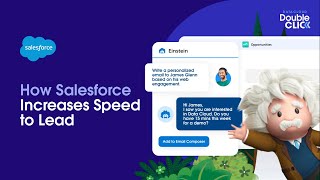
Salesforce uses Data Cloud to route leads to sales reps in seconds instead of minutes. The system detects buying intent from website activity, sends Slack alerts, and scores leads by product interest to personalize outreach without custom code.
Chapters
Welcome to Data Cloud DoubleClick, where we demo live product to show you exactly how Salesforce helps customers solve their top business use cases. In this demo, we'll be sharing how we at Salesforce use Data Cloud to align sales and marketing teams and increase speed to lead. And we'll break it down into three simple steps. 1. Capturing leads from salesforce.com and routing them to the correct team for nurture. 2. Alerting sales reps of buying intent signals via via Slack and three Using AI powered product interest scores to engage customers about recommended products. Let's dive in. Salesforce processes over 20 million leads every single year. Historically, it could take up to 25 minutes for a new lead to land in the queue of the right sales development rep. That's because our system relied on over 2 million lines of custom code. But with Data Cloud we've gotten that time down to a matter of seconds and only a few thousand lines of code built natively into Flow. And did I mention that we can now deploy business changes in a matter of minutes versus weeks? Here's how it works. When a prospect expresses interest in our products, the first step in our routing process is to ingest this lead into Data Cloud in near real time. We can then perform data transformations on the form submission to enrich the data we've collected and create a usable lead record. For example, this transform checks for and assigns an owner ID to the lead based on the data we have about the sales team members that own the account. So as we prepare the lead for routing, we can ensure the record has been enriched with all of the relevant data and metadata needed for our teams to take the appropriate next steps to route the lead to the correct individual. We're using Data Cloud powered flows which are real time configurable automations. Once all the steps in flow are completed, we can then insert the lead record into ORG62, which is our internal Sales Cloud instance, and pass it to the correct rep. Next, we'll show you how we can engage qualified leads at the right time to help close deals faster. With Data Cloud powered Slack Alerts. Our sales development teams have done a great job nurturing the lead and the prospect has gotten a good sense of what their use cases are and they're very interested in purchasing one of our products, so they visit the pricing page for more information. Using tagging capabilities in Google Analytics, we can capture that engagement activity on the website and ingest it into Data Cloud. From here we created a dynamic segment of customers who visited a pricing page on our website in the last 24 hours. We can then use this targeted audience segment to activate an alert mechanism we've built for Slack that goes out to our account executives. These alerts are personalized based on interactions this contact previously had with Salesforce, including what product and pricing pages were visited. And there are also recommended next steps such as pointing to LinkedIn sales navigator so reps can do additional research on the prospect or account. Finally, we'll show you how we can leverage Product Interest Scores to decide which contacts to follow up with and how to personalize our outreach based on previous engagements. Once customer interaction data lands in Data Cloud, we cleanse, unify it and tie that activity to an individual. In the Profile Explorer view we built, we can quickly see key attributes about our customers including name, title, email as well as things like if they're an existing customer or trailblazer. This one stop Shop includes all of their account information, consent status and all of our transactional engagement data such as email opens and clicks and all of the certifications the customer has earned so far. We can leverage AI powered prediction models to help us understand which products an individual is most likely to be interested in based on their contact and account data in CRM as well as past interactions across Salesforce channels and touchpoints. These Product Interest Scores rank products for a given customer based on their engagement. We can then activate this data to our outreach efforts, layering Product Interest Scores into our segments and feeding them into our dynamic email send engines to pick the right message and the right content, all of this driving towards deeper, more relevant engagements as well as potential upsell and cross sell pipeline. So to quickly recap, you just saw how Data Cloud enables lead capture and routing Slack alerts to sales reps and Product Interest Scores to help our sales teams increase speed to lead and close deals faster. And that's our doubleclick into Data Cloud.