How the Cleveland Browns Built a Winning Franchise - Ep7 | The Inflection Point | Salesforce
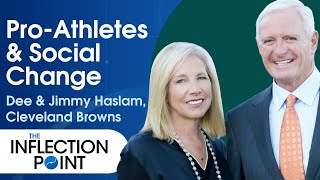
This is a transcript of a Salesforce "Inflection Point" interview (Monica with Dee and Jimmy Haslam). They recount growing up in Knoxville, their careers (Dee: television/River Media; Jimmy: Pilot → Pilot Flying J), key inflection points (moving to Cleveland, the 2010 Pilot–Flying J merger, Berkshire/Hathaway relationship), and their ownership of the Cleveland Browns (acquired October 2012) and Columbus Crew (prevented leaving Columbus; won MLS Cup). They discuss organizational culture (the coach's "four H's" exercise), COVID-related challenges, and philanthropy focused on education and the digital divide in Cleveland/East Cleveland.
Questions this video answers
June 2010
About 700 travel centers
All 48 continental U.S. states
October 2012
Summer of 2017
Chapters
When you grow up in Tennessee, your blood runs orange for the University of Tennessee. Go Vols.
Those Tennessee genes are strong, right?
Back at high school in Knoxville, I cheered for Jimmy and Dee Haslam, both athletes. Four decades later, I'm still cheering for them as they lead not one, but two pro sports teams with great success. The Columbus Crew just won the MLS Cup.
We're really excited about the opportunity in Columbus.
Cleveland Browns made the NFL playoffs for the first time in 18 years.
If you love business and you love sports, I mean, what could be more fun, right?
And if that wasn't enough, Dee and Jimmy also have hugely successful careers in business with Pilot, Flying J and River Media. It is with special pride I welcome the Haslams to hometown kids Made Good. Dee and Jimmy, thank you so much for joining us today.
Thank you, Monica.
Thank you very much.
First of all, let's talk about the small world aspect of our lives. I mean, it's crazy that I'm talking to you from San Francisco and you all are in Cleveland, where you're the managing partners, owners of the Cleveland Browns. But we all grew up in Knoxville, Tennessee. We went to the Webb School of Knoxville and the University of Tennessee. So it's super fun to be here and have our down home moment when we're all from Knoxville.
Glad to be here.
I have a really strong memory when Jimmy used to play football on Friday nights at Webb and your dad, Jimmy would come to every Friday night game, and your dad played football for the University of Tennessee. And. And I always admired the strong family bonds that you all had. And it was over football. And now then look where you are today.
That's right. Dad played football in Tennessee. And so we grew up around football. And fortunately, I've had the opportunity to be involved in football for a long time.
Okay, so because the name of the show is called Inflection Point, let's go there. I would like you all to tell me if there was a moment in time at some point in your life when everything changed for you and Dee, I would love for you to go first.
Well, you know, I think the moment that's most current that I can remember is moving to Cleveland, Ohio, and starting working with the Cleveland Browns. Leaving my lifelong career in the television business and changing towns and changing careers at kind of a late time in life. So it was certainly a turning point and a great challenge and really exciting to be part of it.
Jimmy, how about you?
Well, in 2010, we merged our company, Pilot, with our chief rival, Flying J. And it's something we'd worked on for 10 or 15 years, and it came to reality in June of 2010, and we created Pilot Flying J. And that was just a huge moment for our customers, our team members and shareholders of what has now become Pilot Flying Jefferson.
J. Dee, tell us a little bit about what River Media is and then, Jimmy, about what Pilot Flying J is.
Well, you know, I've been in a family business all my life, so I worked for my dad in the television business from the very beginning, and my entire career has been in the television business. In the late 90s, I took over our family business to run what is now River Media. Our newest show is the number one show on HGTV right now, called Fixer to Fabulous. So it fits my interest outside of sports really well.
And you've been nominated for Emmys and I know your shows are always popular. Right. I remember back in the day, you were one of the first people doing these reality based shows like Trading Spaces.
Yes, we started with Trading Spaces and that was kind of the first reality program. And so I do feel like our company was very much a pioneer in that genre. And we since have developed it more and do everything from competition based reality to anything nonfiction. We don't do scripted, but a lot of nonfiction.
Okay, Jimmy, let's talk about the Pilot companies. I know whenever I'm on the interstate, if I need gas or if I need a bathroom break or I need something to drink or eat, I always go to Pilot because they have the cleanest bathroom and they have the nicest stuff. So tell everybody here what is Pilot Flying J.
Pilot Flying J operates about 700 travel centers, so most of the viewing audience think truck stops. We're in really all 48 states in the continental United States. And it's a business that really serves all of America. And I think that came through during the pandemic when our team members worked 24 7, didn't miss a beat, kept coming to work, which enables the trucking companies and their drivers to keep delivering goods to the stores, which, as we said, kept America open and moving. So it's been a great business for our family. It's still very interesting and still a growing business.
Okay, so this is a family run, booming business, and suddenly Warren Buffett comes a calling. The world's most famous investor. Do tell.
Yeah. Well, we were fortunate enough to have grown Pilot into a very large private business. And we started looking around. There was nobody in the third generation who, who really wanted to run the business for various reasons. And so we started thinking about succession. We didn't really want to sell the company. We'd had people approach us before, and we had known Mr. Buffett from a distance for a while, and in the summer of 2017, he approached us, and it's been a fantastic relationship. We really did the deal with Berkshire and with Warren for three reasons. One, we wanted the business to remain in Knoxville because it's just a huge factor in the community. Two, we wanted a partner who would leave us alone. And then thirdly, we wanted to have a partner that if a large deal came up, they could help finance it. And obviously Berkshire, with 100 plus trillion on the billion on the balance sheet, can do that. So it's worked out even better than we had hoped.
Yeah, it's truly an honor to be a Berkshire Hathaway company. I mean, that was really important to our family. We've worked really hard, and for our employees. Being a Berkshire Hathaway company, you know, it's really a source of pride, and we're very excited about it, and we were most excited about that. The company will stay in Knoxville, Tennessee, and continue to grow and thrive for that community. It was really important to us.
It's a real value to think back to the middle of March and the world's falling apart in the country with COVID 19, to be able to pick up the phone and just say, tell us what you're seeing, Warren. Tell us what you're thinking. What should we be doing? And he's literally the most successful guy I know. And to have an hour conversation with him anytime you want to is. It would be hard to put a dollar value on. I'll say that.
I know. That gets auctioned off for, like, a ton of money. And look, you pick up the phone. Yeah. And that's the ultimate stamp of approval that you're a Berkshire Hathaway company, isn't it? It's fantastic. So let's go back to football. You all bought the Cleveland Browns, what, in 2012?
Yeah, October of 2012.
Okay.
But before that, Monica, we were minority owners of the Pittsburgh Steelers. What's interesting is when we applied the Steelers, we won the super bowl the.
First year before we even paid for it.
Right. That was a really fun trick you did. I didn't even pay that. So what is the difference between running a sports organization and running a business? Did your skill set translate or did you all find, oh, my God, we are, like, in over our heads?
It probably looked like that from the outside. I would divide. We came into a franchise that was not doing very well on or off the field and were able to get doing pretty well off the field very quickly. But we struggled tremendously on the field because we didn't have the right people in the right places. Is. Dee knew the TV business really well. I knew the travel center truck stop business really well. You come into the NFL, you understand the business or financial side. You don't understand the sports side as well. So it's getting the right people in the right place on the sports side.
And I think the other thing is being completely aligned. Every member of the team, from the gm, the coach, work really well together. And I think that's made a huge difference. We line up culturally.
Yeah, I think the alignment and culture are equally, or maybe more important due to just the high profile and the super intense nature of the business. Particularly in the NFL where everybody in the country knows how your football team did on Sunday. And when you win, it's the ultimate high. And when you lose, it's not a lot of fun.
Yeah, when we win, we get hundreds of text messages. When we lose, it's crickets.
And was it 2017? You had an actual winless season.
We had a two year stretch where we only won one game. And that was exceptionally. We decided to tear the team down and rebuild. But it was exceptionally difficult time period. And we're thankful for our great Cleveland Browns fans for hanging in there with us.
Yeah, I think it was really painful for us in. It was extremely painful for our fans. And as hard as those times were, I have to tell you that when you make the playoffs, the pressure of winning and wanting to win so bad, that that's just another whole layer of pressure we have. So I'd much rather be in this position. Of course.
Now, Dee, you talked about the culture and getting that right and that you all have done that clearly this year. Cause you did make the playoffs for the first time in forever. And the thing that fascinated me is your new coach implemented this thing called the four H's because your players were socially distanced during COVID but you had to bring the team together. Can you all tell us a little bit about what the four H's were and how that made a difference for your team, camaraderie and culture this year?
Well, our coach did a terrific job of bringing something to the team that his hopes was to bring everybody together. So if you told your history, your hardships, your hosts and your heroes.
It.
Gave an insight into your life. And I think for all of our players, they were able to tell something about their lives that everybody could relate to. A lot of the players have had hardships and lost family members. They had a lot of things in common and it was just one of the best bonding, culture building things that I've seen work within an organization.
Monica, what was interesting, these are NFL players are big, strong, tough guys, but it was amazing how vulnerable they were and how much they opened up in the sessions. And Kevin had players, coaches, people in football operations, as you mentioned, even Dee and I go through the process or the exercise. And it was particularly during this Covid year when we weren't together nearly as much as normal. It was a tremendous culture builder.
That's fabulous.
Yeah. And you do realize how much you have in common. I mean, you know, I've lost a brother. You know, the players have lost family members. And so you build upon each other's commonality by doing something like that. It was terrific.
Another successful team apart from the Cleveland Browns is the Columbus Crew that you all own. Now, this is a Major League Soccer team and they were going to leave Columbus. And what possessed you all to decide, let's own a soccer team? Because honestly, football. Football to me seemed like a natural thing for you to do. We're from Tennessee. I get it. Soccer. Now, I think maybe your daughter Whitney was a goalie at Webb, but really, I didn't see soccer coming from you all.
Well, I mean, we live in Cleveland, but connected around the state. And we are watching the story of the Columbus Crew is probably going to leave Columbus. And we know from living in Cleveland the fan base never quite gets over when a team leaves their city, number one. So we know how heartbreaking that can be. And number two, it's really hard to get these sports teams in a community. It takes a lot of work, a lot of dollars, a lot of commitment with the community. So you do not want to leave it. You don't want to lose the team that you have. So we inquired about it and we're loving it. And obviously we won the MLS cup in the second year, which was a surprise to us too. But we were very excited. We had the right people at the right time.
I think when you're part of these sports organizations, you know how hard that the sports people work and the athletes work, and to see the joy on their face that they had won was just a huge thrill for DNI and the rest of our family.
Well, you all are doubling down on your commitment to the Columbus Crew. You're in the throes of building a brand new stadium that looks like super high tech state of the art. Is it going to be the best soccer stadium in the U.S. we think so.
We think it's going to be, you know, it's exceptionally fantastic looking. But the, you know, we thought about the community foremost in our thoughts to make something that's uniquely Columbus. When you see that stadium, you know, it's Columbus. So we're real excited about the stadium. We're opening up hopefully July 1st.
Let's move to a different topic. The issue of social justice has been the forefront of the national conversation in recent years, and perhaps it's most visible with pro athletes at some point, Dee, I think you had talked about that. It was a tough conversation with your players.
Actually, it was a tough conversation. We've had a lot of conversations with our players now who should have done it long before these issues came up. Let's talk about tough issues. But now we're able to sit down and talk about tough issues.
Yeah, I would say a couple of things that you grew up in Knoxville, Tennessee, like we do. It's not a diverse makeup of the population. And you come to a town like Cleveland, where it is much more diverse. And back when the players first kneeled for the anthem, we sat down with our players and we all came away with better understandings of, well, this is how we see it. This is how we see it. Here's what you could do to help. Here's what we could do to help.
Jimmy and I recognized a long time ago that the greatest social injustice is the education system. No matter where you live, you have the right to the best quality education you can get. Unfortunately, the way our systems are set up, that's not reality. And a lot of our children are left behind because of where they live. So Jimmy and I started really working hard in those areas. And really what happened with our players, they piled on. They gave with their money, their hearts to be involved in the digital divide. And we're able to crack down on that in East Cleveland, which is the fourth poorest city in the United States. So our players are all in. They're very much engaged and really relate to this education issue. So we couldn't be more excited about having them as partners and us being partners with them and attacking some of the social justice issues.
To hear you all speak about all you're doing in Cleveland and the state of Ohio and to give back, it reminds me of what I grew up hearing and seeing in Tennessee, of your all's family's tradition of philanthropy and civic responsibility. And you are clearly taking that model to Cleveland.
Yeah, I mean, we grew up in families that were committed to their communities. And I think it's important for us to be involved, especially you have something like an NFL team and you can get the messages out. So it's very powerful, very excited to be able to use the platform.
Dee said it well, it is probably overrated, but the platform and an NFL owner is a high one and it gives you the opportunity to have an impact. And I'll be honest, when we first bought the team, Dee and I were overwhelmed at the attention. And then once the dust sort of settles, we figured out, okay, how can we use this to do good things? And I'll give Dee the credit. She immediately immersed herself in the Cleveland community and figured out, okay, this is what we want to help with. This is how we can help. And there's a lot of heroes during COVID 19, certainly the frontline workers, but. And there's been a lot of people obviously tragically die, get really sick. But we think the population have suffered the most are the school children. And if you think about it, most of these kids have now been out of school, or a lot of them for almost a year now. And we've seen it with our grandchildren. Virtual learning sounds good, but even if you have parents who are all over it, it is still exceptionally difficult. And it's just not the same experience as the in person learning. They're missing sports, band, you know, drama, music, all the other things that you get at that age that are so important in the grow up experience. So we just think that's a really good way for us to be able to use what we've learned in business and in sports to give back and help.
Exactly. Okay. Dee, you're one of a handful of women owners in the NFL and I've heard from many that you're well respected and you're a role model. So do you recommend that women think about pro sports or sports to go into the business side of it?
What's really interesting, in our two day meetings we've had, you know, we were going over the list of, of everybody in the organization on the football side and, you know, really impressed with the amount of women that are now working on our football side, whether it's in coaching.
Oh, really?
Yeah. Or in analytics, you know, involved in our strategy. I mean, it's fantastic.
On our football side, this is actually amazing when you think about it. Two of our scouts are female. We have our assistant to the head coach who also does some coaching and actually was an assistant coach during two games while Our regular assistant coaches had Covid, so she actually coached in two games. First time that ever happened. I think something she wore in that game will now go to the hall of Fame.
I think women are more and more attracted to the sports side of it, and that's what's really exciting. The business side has always been, I think, or for a long time, women have been attracted to it. But for the sports side, I think it's great for our organization.
It's fantastic. Okay, now let's talk about the two of you before we wrap up. You two seem to be better together. There's a country music song that says that. But what is it like working with your spouse?
I've always admired how hard Jimmy works and what he does, but working with him, I've come to realize what a terrific CEO he is. I mean, that I've learned so much from just working with him. That's been great for me. But I do think we bring different things to the table. I'm creative and. So we're so very different in our approach that I think it's really helpful for us. But our daughter and son in law now work with us full time. And so we're back to a family business and we're very used to that. And hopefully the people we work with enjoy working in a family business because that's pretty much what we are.
You're both strong willed people who run your own businesses. Do you disagree and how do you handle it or do you not?
We do disagree, but I think we've learned who's best in what lane. And Dee is super creative, comes by that naturally. There's a lot of media, et cetera, in this pro sports world, so she handles that. I'm a little bit more operational naturally, so I'll handle that side of things. And so I think we've learned each of us has our lane and I think our team members have learned. Okay, I'm gonna go to Jimmy on this. I'm gonna go to Dee on this. It takes a little while, but I think we've hit a pretty nice rib.
Yeah, I think we're doing a pretty good job. It'd be nice to ask. I feel like we're working pretty well together.
Dee and Jimmy, thank you so much for joining us today. It's great to see you both. And we've had our down home version of the inflection point with two friends from Knoxville, Tennessee who have just like made it in a whole new way. I'm so proud of you and I'm going to be cheering on the Cleveland Browns and now adding Columbus crew. So I really appreciate y' all joining us. Thank you, Jimmy and Dee.
All right, Monica, thank you.
Thank you.
Next time on the Inflection Point, I'll be joined by Jim Farley, CEO of Ford. What is it about cars that you love?
It's changed over the years, but initially it was independence. Like I get my car and I could do whatever I wanted. We are a family company, and that sense of service doesn't stop when you're the CEO. As someone who's grown up in the car business, an electric car is just a better car.
That's surprising for you to say.
It's time to be decisive. I do not want to take the easy way. I want to take the hard way. That was an inflection point. I wanted to follow my heart.









