How The Estée Lauder Companies Embrace Digital and Unify Service Globally | Salesforce
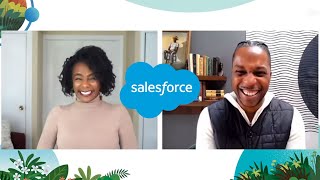
Transcript of a Salesforce ‘Leading Through Change’ session (part of Emerge Smarter series) featuring Andrea Chin, Executive Director of IT Programs for Global Customer Care at Estée Lauder, interviewed by Neeracha Te Kachunavud. The discussion (recorded during the COVID‑19 pandemic) covers Estée Lauder’s pivot to virtual selling, cloud‑based operations, omnichannel customer care (WhatsApp, live chat, social), virtual try‑ons, payment links for secure remote payments, buy‑online‑pickup‑in‑store/curbside, use of AI/chatbots for deflection and personalization, change management for global rollouts, and lessons learned for sustaining innovations post‑pandemic. The session also includes a demo (Northern Trail Outfitters example) of Salesforce Customer360/Service Cloud and a short segment with Simon Shah (IBM) on contact center lessons from COVID‑19.
Questions this video answers
December 14 (year not specified in this chunk).
Executive Director of IT Programs for Global Customer Care at Estée Lauder.
Chapters
Let's come together for the Dreamforce Trailblazer Experience dreamtx, A space dedicated to demos, luminary sessions and a whole lot of Trailblazer love. There will be something for everyone. For every line of business in every industry. You'll see the power of Customer360, share stories of working in a pandemic and hang out with other trailblazers virtually and be entertained by some surprise guests. Join us starting on December 14th for DreamTX. Good morning, I'm Leah McGowan Hare and welcome to another one of our live weekly conversations as part of our Leading Through Change series. A chance for you to hear from leaders who are doing their best to get through these challenging times and support their communities. Before we get started, I want to preview the next hour. Andrea Chin of Estee Lauder speaks with Salesforce's Naracha Te Kachunavud about how they are harnessing the power of Digital and Customer360, the world's number one CRM to transform customer service globally. Learn about how they are delivering consistent service experiences across their global profile of 25 plus brands by putting their customers and employees first in part two of our two part Emerge Smarter series powered by IBM. To learn more, download the State of Salesforce today at IBM Biz SOSF2021. We'll then dive into a live demo showing a single source of truth with the power of Service cloud. After that, we'll close with a special interview and musical performance from Leslie Odom Jr. Now, if you like what you see today, which I'm sure you will subscribe to, get the latest stories from the Salesforce blog. Every week at salesforce.com signup we talk to leading trailblazers, thought leaders and customers to learn how they're putting the customer at the center of everything they do. Subscribe now to stay informed with all the latest information and as we do every week on leading through Change, we want to help those who need it the most. We are committed to doing everything we can to step up to the urgent challenge of slowing climate change and creating a sustainable low carbon future for all American forests. Use the latest climate science to pioneer new tactics to grow healthy, resilient forests. We'd love you to join us. Donate online@salesforce.com trees Again, that's salesforce.com trees Our host Neeracha had the chance to sit down the other day with Estee Lauder Executive Director Andrea Chin to talk about how the cosmetic company is adapting and innovating to emerge smarter from 2020. Here's that conversation.
Well, as always, thank you, Leah. I am so pleased to be here today with Andrea Chin, Executive Director of IT Programs for Global Customer Care at Estee Lauder. Welcome, Andrea.
Thank you. Nerocha.
This has been an amazing year on so many fronts. I think you're out of New York. So tell me, with the pandemic, it's hit us all differently. But how has your year been and how have you been managing?
Well, notja, it's been crazy year and you know, almost nine months at home, you know, working remotely, it's been quite a feat. And I manage a global team for Estee Lauder's Consumer Care and it's nonstop. There's always somebody working. So it's been quite an interesting time. But I think we persevered and we definitely, you know, rounding the corner here. So.
So given all the things you've had to adapt to, how have you managed and how has it driven a change perhaps in the priorities that you set before around your service strategy?
Well, we had everyone in the stores and everyone kind of coming to the stores in terms of their retail strategy. But guess what? Everything went online. So the stores had to, unfortunately, some of them had to close and our beauty advisors and our makeup artists had to go home. They had to take their makeup brushes and their palettes and they had to go home. And we're really looking to do something called virtual selling. So those beauty advisors and the makeup artists had to sell from home. They had to get the ring lights and they had to do their Instagram lives and they had to do their pop up makeup tutorials and really change the game. Right? Change the paradigm shift for shopping from in store, trying on lipsticks, trying on foundations to their face, to actually doing it from home. And we actually also launched virtual try ons. So using apps for our brands to have our consumers do foundation matches and lipstick matches from their phones.
That's amazing. So not only an enormous pivot to virtual, but also adding in new innovation to that virtual experience.
So.
So if you think about your prior investments in cloud technologies, how did those investments really give you that ability to innovate and pivot given the new scenario that we're all living in?
Yeah, we're really fortunate to be able to actually do everything in the cloud. So our advisors actually, that Friday, they were able to take their laptops and take their headsets home on that Friday and on Monday to take the calls from our consumers. So everything was in the cloud. We really didn't lose a beat. And so our advisors Our consumer care advisors were able to quickly pivot and work from home in terms of our beauty agents and beauty advisors and makeup artists. They had to pivot more because they were used to dealing with our fans and our consumers in person. So that took a little bit more creative thinking and creative strategizing, but we were able to leverage WhatsApp and live chat to actually connect with our consumers at home.
I love the fact that you're leveraging all these channels, really meeting your consumers where and how they want to communicate. And I love your points that customer care isn't just for the contact center anymore. You had makeup artists, store associates, everyone just kind of getting in on the customer care action because that's what we needed to do. I love hearing about the prior investments you made in technology. Can you talk a little bit about change management? It's always a challenge with the global nature of your projects, how you're rolling this out to all, you know, your folks all around the world. Talk a little bit about change management, how you put that in place.
Absolutely. So we've been on this journey for a little bit over two years, and we've gone all the way around the world. And for me personally, I had actually get on planes, trains and automobiles to launch these new markets. And in the last nine months, we've launched a bunch of markets, and I didn't actually get on one plane. So we did everything virtual, we did everything via Zoom, and we have an amazing education team. And this education team worked with translators around the world, and we're not only able to launch new Salesforce markets, but actually launch and onboard new advisors around the world. And it was all seamless. So we just had the power of technology and one global team, and we were able to launch many markets in these last nine months.
That's great. So that's one example of innovation. I'm sure you have plenty more in terms of all the things you had to work through over the last nine months. Any other examples of how this platform really gave you that ability for adding in new innovation?
Yes, I have a great example. As you can see, and as you know, a lot of our advisors are working from home and so how to take payment and credit card information over the phone. Right. So we've launched some things called payment links. So we actually send out these payment links to our consumers at home, and they can pay via debit, credit, PayPal, any type of payment, and we get a notification on our end that the payment was successful and the payment process was approved. And then we are Able to ship the product. Sometimes the payments are declined. Right. Payment, the card is denied, declined. So then we don't send that package and we ask the customer for a new form of payment and send them a new payment link. But this is allowing us to be PCI compliant and then taking in the credit card information in a new and more secure way and also closing the sale.
That you're just meeting your consumers where they want to operate. Right. So that's. That's great. Have you been able to put in place things like buy online, pick up in store? You know, some of these new trends that we're seeing across retail?
Absolutely. As some of the stores are reopening, especially in the United States, a lot of people are doing curbside pickup so that the store is actually in the mall, but they don't feel comfortable going inside the mall. So we do buy online and pick up in store. Right. Or pick up in the curb. Right. And so we can bring the packages out to their cars and they can make payments and then they can be on their way. So we are really adopting that, whether it's groceries and makeup. Right. A lot of people want to feel comfortable with picking up that package at the store, but not inside the store. So we are definitely rolling that out across the globe.
In the salesforce world, we talk a lot about the customer.
360.
So if you think about the Estee Lauder customer, how does that 360 degree view really impact, you know, we talked about different channels, all these new and different touch points for service. How did that 360 impact all that?
Well, because we're online now. Right. And most of the purchases are actually online. They had a lot of online purchases. So to be able to actually look at those online purchases, see what they want, actually offer them the refill, call them, be proactive with them, text them to say, hey, you're about to run out of your product. Would you like us to send you some more? Would you like us to refill? Some of our brands had started that kind of replenishment program and reach out to make sure that our customers were getting the products that they wanted, when they wanted them.
Personally, I love replenishment because time is very strange in pandemic time right now. So I never actually remember anything. So replenishment for me is consumers. It's just a wonderful service. Were there any other surprises as you went to different channels and different touch points, maybe using social more? Were there any surprises and learnings that you had around just the channel side of things?
Sure. For sure. So one of the borders shut down in Europe, those trucks actually couldn't get cross border, cross country. So we actually had to think about last mile delivery and we actually leveraged Postmates. Right. So if you wanted your mascara or your lipstick, you know, within a couple of hours, as opposed to waiting a couple of days, we're able to leverage postmates for that last mile delivery. And we're actually looking to do that around the world also with social media. So sometimes our orders are a little delayed. Right. Sometimes the trucks couldn't leave the country, they couldn't leave the distribution centers. Supply chains were really kind of stuck. So they would call into consumer care and when consumer Care said, you know, your order is delayed, then they would complain on social media. But because we have our social media channels, LinkedIn, with Salesforce, we're able to pass those conversations back and forth and really give our consumers the best estimate of where their parcel was in terms of the supply chain. So even though they called us and kept on asking us, where's my order? We're able to give them a good answer no matter what channel they came in on.
That's great. Now I'm going to pivot a little bit to AI, artificial intelligence and the impact of that. How do you see that feeding into your service strategy? How do your agents feel about that?
Sure. And I'll just kind of lead off of what we talked about in terms of where is my order? As we're approaching peak season and Black Friday and the holiday season, everyone's going to ask where's my order? For us, that's not a value add inquiry. Right. So we're using chatbot, chatbots and AI to deflect those calls and deflect those inquiries so that our advisors can actually work on the more fun calls and the selling and the more value add transactions as opposed to just where is my order? Or my order is delayed. So we're really using AI for that. We're also looking to do more interesting things with the purchase history. So if you see that someone loves these shades of this brand, you can actually give product recommendations. And we're really looking to leverage Salesforce for that too. For next product recommendation or next best action for the advisor.
I love that as a consumer, I too don't want the low value interaction. I would prefer a chatbot. Right. Just answer my questions, where is my stuff? Whatever the question is. And I do love the personalization that you're talking about. I think that's more important than ever. Now, earlier Leah had Told us a little bit about a research called the State of Salesforce. More than half of the businesses surveyed in the State of Salesforce report have increased their focus on brand loyalty and trust with their customers. How have you at esteemed been able to build and maintain that trust with your customers during times where there's a lot of external challenges to the business?
Yeah, so more so even how more important to have the 360 degree review of the consumer within Salesforce. So when they call us, they email us, they contact us via social media. Our advisors know a lot of information about them. You're not just, you know, the first time you're coming in, you know, saying, oh, I don't know anything about you. So really having empathy for the consumer, having, you know, that connection, understanding their habits and their social channels and their communications and which channels they like best, we're able to meet them where they want. So if they only want to communicate with us on WhatsApp, then that's where we're going to communicate with them on. Right. A lot of people these days don't like to talk to companies on the phone. They like to have that asynchronous relationship just like they do with their friends. Right. So they want to trust their brands. You know they're going to be doing a Zoom wedding. Right. They want to know what makeup they want to wear for their Zoom wedding party. So we want to have that relationship with them, not just when they're complaining with us and when they have a product question.
Yeah, that's beautiful. And we talked a lot about customers, but obviously that's one of your many stakeholders as you think about your employees, the fact that they were able to pivot to remote. The fact that you mentioned you've got this global, very distributed, distributed workforce. How do you keep that communication channel with that employee constituency so you get good feedback and understanding of how people are feeling.
So our advisors love the Salesforce platform and we've actually been growing along our journey on the Salesforce platform. We added new channels. We just launched chatter. So chatter allows them to talk to each other around the world. We have a community of practice and they can ention another advisor, let's say, you know, in Europe or in Latin or an apac and they can share best practices because we're all on the same platform. So they really love to learn the new enhancers we're putting in basically monthly and it really helps with attrition. So it's not just where's my order, where's my order? Where's my order. They're actually doing some fun interactions as well with our consumers. And now that we have, you know, the holidays coming, they're going to be some fun challenges ahead. But having a great platform like Salesforce allows them to really escalate, where necessary, escalate to different departments that might not be within consumer care. And also if there's product quality issues, we can actually work directly with our product quality and quality assurance teams to make sure that the products are addressed in a timely manner. So having the power of Salesforce globally allows us to really do the follow the sun model as well, and we can help other regions out when other regions are overloaded and actually have that whole holistic view of the consumer wherever we are in the world.
I love that because you're taking beauty, which is such an in person kind of experience, making it virtual, using all these tools. So as we come out of the pandemic next year with all this promise of the vaccines, how do you see that innovation sticking? Is it going to keep going? Do you think it's going to go back to the old way? What are your thoughts on that?
I actually think Virtual Song is here to stay. I think that people are going to be hesitant to go back into the store, you know, in big groups or even go back to the malls. So I think that those folks at the counter and at the malls and at the stores are going to have to use that store and use that platform to do more outreach. Right. To answer more virtual questions, do more virtual hangouts or virtual, you know, makeup tutorials. Right. Or hair tutorials. Right. People want to dial in and see how to use the products, how to use the different products together, what the new products are and how to do that new hairstyle. With some of our hair styling tips, people are wanting to tune into that. And I think that if those experts are in the store, they have a platform and they have a following. But then to actually drive sales from those events, that's where it's getting key, right? To be able to actually have the consumers buy those products at that moment as opposed to waiting for the next day or for the next week. I think that's where technology is going to be really integral, to be able to help them, you know, check out their basket immediately after those events.
You know, I love that as the mother of two girls, late teens, early 20s, I see how they shop. I see, you know, well, the love of beauty is universal. I see how they follow their influences on Instagram, many of whom, you know, are makeup Artists and store associates who just kind of expanded on their channels. So I think I agree with you. I do think this is here to stay.
Yeah. And we have. Sorry, we have Salesforce as our platform. So we could do virtual appointment booking, we can do screen sharing, we can do video. Right. So Salesforce allows us to really grow in this new digital age to actually do all these in one platform. You can integrate with Zoom, you can integrate with Outlook. And so as opposed to having so many different screens, the advisor or the customer service agent can actually just use that one platform to do all they need to do in one area, as opposed to all different applications on their computers.
That warms my heart when the technology makes all this amazing innovation possible. So we're nearing the end of time, so I just like to pose one final closing question to you. What's one thing that you've learned this year that will forever change the business at Estee for the better?
Don't be afraid to try new technology. New technology enables the future. And some things are going to fail, and some things aren't going to be the greatest. But I think that because we were really innovative and agile in terms of let's try, try new things. Trying something overseas and then bringing it back to the United States or trying something in the United States to bring it overseas, that's how you leapfrog the competition, right? Fail fast. Right. Fail cheap. But you have to keep on trying, right? There's going to be new technology every day. Who knew that we would be doing school via Zoom? Right. Who knew that we were going to be doing makeup tutorials via Instagram? And these pop up, you know, virtual events, Right. There's so many new things right around the corner that we've never even thought about before. And so with the onset of AI and machine learning, you know, the world is our oyster and the world is actually really small. Right? You can connect with someone in Israel, you can connect with someone in China. You don't need, you know, to get on a plane to be able to share and exchange those stories. So I'm really excited about the future, and I hope that 2021 brings us some great things and also some great joy.
Well, and maybe that's the very small silver lining of everything we're going through is that the amount of innovation it's generated and also people's acceptance of that experimentation because the conditions are all so different for everyone. I think that's something we can take out of all this. So, Andrea, thank you so much for your time today. That was super interesting. As you know, fan of beauty. You know, that's an extra add on to this. So thank you for joining us today.
Thank you, Neeracha. My pleasure.
All right, now with that, I'm going to turn it back over to the amazing Leah.
Thank you so much, Neeracha and Andrea, what an amazing conversation. It was great to hear how Estee Lauder had pivoted in this pandemic to meet their customers where they were and continue to meet the needs and actually innovated in this new space. I know that I will be sticking to some of those new virtual habits of shopping and virtual consultation. So thank you for that. Next, I'd like to hand it to Martha Walchuck, VP of product marketing, for a demo on how companies like Estee Lauder can harness the power of Digital and the Customer360 to transform their customer service. Take it away, Martha.
Thanks, Leah. As you just heard from Andrea, SD Lauder is harnessing the power of digital to quickly pivot and deliver seamless experiences for their customers. So why don't we take you through a demo and show you an example of how a company called Northern Trail Outfitters is leveraging the customer360 to do exactly that. And we're going to start our story with our customer, Lauren. She is staying safe and staying at home for the holidays, and she's going to do some exploring in her own big backyard. She's going to try some new hobbies, including backcountry skiing, and she's going to need some new gear to do that. So she pulls up her iPhone and heads to the Northern Trail Outfitters E commerce site. Companies like Northern Trail Outfitters have been able to pivot quickly and ensuring a seamless and cohesive branded experience to engage their customers across any device. Thanks to Commerce cloud on the customer360, she sees a lot of good options here, but it's definitely been a while since she's hit the slopes and she's really not sure what's the right gear for her. Normally she'd go into a store and maybe talk to an expert, but she doesn't have that option right now. But she does have the power of her phone. And Northern Trail Outfitters is making it easy for their customers to get in touch with them from anywhere on the channel of their choice. So she can go ahead and start a conversation on her favorite channel, and that is WhatsApp. And when she does initiate that conversation, she is going to be instantly greeted by a chatbot. Now, Einstein bots are native to the customer360 and they're connected to all the customer data. They're really part of a powerful suite of process automation capabilities called Einstein Automate that's enabling organizations to really bring this powerful combination of automation and personalization together. Right. In this experience that you're seeing for Lauren, she is offered a menu of different options to help her get started. And she notes that she wants to speak to a stylist and what that's going to do is automatically kick off a flow to confirm a number of questions about her preferences that can ensure she's routed to the right expert. Now keep in mind this is just one example of what chatbots can do. Lots of service teams are using bots to handle appointment scheduling, things like order status and even handle returns. Think about what that might mean for your business. What are some of those common processes that you might want to automate? Now looks like our bot is pretty up to speed on what Lauren's preferences are and it can seamlessly take that information, leverage it inside the system and seamlessly transfer her over to the right stylus to help her with her questions. So let's take a look at that experience. Here we are looking at our stylist Joel's service console. This is really the central place for him to engage with and advise customers from anywhere, including right now while he's working from home from his kitchen table. Now, based on Lauren's preferences and Joel's skill set, he's been routed her conversation and here he's accepted it. He has everything in one screen. Here on the left he's got the at a glance details about her loyalty, status and lifetime value. And in the center he has the details from Lauren's profile, her purchase history and her propensity to purchase new products. That single source of truth is powered by the customer360 bringing together all the data across sales, service, marketing, commerce to help Joel personalize the experience and build a trusted relationship with Lauren. Now he can dive in and start helping her. And I want you to take a look here in just a second on the bottom right hand corner of the screen. Pre built replies based on the context of this conversation are automatically surfaced. No more does Joel have to copy and paste from a notepad with common responses for Lauren. Now you might be wondering how does this work? Well this is the power of Einstein built in AI that learns from past conversations to build a curated library of common replies so that Joel can be more efficient and customers like Lauren get a really consistent experience. Experience. Now, not only is that AI suggesting replies. It's also recommending the best next step for Joel, which in this case is to review the product recommendations for Lauren. And when he accepts that recommendation, he's presented with a workflow to walk him step by step through Lauren's product recommendations. And this is really Einstein automated work helping to digitize workflow and processes so that stylists like Joel can be efficient and stay in the flow of work. And Joel can even place the order right on Lauren's behalf from the screen. He doesn't have to leave. He can even add on that extra pair of pants that she forgot she'd also need. Once he completes that order, he can let Lauren know that it's on the way, she can get back to her day, peace of mind intact, and Joel can get on to helping the next customer. These are just a few examples of how companies like Northern Trail Outfitters can quickly pivot their business and deliver seamless service for their customers. Thanks so much. Back to you Leah.
Thank you so much Martha. That was great. Now I'm going to hand it over to Neeracha and Simon Shah, Customer Services Practice Director, IBM Services, to dive further into lessons learned from contact centers during COVID 19.
Thank you Leah. Well, I really enjoyed my earlier conversation with Andrew Chinna Veste and I found it incredibly insightful about Contact Centers. So I'm so pleased to welcome Simon Shah from IBM to talk a little bit more, dive a little deeper about what he's learned about Contact Centers during COVID Welcome Simon.
Thank you. Nice to be with you.
So what is the biggest lesson that you've seen that Contact Centers have learned from coming through this COVID pandemic?
I think firstly from a technology perspective how important it is to have a sort of cloud based, fully integrated platform approach to your tech stack. I think organizations got caught out at the beginning of this crisis thinking they could pivot to remote working or multi location working and then realizing they couldn't because they didn't have the infrastructure in place. And I think also a lack of realization around the importance that agents had with sitting next to their colleagues and being able to ask questions and maybe this lack of a knowledge base and guided workflows. When an agent sitting at home, maybe on their own versus being next to colleagues in the office.
That's wonderful. We hear that a lot. The incredible impact of cloud technology. Excuse me now, if I were running a contact center or a service professional and I'm kind of looking at the future landscape, what is your best advice for me around what to focus on.
In 2021 I think firstly take a step back and focus on let's do an honest assessment of what went well so what's the good the bad and the ugly for the last eight months what can we take lessons from that we did well but also maybe really impacted us quite badly and look beyond the contact center what else was impacting you as a contact center leader from other parts of the business and then as you move into 21 focus on an experience led strategic approach so start to build a roadmap of technology but not just technology people process and the technology solutions and where you can find some short term tactical wins launch those early and just test them and keep iterating on them but still with that focus on that longer term contact center.
Roadmap thank you I love that the experience focus strategy well thank you for joining us today giving them some insights really appreciate your joining Simon you're very.
Welcome I enjoyed it too thank you.
All right Leah over to you.









