How to Calm Down at Home with Tips from Kristine Carlson | B-Well Together | Salesforce
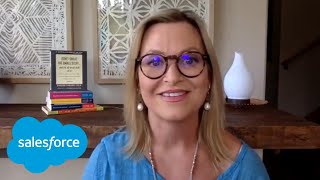
This YouTube interview (Be Well Together / Salesforce) features Christine Carlson, co‑author of the Don't Sweat the Small Stuff series, giving practical guidance for managing pandemic-related stress at home. Key elements: a short guided imagery meditation called the “golden pause”; advice to start the day peacefully, practice gratitude, and simplify life; an overview of five principles of happiness (thoughts, feelings, moods, separate realities, present moment); a personal anecdote about connecting with a passenger who assisted when her late husband died on a flight (present-moment healing); and program/gift sign-up (golden pause download). The clip also cites the Don’t Sweat series’ reach (about 100 million readers, ~30 million copies sold).
Questions this video answers
About 100 million people worldwide.
About 30 million copies.
Thoughts; Feelings; Moods; Separate realities; Present moment.
Chapters
Foreign.
Hello everyone. Hello and welcome back to another edition of Be well Together. We missed you. We missed you last week on Friday and Monday. But I hope you were able to take a nice long weekend off and relax and unplug. And yet here we are. Here we are again. And we are back in the grind. So we have someone here with us today who I am delighted has agreed to join us because she has a great perspective on stress and hopefully letting some of it go. So it's my very great pleasure to introduce all of you to New York Times best selling author, Christine Carlson. So Christine co wrote the book Don't Sweat the Small Stuff with her late husband and she also hosts a podcast called Don't Sweat the Small Stuff, Live the Big Stuff. She has appeared on countless shows. She's been on the Oprah Winfrey Show. She's been on the Today Show, Good Morning America, the View, and now she's here on Be well Together. So she's going to share some practical tips with us on helping us just find some peace. Don't sweat the small stuff at home. So Christine, welcome to Be well Together.
Thanks so much, Jodi. I'm so happy to be here.
We're delighted to have you.
Yay. Well, I mean, geez, it's been such an amazing ride. I know that you are all getting very accustomed to this pandemic that we're living with at this point. I've been calling it, it's like a roller coaster, isn't it? It's like an up and down and I call it the COVID coaster of change. Boy, I know that you must be feeling overwhelmed, anxious and wondering what is going to happen next. We were just chatting about the Bay Area. I mean, everybody woke up to Orange sky in the Bay Area this morning because of the fires. It looked very apocalyptic in a way. So there's lots of outside influencers in our lives, I don't need to tell you that are causing us some undue stress. And you know, maybe some of you prior to this fantasized about what it was like if you could work at home. And now I bet you're fantasizing about what it might be like to go back to the office. I bet that many of you are experiencing too much togetherness with your family and then some of you are experiencing the effects of too much isolation. And we are all experiencing what it's like to have the rug pulled out from underneath us and going through this change that none of us could have anticipated or counted on. So I know that we all need to practice managing our expectations right now. And sometimes that means that we have to let go of what we thought life was gonna be so that we can live life how it is. I really get it. The first thing I wanna do with you is what I do in all of my podcasts and every group activity that I ever do. And that is a golden pause. This is something that we've taught in our Don't Sweat the Small Stuff book series for years. It's a very short guided meditation, an imagery meditation. So if you would just sit comfortably, sit back and close your eyes, place your palms open on your lap and just begin to breathe with me. Breathing in through your nose, allowing your chest and your belly to fully expand, Taking in the fullness of your breath. Exhale, release, and let go. Breathing in pure golden sunlight to the top of your head, to the tips of your fingers and your toes. On the exhale, just let go of what doesn't serve you. Breathing in pure golden sunlight to every cell of your being. Just exhale, release, and let go some more. Breathing in pure golden sunlight. The top of your head to the tips of your fingers and your toes. Place your hand on your heart. Activating your heart, opening your heart. Just spend a moment thinking of one thing you feel grateful for as you think of that one simple thing. Breathing in that pure golden gratitude through your heart, through your core, through your entire body. On the exhale, relax and sink into your breath. Breathing in pure golden gratitude to the top of your head, to the tips of your fingers and your toes, through your whole body. Exhale, release and let go. And breathing in golden gratitude throughout your whole body on the exhale, allow that gratitude to wash over you like a cascading waterfall of pure joy. And breathing in golden gratitude one last time, filling your heart, filling your mind, filling your entire body with golden gratitude. On the exhale, go ahead and open your eyes. So that's a golden pause that I teach. That is really two and a half, three minutes about taking 10 deep breaths, tuning into your gratitude, sinking into a very peaceful place inside that brings you deeply into what we like to call the present moment. Do you feel that? You feel that sense of just sinking in? You know, Those can be two minutes, those can be 10 minutes. It's really just about learning to pause. All right, so, you know, I like to think of the definition of wellness. And first of all, I'd love to say, you know, thank you to Salesforce for offering this to all of you and for making it public to others. I mean, what an incredible service this company is doing, especially during these very unsettling times that we're in. I like to think of wellness. One definition be how well you are able to access your mental health, well being. And this is so important when we're talking about not sweating the small stuff or even not sweating the small stuff at home, because really, this golden pause and being able to pause before you react to life. You know, those knee jerk reactions that we do, those things that you do when your kids say something or do something that's just driving you nuts or you're in traffic and sometimes somebody cuts you off. Those reactions that we can all relate to. What we want to do is learn how to respond, to respond with kindness, to respond with compassion, to be able to step back from a moment and reflect for just a split second enough to calm down, get into that peaceful place so that we aren't reacting, so we're not flying off at our kids. We're not yelling. We're not, you know, doing all the things that are probably pretty prominent in households right now just because everyone is just way too much together. I can only imagine. I mean, I have never been so grateful to not have children growing up at home as I am right now. For this reason alone, I just can't even imagine. Parenting is a hard enough job, but much less having to do it with everyone at home on top of each other the time. I know my daughter Jazz has five kids and she just had them all out of the house for the first time in seven months yesterday. It was a big celebration day for she and her husband, both essential workers doing homeschooling. You know, saying, I remember back at the beginning of the pandemic, she goes, mom, this is my worst nightmare to have my whole family home without having any place to go, really. So you can think of that golden pause or just anything you do to increase your mental health and well being as self care for your mind. I mean, we all know what self care is, but how many of us really take care of our minds, and this is where we really are most apt to gain a healthy perspective, is if we can learn about how to access our. Our mental state of well being, our health in situations that are anything but calling that out in us, you know, we're having so many circumstances these days that are really testing us, really testing our ability to stay and keep a healthy perspective. And that doesn't mean it's always positive. Sometimes a healthy perspective is just feeling your feelings and just being in those feelings that can be healthy. Too. All right, so what I want to say is that the bigger issue that we're dealing with, too, is just this feeling of safety, you know, not feeling safe, you know, for a lot of different reasons, for a lot of people. But I think I'd say a pandemic pretty much threatens all of us on some level. And we've had to make peace with what it's going to take to keep our families well and keep ourselves well and. And get through this pandemic. But it doesn't mean that that unsettled feeling of a lack of safety, which really is at a very survival need, which is not where most of us or a lot of us are used to living, Right? There are countries that live in this place of feeling unsafe all the time. But this is something that is one of the bigger issues that we have to face. So I want to say that here's like, throughout this, I'm going to go into a few tips for you about how not to sweat the sun, small stuff at home. And I'm going to lead into five principles of happiness that are woven throughout the Don't Sweat the Small Stuff book series. But the first tip for you is, and this will work when you get back to the office, too, is remembering that how you start your day is how you live your day. So this means that when you get up in the morning, however it is that you get up, it sort of wires your brain to experience your day in that capacity. And so, you know, because we're such habitual people, you'll notice that you probably get up the same way every day. You might go to the toilet, you might go get your cup of coffee, you might go just jump out of bed. You might have an alarm. My suggestion for you is to start out peacefully, to really create a peaceful ritual for yourself so that you wake up slowly. Do you know that they say that? Well, Jim Kwik, he's like a great brain, brain guy, brain geek guy. If you've ever read any of his stuff or looked at him online, he says you're not supposed to look at your phone for the first 15 minutes of every single day. And that makes perfect sense, doesn't it? Because looking at your phone, it just sends an immediate signal, or your email, opening your email right away, or even your social media to your brain. Ideally, you would probably do a golden pause, or you would meditate, or you would do some inspirational reading. Just take your coffee outside, watch the sunrise, just something like that. But that will really help you throughout your busy day. Another tip For a don't sweat tip is really to teach your family and to teach yourself and anybody you're living with in your household to start to talk about what you're grateful for. And you know, it's okay to talk about our problems. There's nothing wrong with that. We all need to vet now and then we all need to, you know, share what's on our minds. But really the more you can focus on what's right even in small ways. Right now the small things in life are really, really big. And this is another don't sweat. The small stuff thing is you've got to really learn how to generate your inner sense of joy and well being. And this happens by tuning into your gratitude. This happens by taking that golden pause, by feeling into gratitude. Do you know that your heart registers gratitude as joy? So if you ever are feeling super super low or you're feeling just in an off place, if you can just spend a few moments and tune into your gratitude, that will bring you into a different place in your heart and you actually will bump up to a place of joy. So the question for all of us as we adapt to this change of this Covid coaster and we're riding our ups and downs and we have some of our Covid blue days, not that we're going to be happy all the time, but how can we get back to happy more quickly now? Most of us didn't get a lot of happiness training growing up and you know, our parents probably did the best that they could. We're doing the best we can with our kids. But that's why I have created on our don't sweat.com sites and happiness training for you. And I'm going to go through some principles of happiness that are woven throughout the Don'ts with the Small Stuff books. Now about this time in the history of Don'ts with the Small Stuff in our book series, they have been read by about 100 million people worldwide. We've sold over 30 million copies and each book is read many times. And in fact I'm wondering if you've ever read one or you have one laying around. Maybe it's a you found it at a garage sale or it's sitting in a bathroom or you've just seen it around somebody's house. But these principles are tried and true and they really do help you access your mental health and well being. And as you develop a deeper understanding of them, it's an instant way to gain perspective. Alright, so here's the first. The principles are thoughts, feelings Moods, separate realities and present moment. Now, these are principles that my late husband, who is a psychologist, identified as being the important factors to accessing mental health and well being despite any circumstances that are going on in your life. So that really means that no matter what's happening, you can actually be a happy person. That's right. It's true. Again, I'm just going to reiterate, nobody's happy all the time. That's not the goal. The goal is to get back on our happy tracks more quickly. All right, so the first thing that I want to talk about is thoughts. That is the first principle of happiness. What I want to say about this is that thinking is as natural to us as breathing. And we do it all the time. We do it just inadvertently, right? But how many of you get into thought attacks? How many of you get on a spiral of thinking? It's really easy to do. It could be with your kids, it could be with your spouse, it could be with anything. You get on a spiral of negative thinking. And what is it going to do? It's going to create feelings. That's the next principle that don't feel good. So you can always track back your feelings to what you were thinking prior. Your feelings become your best navigational guide to what the content of your thinking is. That's really important because you can't choose to change a thought that's already happened. But you can change the trajectory of your thinking, which will automatically make you feel better. Now, we have moods. Does anybody not have moods? Okay, so quickly, what I'm going to say about moods is when do you think most married people talk about their problems in a high mood or a low mood? Well, most married people talk about their problems in a low mood. When do you think you should talk about your problems in a higher mood? Why? Because life looks vastly different in a high mood than it does in a low mood. If you ever want to get something, this is kind of a bad thing to say. But if you ever want to get something from your spouse, be sure and check in with them about where their mood is before you go and you launch onto anything that they might not agree with with you. All right, now, separate realities is it really is about looking at life through our own unique lens. Now, this is built on belief system. This is built on so many things. But the big point of this is that we can have a lot of compassion in our communication for somebody else if we realize that people are really living from their own worldview. And even your children, you know, when you're dealing with your children if you can remember how innocent they are. I mean, as parents, I know I was like this too. I just thought my kids have to see it my way. That's just it. They have to see it my way. But when I did put myself in their shoes and realized where they were really coming from and how they were viewing the world, that made all the difference in how our communication went. The last thing I want to talk about is present moment living. This is the coup de grace of our experience. This is when you sink into your body, into your breath, and you're living in a place where the ordinary moments become extraordinary. You notice the nuances of life. You're present with your children, you're not distracted. This is a lifetime practice and that's why it's been part of Buddhism. It's part of mindfulness. It's part of so many practices. You have to practice it all the time. Now this is a little bit like speed dating. I'm going through these really, really quick, but I want to share with you to end a story about present moment living. So I've told you that I lost my husband, my late husband, Dr. Richard Carlson, about 14 years ago. He passed away suddenly from a pulmonary embolism while on a flight to New York. Well, two years after he passed away, I was of course, had been through deep grief and deep healing and I was traveling with my daughters and we were flying back from Eugene, Oregon from a celebration from my parents wedding anniversary. And we got on this little commuter flight. When we walked up to the ticket agent to get our seats, he said to us, you know, you're not seated together on this flight. And I said, oh, it's okay, I don't mind. And we didn't mind. It was a little flight and it was going to be quick. And so we went, we started to walk off. He said, well, I just moved your seats around, I rearranged them. You'll be seated together. So when I sat down in my seat, the window seat was open and my girls were sitting to my right. And a man walked up to me and he stood in front of me. When I looked at this man, I got these chills and they ran through my body and my kids let out a giggle. And when he sat down, I had this very strong feeling of that I need to talk to this man, really strong. But he pulled his laptop out and he was busy. So I let him settle into his flight and I said, I'm not going to disturb him. You know, in my mind I'm saying this, but on the descent of the flight, he put his laptop away, and I said to him, is this a work day for you? And he said, oh, yeah, I'm sorry. You would have loved to chat. And I said, and he says it a workday for you? And I said, as a matter of fact, every day is kind of a workday. I'm a writer, so any day could be a potential workday. And he said, oh, well, have you been published? Is it anything I might have heard of? And I said, well, you might be familiar with my late husband's work, Dr. Richard Carlson. He wrote Don't Sweat the Small Stuff. And the man really looked visibly shocked. He looked really shocked, and he'd even lost a little color. And I said, what? Did you know him? And he just shook his head, and he still looked very visibly shocked. And I said, what? He said, well, did your husband die on a flight to JFK a little over two years ago? And I said, yeah. Why? How did you know that? He said, because I was seated directly behind him on that flight. I was the first to assist. I helped lift his body out of his seat. And I always wanted to tell you he died very peacefully. And I just. I mean, can you imagine? I just gasped, and I burst into tears. And what that man didn't know was that my deepest prayer was to talk to somebody who had been on that flight because I hadn't been there. It was the biggest pivot toward healing that I could have ever received, and it was so divinely orchestrated and so magical, and it happened because I didn't miss the nuance of the present moment. I know that was so quick, and I'm so sorry to end here, but I know I need to get back to Jodi because in case you have any questions, and I know you're probably just like, your heart is. Oh, my gosh.
I am. I have to say, we've done a lot of these episodes, and you don't. You don't really find me at a loss for questions. That story is amazing. Amazing. And I am just so grateful that you had that opportunity to be able to really plug into that and be able to begin a different course of healing for yourself. What a gift.
It was an amazing gift. It really was. It was just such a gift to. Of grace.
I wrote down so many things about what you were saying, things that really, really resonated with me. You know, present moment living was one of them. But the multiple references to joy, to gratitude. And I really love how you start Your day is how you live your day. That is. Those are words to live by. Gosh, I'm so taken by that story.
But I did.
I did have a question going in, and I want to, like, say somehow get back to. In my brain. You and your husband were really kind of ahead of the curve on, you know, don't sweat the small stuff. And I think this time in this period, this Covid. This Covid coaster that we're living is really, really putting a lot of that into perspective for many of us. Right. Like, I mean, we're kind of. It's kind of a giant reset button on what is actually important and whether it's too much family time or not enough family time, you know, you really are. Everyone is forced to take a hard look at the life that they lived before this experience and the life that they want to live after this experience.
Absolutely.
And so I'm curious. Yeah, right, right.
And during.
Let's not forget the during. I just keep thinking about who I'm.
Going to be on the other side.
That's how I'm getting through it. But I guess my question for you is having, you know, having walked this. This mile before, about not sweating the small stuff and about keeping your priorities straight. You know, what advice do you have for people when they do look forward and we do get to the other side of this pandemic? And, you know, there is an expectation that you put on shoes again or that, you know, maybe you're grooming at a more regular haircutting and, you know, manicuring or whatever.
Right.
You're wearing pants. You know, it's these types of things.
Right.
As all of these things start kind of creeping back into, you know, are the things that. That were. That used to be really important and that, frankly, were creating a lot of busyness and maybe a lot of distraction from what is really important. Like, what advice would you have for people to try to stay centered and try to differentiate between the small stuff and the big stuff and to, you know, take the good parts of what. Of what you people have learned through this experience and not. And not just have that all get swept away.
Well, you know, that's a great point, Jodi. And, you know, the truth is, we all go through stuff that changes us every single day. I mean, certainly I'm a different woman after going through the loss that I've been through than I was prior to that loss. And we will be changed people after this pandemic because it's enough time that has passed where we will implement New habits and new structures and new ways to bond together, new ways to get through this, new ways to communicate. And I would just say take the best of what you've learned and hold on to it, you know, hold on to the good parts that you've created with, you know, the people that you've created them with. Don't let go of those things. I know for me, it was a huge reset too. I mean, they say that introverts were just sort of like, yay, pandemic and extroverts were like withering roses, you know, and I guess I'm somewhere in between. I think for me it was just a huge reset. My busyness, I was doing a lot of travel, leading a lot of retreats and it was kind of like, wow, I didn't realize how fatigued I had gotten from life itself. And so it was very restful for me. For the people who have their families at home with them, there's going to be some benefits to this that are going to be far reaching for your family that you never would have had the opportunity to experience. And I'm hoping that most people are experiencing some of those positive things. I know there's an awful lot of, you know, it kind of depends on, you know, where you were when this hit, you know, like what kind of habits did you have in place. And I know so many people might have began to eat their feelings in the beginning or bake their feelings or cook more or be an obsessive exerciser or, you know, or cleaning everything. You know, I mean, I had a friend, she just cleaned everything. You know, even every table outside, every. Everything was just completely organized. And, you know, you have to have a strategy for life. And I think the strategy going back into life is to keep the things that really work. And, you know, whether that's just the simplifying of life, which is so powerful. You know, Third world countries are often noted as being the most grateful countries and they don't have all the materialism. Some of them don't even have running water or full electricity. And yet they have more gratitude. And so I think we can learn from that, that this is a time that we're living in that forces us to slow down. One of my favorite Richard Carlson quotes is, if you slow down long enough, happiness might just catch up to you.
Oh my gosh, that's beautiful. That is really, really beautiful. Well, this has been an absolute joy. Thank you. I know that you wanted to offer our viewers a gift. Do we want to pull up that slide so that people can see that we're very grateful for this offer.
It's the golden pause.
It's the golden Pause.
Yes. If you just go to that URL, that I think they'll be posting it for you, too. But if you go to that URL, they'll be a golden Paws download that you can sign up for. And I hope that you really enjoy that. I hope it. It helps you start your day off right. And, you know, just remember, you can always just touch your heart, take a deep breath, and. And you'll find that place if you practice going there. So life is a practice. You gotta live it and practice it. You have to practice the way you want to live it.
Amazing.
Amazing.
Thank you. Thank you so, so much, Christine. This has been a real treat, and it's just a lovely way to. To wrap up this day. So I will put my hand on my heart and I will take a moment to express my gratitude to you and to all and to all of you. Thank you for tuning in. Thank you for giving yourself this little gift today, and we will look forward to seeing you again on our next show. Take care. Be well.
Bye. Bye.









