How to Create Your Personal Brand - #BossTalks
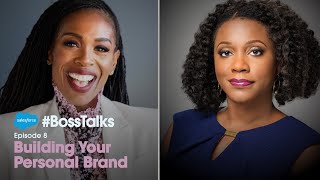
Kyra Kyles, CEO of YR Media and former Editor-in-Chief of Ebony, on building a personal brand that actually reflects who you are. She talks about saying no to visibility that doesn't align with your values, separating yourself from your job title, and revisiting your brand blueprint regularly.
Chapters
I got a feeling that you got.
A feeling that this is gonna be good.
Say hello.
Hello, everyone, and welcome to season two of Boss Talks, a series featuring candid career conversations with people who are changing the game in their respective industries. Today's episode focuses on building your personal brand. Now, if I had a dollar for every time I get asked about this, I would be a rich woman. And I really love sharing my thoughts on this because it's something I've been incred. Intentional about. So today, we're going to give you total access into everything you need to know about building your personal brand and establishing yourself at work. Having a personal brand helps people understand what you're all about. And it comes through in the way that you show up, whether it's how you look, how you speak, or how you work, it's the whole package. To help me unpack this topic, I've invited someone whose personal brand I really admire. Our guest today is Kyra Kyles. Kyra is the CEO of YR Media and the former editor in chief of Ebony magazine. Kyra, welcome to Boss Talks. We are so thrilled to have you here.
Thank you so much for having me. And I love the term boss Talks. So I'm excited to be online with you.
Excellent, Kyra. I have to share that I am obsessed with Ebony magazine, and I have several vintage covers from my birth year hanging in my office. It's actually also my personal mission to collect all 12 magazines from my birth year. It's a hobby I've had for many, many years now, and I'm happy to report that I'm only missing a few. So I'm having a bit of a fan girl moment here with you right now.
Oh, thank you. We appreciate that we have to support our black media. It's so important and so crucial.
And now more than ever, that is right. We have so much to cover, so I'm just gonna dive right in. I'd love for you to start by telling us about your background and your career journey.
Absolutely. So my career journey is unique in that it started super early. So I was about 4 or 5, I think, when I really got interested in broadcast journalism specifically. And I used to do this thing where my mom, who was like a shopaholic. Don't tell her I said that. Well, I guess she'll see it. She used to just plant me in front of a dressing room mirror when she wanted to shop. And I would just entertain myself by doing the news, doing the weather, and I had such a great time doing this. And, you know, Normally, you end up. You grow up, and you grow out of a certain career that interested you. But that never happened for me. I used to read the newspaper next to my father. You know, I'm dating myself now next to my father on the floor, and he would always pass me the sections when he was done. And I was always really interested in journalism, but really also noticed, even at a young age, that there weren't very many people like me, no matter what it was, whether it was print or tv. And I was determined to change that. So after doing that through high school and going to Northwestern University, where I earned my degree, I've actually done every single platform you can do. So tv, radio, digital, magazine, as you mentioned earlier, newspaper. I just really love media. And as you mentioned, work. That's EBONY Editor in Chief, which was a great experience in terms of just communicating directly with black audiences and highlighting black excellence. And now I'm super proud to be the CEO of Wire Media, where I'm trying to help light the way a little bit for young content creators, particularly of color and from underrepresented communities. And that's what I'm doing now from my base of Oakland.
So I hope everyone can see why you are the perfect person to unpack this topic with us today, because this episode is all about building your personal brand. And I want to start really by defining it. So what does it mean to have a personal brand? And do you think it's important, Kyra, for people to have one?
You know, I do. But what I think is even more important is to have an authenticity, personal brand. Sometimes people build their brand around what they think others want from them, and it's very hard to maintain that. And you can also find yourself pigeonholed. So I like to think of it just as, why am I working? Like, what is my reason and my motivation? And for me, my personal brand is representation. So even though I've done tv, I've done all these things, the through line that you'll find has been that I want to make sure that it's not just representation of me, myself as a creator, but then I'm also making sure that other people get this opportunity because there's this power in numbers, especially when it comes to diversity, equity and inclusion. So that, for me, is a real brand, because that's something that I've been interested in since I was a child. It's not something that I did because it was popular or a fad or a great new hashtag. And I think people should seriously consider that, because once you embark on that path, people will really hold you to that. So it has to be something that really resonates for you. And you also have to not be afraid to. To let it evolve, you know, as time goes on.
That's right. When in your career, I know you said early on as a young child, 4 or 5, you started thinking about what you wanted to do, but when in your career did you start thinking about your personal brand?
I think that I started thinking about that most when I was at the Tribune, Red Eye. I had my own column called the Kyle's Files. And I also had a TV segment on WGN TV which was so much fun. And I got to work with some really incredible people. And it was all about the intersection of pop culture, gender, race. And that is how I really kind of materialized. What I was telling you earlier is my interest in representation. And so that's when I think I became really cognizant of having a brand and having to build it in the directions that made sense for me and for my career.
Now a lot of people wonder where to even start when it comes to building their personal brand. For me, it was helpful to start with my values. So what are your tips for folks just getting started on building their brand?
I totally agree with you on starting with your values because as I mentioned, authenticity is important. If you pretend to be this sunny person and you are on social media being sunny, and you're on LinkedIn being sunny, and then people meet you and you're grumpy or you really don't enjoy talking to people, that'll be a problem because there'll be a major disconnect that you're going to have to. To solve for. So, of course, you have to obviously behave and comport yourself differently in different circumstances. But I think the important thing is to make sure you're true to yourself. Like, I really like humor and, you know, that's the way that I look at life. And so when people meet me, I'm not going to give them this dour, you know, like, I'm an executive and this is how I do things, because it's ridiculous and I'm giggling to myself even as I just did that, you know, like, it does not feel real. So even though there may be some people who want me to behave that way, that's not natural for me. So I'm not going to do that. And I'm also not going to take a job or role that that where I'm asked to do that. Like, we need someone who behaves like this, then go get that it's not me, you know, even though, no, everything is not funny. But I do think that if you cannot, you know, see some humor in things, life is a lot more sad for you. And so I don't want that for myself. So I think that's where you want to start. I also think just a practical tip is I mapped it out, you know, like, I did it on paper before. I've done it with PowerPoint. I'm not great with PowerPoint, but I've tried. And I just map out, like, what are my interests, what are my career aspirations, what are my personal values, how do those items sync up? And just seeing it on a visual level was very helpful to me. And as a matter of fact, that's something that I did before joining Wire Media, like, where I was able to sync up my love for media, love for content creation, love for DEI and concern for ushering in the next generation of journalists and content creators, musicians, and bring all those things together. So it was almost like, I won't go as far as to say manifesting it, but I think if you don't have a blueprint, you're kind of just rudderless, you know, floating out there in a sea of opportunity. So that's one of the things that I've always done, is create a visual reference for myself.
I love that. And those three things were your interests, your aspirations, and your values. That's so great. It's a really great place to start. And we know that your brand can change over time. My boss building brand was definitely not a thing when I was a call center agent, but I was still super intentional about all of my actions and, and all roads led me to where I am today. So I know your brand can change and grow and evolve with you over time. Talk to us about how that happens, Kyra.
I think it just goes with, like I say, every few years I make it a point to create that blueprint again and to look at it, and if it looks fine, I keep going. If there are alterations that I want to make, I change it. I mean, hopefully people are mutable, they're able to change. They're able to look around at their lives and things that are going on. And that's even on a personal level, you know. And so I think that it's really important to have a plan. But what scares me is when people are too rigid. And so I think what it is, is you want to revisit it, look at your career path, is it going in the general direction that you want. I mean, sometimes you have to take a step, so called back in order to step forward. And I think we're afraid of that because everything we hear with careers is climbing promotions. Sometimes you can be promoted into a corner. And so I always look at that. Just because I'm good at something or someone has told me I'm good at something, does not mean that I want to do that. At one point in my career, someone tried to make me into a meteorologist. Now, I'm not going to disparage my mathematical skills or science skills, but I'm not a meteorologist and I did not want to do that. And even then I had to say, yes, it's more money, yes, it's more visibility. I'd be in the main newscast. But do I want to be a meteorologist? No. I'm going to leave that for the pros. Like, Al Roker is incredible. Me, I see clouds. I'm like, yeah, okay. My weather is confined to me looking at my phone and deciding what to wear for the day. And I've never looked back in my career and thought, oh, I could have done this. No, because I knew then, even though that was in the beginning stage of my career, that that was not something that I wanted to continue.
I love that story. So, Kyra, let's be real for a minute. Some of us might need to rebrand, and that's okay. It's fine. As we've said, it's fine to make change and try something different with your brand if you need to. So what tips do you have for people who are thinking about the rebrand?
Yeah, I think it starts with, what do you want in life? Like, what are your ultimate overarching goals? Like over the next, let's just say 10 years. Because 20 years can be disconcerting for some people to try to look that far into the future. You don't have the crystal ball. Look at where your career goals are, look at whether you're actually doing any of those things. Are you doing it professionally? And if not, can you, can you speak with someone that you're working with and see if there's a way to incorporate that? If not, and I love what's going on now with our creators that are on TikTok, you can create your own lane. You don't have to wait around for somebody to tap you and say, it's okay for you to create, create your own media. You know, that's something that we can really do within this field. And that's not something I could have done, really. When I started off, I had to have a news director believe in me or I had to have, you know, a news editor believe in me. Not a lot of people when I started were doing, like, at that time, it was blogging. So I think it's like, can you create these opportunities within your career path? If not, how can you do it outside your career path? And then just take a hard look at it? And you're right. There are some people who may have created a brand for themselves that they didn't mean to. And your brand may be over promising and under delivery. And that's something tactical you can do. Stop it. Learn to say no in the politest way possible. And you will see that people that can change your brand. Like some things about your brand may be also like how you show up for people in the work you do. I think people make the mistake of thinking, if I brand myself as this, people will believe it. No, it really comes down to the actual work. So I try to stay away from what I call, like, this performative brand where it's all smoke and mirrors, because what happens when the smoke dissipates and everyone sees you for what you are like? I just had an opportunity. Someone asked me to come on tv, and it would have been a great opportunity to talk about something. I don't know anything about that, not going to do that. Because, yes, it would be a great visibility. And of course I want to do everything I can for any organization I'm with to provide them visibility, but not in the wrong way. So that's the other thing. Sometimes an opportunity is not right for you, and you have to step back and realize that, and realize that all publicity and all visibility is not good visibility. And I think that's hard to do, but something that people need to do, especially if they've gotten a little tug on the coattail that they need to rebrand.
You said something about how we see ourselves. It reminded me of a story I was recently telling about when I decided to move from it to philanthropy and how much I was struggling because so much of my identity was wrapped up with who I was at work. I saw myself as a young black woman in tech, and I was really worried that this shift would do something bad to my brand and how I saw my brand. So I want us to explore the balance between our personal brand and these other aspects of ourselves, whether it's our identity or even our ego. How do you see that?
Well, here's a good rule of thumb that I follow I don't identify myself by my job, and I never have. Like, first and foremost, I am Kyra Kyles. I'm the daughter of W. Lewis Kyles and Tony Kyles and the sister of Cozy Kyles. Those are the things that I'm most proud of in the world. First, some people treat you certain ways when you're in certain spaces. There are certain people that you know, when I was at the Red Eye, when I could offer them coverage, they treated me one way. When I left the Red Eye and was independent, they treated me another way. When I went to Jet and Ebony, then they came back and they treated me even a different way. And what I had to know in that moment was, it does not matter what these people think of me. It does not matter how they perceive me, because many times they're looking at it as what they can get from me. It matters what I think. So I don't care where I go. I'm always me, and I'm always going to try to bring the same gifts to the table. And unfortunately, just when you're having a conversation with someone, what's one of the first few things that they ask? What do you do? You know, where do you live? It's part of your identity. I actually reject that as being part of my identity because what I noticed was it blocks you from trying other things. If everyone thinks I'm awesome because I work at the Red Eye, I can't leave the Red Eye.
That's right.
Even if the Red Eye is not offering me what I need anymore, I'm stuck there because I want to be Red Eye Kyra. So throughout this, I'm just Kyra. Whatever I'm doing, that's what I am and that's what I offer. And I feel like sometimes people use that as almost like a shield. And it's also almost like a comfortable little prison that you build for yourself. And so I've just made it a point throughout my career. Doesn't matter what is on your business card. It matters who you are as a human being and that you're doing what you want to do. And if other people don't respect that, that's on them.
I think that's such an important lesson to learn so early. You're right. It's one of the first things people ask you. So your job, your zip code, does not define your brand, because what happens.
When you move right?
Really excellent point. I'm glad you brought that up. Now, part of having a personal brand is the actual branding. And I think it's a fun exercise to think of three or so words to describe my personal brand. I've used for myself grace, grit and gratitude as an example before. So, Kyra, what are some words you'd use to describe your brand? And they don't have to start with the same letter. It is more fun if they do, but they don't have to.
I like that. Yours, that was very clever. So mine is not as fancy, but I would say direct, honest and entertaining. I try to entertain, you know, even in the bleakest of circumstances. Like I said, you know, life is short, as we all know, from what's going on. So I really want to always be having a good time if I can. And I always try to be direct. I try to be super transparent with people and I try to be honest. Now you can't be painfully, ridiculously honest with people and hurt their feelings and. But I feel like it's not fair when you're having any kind of transaction with someone if they don't have the full facts. So I always try to do that and that's what I pride myself on as like kind of undergirding anything and everything that I do, whether it's writing or presenting or buying a home, anything I do, those are the things that I want to bring to the table.
I think you've just demonstrated to us one thing that I think is really important about your brand and it's knowing it. You didn't have to like wonder what your brand is. You were able to rattle those off of the top of your head. And I think that's really important to be grounded who you are so that you can just come off the cuff and know who you are. So that's really great. I love that you demonstrated that for us. So we've all heard sayings about first impressions, so clearly how people see you matters. But in this hybrid world we're living in, our full presence is our brand. We have our in person identity and our online identity through zoom and social channels like LinkedIn and others. So tell us what your thoughts are and on how to do this and how you choose where you show up.
You know, I think it's almost impossible to be everywhere. I think people once tried that. But with the proliferation of different social media sites, there's so many offerings out there, it would be very difficult to maintain all of that unless you probably have someone helping you or doing it for you, which in some cases can be a great thing, in some cases maybe not so great. So I think what it is is Consistency and knowing who your audience is, knowing things like their demographics, like, who are you trying to target? And then looking at your social media and thinking about, are these the people that are being reached through this, through these channels? And I think that can help you whittle down. Also, you can look at, like, what are your capabilities if you're super visual? There are other social platforms that are more given to the visuals. There are some that are more given to writing and the way that you present yourself through the written work. So I think that's a way that you can narrow it down. But you're right. Even with the zoom, like some people have said to me, at being like, oh, my goodness, why do you have on earrings? We're on zoom, like earrings. It's not hard to put on earrings. You know, I love earrings, right? You know, I love, you know, jewelry. So I'm going to go ahead and keep doing that. And I think it's just like what you are doing matters. Like, if you are presenting at a conference, if you're doing certain things, obviously you want to step it up, but I think that you just want to have a minimum for yourself and the way that you want to present yourself. I feel like sometimes as a woman of color, unfortunately, we're judged more harshly. And I'm not going to step into that and say, well, as a result, you need to show up to everything. You know, wearing pearls. You don't have to do that, but just have in your mind, what are the things that you like? What are the things that make you happy? Like, I like makeup, I like lipstick, I like earrings. That makes me happy. It makes me feel like I'm really working and like, we're not living in an apocalyptic universe. We are right now. It makes me feel less like I'm in a Marvel comic. So that's what I'm going to do. And when other people point that out, I just, you know, kind of think, okay, that's the standard you set for yourself. You don't want to do those things. Don't do them. But also don't point out what other people are doing. Try to make them uncomfortable. Because I'm not asking you why you've got a hoodie pulled up on your head. You do you. It does matter. And I mean, unfortunately, like, yes, people judge you visually. They judge you by the way that you speak. They judge you, as you mentioned, where did you go to school? Where do you live? So all these things come into play and they're almost amplified by having all these different Places that you can have a presence. For me, that's why it's important. Like, show up the way you want to show up. Don't worry what other people are doing, because if you're comfortable, they become comfortable. You know, people question you when you seem hesitant. Have you ever stepped out of the dressing room and looked quizzical? And then other people that you didn't even ask start telling you what you think. If you like it, you step out there. My mother taught me this. You step out there like you own the world. Nobody will say a word because they know you like it. You know what I mean? So that's what I try to think about all things. Act like you like it, and then if you want commentary, ask for it, but don't ever step out. Like, should I be doing this? Not gonna work. You should if that's what you want to do.
I love that. And I know for the last 18 months, I've always had on my lipstick because it makes me feel me. It is part of my brand, and.
I love your lipstick. Thank you. Please keep wearing it.
Lipstick and heels. Two things you will not catch me without.
Now, I will admit. The shoes. I don't want to talk about those, you know, because I'm sitting in a chair all day. But we will get to that.
I do understand. Okay, final question, and it is my absolute favorite because we ask it to all of our guests, and I love hearing their answers. So, Kyra, what is your superpower? And before you answer, you've got to make sure it's on brand.
My superpower is writing. Like, I can write super fast, so I'm like the Flash when it comes to that. But it's also about communicating one thing, you know? And I love my mom. She's an educator. She loves the fact that I have this flowery vocabulary. Sometimes she wants me to use it more. Hi, Mom. So I'm like, mom, you know what, though? I can. But I also. I write for clarity, because my whole thing is, like, bridging understanding. So I don't want to write in a way that doesn't reach people just so I can show off. So my superpower is writing, because I feel like I can do it fast, and I think I can also do it effectively, which I think is super important.
I love that superpower. Definitely on brand for you. Kyra, thank you so much for joining us today. You shared so many helpful tips for building our personal brands, and we are so grateful for this time you gave us.
Well, I am so grateful for being here great questions and thanks. I would be happy to come back anytime.
Part 2 I know this is a popular topic with all of you, so let's hear your questions. Hi Ebony, I'm callie and I'm 16 years old. Is it ever too early to start the thinking about a personal brand? First of all, Cali, hi. Clearly you are a boss in progress and I love that you are thinking about this and I'm so glad you asked this question. It is never too early to start thinking about your personal brand and in this day and age of social media, your digital footprint is a huge part of your brand and can follow you for years to come. I wish more young people were mindful about that, and old people too. So with that said, your brand can evolve over time and that's okay. So remember to stay flexible and open to change as you learn and grow in your career. Thanks again, Callie for the question. I hope you all enjoyed today's conversation. For more Boss Talks, be sure to check back here on Salesforce plus so you never miss an episode. And to continue boss building, head on over to trailblazer.salesforce.com to join millions of trailblazers who are learning relevant skills and giving back with the Trailblazer community. With that, thank you for tuning in to Boss Talks. See you all next time.









