How to Up Your Health and Wellness Game with Rich Roll | B-Well Together | Salesforce
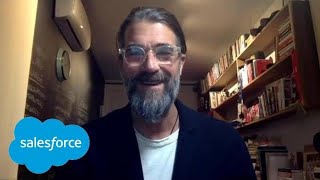
Rich Roll, an ultra-endurance athlete and former corporate lawyer, describes wellness as growth across physical, mental, emotional, relational, and purposeful domains. He transformed from addiction and a midlife health crisis into sobriety and plant-based ultra-endurance sport, and shares practical advice on tiny consistent habits and organizing life around values rather than endpoints.
Chapters
Hello.
Hello. Welcome. You know, before we get started on our great edition of Be well Together today, I just really want to thank you and I want to commend you for your commitment to your own well being. This is great that we have amassed this following and that we're all coming together. It's just so important not only for you, but it's important for your families and for your friends and for your co workers. So go you. Ok, now let me tell you, I cannot wait to start this session today. We have an ultra riveting new episode today. Our guest is just Be well personified. From nourish to prosper. You are going to gain so much out of this one session. So just buckle up campers. I am thrilled to welcome to the show, a real living testament to the power of just human will, of personal transformation. Iconic ultra endurance athlete and motivational speaker, Rich Roll. Now, if you don't know Rich Roll's incredible story, let me just give you like a little taste. He has achieved top finishes in grueling endurance races like the Ultraman World Championships. Also garnered praise as one of the 25 most fittest men in the world. He is the author of the number one best selling memoir Finding Ultra and the cookbook the Plant Power Way. So Rich now dedicates his life to just exploring human potential through lots of mediums. His Rich Roll podcast is one of them. But today we're just going to really get some invaluable lessons of personal empowerment. We're going to talk about themes about wellness, business to the human psych, the business of the human psyche and self improvement. And then at the end, of course, we'll try to take some questions. So without further ado, Rich, welcome to our show.
Thank you for having me. I'm delighted to be here today. I appreciate it.
So why don't we just start off like with the big kind of macro view of what does wellness mean to you? What does that holistically look like?
Yeah, wellness is one of those terms that now feels like it's been co opted and commercialized. But for me, wellness basically just means a commitment to constant, progressive growth and iteration. Can I be better today than I was yesterday across all aspects of what it means to be alive. Of course it means fitness. It means paying attention to your diet, what you put in your body, what you put on your body, but also your mental health and your emotional health. How fit are your relationships with the people that you love, how productive are you throughout the day, what kind of employee are you? How do you function and operate in the workforce. And what is your connection to things like purpose? How are you contributing? How are you giving back? These are all tentacles or sort of aspects, threads of what I consider wellness. So I think about it in really the broadest context.
Okay. And so there's so much like surface area there to cover. And I know that you weren't always, you know, so into wellness, you know, and that especially when you have such a large surface area to cover. So can you kind of tell us a little bit about your journey to get here? Because I think there's been some interesting obstacles along the way in some of those different areas.
Yeah, sure. So, you know, I'm 53 now, but I haven't always been, you know, a podcaster and kind of into this kind of stuff. I mean, I grew up in a very traditional household. Education was a big priority. I was always kind of an insecure, bookish kid who struggled with, you know, how to connect with other human beings and initially struggled academically. But I fell into the sport of swimming, and that kind of became my world. And, you know, the better I got in that sport, the better I got academically, and I was able to succeed at a young age. I ended up at Stanford University competing with some of the best swimmers in the world on the best college collegiate swim team swim program in the world. And I went to Cornell Law School and became a corporate lawyer, initially in San Francisco and later in Los Angeles. But along the way I became, you know, I had tremendous struggles with drugs and alcohol that landed me in rehab at 31, 100 day stint in which I really had to deconstruct how I was living my life on every. On every level. And that kind of was the first instance of understanding that perhaps there's a different way to live that was kind of outside of this very traditional track that I was on. But even with that, like, 10 years into sobriety, I was still a corporate lawyer, kind of climbing the typical ladder, and found myself at 39, on the precipice of 40, 50 pounds overweight and really not only dissatisfied with how I was living, like my career choices, feeling very unfulfilled in that, but really tremendously unwell. And I characterize it kind of like an existential crisis about how I was living, but also that collided with a health scare that I had shortly before I turned 40, where I was walking up simple flight of stairs to go to sleep and had a heart incident. Like I had tightness in my chest. I had to take a break on a simple Flight of stairs. I was buckled over, sweat on my brow, and really scared that I was about to have a heart attack because heart disease runs in my family. And it was a very specific moment in time that was similar to the day I decided I was going to quit drinking alcohol. And I realized that I was being blessed with a moment that could really be pivotal in changing how I was living. And I grabbed onto that. And that was the beginning of this journey that I've been on ever since. That began with changing my relationship to food and changing my relationship to my body and getting into fitness and really being mindful and paying attention to everything that I was doing. And it's really just mushroom clouded from there. It led me into ultra endurance sports and ultimately out of the law, into becoming this kind of wellness entrepreneur and starting the podcast and writing books and the like. But it wasn't like this grand plan that I had. It all happened like very organically.
Well, first of all, thank you so much for being so open and honest with your experience. That's really helpful. I'd like to just ask it for a moment in those moments where you're having that epiphany, that moment on the stairs, or that moment before you check yourself into rehab, how do you. What was it that kind of like you grabbed onto? Sometimes it can be something that's just so small. But to help you kind of break through and say, this is just the first step. But I feel like so often people take that first step and then there's not a second step. And I'm kind of wondering if we could just like go deep on those particular moments and if you can think about like that first step, that it stuck and it meant something to you enough to take the second and third and fourth steps.
Yeah, that's really the ultimate question, isn't it? You know, it is. If we all grab onto those moments and create a foundation for change, then we can all grow. And I think, you know, the way that I look at it is that, you know, these things that happen to me aren't that unusual. I think that we're all blessed with these kinds of moments in our life where the waters part a little bit or there's a crack in the door and we feel like there's an opportunity to make a change. And I think it's very important to be kind of always aware and paying attention so that when these moments visit us, that we're able to recognize them and to see the inherent potential energy that they hold. For me personally, these events were visited upon me and I was able to capitalize on them because I was in a tremendous amount of pain. Pain is always the ultimate motivator. If you're in enough pain, then the fear of the unknown is, you know, outweighed by the discomfort of the pain that you're in. So those are always, you know, very helpful leverage moments. So if you're in pain, understand that there's some teachable moments. You know, there's something that, you know, there's something inside of you that's trying to be expressed about change. And they can be sacred. They are opportunities, truly. So rather than trying to avoid the pain, maybe go into it and say, what am I supposed to be learning here right now? But once you have that recognition, yes, like, you know, you can take that first step. And believe me, I tried to get sober a million times and wasn't able to make it stick until, you know, I made a larger decision to ship myself off to a treatment center. But I think when you have those, those fleeting moments of inspiration, you've got to jump on them right away because they'll pass and then you're back to your status quo. So the first thing is recognition, taking an action and making that action significant. You know, when I decided after that staircase episode I'm going to change my relationship to food, I did a seven day, like, juice fast. Not because I thought that would be the ultimate elixir to health, but I knew that I needed to do something hard that would kind of shock my system and create some momentum around new habits. So it was as much emotional and mental as it was physical in that regard. So I think seeing the moment, taking an action that's perhaps drastic or at least out of your comfort zone is super important. And then planning, like, be organized and thoughtful about how you want to carry this energy forward. Like, get a big desktop calendar and write out on the calendar, you know, some goal out in the future and then backtrack from that and try to identify small, tiny little things that you can do every single day that aren't that hard, that aren't that intimidating, or aren't that inconvenient. Because truly, these huge changes that I've been able to undergo and that I've seen happen in so many other people are not the result of going out. And everyone's like, oh, did you run 30 miles today? Like, no, it's just they started with like, going out and walking around the block or maybe eating a salad for lunch as opposed to a cheeseburger. And it's Those tiny little tweaks when you string them consistently over a large amount of time that really make the most difference. So understanding that it's really about what you're doing in the moment and the choices that you're making hour to hour to hour, that move the lever. Because we tend to think that we make these New Year's resolutions and we get frustrated a couple months in because we haven't seen the results that we're seeking. We tend to overestimate what we can do in six months or a year and tremendously underestimate what we can do in a decade. We're here for a significant period of time. How can we make the most of that? And to be patient with yourselves and understand that these aren't short term things, but what we want to do is create new lifestyle habits with staying power. And in order to do that, they have to work within the construct of our busy daily lives until they become rote and habits when we're not even thinking about them. And then you wake up one day and you're a very different person than you were a year ago, two years ago, 10 years ago.
I think we talk about that a lot on this show, about just the importance of micro steps and forgiveness for yourself when, you know what? I didn't get to the yoga mat today and I really wanted to and it didn't happen. And I'm not going to do yoga at 11:30 at night just to put a check in the box. I'm going to go ahead and be okay with it and get up the next day and give it my best again.
Yeah, I think that's super important because if you then beat yourself up, you've made a second mistake. Right? Beating yourself up isn't doing any good for anybody. It's just about, okay, maybe the better, healthier approach to why you didn't make the great choice is trying to understand why you didn't make that choice. Like, what was going on with me emotionally that I couldn't get on the map that day? Like, was it just because I was disorganized or was there some resistance that I'm experiencing inside of me? Like then when you unlock, like, oh, it's because, you know, I got in a fight with my spouse and I was frustrated or whatever it is, better understanding that will help inform a better decision next time and just say, you know, all right, next time I'm going to make the better choice. What is the next best choice that I can make right now? And distancing or, you know, Kind of detaching from all the emotional baggage of beating yourself up. Like, oh, here I am again. I'm the person who can never make it on the mat. Like, that's just a story and a narrative. And part of the growth process is creating a new narrative, a new story, and letting go of those narratives that don't serve.
So I want to draft off of something you said before when you were talking about how, you know, it's not just a one year thing. Like, we're here for a long time, right. And you know, I'm curious about how you, for me personally, it's easy when I put a goal out there, okay, a year from now, this is how I want to feel, this is how I want to look, this is how I'm going to show up in the world. And then I go and I achieve that goal. And what has happened to me a number of times in my life is that I achieve that goal and then it's like, woohoo, I achieved the goal. And then it's like, you know, I just started crashing and like I kind of lose momentum. And then, you know, and then it's. And then that depression kind of stinks and it's like, ugh, I couldn't keep it up and now it's going to be so much harder and I got to get back up on that horse. And I'm, I'm kind of curious for you, for somebody who has just done, done these long endurance runs and had to overcome so much, like, how do.
You.
How do you actually. The obstacles are one thing to overcome, but how do you overcome like the. I achieved my goal, right? And I need to keep going and I need to like, keep investing. I'm just, it's like the carrot, it's like you. I don't want to like dangle a carrot that I never get to.
Yeah, yeah, yeah.
You know what I mean? To get and be like, woohoo, I won. But on the other hand, sometimes, like, achieving my goal is actually a setback because I'm not as focused anymore.
Yeah, 100%. And that's why I think goals are tricky. I think it's important to have goals because they then set in motion a structure that creates a framework for how you live your life every single day. But the trick for me is to not focus so much on the goal. Like, I know there's a goal looming out there in the distance, whether it's a race or finishing a book or whatever it is. And that's helpful in helping me make Better decisions about how I allocate my time every day. But the key is understanding that it's really not about achieving the goal. It's about how you're living your life every single day. And I know, I think you mentioned you had Shane Parrish on, you know, on this program not too long ago. And, you know, I had him on my podcast, and he talks a lot about organizing your life around your value system. So if your goal is to run a marathon, it's achieving that goal isn't really what you're truly after. What you're truly after is organizing your life around a certain value, which is, I'm somebody who goes running and enjoys the outdoors and is an active person. And aligning your behavior with that value is really the true win. It's not about crossing the finish line. It's about becoming somebody more authentic to who you are that's more in alignment with those values. And I think when you can organize your thinking around that structure as opposed to an endpoint on a calendar, then you're in a better position to perpetuate whatever the behavior is. And I know as somebody who's trained very hard to achieve goals in these crazy ultra endurance races, when I think back on those experiences, I barely remember crossing the finish line. It wasn't about that. It's about the person that I became in the process of tackling something very difficult and the experiences that I had along the way, like that one day that I just didn't want to get out of bed and do that incredibly difficult workout, or the friendships that I made along this journey that continue to give my life value. That is what you're getting out of these experiences. It's not the metal or, you know, any of that other kind of nonsense. So I think when you just start thinking about when you're. When you get really clear on your value system and the person you want to be, then you're in a better position to just make these things habitual as opposed to temporal.
Oh, my gosh. This is so resonating with me. Our company is a very, very values focused company. We put this at the heart and center of everything we do. And I think you've just articulated that so well. And I can just see light bulbs. I'm imagining light bulbs going up over our audience right now. In that values and behaviors are intricately linked. It's not just a thing that you strive for that's nebulous and out there. It's how you show up every day. I think that's fantastic. I really think that's fantastic. Let me shift gears a little bit. I think that, you know, you have to be really living in a pretty deep cave and under a pretty deep rock right now not to be feeling kind of the. Just the mental exhaustion that comes with all that we're living through right now and all that is happening in our world. And I'm curious about how, through some of your training and some of these endurance races, what you've learned about kind of pacing yourself and keeping a healthy mindset when the obstacles are seemingly insurmountable and the end is just nowhere in sight.
Yeah, it can be extremely overwhelming. I mean, we're all enduring something that is completely unprecedented.
We're all ultra marathoners right now.
This is its own strange ultra endurance event that's testing us in ways that we've never been tested and kind of came out of left field in a manner in which we were ill prepared to, you know, navigate it. And we're all being tested right now. We're all being asked to stand up and weather something that is extremely difficult. And I think it's important to first acknowledge that, like, hey, this is weird and hard and, you know, I don't have all the answers. And for me, it all comes back to getting really clear on what we can control and what we can't control. You know, in very. You know, when I went to this treatment center, one of the first things I learned, one of the first principles that I think about every single day is the serenity prayer, like, help me control what I can control and let go of the things that I can't. And right now, there are so many things that we can't control. So understanding that truly all we can do is take domain over our own behavior and how we respond and react to the world and not get caught up in all the things that we can't control that make us crazy is really fundamental to trying to maintain your health. Right. I think also reframing what's happening not as, oh, this is a crisis, and it's terrible, but trying to see it as an opportunity. Like, instead of, this is happening to me, isn't it terrible? Look at it like, this is happening for me. What is the lesson in here that's going to allow me to grow? And when you have this lens of looking at the world like, everything is here for my growth opportunity, and this is just another thing. How can I be more emotionally resilient? How can I be more emotionally agile? And look at this and say, here's an opportunity for me, where I'm being compelled to slow down and stop in a way that's very uncomfortable because now I have to really look at myself in the mirror and I can't just run away from all of these kind of things that I've been doing for a very long time that I prefer to just be in denial over. And let's unpack that, let's deconstruct that and let's see how I can make changes now in this moment of forced repose that can make my life better. So if you're unhappy with some aspect of your life, perhaps there is an opportunity now to reconstruct that, look at it differently. And I think in the, you know, your opening question was like, what is wellness to you? Well, here is a moment in which we can tackle wellness in a, in a really, in its broadest way to say, okay, I need to. Here I am at home, I'm still working. How am I going to organize my day and not just like, what is my food intake going to be like, you know, when am I going to be able to get outside, how am I going to move and connect in nature, how am I going to interact with my family that's climbing on top of me now and not get into fights, but also what is our information diet? What are the choices that we're making about the, you know, the news that we're letting in or our relationship to our devices and social media? And how is that making me feel like, what is the emotional mental impact of, you know, the scrolling and getting caught up and the dopamine spikes that come with seeing some outlandish thing happening on the other side of the country. All of that has a tremendous impact on us emotionally. And here is our opportunity to reframe all of these things, to get really clear on what our values are and to start taking actions with a little bit of extra free time that we have because we're not commuting and doing these other things to create new habits that can make us more fully expressed and self actualized.
So I'm curious and through your own words of wisdom, what have you learned about yourself? What are the lessons that you've kind of found during this period for your own journey?
I mean, for me, you know, initially when this whole thing began, I thought, well, I've been training for this my whole life. Like, this is going to be awesome. I'm an introvert and I would prefer left alone anyway. And I could just, nobody's going to call me and ask me, you've been.
Waiting your whole life for this moment.
I'm like, now everybody is on my level. You know, what I've discovered is that this story that I tell myself about being introverted and about not needing to be, you know, in social settings all of the time is really just a story. You know, I found myself very lonely and feeling, you know, really missing connection with other human beings. And that's been a teachable moment for me to realize. Like, you know, I really downplayed the importance of my friendships and the interconnect, the interpersonal physical connections that I have with other human beings. And I really. And I, and I missed that and that was something that I think I wasn't fully aware of. Also, you know, a hidden blessing is I've got two older boys who were living across town in an apartment, they moved home. I've got, we've got all our four kids here. And this has been an opportunity for us as a family to grow closer. And you know, it's been really hard for our 16 year old daughter. Like it's tremendously emotionally challenging for her to have her whole life pulled away from her and to have her older brothers around and to have her parents and her stuck at home has been this crucible where we've had this roller coaster ride that hasn't always been easy and very difficult and some very emotional conversations. But I think ultimately, you know, these are all experiences that have brought us together closer and will make all of us better family members and better human beings. But it hasn't been easy for everybody and just learning to be gentle with yourself. Like when I experience the melancholy of feeling like I'm stuck at home, like this is real and it's important to appreciate that and recognize that and try to be gentle on yourself.
Yeah, gentle on yourself and I think empathetic with others. Everyone is carrying a 10 pound bag of rocks right now and it looks different for everyone. You know, a teenage daughter's angst is different than my 7 year old who has gone so deep into an imaginary world that like you can't like trying to explain that there's no dragon in the house for her to hunt is sometimes like a huge challenge.
And when you see, you know, these viral videos that go around where people are losing their minds and you know, doing a bunch of crazy stuff like, you know, my first thought is like what's going on in their life? That just beneath the surface was that rage or that, you know, that like, you know, that sense of discontentedness that led to that Outburst. Like we're all suffering in different ways right now. And I think, yes, empathy is certainly key.
It's key. So what are you working on right now? I think you've done some pretty incredible things with businesses and writing books. Tell us what you're doing right now from a non. A non endurance training thing.
I'm finishing up a book right now called Voicing Change, which is timeless wisdom and inspiration from the podcast. I've been doing this podcast now for like seven and a half years. I've had 530 episodes come long form, like two, three hour conversations with amazing people. And this book is really an effort to take some of those pearls of wisdom that I've learned over the years and condense them down into this kind of coffee table book with beautiful photographs and excerpts from some of the great minds that I've had the opportunity to sit down with, with some essays and some additional thoughts. So I'm just, you know, taking this moment of pause to really finish this project, which will be coming out in November. So pretty excited about that.
That's awesome. And tell me what, tell me the name again.
It's called Voicing Change.
Voicing Change. And how did you come to that? I mean, it's a big deal when you take 500 plus podcasts and you've got to get it down to a title. So what, what, how did you land there?
Well, how did I land there? I mean, I can't remember how I arrived at the title. I mean, I think the title is. Really speaks to this idea that we're, you know, we're living in interesting times. And, you know, I come from an era where your only exposure to information was, you know, the three networks on the evening news and whatever.
Familiar with that, with that era in.
High school and college. And now we're in an area where there's all kinds of interesting new voices that we're able to access and hear from that are just a little outside that mainstream narrative. And, you know, I think finding those people and being able to like, spread their wisdom and their thoughts has been the greatest gift of my life. And they're all speaking to some aspect of change, whether it's personal change, planetary change, political change, whatever it is. We're all looking to be part of positive change in the world at large with ourselves and with our families and our colleagues and our friends and really the earth and this global community that the Internet has created.
Amazing. You are such a delight to speak with. My soul just feels really good this morning. Thank you so much. For being here. Is there anything else that I didn't ask about that you want to kind of leave our audience thinking about?
Well, I'm so used to doing like two and a half hour podcasts.
You're like, I'm just getting going.
It's very difficult for me to answer questions concisely.
So this has been wonderful. You've done great. You've got short format in your future too.
Okay, thank you. I hope everyone enjoyed it.
Yeah, I think so. I think so. Thank you so much for joining us today. It's been a great conversation. You're a great inspiration and congratulations on everything you have accomplished, not the least of which is getting that family into a state of harmony. Not easy at all. Not easy at all. All right, everyone, take care, be happy, be well and we'll see back. See you back here again tomorrow. Bye.
Bye.









