How U.S. Olympic Champion Shaun White Built His Brand | Connections Ep. 18 | Salesforce
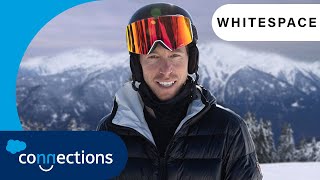
Shaun White, three-time Olympic gold medalist snowboarder, talks about growing up in San Diego, his early sponsorship from Burton, overcoming a congenital heart defect, and launching White Space with his brother Jesse. He discusses staying authentic while building a brand and what it takes to move from athlete to founder.
Chapters
So I hear when you're ready to drop in, you calm yourself and you say, like, who cares? Is that true?
You know what? It is, honestly, because at that point, I've already done so much of the practice and the work to get to this point. Like, I need to say, who cares? And let's have some fun.
Well, let's do it. Let's have some fun.
All right. All right.
Hey, I'm Sarah Franklin, and welcome to Connections, where we hear from some of the most innovative leaders in marketing. Today we're in Mammoth, California, site of the final Olympic qualifying event for snowboarding. So who better to talk and to snowboard with than three time Olympic gold medalist Shaun White? He's one of the biggest stars in the history of the sports. But as you'll hear, his success extends all the way from the slopes to the business world. You grew up in San Diego, which is not really the snowboarding, like, hotspot, right?
Yeah, no, not at all. But action sports were huge in that area, obviously. Skateboarding, surfing, and going to the local skate park. Like, Tony Hawk was there and, like, Bob Burnquist and Bucky Lysik and all these amazing people. And so I was always kind of around, you know, the best of the best in the sport. And then when I would do the, like, weekend trips from San Diego up to, like, Big Bear or Snow Summit or Mammoth Mountain, they were kind of smaller mountains. And whoever was in charge of running the show at those resorts really let the park builders and designers kind of have free reign. Like, Aspen would have never been like, oh, yeah, take the whole west side of the mountain and build a giant silver park. I would show up there and just do these laps after laps.
And so I hear your first sponsorship deal, like, your mom called Burton, like you were seven years old.
Yeah.
And you got like a board.
Yeah. My mom, Kathy, she called Burton Snowboards because they didn't have kids boards at the time. You know, she's like, my son, he's gonna be great whatever hype she gave him. And they gave me a board that was kind of the start of like, hey, well, if we're giving you this board, maybe you should start doing some contests. After that, I was entered into these local amateur events. And I wonder.
You've been in the public light since you were a teenager. What's that like to be so authentic with such a global audience?
It's about being selective, which is difficult too, because, you know, as an aspiring snowboarder, I wanted the big deals. I wanted these big interviews. Here's the money. Here's the things that. As well as just the kind of. Like, for example, after the Olympics, I was 19, it was 2006. I'd won the gold, and my life was changing. In front of my eyes, multiple talk show hosts. They're like, can we bring you in over the rafters and we hang you?
You're like, I'm not a gimmick.
Well, yeah. And I was like, well, like, no, I'm not gonna do that. And they're like, what do you mean, no? It's like, this is so and so calling. I remember having to kind of stick to my guns and say no to certain things. But in the long run, I think it. It really set the tone for, well, this is my one I'm okay with.
I feel like it's paid off. You stayed true to who you were. You were led by your values. How would you tell people to find. To say no, to stay true to themselves?
Yeah. I had a really amazing team around me. My brother, who's seven years older than me, Jesse, he was always doing the next coolest thing. He got me into snowboarding. He got me into skateboarding. You know, he was always very artistic and creative, and so he joined forces, and he was kind of my sounding board for these things. I think it's all about surrounding, like, who you surround yourself with and people that are willing to tell you, like, this is a terrible idea.
What's the secret to connecting with audiences?
I just try to be as honest and real about it as I can. If I'm having a bad day, I'm like, yeah, I'm having a bad day. It's not looking too good. I can't see anything. I don't want to get to the bottom of the half pipe. And it's a blowing wind and all these things. Like, how do you feel? And I'm like, I'm great. So happy to be here. Like, no. Like, I'm freezing cold. Like, I miss home. Honestly, it wasn't my day. But, hey, I'm not trying to put on the show. Yeah, this is where I'm at.
That's who I am. So you've done sport, you've done business. I want to go back all the way to the begin, because I learned that you were born with a heart defect.
I was, yeah. It's a congenital heart defect called Tetralogy of Fallot. And I had multiple surgeries to correct that. And I was told I was going to be very inactive and kind of, you know, sluggish child. And I Was always doing these stress tests and things. I had a couple scares along the way where I, like, I passed out on a soccer field. The miracle of it all is my parents really let me find my own boundaries. Even after the soccer field incident, which was a lot more than was expected. And so for my second Olympic appearance in Vancouver, I told the story and I am so thankful that I did because I. I got the most amazing. I'm gonna tear up talking about it, but, you know, the just messages from families like, oh, we were going through this, you know, hard, hard time with our family and our son or daughter, you know, whoever relative found out that you had the same condition, actually worse condition than they did, and they are now breezing through it with flying colors. When there's like a real life sort of ripple effect where people can see me doing something and maybe they get inspired or hope is now in their life. I mean, that's such an awesome, very real life thing.
You inspired people.
You guys.
I was really.
Yeah, I was really, really glad that I did that. And now we see people, because I have a scar down my chest. So I'll see kids on the mountain.
They're like, check it out.
Oh, yeah, I got one. Yeah. Yeah. They call it the zipper clip.
It is so inspirational and it's so courageous to share because it's so personal.
Yeah.
How important is that in marketing, in business, to just always be yourself and to be personal, to be vulnerable, it's so important.
And I think people nowadays, they really know, they really do know. If you're putting in that extra effort.
At what point did you decide to move away from being a spokesperson for other brands and build a brand of your own?
You know, it honestly was. Most recently I had these very long term deals and I remember signing them thinking like, oh, I'll be sold by then. When you're 19, you think 30 is like, oh, I golf or whatever. Yeah, yeah. And So I remember 30 came around. I was like, I feel pretty good. And I went, wow. Like, maybe this is that opportunity to take all that knowledge and all that experience of product development and combine it and do my own thing, really, Instead of taking someone else's ship and trying to steer it in the way you want it to go. Like, hey, let's build our own boat here. Really, you know, take it where we want to go. I've teamed up with my brother Jesse to start a company called White Space, a snowboard brand. It's just so exciting to me. I've always wanted to do this my entire Career and I finally have the time and the right people around me. It's like at the beginning again, it's like, ooh, someone ordered a board. Like, we sold two of these. Like, you know, it's so exciting. Like, every little gain, every little thing is just so meaningful.
What did you learn about the business of sports and marketing?
As a kid, I'm so determined. So whenever there's like something that comes my way and like, oh, this is, this would be really cool to do, but it's never really been done before or, hey, what do you think of this? And I'm just so competitive that I want it to succeed. So I think I dive into it and approach it in the same way where I kind of pick it apart, take the little details. So, like, if I was going to learn a 1080 on the snowboard, obviously I would like work my way up to it. Okay, well, let's start with the 180, then the 360 and kind of go.
And then you do it more than once around. Exactly.
Yeah, exactly. But you kind of like, I pick it apart. So I would approach the business strategies in that same way. Like, okay, well, what are people going to like? What's the first reaction they're going to see if it's like, you know, a snowboard or a pair of goggles or something. Like, what's the, you know, marketing behind it?
Paying attention to those details that matter.
Of course. Yeah, it's the little things.
Goals are really important to you.
Yeah.
And I hear that you set like a really serious goal, but then a fun goal. Yes, tell me about that.
The recent ones are pretty funny.
I didn't hear that before.
So the big goal is obviously to win the Olympics. And then the fun goal was I thought that if I did this Olympics, five Olympics now, I would hope that I was such a well recognized snowboarder that they would be forced to change the Emojicon on the phone to look like me.
Oh.
So that would be the goal.
Is it that they designed already?
Not yet. We got a whole team of people. No. I don't know. I just thought it'd be so funny if I was able to pull that off. So that's the fun goal.
Salesforce is partnering with Team USA and LA28 to develop deeper relationships between athletes and their fans. What opportunities do you think that we have to help?
Well, I think that's so important, especially right now. Like there's so much distance between people because of the way the world is with the pandemic. And I think it's more important now than ever to be able to connect with people in a real way.
An athlete's career has a finite set of time. How do you view business as a career that can be long lasting?
Obviously there's only so much time an athlete can do his sport or her sport. It's that inevitable thing and you're trying to push it away as long as you can. But I don't know. I think the nice part about business is there's something to strive toward. And I will say personally, like, when I see someone on the mountain wearing a product I've developed or I win a competition and I get that reward, I feel in the same sort of, I don't know, excitement and gratitude for that moment. Like, I sat and took the time to develop this product. It went to the market. There's so much stuff on the market and someone sat there is like, this really best represents who I am. And I love the style, all these things, and they bought it. Now you have a connection with this person. So I really say it's one of the only other places that I feel that same sort of excitement as I do is competing. So hopefully I can live on much longer than my sporting career.
So when a 7 year old calls and asks for sponsorship.
Oh, yeah, I was thinking, it's so funny you said that. I was thinking like, wow, what if I'm that Jake Burton? To me, for someone else, I don't know, that would be amazing.
Thanks for tuning in. Never miss an episode by subscribing and turning on your notifications. We'll see you next time.









