HubSpot's $30B Ecosystem Opportunity with Brian Halligan
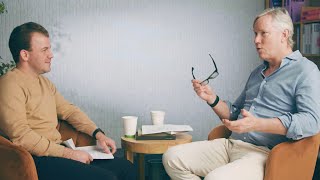
HubSpot co-founder Brian Halligan on the company's $30B ecosystem opportunity. He breaks down three customer types: end customers, solution partners, and app partners. AI agents and unstructured data are reshaping how companies will access information.
Chapters
I remember so when I was in sales at HubSpot many years ago, I remember watching you walk around the sales floor and you had a stopwatch and this was when we used other tools back in the day and you said, go ahead, let me see how long this takes you. And you would start the stopwatch minute and 30 seconds. And you multiplied that times 60 interactions a day. And you saw how much time was being wasted and that's what led to CRM and all the efficiencies we're trying to create. Maybe there's a time to bring that stopwatch out again so we can see how much time we're wasting with a lot of the manual work to see what we can create for. I forgot about that sticks in my brain because I was nervous like you couldn't believe. I was like, I gotta do this. Well, I think the word platform in your mind is probably ever evolving. What do you think about HubSpot as a customer platform today?
I like that word platform a lot. We have I think 4,000 solution partners that build on the platform. We have I think 1600 or 1800 application partners that are building applications on HubSpot or connecting them in. So it's starting to feel like a real platform that it kind of takes a village to raise a kid. It takes a village to build a CRM. It takes more than just one vendor. It takes solution partners, it takes application vendors. You have to connect everything else to really make it sing. And we had that in our head and so we've been pretty focused on that. And I just kind of think about HubSpot. What's what changed when we did that was 2006, 2013, we have one customer and it was our customer, the person who paid us. In the 2013, we actually have three customers that we have our end customer, we have Solutions partners that we wanted the light and we want to have a really strong value prop for. We have application developers that we wanted to light and have a strong value prop. So we have three customers today. And so people throw the word platform around kind of willy nilly, but it's a very serious endeavor to build a platform. You're building an ecosystem that works for those three constituencies.
Then even like what the village is cultivating and living off of and breathing off of has changed tremendously too. Right? And so from where Solutions Partners on the early days helped us build this company and you made a massive bet on that then. But I think even in 2025 today that solution partner world and the app partner world has needed to evolve. So what are you seeing from your seat as the evolution of what these solution partners and now the app partners as part of this ecosystem. What are you hoping they evolve into to help this village become even bigger and more flourishing?
I sort of stick still sees HubSpot as an early stage startup. Even though it's a good sized company now, I think HubSpot will be many times bigger in the future. I see us still quite early on the journey, deeply investing and delighting those three constituents. We want to be very easy to do business with for partners. We want to be as low friction and high value as we possibly can. And we want all the partners who are listening today to double down on us. And so we're growing nicely. We want to continue to grow nicely because the more customers we have, the more attractive we are to partners. We want to make our APIs as easy and as good as we possibly can. And we made awesome progress. We'll continue to do on that. We want to keep those free. We want to make it easy to engage with our sales organization. And so we're working on building kind of the flywheel for HubSpot. And the flywheel is, you know, HubSpot's got to continue to grow. We've got to continue to add customers. As we continue to add customers, we need to attract partners. We attract partners. The flywheel spins. We're very cognizant of keeping all those things in balance and investing heavily in it.
Yeah, I think even just trying to dig in a little bit to how your brain works around studying the behavior of customers. And I think you've called yourself the. An archaeologist or anthropologist of customers. Yeah, it'd be interesting to get your take on what the customer looks like in 2025. And even beyond that, we can help our apps and solution partners kind of get around as the landscape does change. If you have any insights on that.
Things are changing super fast again. And like change happens. Like things will be moving suddenly a lot of change and they're moving a lot of change. But like, there's been a lot of change since 2005, but this is like the biggest one. I think mobile was a big change. Social is a big change. But like, and I just look at myself, I built an agent for myself. You can check it out. It's B. Halligan AI and you can chat with it. You can chat with it via text, you can chat with it by voice, you can chat with it by video. It's definitely not perfect yet, but it's pretty darn good. And the first use case I had for it was I teach a course and there's about 100 kids who take the course in all 100 kids, one office hours and like 30 minutes times a hundred kids. I was like, I just, I don't have time. And so I built it for that. And they're all using it and they're getting a fair amount of value of it. And the way I built it was super slick. It's the system. I basically trained it. So I uploaded a Twitter feed, I uploaded all of my lectures, all my inbound talks, anything I've ever written. And I've been obliviating for a long time. So there's a lot of content in there and the more content in there is smarter it got. And then I started letting people answer questions, then they can go and edit the answers to the questions. And I'm literally training it. But a year from now is going to be great as the underlying models get stronger, as it continues to train, multiple network effects, working on it. And I just think everyone's going to have these agents. You're going to have multiple agents. And my agent is going to be like, you'll invite me to a meeting a year from now. Be like, brian didn't show, but his agent. And you can ask my agent questions. My agent's obviously going to take notes. My agents can have access to my email, to all my Zoom meetings. And I just think the world's going to change. Companies are going to have agents who are going to add agents. I think it's going to get very, very interesting and it's changing very fast. And I think we're going to look back at 2025 as sort of a big, big year of change for human behavior. And I think change creates opportunities for HubSpot and its partners.
There's another piece, I think maybe even digging into the infrastructure layer of this. I think I heard you talk about this a few times, of structured data and unstructured data. Can you help, like, explain to us how you're seeing this all unfold and I think maybe even relating it to what customers and partners might be able to help us with or they can benefit from too. And I have a couple other questions to follow up with that. But maybe even just starting with how you're seeing the world becoming largely unstructured and what that means for the future of HubSpot and companies and their data.
I sort of think SaaS plus AI are like chocolate and peanut butter. I think they go together perfectly and I just think of an application like HubSpot and others like it, where there's a database and basically HubSpot is really good at taking gobs of structured data and putting it inside of this database and then giving people access to it through a pretty structured process of menus or search. The way HubSpot's going, the way the world is going and the way AI is going is AI is really good at unstructured data. HubSpot has access to gobs of unstructured data. Combining those tools can be incredibly powerful. What's interesting about AI, it's like unstructured data and unstructured ways to get at it. So you're able to chat with your data, you're going to be able to create an avatar from your data, you're going to be able to kind of combine all that together to very powerful things. So I think of HubSpot, you're able to access your structured and unstructured in new ways. You're able to access through a menu, through chat interfaces, through search. I think our applications are going to get much, much more powerful.
Can I almost take a spin on that now with partners? Because I think what I'm seeing from my seat with the app EcoSystem is, yes, HubSpot is an amazing container for loads and gobs of data. Partners are integrating with us not only to put the data that they have uniquely in their environments into HubSpot, because that's what customers are asking for, but also the inverse is happening where all of the customer interactions that are happening inside of HubSpot, companies like Amplitude and companies in the product analytics space beyond them, and you're even seeing it in other sales tools and marketing tools.
Yeah, like Fireflies and Fathom are a good example.
Yeah. They're pulling data out, pushing data in, and they're growing tremendously with that. Is that a huge shift that you're also seeing now in ecosystem building? And also, like, how can partners be thinking about that as they see HubSpot as a frontier for where customers already are and where they will hopefully be going, and a center for where the data lives to enrich it, but also use it for their customer's benefit too? Like, is there anything there that we should be trying to.
I think. Do you see that shifting? Totally see that shifting and being way more important. Like, somebody builds an application, people are using that application as a system of engagement or even like Amplitude, another, like, reporting suite. They're pushing data into HubSpot. HubSpot's making sense of it. And then Their application gets better. There's definitely a flywheel inside of these applications. I don't think it's completely new yet though. I remember when we were first building HubSpot, we built a pretty deep partnership with Google and Google AdWords. Kind of similar. Like hey, if you use Google AdWords and use their systems, it's great, use hubs, great. But if you combine those two, you're running those AdWords, you're seeing the closed loop ROI all the way through. AdWords got better, HubSpot get better, everyone was happy. So I don't think it's completely new, but I, but I do think that's a really important phenomenon.
Yeah. And this might also be a layer back to the solutions partners a bit where like the SaaS world is continuing, continuing to explode. The AI layers within those are continuing to explode. Some of the small business and mid market companies, they don't know how to harness this yet. So like how do we help even those solutions partners get on board and also push the limits there to help more customers become more AI and you know, unstructured natives.
Okay. I think both the solution partners and the app partners, there's big shifts going on that are going to benefit them a ton. Like I look at the solution partners, I love our solution partners. When I look at their websites and kind of drill it, the value props are pretty similar. It's hard to differentiate for them. I would be if I were a solution partner, create a new offering where I go into XYZ company and I do an AI audit. I come into the company, I'm like, how are you set up? What's your P and L look like? What's your headcount look like? Go through each of their processes, see what tools they're using and then come in and say, hey, this is how we think you should configure it. This is how we think the head capture work. Here's where we can implement AI, build them agents, implement agents, implement HubSpot and really go with the transformational sale and set them up for the future. I think there's a huge, huge opportunity for solution partners to do that and they're going to bring HubSpot in, they're going to bring tons of the app partners in when they do that type of thing. If I were an app partner, I'd be looking at as we continue to open APIs, as we open skills, as we open all this stuff, I would be building agents on top of HubSpot. They can delight their customers. I think the world's changing in a really positive way for HubSpot in both partners, both sets of partners voice.
Yeah. And I think as we continue to evolve and with continued leadership and what we hear from partners and customers, the extensibility of HubSpot has gotten to a really good spot both with app cards and UI. So you can actually use apps directly in HubSpot's interface. But now where we're trying to go with the data and unstructured data as well and a world where agents become super relevant, I think that's going to be a massive opportunity where now things to your point are going to be hyper productive. Businesses are going to be much leaner and better.
Yep. I think they'll scale without having to add tons and tons of headcount.
Yeah, that's. I'm excited for it. I feel like we're on the brink.
Me too. I feel on the cutting edge at HubSpot. It's going to be sweet.
What advice do you have for us as partners but also us as humans in 2025 that can elevate our games?
I think as humans there's a good line of you're not going to be put out of work by the AI. You're going to be put out of work by somebody really proficient with AI. I think that's pretty good advice actually. And I think it's a bad time to be a late adopter. In terms of the partners. It's completely self serving but I would totally Double down on HubSpot. Company is doing really well. We're growing well. It's well led. CEO is good. Terrific actually. We're very partner friendly and centric, very focused on our partner communities and making them make it easier to partner with HubSpot. We're on top of all the technology trends, the products getting a lot better. I think it's a really good setup for somebody to build applications or somebody building a solutions business if they want to grow and be with a company that's been going to be around for decades. I think we're really good fit. So I hope, I hope the partner's listening. Double down. I think it's, I think the timing and the setup's really good.









