Main Keynote - World Tour Chicago | Salesforce
Transcript of the Salesforce World Tour Chicago main keynote (Dec 2023) where Connor Marson and Alexa present Salesforce's AI-first strategy. Key announcements: Einstein One platform (AI-first, metadata-driven CRM built on Data Cloud), GA replatforming of Marketing Cloud & Commerce to Einstein One, demonstrations of Einstein Copilot and Copilot Studio, Data Cloud capabilities (data ingestion, harmonization, data graphs/JSON), Slack Sales Elevate, and Tableau Pulse. Emphases: trust/ethical AI, 'your data is not our product', zero-retention for model calls, human-in-the-loop, 1:1:1 philanthropy, sustainability, and community investment in Chicago.
Questions this video answers
December 6, 2023 at Salesforce World Tour Chicago (main keynote).
$1.25 million (to two local nonprofits).
1.2 trillion flows.
1 trillion predictions per week.
227 AI papers and 300 AI patents.
Chapters
Please welcome Executive Vice President, Sales, Salesforce, Connor Marson.
All right, welcome, Chicago, and welcome to World Tour. We're so excited to be here. It's the first time that we've had a World Tour event since 2016. And we're so happy to be back. And today we're going to talk about data and AI and CRM and, and trust. But a first, a quick question for the audience. Who here has used chat, GPT or BART at home? Raise your hands. Now, keep your hands up. If you use it at work today in the applications to drive your business, look how many hands went down today. Look how many hands went down. A lot of hands. Because it's really hard, right? It's really hard in companies say there are a lot of challenges to do that. And that's what we're going to talk about today, how Salesforce is in our trusted platform. We're going to make this easy for you to bring these innovations to each one of your companies today. But before we do it, I want to say a huge thank you. A huge thank you to our customers, to our partners, a huge shout out to our MVPs. We have our MVPs here.
All right.
And to all you trailblazers, thanks so much for spending time with us today. And a huge shout out to our sponsors out in the campground that make this event possible. So this is going to be a really special world tour here in Chicago. And we've got some great customer stories lined up from you. From Cushman Wakefield to grubhub, Shipbob, Williams Sonoma, and our very own local University of Chicago medicine, we have 66 sessions lined up for you, 45 demos, and if you haven't done so yet, please take out your phones, take a picture of the QR code, download the Salesforce events app. That'll be your guide for the day to pick your own journey through our world tour eventually. And don't worry, you're not going to be able to get to everything. And so we've got everything recorded on Salesforce plus, so you can go home and watch it at your own time. So I've been at Salesforce since 2014. It's been close to nine years. It'll be nine years in April. When I joined Salesforce, we were four and a half billion dollars of revenue. And it's been a tremendous journey because as our customers have had success, as you've had success with your customers, we've grown. And just after this recent Q3 earnings, we're the third largest business software company in the world. And that's really attributed to you and the audience. Thank you all so much for being part of our success. And a key part of our success is that we're a very values driven organization. We make every key decision based on our core values. Core values like trust. Trust in how we keep your data secure. Trust in how we're going to train our AI models in an ethical way for customer success. We have success. When you have success driving success with your customers, it's really important to us. And innovation, whether it's organic innovation, which we'll talk about today, or inorganic innovation and acquisitions that we've brought, and three releases a year. So bringing the features to help propel your businesses forward and everything is done with equality and sustainability at the heart. Now at Salesforce, we believe that business is the greatest platform for change. And when we launched Salesforce in 1999, we launched it with a 1:1:1 model. And it's been absolutely tremendous. The impact 1% of our equity, 1% of our employees time and 1% of our product goes to nonprofits. And that's led to 676 million of grants, 8.5 million volunteer hours. And do we have any nonprofits here in the room today? A few nonprofits. 56,000 nonprofits today run on the Salesforce platform free of charge. But here in the local Chicago market, we've done 16 million in grants, 270,000 of volunteer hours. Absolutely phenomenal results. And Salesforce is net zero. And we want to help all of our customers get to net zero as well. And one of the things we're most proud of is that 18,000 customers have joined us in the 111 model and pledged at the pledge 1% org. Absolutely phenomenal. And we're also committed to Chicago. We're doubling down on the Chicago market. And so I'm really excited today to announce we're making a $1.25 million grant to two local nonprofits driving equity in education and student well being. We're really excited to double down and invest here in Chicago. And I'm pleased to announce the grand opening of our Chicago world tour. This week we had official launch. If you haven't been to Chicago, our Chicago tower. Absolutely the best views of the river. Absolutely gorgeous. We've got two ohana floors on the top and it's open to the public. So if nonprofits want to hold a community event, a fundraiser, a social gathering, it's open to the public. So please, after you spend time here at the world tour, please Come down to our Chicago office. It's open for everyone. So today we're going to talk about connecting with your customers in a whole new way. And everyone knows this is the number one AI CRM application with applications like sales service and marketing and commerce. But we're also a data company. Today at Salesforce we support trillions of records on our platform today. Trillions of workflows and automation. Millions of custom objects that you've built to help drive success with your to drive success with your customers. And we've done this all in the goal and the strategy to get to a customer 360 as your single source of truth. When we launched I've actually never been more excited about delivering on a customer360. I feel like we're really at the point that this is a reality for our customers today. And the customer360 is something that is how you're going to engage with your customers to really drive success with AI across the board. The the. In 1999 we launched with a relational database, you know, tables, rows and columns. And it allowed us to bring things like Einstein predictive AI to drive recommendations on what the next best action is. But those recommendations were a little bit limited on our platform. They were limited in that it was resulted in the. The data that already existed on, on the Salesforce platform. And we thought we could do a little bit better. And so we brought some organic innovation data cloud to the market. And data cloud's a really powerful tool and that it allows us not only to have Salesforce Data, but also third party data data like IoT data, order data, ERP data, credit card transactions. And so now if a service agent is on the phone with the customer and there's an inquiry on an order, where's my order? Has it been delivered? The service agent can very quickly answer that question. Or if you're a salesperson, you can actually see the totality of the relationship with your customer. But what also is more most important is once you have your data on the platform, you can start to harness the power of generative AI and bring that AI to bear to drive workflow and automation for your customers. Really powerful. And there's really no better demonstration of the customer 360 then what happened just in this past week was Cyber Week. I don't know if anyone bought anything online during Cyber Week. I know personally my phone was buzzing and my wife's phones were buzzing as we were going to e commerce sites and we were making transactions and we were getting those little toasts from our banking apps. New purchase, new purchase, new purchase. Anyone else experience that? I know, I know I did. And so 29 of our top 30 US retailers actually use the customer360 to power the holidays. And that's 3.7 billion in service cases. 53 billion marketing messages were delivered, 50 million online orders just in the past week. And this was all powered by 49 billion product recommendations, personalized and powered by AI. I was talking to my chief of staff earlier and she said, God, I bought never bought so much from commerce. This really AI powered recommendations must have really been working. And it's because we're actually in an AI revolution today. And AI revolution started with predictive AI, with Einstein driving next best action. And we very quickly moved into the generative stage. If I was here a year ago, chances are no one here would have heard of large language models or what ChatGPT is. It's amazing to see what's happened in the past year and how fast things have moved. And we very quickly moved into wave three, which is autonomous agents. And what autonomous agents are is imagine a large language model agent talking to another agent to actually resolve customer issues without any human interaction. And I know that may sound a little bit scary to some in the audience, and it is scary because it's gonna drive a lot of change in how we actually engage with our customers today. It's something that salesforce, we are really impassioned by because we believe in the AI revolution. Everyone's an AI with data, AI, CRM and trust. And this represents a huge opportunity for us. A huge opportunity. I was just in Atlanta yesterday morning and I was meeting with the CEO of a $10 billion consumer packaging organization. And he's got four priorities around customer service, sales, marketing, and customer engagement to help drive his business forward. He thinks it's going to be a huge driver and increasing revenue.
He.
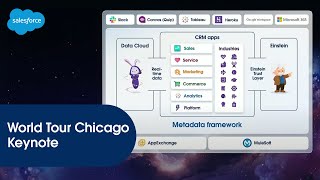
He also thinks this can be a huge driver in taking costs out of his business and also while creating delightful customer experiences. We've got a customer, Anderson Windows up in Minneapolis, that is deploying Service Cloud GPT right now to help automate customer responses and service resolution. And based on the current projection with Service Cloud GPT, they're gonna take $10 million of cost out of their service center. These are real opportunities available to our customers today. But it's not going to be without its challenges because at the end of the day, and the reason why a lot of the hands went down in the audience is because it's really hard to bring AI into your businesses. Today, because our businesses are disconnected. We've got disconnected data, disconnected APIs, disconnected apps. Got another customer in Minneapolis. They've invested a ton of time and energy and effort pulling their IoT data into Microsoft Azure. And they do their AI predictions in Microsoft Azure. But what they struggled to do with these data warehouses that sit outside of the application is actually to pull that data down and get it into the hands of the employees who are engaging with their customers. And so we partnered with them on Data Cloud. So now we're streaming all the data from Azure into Data Cloud, we're putting AI predictions on top of that. And the employees who are engaged with the customers in real time can get that offer, can get that next best action, can get that recommendation at the moment when it matters, when they're in front of the customer. And that's the power. And those are the AI experiences that we actually, that we want. And that's what's going to drive our customers success. And so to talk about the next announcement, I brought my friend along. To talk about the announcement of our Einstein One platform. And we couldn't be more excited about this. The Einstein One platform is the same platform that you know and love from Salesforce and that you've used, but it's been supercharged. It's been supercharged in that it's AI first, it's been supercharged with automation. And so let's, let's drill into it a little bit. So the Einstein One platform, so first it's the CRM apps that you know and love, sales, service, marketing, commerce and analytics. But it's built on data cloud so that first party Salesforce information, but also your third party information that I referenced before, it's all accessible through our Einstein Trust layer so that you can bring generative AI in a trusted way to drive automation and workflows. It's all accessible through the applications that you know and love, Slack, Quip and Tableau. It's built on Mulesoft so that every company can be an API first organization which is going to be so critical to and this AI revolution that we have. And it's open and so open for the customizations that you're going to make custom objects and workflows, but also to pull down, pull down applications from our business partners through the App Exchange, the world's largest business marketplace. And it's powered by our metadata framework. And so let's drill into that. Who here wants to talk a little bit about metadata? Metadata is probably one of the most, the biggest innovations that we have on the Salesforce platform. And I wanna talk a little bit about it today. So a really quick example of how our metadata platform works is, let's say you wanna create a custom object in the application to track something personalized to your business. You wanna write that application one time and you want it to show up in the browser, but you also wanna show up in the mobile application and you want it to inherit all the security permissions, the access to what records that user can see, and you want the platform to control all that and you want it to appear everywhere, so wherever you need that information in a secure way. And the beauty of it is, is it upgrades automatically. It's the magic that Salesforce brings to our platform with our three releases a year. And it's why across the globe, all of our customers are on a single code base today on the Einstein One platform. Now, we've made some acquisitions over the years and. And a lot of our customers have been saying, how do we get these acquisitions onto the Einstein One platform? And it took a lot of work and effort and engineering resources, but we're really pleased to announce that marketing, cloud and commerce are being replatformed and are now currently GA and available on our Einstein One platform. And we have 25 additional features available by Q4. So this is really exciting and consolidating our platform to. To make it easier for all of you to drive customer success. And our Einstein One platform is AI first. So back in 2014, we knew that AI was going to be a big deal. Probably not as big a deal as it's actually going to turn out to be, but a pretty big deal. We made dozens of acquisitions and we created our Salesforce research team, and that resulted in 227 AI papers, 300 AI patents, and has anyone here in the audience heard of prompt engineering before? Prompt engineering for large language models? Yeah. Prompts are gonna be the questions that you ask to an a. To a large language model to yield a result. The better your prompt, the better result you're gonna get. So Salesforce, we actually wrote the foundational paper on prompt engineering that drove the entire large language model of how you engage with ChatGPT or Bard. And so we've been in this space for quite a long time. We're the first company to create an office of ethical and AI of an office of Ethical and humane use. And in 2023, we've launched Einstein GPT for every single one of our clouds. And that's going to result in 1 trillion predictions a week. It's absolutely Phenomenal the momentum that we're seeing with AI today. So the Einstein One platform is also automated with flow. Flow is absolutely amazing. Flow is like just a value driver in every company. If you don't know about flow, download the events app and go check out a flow session. Because it's actually how you drive automation. Take cost out of your business and create those automated customer experiences that are going to delight your, your customers. And just in the last month we've had 1.2 trillion flows executed on the Einstein One platform. The Einstein One platform is also for trailblazers. And so I've been working with CarMax. I don't know if anyone's ever bought a car from CarMax. It's the simplest trusted car buying experience and they've got really a high touch business model. So a high touch test drive process, a high trust, a high touch appraisal process to buy a car. But when Covid happened, they had to go from this really high touch environment with a sales associate working closely with the person to buy your car. They had to go to a completely no touch environment. And how are they going to do that? Well, the trailblazers at CarMax in three weeks were able to completely change their entire car selling process using low code and no code to open their businesses back open to their customers. And actually had a record, a record year. This is the power of our Salesforce platform. And our Einstein One platform is also open with App Exchange partners and technology partners. So App Exchange partners that you know and love, like Docusign and Box and Conga, you can download the application, it's pre integrated into Salesforce and technology partnerships with Snowflake and Databricks where we have zero copy partnerships into data cloud so you don't pay that tax as you pull data between the, between the applications and the recent announcement of Salesforce applications being available on the AWS marketplace, which we couldn't be more excited about. And so the Einstein One platform, in closing, it's integrated, it's AI first, it's automated, it's low code and no code and it's open. But the AI revolution is not just about AI, it's also about trust. Trust in making sure that your data is going to be secure. Trust in ensuring that your company's information isn't going to be submitted into the large language models from a public standpoint. Trust in that the AI models are going to be ethically built without toxicity or bias. And and to talk more about that, I'm so excited to announce my friend and colleague Alexa to tell us more.
Thank you so much, Connor. Good morning, everybody. I'm so thrilled to be with you on this beautiful Chicago morning. Einstein didn't even need to wear a jacket, so that's a surprise in December here. But I am thrilled to be having this discussion with you about AI. I started my work in AI about 10 years ago, leading product teams, and now I spend all of my time talking to customers about the art of the possible. There has never been a time where we have needed to solve problems as a society and as businesses, as individuals, more than we need to today. And so I think that's the really exciting thing. That's the thing I hear when I sit down with all the people like you in this room, with our customers all over the country and all over the world, there's opportunity, but there are also challenges. Connor talked about a lot of those challenges, and I would sort of break them up into three buckets. There's challenges around the technology, simply learning and understanding what is the technology landscape, how do we work with it? It is evolving incredibly quickly. So the process of educating oneself or our customers educating themselves around what's available in the landscape is hard. Candidly. I think then there are a lot of implications about starting to use this technology, not the least of which is on all of us. Right? We're all employees of companies. What does it mean for us? How are we going to work differently? We lead teams. What does it mean to reskill and upskill those teams, to upskill communities and populations? Those are things that I hear that are top of mind. I think there are implications to brands, right? What is this going to do to customer experience? I mean, arguably make it better. Everyone in this room who interacts with brands can tell stories about, you know, where we want to have a better, more fulfilling experience. So the opportunity is clear, but the downside maybe isn't. There's questions there, I think, that are top of mind for all of our customers. And then finally, I would argue, you know, there's a set of sort of complex, evolving, I'm almost going to call them novel challenges around what are the legal implications, what are the landscape implications? What is this going to mean to industries? And I argue, I would argue, I do argue that I think it's going to reshape the way we think about these business ecosystems today. So, in short, there's a gap, an enormous opportunity. People are really excited about it, but they're going to pause, they're going to think about how do we go forward. And I think our Hypothesis is the people who will move the most quickly, the people who will see the most accretive benefits are the people who are going to take a partnership approach. And we're here, we want to partner, we want to partner with everyone in this room. And it's not just us. We bring our ecosystem behind us to help you think about the most productive path forward. And as we started our journey, and this is really, we've been working. Connor showed you the chart, we've been infusing AI. AI is not, first of all, it's not a new discipline, right? This has been around for 50 years. It's an evolving discipline. And I think we find ourselves at a point where there's some really exciting capabilities. But we saw this wave coming, right? We saw this build of interest in the late fall, last year, early spring. And so it was important for us to sit down and think about as we build this next generation of technologies which will survive for years to come, what's our North Star? What's our guiding set of principles about how we're going to do this? And I won't go through every one of these, but I think there's three to call out that are really important. The first is your data is not our product. I want to let that sink in. We do not build products off your data. I have a 10 year old son who's just, we got him an Apple Watch. He's just starting to like, experience, experiment and access the Internet, which is candidly terrifying. But as he does that, I have to explain to him, buddy, if you don't pay for something, you're the product. You're the product in that scenario. And so it's essential, I think, to underline that we are not thinking about monetizing your assets. That's your data. We do though think that in this landscape there's going to be an opportunity to help people use their data more effectively. To, to help people bring that rich contextual information into their CRM environments. And we definitely want to partner with you there, just to be clear. And I think the third piece is just because we can doesn't mean that we should. And that's not just a Salesforce statement, although certainly we think about it. Connor mentioned our Office of Ethical and Humane Use. And so we are actively looking at the use cases that you all, we all want to serve and thinking about is that the best place to deploy the technology today? I'll give you an example. We just, you know, updated our policy to suggest that we don't want people Using it for dating applications, which I think is fascinating. I guess it's already easy enough to tell stories on your profile. We don't need AI to make it any easier. But, but we, we think it's important that we help provide that guidance around where we should use this technology and where we shouldn't. And we also do that at the national level. We sit on six AI councils. We help inform, you know, policy at the, or the national and international level. And I think we do all that because that we believe that having this dialogue, being transparent about our intention, our optimism and our concerns is going to build trust and we're going to find the path forward collectively and to go back to kind of where we see opportunity, you know, where we are going to build tools and technologies. There's a gap in the market. Right. And we want to go and help you fill that gap in terms of how you build applications. Taking advantage of these incredibly powerful generative AI models. And we talk a lot about large language models. That's not the only kind of model. Right. And these models are going to continue to grow and evolve. There's models that will help us interpret videos and photos and we'll weave all those things together. And so how we bring data to that environment is really important. There's a lot on this chart you saw, there's 66 sessions here today. One of those will certainly go deeper on the trust layer. But I want to kind of break it down into a couple of pieces just so that, that you understand kind of where are the essential insertion points that we're thinking about? It all starts with a question, it all starts with a prompt. Connor already explained that to you, but we've all used it. You guys all put up your hands and said, yeah, we've experimented personally with LLMs and I'm in the middle of trying to plan my first vacation since we had our almost four year old. So I asked a question last week. I want to go on a vacation. Where should I go? And you get an answer back. And it's not a bad answer, but it's not specific, it doesn't really know. And so I have to give it context. I've got to ground it, I've got to tell it. I want to go somewhere less than five hours from New York and oh, by the way, I want it to have a be. I want to do absolutely nothing while I'm there and I want to have like great food and great drinks and you're going to get a better answer. So that's grounding context to give to a model. And if I kind of take that individual consumer example and now extrapolate it out to enterprise use cases, which I think Connor did a great job articulating of kind of why that's a different challenge. You know, there is an opportunity to deploy that same powerful technology, but we've got to think about doing it at scale and helping you both ask those questions and provide those commands or prompts at scale, but also bring rich contextual data in that may sit in your CRM or it may sit in systems outside your CRM that can provide that grounding context for an LLM. And so once we've done that, once we've initiated new data into your prompts and to do that, and there's more that we can sort of, there's more that we can explain here, but there's, you know, templates that we can bring to bear that help you ask those questions more quickly. And we also give you the freedom to configure those prompts to deliver the specific use cases or challenges that you're facing. But once we bring that data in, we've got to secure it like you do in any application that you build today. And so we're bringing the same powerful technologies that we leverage in our CRM platform around ensuring that, you know, if you shouldn't have access to the data that you don't see it, and if you should, you do that. We can mask sensitive data like PII data before we send it to the model. And now you're ready to send it to the LLM. But we have to make sure that there is a zero retention policy. And this is important because one of the questions I hear from people is, what's the implication of submitting my IP to LLMs? What is it going to mean if I'm informing a broader competitive landscape with my core asset, my enterprise data? We're thoughtful about making sure that there is zero retention. When we commit data to one of our ecosystem model partners, then the model spits out an answer and we're monitoring that output for things like bias, toxicity and hate speech so that you are managing your brand experience, you're managing the output in an automated way, and then importantly, there's a human in the loop. And I believe maybe not forever, but for a long time. This is a really important part of the equation. Your employees, your partners, your contractors, they bring deep qualitative knowledge about the customer experience you're trying to create. Now we want to orient them towards higher order operating. You know, we Want to orient them to operate at a higher level and sort of take some of that lower level functioning tasks off their plate. But we believe it's really important to have a human who's looking at the output and saying, yes, this kind of fits the bill, or no, it doesn't. And they adjust and then this whole loop repeats, right? And it throws off a ton of digital exhaust that we can use to, amongst other things, inform the process going forward. And I think that digital exhaust is a great example. It's a great sort of indicator of why we find ourselves in this data revolution. When I graduated from university, and I'll let you guys guess how long ago that was. Longer than longer. I'd like to believe it's longer than you think, but you know, less than 10% of the population had access to the Internet. 9%. 9.1. At the end of this year it'll be almost 70%. And so you think about what people are doing with that access. They're interacting with content, they're creating content, they're interacting with applications, they're using their wearables, they're throwing off all of this information, all of this signal which we can use as intent data to create experiences for them. But we gotta find it. And finding it is really hard. And I would argue it's hard for three reasons. There is a ton of data. By the end of this year, we'll have created 181zettabytes of data, which is a number that we have struggled to try and give you a visualization for. It's 181 with 23 zeros behind it. That's the best we've come up with. So maybe we should run a contest around how to better visualize that concept. It's a lot of data. It's a lot of data. And it's a new type of data Connor talked about, sort of. We're typically used to building applications around structured data rows and columns. We have tools and technologies and experience doing that. Unstructured data presents new challenges and new opportunities. And the marriage of both is really important. But it is new and there's an incredible volume of it. And as the result of the way we create it, it's disconnected. It's in all sorts of different systems. It's in legacy mainframe applications, it's sitting in data warehouses, it's in data lakes, it's all over the place. And it's always been challenging to bring your data together, but I would argue it's never been more challenging than it is right now or more necessary. And so that was really the inception behind our data cloud product. And so it started as an effort to bring together data from the Salesforce ecosystem. And what we quickly realized was there's a much greater need out here. We need to help our customers bring data from all of these external sources. You heard Connor talk about the incredible partnerships that we formed in the market. We need to bring that data in so that we can marry it to the customer. Data that lives inside Salesforce lives inside your CRM. And we need to do that at scale. And so we think about that. I'm going to make this overly simple in three basic ways. We connect to data from anywhere. We connect to your Salesforce ecosystem data. We connect to data that our partners is housed in our partner environments. And we think about making that really easy for you to do. Connor talked about 0ETL. Moving data around is hard and it's expensive and time consuming. We're trying to make that easier for all of our customers. We just announced a deepening relationship with AWS at Re Invent, if any of you were at RE Invent last week. And so this is sort of top of mind for us, getting easy access to that data. And finally it exists in legacy systems. And so we're leveraging Mulesoft and pre built APIs and SDKs so that we can bring that full picture of rich data to the table. And once it's there, we have to harmonize it. This is a fancy marketing term for we've got to understand that data. You know, data tells stories, right. But it does it in different constructs. And so when we bring it into the Salesforce environment, we've got to translate it so that those data, different data sources, can talk to one another. We have to map it to the Salesforce data model. And once we do that, then we can treat it like we treat any object in Salesforce and we can do a bunch of cool things with it. We can report off it. We can build flows around it. We can trigger events off of it. And that's really powerful. And it's one thing for me to talk about it, but sometimes I think it's easier when I show you what that really looks like. So let me throw it over to our incredible demo team, Kristen and Miles. Please say hi, guys.
Everyone.
Give them a big round of applause. Okay. And they're going to kind of bring this to life for us. So we start. Let's start with the end in mind here. This is what it looks like to create A unified experience. And I'm looking at this through the lens of a customer service agent that has rich contextual data embedded in the experience that they're trying to create for a customer. But there's a question of how do you do that? Not just bring your CRM data to bear, but really bring sort of external data sources. Maybe I want to bring loyalty data in, maybe I want to bring sort of GPS positioning data in. And so data cloud gives us the ability to connect those external data sources. And we do that by allowing you to access data in these external systems in the way that Connor and I have both already talked about. And so maybe in this case, you know, my data lives on Amazon S3. I click on that data source and now I can bring, I'm going to stick with a loyalty example. I can bring that loyalty data in and now I've got to map it, right? I talked about it. We tell stories with data. We've got to translate that data from the format it lived in in Amazon to the data model within Salesforce so that we can do something with it. And once I've done that, now I can go do something, I can take an action. In this case, I'm gonna do a data cloud triggered flow. And so this flow, we're just building a workflow here, right? Many of you in the room will have done this before. I might wanna take a customer service flow, right? A case flow. We're going to insert this dynamic object that is going to change status into the case flow. And now my customer service agents have the opportunity to understand there's been a change in state in the context of their application or their experience. And that's important and it's impactful. When you kind of go back to what is the view that ultimately our customer facing employees see, so now here I am back in the console and in this case, my view, I'm a seller. But by the way, like a customer service agent could be a seller too, and I would argue should be a seller. And so whether you're a customer service agent or whether you're a seller who's just looking for better information about your client, now I have this additional sorts of rich contextual data and most importantly, I have that dynamic data object that's embedded. And when there is a change, when something happens, when my loyalty status jumps up, I can use that to make better recommendations and serve you better as a customer. And that's really important. So I showed you sort of three very quick examples of how we're using data Cloud to drive different experiences for your Salesforce admins. We talked about two external facing, customer facing employees within your company. But let's talk about your business users, right? And so look, this is traditionally a pretty small population and their jobs are really hard. They're trying to understand as the result of all the work that your customer facing employees do, what has happened. And so usually the way you do this is you form a hypothesis and then you go and you query the data and you try and see, hey, is this true? It's hard to do. And so we really want to bring the power of Tableau Pulse to so many more users within, inside an enterprise so that we can understand not only what happened, but why it happened. And we can give you the ability to interact with that data very differently. Whether that's drilling down like you would traditionally, or maybe you're going to ask a question, but you're going to use natural language to do it. You're not writing an SQL query, which is hard to do, right, to ask a question of the data. And this is all with the intention of helping you understand not only what has happened, but prediction's hard, right? Particularly what's the Mark Twain quote, particularly when it relates to the future. We're all trying to understand where we need to go. And I think this is going to give us really powerful abilities to understand what's coming, not just in the rearview mirror, but what's ahead of us through the windshield. And so I think it's incredibly powerful. Thank you so much to the Data Cloud team or to the demo team for bringing this to life for us here today. You know, I think it's really exciting that we are having these discussions about what we can do, but I also want to encourage you to think about how do you get started. So everybody in this room, if you're an Unlimited Edition customer or an Enterprise Edition, if you don't know what those things are, see me after or ask your sales rep. But you've got access to these technologies for free to use today. Scan the QR code or come to one of us and we'll help you learn more about how you get started. Started. And you experiment and iterate with this technology because this is really a revolution. It's a customer revolution. All of you in this room are thinking about the things you want to go and do, but we're thinking about it too. We're thinking about not only do we how do we help you change your businesses, but how do we drive change in our own product portfolio? And so we're embedding. We've been embedding AI technologies in our portfolio for the better part of the last 14 years, but we're now embedding generative technologies across the portfolio. I think it's incredibly powerful. You saw a similar chart that Connor showed you during his presentation, and I'd invite you to spend more time in the sessions understanding where we're bringing this capability to bear. And it's really the result of asking ourselves. We were all together with Mark at a leadership meeting earlier this spring and we asked ourselves how. Same question we ask you guys, by the way, how can we connect with our customers in a whole new way? What do we need to do? And as a result of that discussion, the answer was, well, gosh, we need to give people. Here he comes.
Right?
Hooray. We need to give people. Hooray. No, we need to give people a copilot, right? We need to help them engage and interact with our systems. We need to make it easier, right? Salesforce is incredibly powerful, the information that lives inside of there. But it's the actions you take out of Salesforce that help you go sell more or service better or market to your customers better. And we want to make it easier for you to interact with those tools. And there's no better example of this in my mind than Williams Sonoma. Williams Sonoma is an incredible customer. I suspect everybody in this room is familiar with their brands. Pottery Barn, West Elm, Williams Sonoma, of course. I think they're probably best known in my household for their chocolate peppermint bark, which I have about 400 boxes of sitting in my dining room. Unfortunately, it'll all be gone in the next couple of weeks. But they're also really driving an advanced agenda around digital transformation. So let's take a minute and learn a little bit more about Williams Sonoma.
At Williams Sonoma, we tell the story of the shopkeeper. Chuck Williams was inspired on a trip to France. He brought back a dream and he opened a small shop, bringing those French cooking tools to the United States.
He really built that one on one relationship with his customers. And almost 70 years later, we operate by that same ethos, putting the customer at the center of everything we do.
Chuck really cultivated that shopkeeper mentality and we've been able to effectively deliver that experience in the digital world with AI, with data, with the latest innovations.
The in house work, which we do is indeed a bedrock for Williams Sonoma's growth.
Our partnership with Salesforce allows us to integrate that innovation and deliver it at scale, securely Reliably connecting the dots between the B2C marketing space and the B2B space and really ultimately amplify the customer experiences we want to deliver.
We have this amazing portfolio of brands that allows us to serve our customer in every major event, even the small events of every day.
Customer360 for us is really about being able to stitch not just their behavioral data and their transactional data, but our understanding about who they are.
Our triggered email program is able to capture what our customers are interested in from a product perspective, but also a life stage perspective. And as our customer transitions through different life stages, our marketing transitions as well.
Data cloud is where we're layering in our own data science to translate all.
These signals, leveraging all of our data to make sure that we're serving the right message to the right customer. And it's our job to inspire them.
Dreaming about the dinner party. A better recipe for the holidays. A gift that you give. That's the stuff that gets people really excited. If we know they love to bake, we are able to send personalized notes about the latest and greatest baking I'm supporting.
Super excited about the era which we have entered powered by data, AI and CRM. And I think trust is going to.
Be the key, whether it's machine learning or deep learning or NLP is absolutely transformative. So we're working closely with Salesforce to figure out how do we integrate our own AI capabilities into our marketing programs to take that to the next level.
The better we can personalize our communication to you, the better we serve you. And what I'm thrilled about with Salesforce is that they're helping us do that so much better than we've ever been able to do.
Salesforce has come to the table with a lot of care and focus on the customer experience. We trust them for their scale, agility and for their performance. It's about building a world of possibilities for our customers.
We're so excited about the partnership and the best, I think, is yet to come.
I think that's such a great video. They are an incredible company. Laura Alpers is an incredible executive and to bring this story to life. And by the way, the peppermint bark showed up while we were all watching that video. So if you need a visual on it. Not that we're here to do an advertisement, but it is tremendous. Highly recommend. But to bring the story to life and give you a better sense as to how Williams Sonoma is using our technology to drive their digital agenda, I want to invite Julian up to the stage to tell their story.
Thank you so much, Alexa. So, man, I just love seeing that Williams Sonoma story. I mean, I will firsthand, I know how great Williams Sonoma is. I'm a newlywed. My wife and I just moved into a new apartment. And when I say that I've spent a lot of time on William Sonoma's websites, I really mean it. So that's why I'm really excited to show you all what their customer experience really looks like. And I know that firsthand, that I know that they're using the power power of our data as customers to really improve that experience. But they're also using the Einstein One platform to create experiences that are truly one to one with every customer that they have. And they do that across every life stage, as you saw in that video, and across every brand in their portfolio. So let's go ahead and hop into this visionary demo. And before we get started, shout out to Kristen and Miles again. Now, they're dressed as William Sonoma Associates, I believe. Isn't that good, guys? So we're going to start off with the star of our show. This is Nya, and she's been a key rewards member for about six years, which means we've got a lot of data about her. So we know her customer lifetime value, her customer satisfaction score, and even all the purchases she's made with us over the years. So we know all of this data about her, and that can be really exciting, but it could also be super overwhelming. So we have to make sense of this data. And I know something that's going to help us make sense of this data is Einstein Copilot. And Einstein Copilot is our new conversational interface at Salesforce. So as you can see here on the screen, Einstein has actually noticed something very interesting. It looks like Naya is actually in the wrong segment. She's more of a B2B prospect these days. So with a click of a button, we can go ahead and add her to that segment and boom, right from there, we can go to this marketing campaign. Now, as a marketer, I've been a marketer for over 10 years, and one thing that's always a top priority of mine, it's creating personalized content for our customers. And Williams Sonoma is no different. So we're going to start by creating an email for our customers in this segment. And guess what? Einstein's already on the job and has already helped me take a stab at writing this email. The best part, Einstein's part of our team. He lives and breathes this William Sonoma brand as much as we do, so it understands the tone, the voice that it needs to speak in. So this copy is already pretty on point. So now I think we could do a little bit better here. Let's add some images to really make this, this email sparkle a little bit. Right? And Williams Sonoma is doing something very cool. They actually have an image generation algorithm that they're using, so they can take that AI model and. And plop it right into the Einstein one platform. That way we have access to all of these really beautiful images. Okay, we're almost there with this email, but I think we can make it even better if we add some promotional details. And just like that, they're already in there. And voila. We have a beautifully crafted email with amazing copy that I didn't have to spend an hour doing. We did it in minutes with Einstein. So as a marketer, that's saving me a ton of time. Now, Einstein is not only helping us in marketing, he's helping us in sales also. So this is our seller home. This is where our sales reps at Williams Sonoma live day in and day out. And they have access to all of the seller insights that they need, like pipeline metrics, for instance, or any other key metrics they need to run their business day to day. And we also have, of course, Einstein up there in the top. Right. And Einstein, as we know, he's very insightful and notices something about our customer. It looks like Naya is actually cruising our website right now, but we need to hold up for a second. Let's pause. That's a big deal. Since when has a sales rep had access to that type of information? Most of the time they don't. The marketing website data is sitting over here, and then we have the seller on their own island over here. But when we have a platform that gives us Einstein and data cloud, we can create that unified view for our customers all in one. That's really, really powerful. And so as we're going through and talking to our customer, we're able to just create some really great insights as we go along into this process. So we're going ahead and give our call to Naya. But guess what? Naya's been a customer for a long time, so we got a lot of data about her. Wouldn't it be great if we just had a work summary about all of the things that we know about Nyan? And there we have it right there, Just three simple paragraphs. And we have that Cliff Notes version. So we're prepared for that call. So how is Einstein able to get us that information? Well, two things. Data cloud. Taking information from all of our internal departments, but also taking information from our external data sources as well to give us that one unique view. Okay, we're ready for our call, but let's just fast forward and go all the way right through. And so we've already finished this call and look right there in the middle we have a full playback, a recording of the call and a full transcript. And guess what? Einstein was transcribing that in real time. So it's able to easily add a call summary right to our contact record. That's going to help us really, really a lot in the future. But he doesn't stop there. Think about what we need to do after this call. We need an action plan. So he actually creates an action plan for our seller to take action on later on. But it's not just a list of steps that he needs to take. He can actually do a little bit more. One thing we're going to see right here is he's actually dropped Naya into a new sales cadence. So this is using the power of automation and AI to show us how we can automate some of those follow up action items. Very, very cool. Now that's really the power of pairing our sales rep with Einstein Copilot. It's bringing that productivity up. But we also know that our sellers need to be productive on the road because they're on the go all the time. And we have something else that's going to help with that and that's Slack. Slack is our intelligent productivity platform and actually we're going to take a quick pivot out of our Williams Sonoma demo and, and we're gonna hop into a Slack innovation demo. And I cannot tell you anyone better to walk you through this than Slack expert, principal solution engineer and Chicago local, Amy Bauer.
Thank you, Julian. Hello everyone. Thank you so much. I'm thrilled to be here. It's my first time on a world tour stage in my hometown of Chicago as Julian mentioned, to show you some of our amazing product innovations, how we are taking the best of sales cloud and Slack to create a mobile first experience to transform the way that sales teams work. So let's go ahead and jump right into the demo from the perspective of a sales leader. This is Slack Sales Elevate, our new line of business solution built natively into Slack that is deeply integrated with Salesforce and designed to boost productivity for sellers. As a sales leader, I need to know when key Sales activities occur. But more importantly, I need to have the context as to what is happening and why so that I can make an informed decision on what to do next. Here we have a proactive notification alerting me that the close date for a key opportunity that I've been tracking for this quarter has been pushed out. Now, the beauty of Slack is that it is truly a productivity platform. It connects people and systems to drive process automation and collaboration. No more chasing my sellers down to get contacts or updates on deals. Right from here, I can jump into the account channel where the team is actively strategizing and collaborating on next steps. And what's better is that this channel is connected to Salesforce so I can tap into all of that powerful CRM data right here from within my flow of work at Slack. Now, as we can see, this channel has been very active. It's very busy, and I don't know about everyone else in this room, but I am in meetings all day. I am talking to customers. I simply do not have time to sift through all of these messages. And this is where we can tap into Slack AI. Slack AI can very easily generate a summary of all the unread activity that's been going on in this channel since I was last here. And this is an intelligent summarization. So we'll organize that summary by the topics that are being discussed, and you will even show me the people that are part of those conversations. And because trust is foundational to everything that we do at Salesforce, I can drill into the sources of that summarization to understand how it was generated. Now, it looks like one of those topics was directly related to that opportunity that got pushed out. So again, as a sales leader, I can now jump into that active conversation, get the full context of what is going on, and offer my support to keep momentum moving forward on this journey deal. But it's not just about driving alignment with our sales teams. We also want to create a winning sales culture. So when deals are won, we can push alerts to something like our sales WINS channel, which is a place that our entire sales organization comes together to share successes, build camaraderie, and pay learnings forward. This is just a sneak peek at some of the amazing innovation that we're bringing forth to our customers. And I truly could not be more excited about the future of Salesforce for us in Slack. Julian, back to you.
Awesome. Thank you so much, Amy. That was really cool to see all that Slack innovation. So, like I said, we took a little bit of a break from our William Sonoma demo, but now we're going to pop right back in. So this time Naya actually needs a little bit of help with her order. What we learned, actually, during our sales call is that she's opening up a restaurant in Chicago very soon. So she wants to update her order because guess what, her restaurant is opening two weeks early. Okay, so let's go see how we can move up her order. But let's be real. This is a tricky inquiry for any service agent, let alone a brand new one. So we need Einstein to help us every step of the way. We also need some help from our order summary. So we have right here our order details. Now we're using Data Cloud to pull in all of this data using something that William Sonoma has created in house called their product finder tool. Now, as this conversation goes, we're going to see Einstein working and jumping in to help save the day right away. It's actually going to offer some responses and replies to the agent so they don't have to think about what they're going to type back or search through knowledge articles or look through a product catalog. Einstein's surfacing it all right there. But we have a problem. That fabric that Naya originally selected for her chairs is not going to be available with the new timeline. But Einstein doesn't pause there. He doesn't say, sorry, I don't know what else to do. He's giving a recommendation on some new fabric options. So just like that, we can select that new vegan leather option and Nia is good to go. Einstein has come in and helped our agent be really productive. But I want to take a moment to just focus on one really important thing. Einstein was able to do two things very effectively. He was able to be both proactive and reactive all within the same conversation. He was able to be proactive in that it was using the data that we have in Data Cloud that we know about Naya to surface up some responses that can help our agent. But he was also able to be reactive, taking in the context of that whole conversation in real time to offer up some recommendations for that new fabric. What that means is that our agents can be really efficient, but it also means that our customers, like Naya, are happier because they're getting served faster and getting the results that they want. But didn't that all just seem a little bit too easy? Yeah, there was a lot going on behind the scenes, let me tell you. So I think that we need to dive a little bit deeper and ask the question, how was Einstein able to do this so effectively. Well, let me tell you, it all starts with Einstein Copilot Studio. So Einstein Copilot Studio is where you build your own copilots using three things. Prompts, actions, and models. So your prompts are, you build them a prompt builder, and they're essentially your set of instructions for your Einstein copilot. And they're going to be what that copilot does. And guess what? When you also use those, you can use them across your entire business. You don't only build them for your service teams. Now, actions, those are the things that you want Einstein to do, the jobs to be done, the task at hand. And lastly, we have our models. The models are the way you're going to connect your copilot to third party AI platforms. Okay, so let's go ahead and hop back into our demo, back into our service case to see how all of this is coming back together. Okay, so it looks like we're about to wrap up our case, but Naya actually wants us to create a summary of her order. So Einstein's going to help out with that. But this is actually kind of a difficult thing to do because it assumes that Einstein has quite a bit of information. One, it thinks that or assumes that he knows Nia's order details. And two, it assumes that he knows shipping details. And guess what? The reality is Einstein doesn't know that yet. We need to show Einstein how to do that. So we're going to go over to our Einstein Copilot studio, and in here you see some familiar terms. You see our prompts, you see our actions, and you see our models. And we're actually going to start out in our prompt builder. So we'll head right there. We're going to give our prompt two attributes, a name and a description. And this description is very, very important because this serves as our prompt itself. As we heard earlier, the prompt is that set of instructions that Einstein is going to follow. So it needs to be very detailed so that he knows exactly what to do. Now, the prompt also needs to be personalized. So once we hit create, we're able to go in and add some personalization to it as well, like the name field. Because also, one thing to notice is this is not just something that's created for Naya. This is something that's going to be scaled across every customer who uses this prompt in the future. So as we start generating this, we're going to notice that we're going to pick Naya from this list and test the prompt with and as that grounded prop is generated, we see some personalization coming in, like the name, and then we're going to see this generated response come. And this is where the magic is starting. Maybe not exactly happening, because that's a pretty lousy response, but why is that response so lousy? Well, it's because Einstein doesn't have context. It doesn't know much about Nya other than her name. So we need to give Einstein that context. And we can do that with Data Cloud. So with Data Cloud, we're excited about something called Data Graphs. Now, this is more than just a pretty picture. This is actually the way that you're going to create consumable models for your business. And you can think about these models as things that you make for creating these order summaries, things like that. And one thing that's going to appear on this screen pretty soon is this stuff that looks like code. There it is. But that's actually something called JSON. Now, if you're a developer, developers, you're probably jumping out of your seats right now. You're like, oh my gosh, JSON is in Salesforce and it's being generated. If you're like me, you're thinking, what the heck is that? So JSON is actually a text or text file or document with all of the fields and records that we need for the data that we're looking for. So what's going to happen is when an app or like a product prompt consumes all of that data in that JSON document, we get the answer and the response that we want. Simple as that. So we're going to go ahead and take this data graph, we're going to take this JSON document and pop it back into our prompt. And when that happens, Einstein's able to consume all of that data to give us the summary that we want. Very, very cool. So let's go ahead and generate that response. And here we go. It's going to be. It's going. And we are almost there, but not quite. We need more shipping details, but unfortunately those details are not in Data Cloud yet. So we need to go get those things. We need to hit our carrier's API and fetch that. But I don't want to do that on my own. I want Einstein to help and I want Einstein to do that on its own. And so we're going to do that by giving Einstein a new action. So I want to think about actions for a second in the terms of ChatGPT, because we're all familiar with that, as we know so when we think of ChatGPT, ChatGPT is amazing at giving us responses. If we ask ChatGPT, how do I update a Salesforce record, ChatGPT will give us a great list of all the steps that we can take to do it. The only thing is, if we ask ChatGPT to update that Salesforce record on our behalf, it stops there. It's not going to be able to do it, but Einstein can. Einstein takes action on the things that we want them to do. Einstein is a doer. So let's go ahead and search for our order management action that we created earlier. And when we're in there, I want to pause and take a look at that one. That action, the check delivery status in that upper left, that is comprised of something that we call flows. If you're familiar with Salesforce, if you saw earlier in the presentation, flows are just another common attribute that we use in Salesforce all the time. So this is nothing new for you all, and it's very easy to set up. Very cool. Okay. I think we have finally everything that we need to generate this response. We have Nia's customer context, we've got all the product details, we have the shipping information. So let's head back into service cloud to see Einstein generate that amazing summary.
Yes.
We got it. We got it. Round of applause. Einstein, you're doing a great job because we have the shipping information that we want there and we have all the context of the conversation and a beautiful summary that is truly the power of this new wave of AI that we have here. We didn't have to write code, we didn't have to create a new user interface. All we had to do was pair our teams with Einstein Copilot and dig into Einstein Copilot Studio a little bit to give Einstein some skills, and we're able to create these seamless experiences across the business. And Williams Sonoma has clearly been very successful at articulating that vision. Now, I don't know about you, but I'm going to go check out Naya's restaurant opening. And until then, back to you, Connor.
All right, thank you so much, Julian. That was great. Round of applause for Julian and Alexa and our entire demo team. All right, so trailblazers are going to lead this revolution, and it truly is a revolution. We have 20 million trailblazers globally today driving our Salesforce platform. And by 2028, we anticipate close to 12 million more trailblazers are going to be needed driving 2 trillion of business impact. And so, you know, it's interesting. I was sitting here thinking about this revolution and how profound we think this is actually going to be. And there's a really, there's a series of pictures. Maybe some of you in the audience have seen it. In New York City in 1900, there was a picture taken of a city street and it was all horse and buggies with one car. And in 13 years, it was chock full of cars and it completely transformed the landscape of New York City. And the AI revolution is going to be even more impactful for our businesses today. It's going to be more impactful for how we engage with our customers. It's gonna be more impactful for how we drive revenue and how we think about business models. But our companies can't do it alone. Companies are nothing but just the employees that are working and serving it every day. And you need the skill sets to drive it. And so this is a tremendous opportunity for each of you to really redefine your careers and make a bigger impact than you ever thought possible. And to do it, we're here to make it easy for you. We've got trailhead where you can go and learn on demand skills. You can build up your resume and you can connect to new companies and new opportunities with a few clicks. This is a huge opportunity for you guys to redefine your career. And we're really excited to bring this to each one of you. And to get started here at the World Tour, please go to einstein.com to learn about the AI journey as Alexis Shared data cloud is going to be fundamental to how we bring generative AI to our customers, to our workflows, to drive automation. Dig deeper and get your free copy so that you can play around in a sandbox today. And then, please, I hope everyone goes out to the campground to engage with our partners because they are ready to help each one of you in your transformation journey. And so in closing, first, I hope everyone pulls out their cell phone. The first 300 people to fill out the survey will get a Starbucks gift card. So please pull out your phones. We'd love your feedback on how we can improve the keynote, how we can improve the World Tour experience. When you get a free gift card, it's great to see the phones come up and so fantastic. And hey, I just want to say thank you all so much for coming today. It's wonderful to be back in Chicago. I want everyone to have a fantastic world tour. Thank you so much.









