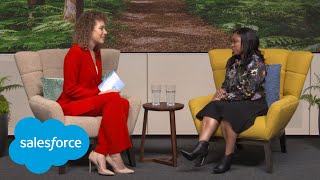
This is a transcript excerpt from a YouTube session (Trailblazing Women Summit) led by Minda Harts discussing microaggressions in the workplace. The speakers define microaggressions as recurring slights or snubs—often unintentional—that disproportionately harm underrepresented communities (likened to 'paper cuts' that hurt cumulatively). A speaker shares a personal anecdote where a manager commented, 'you people love your bright colors,' about her nail polish, illustrating everyday racialized microaggressions and the emotional impact they leave.
Well, let's take a second to talk about microaggressions, because we've been having this conversation. Our own company. What defines a microaggression? And we talk about them as these slights or snubs that may be intentional or unintentional, but largely impact underrepresented communities. And we like to say they're like paper cuts. You know, you get one once, not a big deal, but if you get it every single day, it can be truly painful. Can you tell us about your experience with microaggressions?
Oh, do we have. How many hours do we have? But I think the thing about microaggressions that. So I think that because of those cuts, right. We start to get used to them. And I think that's the dangerous place, because then we start to say, okay, this is what I have to do. This is what I have to get through. And I feel like, as women of color, we don't have to accept those things. Right? But we have to realize, and others have to realize that the onus is on them to change their ways, too. And so one thing that I wrote about was this time that my manager had gotten to the car, and he noticed that on my nails that day, I had burnt orange fingernail polish. And he says, you people love your bright colors. And then he laughed like it was comedy night at the Apollo. And my colleague in the backseat, he chimed in. And then for the next 15 minutes, they talked about how black people like bright colors.
Wow.
And in that moment, I didn't know what to say, you know, and it's funny because even though that was early in my career, it still hurts.
Yeah.
And there were things that happened later on. And I get emotional every time I talk about that story because it's those little things that stick to you.
Yeah.
Those cuts. Those cuts. And you don't realize how much pain all of those cuts cause you until later. And I often reflect back, not because that hurt my feelings so much, because I put on armor after that, because that was a good day for him. But what I realized was I wish that I would have said something to him, because what happens is we go back to our desk and we play it on a loop over and over and over again. And that does a lot of damage, because now I have to manage that and do the best work I can. And I don't think a lot of our counterparts understand what that's like. Yes, people have a bad day, but sometimes ours is, yes, we've had a bad day, but then it's also these racial aggressions. Right. And racial harassment, rather intentioned or unintentioned, is just as insidious as any other form of harassment. And I think it's important that we check language and we allow ourselves to have these courageous conversations. So when it does happen, we give ourselves permission to say something to. To a colleague. But then on the other side, I need our colleagues to be courageous listeners so that we create the space to be able to say, you know what, this hurt, or, you know, this was inappropriate. And then it not be, oh, you're being an angry black woman. Right. Because our feelings matter just as anyone else's. And so I do want to see more of those courageous conversations and listening taking place.