Opening the Doors of Opportunity for Black Male Youth | Blazing Trails | Salesforce
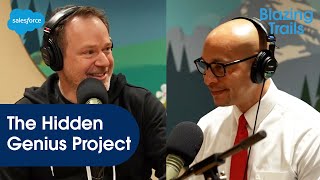
Video interview (Blazing Trails, Feb 22, 2023) hosted by Michael Revo with Dr. Brandon Nicholson (CEO, Hidden Genius Project) and Dr. Ron C. Smith (VP of Philanthropy, Salesforce). The Hidden Genius Project (founded 2012 in Oakland) runs an intensive 15-month immersion for Black male high-school youth (ages ~13–17; ~800 hours) teaching computer science, entrepreneurship and leadership, plus alumni programming and community partnerships. Salesforce’s Catalyst Fund offers catalytic seed grants and product/time volunteering to underrepresented-led nonprofits; the program is invite-only and the current cohort prioritizes Black-led groups.
Questions this video answers
2012
Oakland, California
High-school-aged youth, typically between 13 and 17 years old.
Approximately 15 months, roughly 800 hours.
Operates in Oakland, Richmond (CA), Los Angeles, and Detroit; planned 2023 launches in Atlanta, Georgia and Chicago, Illinois.
Chapters
Welcome back to Blazing Trails. I'm Michael Revo. Today we're celebrating Black History Month, and we're going to learn about an organization focused on improving futures for black youth and young adults through equity in education. It's called the Hidden Genius Project. And we'll learn about the launch of Salesforce's Catalyst Fund, which will provide capital to nonprofits led by underrepresented leaders. Joining us today is Dr. Brandon Nicholson. He's the CEO of the Hidden Genius Project and a nonprofit focused on training and mentoring black male youth in technology, creation, entrepreneurship, and leadership. And Dr. Ron C. Smith. He's vice president of philanthropy here at Salesforce, who directs strategic giving for the Salesforce Foundation. And he's a former educator, teacher, principal, and network superintendent. All right, let's jump into the conversation. Welcome, Ron.
Hello, my friend. Thank you for having me.
Oh, it's a pleasure. Okay. And welcome, Brandon.
Hey, Michael. Thank you for allowing me to be here today.
Okay, great. Ron, I wanted to start with you. I'm excited about what we're doing with the Catalyst Fund. It's a second year of the program, I think. Can you tell us what it's all about?
We've at Salesforce have had a long standing commitment to education, and not just education, but education in cities where we work and live, focused on those populations furthest from success. And that really means underrepresented populations. In our case is black and Latinx populations. They have been in the education space in need of so much more. And Marc Benioff himself has talked about public education as a pathway to career opportunity and success. The Catalyst Fund allows us to do that. It's startup, it's catalytic. It gives a jumpstart to those organizations in search of better opportunities and ways to really bring up things that we normally wouldn't be able to get smaller funding, open to what the company needs, open to what that nonprofit is looking for to be successful. But what we've done today, that has me really just excited to talk to you and Brandon. Today we get to really highlight the Hidden Genius Project. They're part of Cohort 1. They epitomize the work we do, not just in the cities where we work and live, not just the communities we serve, but really setting a high standard for the things that we want to talk about with excellence and in reaching those in greatest need.
Yeah.
Yeah.
Well, welcome, Brandon. It's great to have you here.
Great to be here, of course.
Okay, great. Well, okay, so tell us about the Hidden Genius Project and what it's all about.
We train and mentor black male youth in technology, creation, entrepreneurship and leadership skills to transform their lives and communities. We were founded in 2012 in Oakland, California, which is where we're currently headquartered, but very much proud to operate not just in Oakland, but also in Richmond, California, Los Angeles, Detroit, Michigan, and in 2023, we're launching in Atlanta, Georgia and Chicago, Illinois. So, you know, it's been now, gosh, 11 years of us just working to try and elevate the potential of black boys and young men in their communities where we live, work, play, do all the things, and very much I think, you know, celebrate all that is, you know, this genius in our communities by way of connecting primarily black boys and young men with skills, pathways, experiences that can help them pursue their dreams, support and transform and enhance their communities, but also very much lead throughout the world. And I think we see that every day that a rising tide lifts all boats. So the work we're putting into these black boys and young men every day is manifesting, creating a benefit somewhere else in the community.
You know, one thing in looking at the program. Well, first of all, everybody should check out the website and the videos in particular. The videos are so good and just inspiring to see.
Thank you.
To see these boys traveling the world and, you know, just the confidence and exuberance and, you know, it's really great to see. And one thing I learned is that it's the mentorship program is pretty, pretty long. Once somebody signs up, one of these boys signs up, what age do they usually start the program?
So we've got multiple components, but our core component that's been there since the very beginning is our intensive immersion program and that's focused on black boys and young men of high school age. So they're coming to us usually sometime between 13 and 17 years old. And a cohort based model are spending 15 months or roughly 800 hours with us learning the fundamentals of computer science, entrepreneurship, leadership, and then weaving those all together, but also placing themselves at the center of the experience. So a lot of people will assume that we're here as an engineering program or we must be trying to solve some sort of representation challenge for the sales forces of the world and other companies. But really we're about exciting and inspiring these young people and then helping them understand where they can go and then helping them keep pushing at the edges and then they can figure out the rest.
And Michael, it's interesting that Brandon was just talking about that focus on young men, specifically black men. And my background for 20 years was in education. And supporting schools and supporting students. And really we see the need for more black men in education and not just to really provide a model, provide an image for them to see every day, but provide experiences and to show them. Like the trip to Africa, Everyone go watch the video, they gotta see the video. But those experiences are life altering and really presenting the opportunity for young men in many of these communities, they just don't see it. And so having programs like the Hidden Genius program, having men in front of them like Brandon and his team, having individuals that can provide them with an image and then a future to be it, you got to see it. And that's the thing that people are losing in today's society.
You know, it's interesting too, because so many young people, their experience is so digital right now. When you think of. And then particularly in Covid, everything was remote. And now, you know, what a different experience to be with other kids, with mentors, traveling, you know, having those experiences really opens things up. So Brandon, tell me a little bit about how the program works.
Absolutely. Well, I think first for folks to understand our programming ecosystem, you got to think about it in terms of concentric circles. So at the very epicenter is our intensive immersion program. That's what started in 2012. We were a volunteer driven organization with no budget or infrastructure or staff. And for two and a half years we were running this intensive even as folks were working full time jobs.
And so when you started this, this was not your full time job?
No, in fact, so my job was an evaluation program. And evaluation and you know, we have a core group of founders who are, you know, teaching every day, you know, basically taking lunch breaks for an hour, hour and a half at a time to teach their lesson. And ironically, even as we didn't have a full time staff, we were probably as intensive a program as you could find, you know, for our young people, especially in this space. So the very first summer 2012, they were eight hour days. And so what it took to get young people 8 hours of programming was to, you know, have a volunteer again take an hour and a half to disappear from their full time gig and make it the time people rolling in through. Absolutely. For me, I didn't have do that. Thankfully. I was volunteering around, you know, some of the education design and assessment design. My background's in education policy. I was working in program evaluation, studying what makes programs like ours great or sometimes not as great. And you know, so recognizing that one of the core features certainly what Ron spoke to, being able to have an intensive presence Next to our young people, creating consistency, a longitudinal view. And not just in the 15 months, but beyond. We continue to invest a great deal in our alumni support. So that's at the center. That's the, you know, path to first high school completion, post secondary education, internship, employment. That's all with the immersion program. And that's a black boys and young men focus. Now when you look at these circles around the immersion, they're, you know, increasing levels of exposure for young people in the community. So we've got contracts that we do with other community organizations. Think about youth facing organizations like a boys and girls club or West Oakland Youth center or a school in a district or what have you. They're hiring alumni of our program as what we call youth educators. And so through those relationships, we actually have our young people as leaders facilitating programming for whomever those organizations serve. And then we've got one more circle around that where our young people are typically facilitating and leading events, not the least of which is our brother's code event, which we do now in every community where we are every year during computer science education week. And that's an opportunity for boys. And that's all facilitated by our alumni. So if you think about these circles, at the core is the work we do every day. All of our full time staff, now that we have full time staff, they're pouring into black boys and young men in high school. But then those young people as leaders and as alumni then pour into the rest of the community.
So the Hidden genius project is 11 years old now. And you told us a little bit about the origin, tell us about what it takes to scale the project and what that relationship with Salesforce looks like and with other organizations too.
So when we think about again, those concentric circles, what it means to scale the organization, certainly to establish a new site is to replicate first that intensive immersion program setup. And so that means hiring a full team there, including educators, site director folks, supporting our support services. So that's a big part of what we do, is wrap around our young people holistically, making sure we can support them to get the things that may get in their way, out of the way. So hopefully over time they can focus, you know, more intensively, you know, on the path ahead and where they want to go. But what I'll say is before we get into any community, it's really about building relationships, understanding that we're not here to, you know, kind of pursue a manifest destiny, so to speak, and, you know, kind of take our work across the country and the World, you know, in the name of, you know, the greater power, greater purpose. Really what we're seeking to do is join arms and ecosystems where folks have been doing work for years, where people sit at a table and they say, I've got 20 years experience working with this population and that 20 years matters and that 50 years matters, and that century or more of legacy in that place matters. We want to be competing against systemic oppression. We want to be competing against, you know, the, you know, the factors in our communities that then contribute to our young people not having, you know, the things they really, truly need and deserve to excel. What I can say, though is the thing that's not a challenge is engaging, you know, incredible young people. You know, we're seeing that everywhere we go, that there's, you know, certainly a need. But more than that, there's a great opportunity. We're just impressed by so many of these young people we've met over our 11 year history all over the world. So we're always very much convinced that we should keep doing this because they're right there primed for the opportunity.
And Ron, it sounds like it's a similar process for a company that's going to engage with a nonprofit or a community where it'd be easy just to come in and say, oh, yeah, okay, we've set some money aside, we're going to go do these projects and just sort of engage in that. But it takes a lot more than that.
Takes a lot more.
Yeah, so tell me about that.
I was sitting here listening to Brandon talk about going get to know the community, be a part of the solution.
Yeah.
Not coming in and giving edicts and not coming in and saying, do this, do that, but being really vested and having the community see you as a part of it, that is at the heart of how we do the work that is Salesforce. And, you know, we have our one, one, one model, giving back our equity, our product, our time. Brandon mentioned it, he said, you know, we're going to go in, we're going to volunteer, we're going to come in, we're going to bring our product, we're going to bring us the hidden genius project.
Yeah.
Then we're going to bring, and you were mentioning this on the elevator. You're going to bring in seed funding. Like you're not just saying, I'm bringing this team, I'm going to breed seed funding for groups that are already in the area that allows them to grow while we grow. And I think that is just fundamental when you think about success. For Salesforce, we also think about it going in with a simple question. What do you need? How can we help? What are you doing that you want to accelerate? What do you want to change? Where do you need help and where do you have gaps? We have things that we follow. We have our strategy that we use, of course. But one thing that we're very committed to is not coming in, say, do this. These funds not as flexible as some people think. Now, the catalyst fund is different. We'll talk more about that. But when we think about how we go in and partner, we go in through. Through listening campaigns. We want to talk to the school systems, to the city, to the government officials. We want to talk to the nonprofits doing the good work. We want them to tell us what the needs are of the city. It's very easy when you're out here and we have thousands of employees. Maybe in San Francisco or in Oakland, we have a little bit more foot on the ground. But what if we're in Chicago?
Well, that's a question, too. If you're not a salesforce, you know, this has been part of Salesforce from the beginning. It's a big organization. There's resources. The ability to talk to all those groups is a lot easier. But if you're not of that scale or you're a smaller company, how do you engage those stakeholders?
One, we listen to our employees. We get their feedback. They have them give us suggestions on who should we talk to, our employees in region, someone in San Francisco. We wanted to have you be in Chicago if you're gonna talk about Chicago. But we listen to our employees. We listen to the nonprofits. When you have everyone talking and then you see the through lines and hear the common language and this world we're in right now where we can get back in person, you get to see how people feel and interact around being around other people. It might take months, it might take years before a partnership can be formed, but as long as it's of high quality, at the end of the day, if the young people, in this case in the hidden genius projects, the young men are being prepared for career success, then you're doing the work, and you have to have the long view.
You know, one of the questions I had coming in was, so let's say you develop the relationship with nonprofit organization, the company, and then your key person gets another job and is gone. I mean, we've all experienced that, you know, in the world, one day the person's there, and then the next day they're not. And Everything changes. How do you approach that as a nonprofit? To make things sustain across, you know, and we're in a time of a lot of change right now, so.
Well, it cuts in both directions too, which is, you know, I was just going to share, you know, building on what Ron said. I think also we have to make sure, you know, we're engaging a robust cross section of a community as well, you know, so it's not just going to be nonprofits or not just government officials, not just faith leaders, you know, just understanding in any given community who moves resources, who moves people around. And that's got to be the same, you know, for nonprofits as they engage the salesforces of the world. I mean, at the end of the day, a Salesforce employee is a community member somewhere, right? And so ultimately, you know, we've got to be about that life, so to speak. You know, we've got to be able to deliver on what we're saying we're doing. And there'll be people in Chicago, in Oakland, you know, in la, wherever it might be, who are going to say, well, of course, the hidden genius project. Work with my nephew or with my brother or with my son or whatever it might be. And I may be at Salesforce, you know, working as a product manager, but I'm gonna try and find a way to get 30 minutes with Ron or somebody or so. And so just to make sure, because I'm not sure are we doing something with them here. And a lot of times that's what catalyzes, if you will, that relationship for us. So I think it's really, you know, about us having definitely multiple touch points across, you know, kind of each sides of our relationships and creating value.
It's interesting you said that, Brandon. I was thinking about the example you used about the young people who are part of this experience. You know, you bring adults in and adults are, you know, they're in and out. You know, some are volunteering for that one time and that's it. Others are. It's a lifelong passion. And of course you want to try to draw on especially those people of the passion because you're going to stay committed. But just to hit on that point around the young people, if that young person has good experience, guess what? Five years from now they come down and they see Salesforce, say, I worked with Salesforce when I was 18 and this was this, and this was this. Now they're passing that information back to the youngsters that they're mentoring. They're passing that information down. So then When a Brandon's gone or Ron's gone, the name the hidden genius project and Salesforce is still aligned because it's getting passed through the generations. And that's really what it comes down to. One thing. So when we talk about other companies, we talk about other industries. When you're talking about engaging with the young black men, specifically in the communities that we live and work and serve. Yeah, when I talk to other companies, and I'm very clear, I don't want you to have fear of going into these conversations. Don't stigmatize these young men because of something you've seen on TV or something. Maybe you even had a bad experience. It's possible.
Yeah.
But the purpose of this is for everyone to learn. For you to be engaged in this activation. It might be an hour, it could be weeks long, it could be years long. And by doing that with an open mind, open heart and open spirit, you can actually help build up this young man and build up yourself at the same time. So engaging and talking to companies and talking to other industries or just working with other organizations that want to work with nonprofits, we really talk about going and being authentic, being an authentic listener, which is different than being a listener. Being an authentic listener, you have to be willing to go in, roll your sleeves up and say, I'm committed. And the second you do that, the second you see these young men, the second you see this young man, young, young adult, become a young man, become a man. If you're watching that journey, your eyes will open up. It'll help you in your life, in your home. And I think that at the heart of it is just putting it down where people can pick it up, put it at the root of human nature. We are building a society where we're trying to support young people who have not had the support for the longest.
You know, Ra, I'm curious, after many years in education and working directly with kids and those communities and now being on more of the corporate side, what's the difference in impact there? How has that played out for you?
Giving back in time are always amazing. The biggest gap I see for myself, and when I think about it, and I've talked to some friends who have been different transition spaces, is you lose that interconnection with the kids. When I watch the video and again watch the video, I keep saying it's really good. The powerful piece of sitting on the bus and the young man saying, did we get this accomplished? And his friends tell him, yeah, nay. And then everybody. And then you guys are in the back, just letting them talk.
Yeah.
That energy is unmatched. You cannot understand how much it lifts you up. And when you're in an industry where you're surrounded by adults and adults bring adult problems, and, you know, we all know this, but young people have a certain level of. Of juice and energy and passion and all these catch words, grit, resilience. No, no, no. There's. It's a glow that they bring out of them that people, if you're not engaged in, if you don't go in that space, you don't know.
Right.
And that's just missed. And so being able to step in those spaces sometimes. I used to tell my team, we go to school visits. I'm like a giddy kid. I'm walking around, looking in classrooms, sitting down next to kids, because that's where you get your passion and joy. Education, teachers, the hardest job on the planet. And getting people to understand how no matter where you are, corporate world or on the ground, doing the work. Because that's the thing. On the ground, doing the work. Being with the young people, that's the work.
Brandon, I'd love to hear if you have some success stories.
Sure. I mean, what I'll definitely say is our greatest data set at this point is our young people and the way they show up as leaders. Guys like Devin, you know, a young man we met with a great passion for animation and other things, who said, but, yeah, I'm not really into tech. But in reality, you know, animation, art, and tech are deeply intertwined. And so him being someone with an interest in animation, we were able to connect him with a program here in Oakland at Laney College that was meeting on Saturdays, an animation class that would allow him to attend even as a high school student. And, you know, that put him in a position to pursue his passion and have us there. We literally had the instructor walk into the registrar to get signed up. But also that inspired him to keep going because he said, you know, he felt that higher ed wasn't for him. But that's because his conceptualization of higher ed was either engineering or liberal arts, kind of in a standard setup, not going to an art school or, you know. And so we were able to get him, you know, a look with the admissions director at California College of the Arts. And eventually he'd be offered a scholarship over four years that first started off with about 50% aid, but with the school costing what it does was still not nearly gonna be enough. And his mom called us almost in tears, saying, I don't Think he's gonna be able to go. And within 48 to 72 hours, they'd come back, said, all right, we'll cover it. Just come. We've got another young man from our cohort. Devin was in Richmond, but you know, Elijah down in la and he came into our organization with a churro business of all things, you know, basically as a high school sophomore, you know, and the churro man can, you know, but he's thinking about what can tech do to help elevate my business.
Right.
You know, social media obviously is a huge part of that. And also it's an important lesson because, you know, you heard Ron talk about not being afraid of our young people, also just understanding how brilliant they are even before we reach them, you know, so we have so many young people who have such great facility and agility around things like social. Right. So he knew how to get his brand out there, but now having the skills to build tools for himself and or others. And then he also is someone who's facilitating programming in LA and other places. As an alum of our program, as is Devin.
Ron, to close, can you tell us a little bit more about how people can connect with philanthropy at Salesforce?
We have a website and we can get that information out. And we are an invite only when it comes to our granting program and our Catalyst fund. This cohort, it's 10 black led organizations of the 20. I mean, that is powerful and that's really an intentional focus in communities. We're in Cohort one was our limits test. And when we have quality organizations like the Hidden Genius Project, that's what we're looking for. As we think about the future, as we think about the opportunity to go deeper in this, what does it mean to provide what the communities are asking for? For.
Okay, well, Ron, thank you so much for being here.
Thank you. Appreciate you having me and Brandon.
Thank you.
Thank you, Michael. Absolutely.
Well, that was Dr. Brandon Nicholson, CEO of the Hidden Genius Project, a nonprofit focused on training and mentoring black male youth in technology, creation, entrepreneurship and leadership. And Dr. Ron C. Smith, vice president of philanthropy here at Salesforce, who directs strategic giving for the Salesforce Foundation. Like this episode? Be sure to subscribe wherever you get your podcast, Blazing Trails, or right here on our YouTube channel. Blazing trails is a production of Salesforce Studios, produced by Courtney Elting, edited by Cynthia Chavez with original music from Andrew Duncan. I'm Michael Revo. Thanks for being with us and we'll see you next time.









