Power to the Product | Cloud 100 | Salesforce Ventures
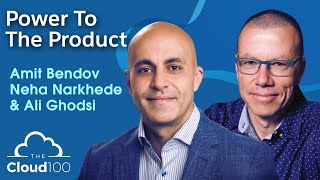
Ali Ghodsi, Amit Bendov, and Nehad Arkate discuss product-led strategy and data-driven innovation. Apache Kafka runs at 70% of Fortune 500 companies. Gong uses AI to analyze customer conversations and maintains an NPS around 70.
Questions this video answers
Mindset by Carol Dweck.
The Warren Buffett Way (or Warren Buffett–style investing/management principles).
70% (claim by Nehad Arkate).
Approximately 70.
Chapters
Hi, I'm Alan Gadzi, co founder and CEO of Databricks.
Hi, I'm Amit Bendav, co founder and CEO of Gong IO.
Hi, I'm Nihand Arkete, co founder, former CTO and board member of Confluent.
Everyone, super excited to be here and have a conversation with you. Neha and Amit, thanks for being part of Cloud 100. I'm really curious to hear more about your thoughts around strategy and innovation and the products that you all have helped build. But before we start, I'm curious what book has had the biggest impact on your approach to leadership?
For me, it's Mindset, where Carol Dweck discusses the power of having a growth mindset or a fixed one in really all walks of life. And it really resonated with me as it aligned very closely with the values I grew up with, which helped me take the leap to start Confluent and also actually to overcome my fear of the open waters to learn scuba diving. But really as a leader, it has helped me think about motivation and influence people to overcome obstacles and really keep growing.
That's fascinating. I think that's also Satya Nadella's favorite book and he made everybody at Microsoft read it. So that's awesome. I really like that book, I have to say. And Amit, what about you? Do you have a favorite book that really influenced your leadership style?
It's tough. There's a ton. I read hundreds of books earlier in my career, but if I have to pick one, it's probably the Warren Buffett way. It's not necessarily this particular book. There are quite a. But I think it's like, it was like eye opening for me first that you can run an empire with just like five people, like Berkshire Hathaway, just such a small company shows you the power of delegation and being like sound structures and culture underneath. And then there's many like maintenance. Suppose like don't do anything you don't want to read about, like in the headlines tomorrow. Right. It's just. And how you run a business. I think it's incredible. Super influential for me.
So, Amit, I'm actually super curious. Speaking of leadership approach, you've talked a lot about listening and the importance of that, even on product strategy. So I'm curious if you could tell us a little bit more about that.
Yeah, it is important to listen. A common mistake that people does is assume that they know. And I think humility is key to innovation. Just come with an open mind. Don't assume that, you know, don't come up with premature ideas. It's listening to customers, listening to sometimes what's not being said into implicit needs versus like explicit desires. We encourage like we talk with customers. We also happen to like record the conversation with. With the. With users. Right. So then we can come back with data. Right. It doesn't have to be like words. It could be like numbers and, and research. But that's always like we always go to like customer needs. Right. Whether they're explicit or implicit.
That's interesting. So at Gong, you actually listen to customer conversations. Right. How does GONG work? A little bit. Can you tell us a little bit about that? I find it super fascinating.
Gong is a system to really understand what's happening with customer or they're like customers or users. Right. It taps into conversation. Could be like emails, zoom calls, phone calls or any channel is usually natural language understanding to mine insights at a scale. So if want to know like how many competitors people talk about that feature or some other features or the new product launching successfully. Before Gong, you'd have to go like interview salespeople or some customers. Now you can know almost like in a second day if a product launch is being successful and how customers feel about your product.
I see. And are using AI to do this or how do you actually listen to the conversations?
Well, it is AI. So to understand like what questions people are asking, what's their sentiment about like a certain product or a certain competitor, what's working with the sales process? How is our customer success experience reflect the way the customer responded. So it does understand quite a bit. It almost like magic. Obviously you can do the basic stuff like listen to keywords. So product names, competitor names, that's freezer but it comes with higher order things like what are the action items, what's the engagement like on conversations? In a way it's very easy to understand.
That's awesome. I wonder what it would say if it listened to this conversation. So the data is actually super important for that then? I guess. I'm curious. Niha, I mean you started a company that's focused on data, right? And data movement and data in motion. Can you tell us a little bit about Confluent and how it started?
Yeah, absolutely. At Conflont, our mission is to empower organizations like all the way from Goldman Sachs, Intel Capital One to put their data in motion and harness value from their data in real time to create new products, new customer experiences. And we started this journey by creating a really popular open source project called Apache Kafka and then later transition to providing both a cloud product and an enterprise software offering to, to essentially help organizations unlock their data and put that in motion.
And with Kafka and now lots of competing sort of efforts around that, you basically created a category. Did you know that you were creating a category when you were at LinkedIn or is that just something happened? What other people who are starting companies and they want to create categories just like you did, what can they learn from you?
Yeah, I think the reality is when we started we observed that existing data infrastructures just do not support a continuous real time flow of data. And we create trace that back to a fundamental architectural flaw in how systems worked. And actually creating something like Kafka wasn't really the first step on that journey. The first step was to hack together existing systems to see if we could just make them work. And when we realized was more of an architectural flaw, that is when we took a step back and really envisioned this world where the whole foundation of how data would move and be captured in a company would change and re envision that as essentially Kafka. That could fundamentally rethink of data as something that moves rather than something that rests and then occasionally moves around. And I think, you know, fundamental to category creation has been capturing the love and the mind share of the user, in our case developers. And that along with creating a category defining product, I think goes hand in hand in really doing that. And not to mention that it is a 10 year journey.
So in some sense just focus on your user Persona, the developers and the problem you wanted to solve that there weren't anything good out there and just solve that really, really well. And then you then happen to also create a category along the way to.
The heart of telling the story, which is equally important in category creation.
So Amit, I'm curious, in the CRM space There is this 800 pound gorilla, right? Salesforce, super successful company, been around, you know, huge. How do you carve out space for yourself in sort of, you know, among companies, you know that in that space.
We created a new space. It does not replace CRM. It works like CRM left. So CRM was built for the leadership team. Like it based on customer facing people in sales, customer success, support, filling in data and forms. GONG is the first application that focused on the customer facing people, right? It is built, they absolutely love it because it just does everything automatically. GONG just taps into conversation and then it can mine the information from there without people having to fill in forms. And it does a lot for them. It gives them memory, it gives Them insights how they can be better with customers. Our net promoter score is almost always in a 70 which is insane for an enterprise product. It's a consumer grade NPS. It's higher than iPhone in 2008. So by focusing on that Persona in addition to leadership, that really helped us drive a new growth. It's a new kind of system that doesn't take away from anything else.
So you have awesome products and you focused on the problem and the end user and telling that story. But we also have to sell the software. So I'm curious, since Atlassian came on the market in the early 2000s, I couldn't hear the end of it that hey, they didn't need any salespeople. It was product led growth. The product led everything. And you don't need to rely so much on go to market and sales and I'm curious about that interplay and what you guys think about it. So maybe Niha, you can go first.
Yeah, I think with our cloud product and community downloads, Confluent has a very strong self serve adoption model. Many prospects are in their earlier adoption stage before we ever engage the sales team. But a product that lends itself naturally to self serve adoption is a good fit for building a product led growth business. Open source software has been a good example of that as we've seen from the success of Spark Databricks and Kafka Confluent. But also another notable one has been self serve freemium offerings that allow you to swipe a credit card and just experience the product. Like Snowflake Atlassian. But I think what's less talked about is the art of layering on a sales sort of touch point and enterprise go to market motion on top of the ground swelling that a product led go to market motion creates. And I think that's a critical step on the path to building a multi billion dollar company. Which is really not only to build a bottoms up adoption model but to layer on the right involvement of customer success and enterprise sales to really maximize the value from the offering.
Yeah, that makes a lot of sense. And I'm curious, you know, GONG must have an opinion on this because you know, maybe we should all just be using GONG and you know and we can automate away a lot of that sales process.
Well, I think our, you know, the product grows is fantastic. Not every product lends itself to this just so the thing is how complex it is to understand. Right. It's a complex financial software is hard to buy. But something like Kafka or Databricks is Or Atlassian is like is fantastic. And our goal isn't to replace salespeople but just take away all the stuff that they hate doing like filling in forms, updating their managers, committing their forecast and all this stuff that nobody loves. Right. But they're forced to do it today.
But certainly the cost of sales and sales and marketing must reduce. If you use gong.
No, absolutely. First like with product like growth and with gong you could probably cut it by half. If you take away like half of what people do which is like not interacting with customers. It's just this, the hateful stuff that, that's a huge saving threat. Ramp up time, increase quotas. That's, that's like. And the nice thing is it's easy to solve. Those are some of the stress points of, of the profession that, that maybe like notorious. There are movies about that like cutthroat environment. All of that is not really necessary. You could make this fun.
Databricks was the same. For what it's worth. When we started we had Apache sparked open source project and it had just gone viral and there was so many downloads, millions of people worldwide. And we started selling to small medium enterprises or small and medium businesses mid market. But eventually to really move up and get those much bigger deals for the company and get the revenue growing, you know, significant, you know, double, triple digit, you know, millions. You kind of have to have an enterprise salesforce. That's what we learned. Because enterprises buy in a certain way. They have a procurement department. Lots of people need to approve the budget. So eventually it turned out that really to unlock that, you know, usage in the big enterprises we had to layer on sales and marketing. But you still need great product and the more you product led, you know, the easier it's going to be for people to sign up and try it out and trial it. So it's. You kind of have to do both.
100 well I got, I gotta ask you if you don't mind in 28 billion. I mean that's like insane. Like that's almost like over 100x right from the when you start, you know, teach me like how did you do that? Like what drove that innovation?
You know, short answer is luck. But if you want to really go back, I think we took a few bets and those bets were kind of out there. Right. I think you all did the same. That's how you created categories. And we bet on the cloud wasn't obvious in 2012. We bet on AI. AI wasn't known at the time. People thought of AI as robotics and machine learning wasn't widely used. And we bet on open source and those bets weren't obvious. And most people told us that's not going to go anywhere and turn out those were the right bets. And eventually the market came there. I think that's the way you build a great business. If you're doing what everybody thinks is obvious and it's the right thing to do, then what prevents the really big guys that you're competing with to do the same? And then you can't grow. So we kind of got five, six, seven years to build a cloud product, figure out ML, figure out open source monetization, when everybody else was like, those are small markets, they don't matter. And by the time we were kind of ready and the market came there, we had that head start. So it wasn't that easy to catch up for the really big companies. So I think taking some bold secular bets and hopefully being right about them, and that's where some element of luck comes in.
Yeah, you're being modest. This isn't luck. This is smart. Like incredible, incredible, inspiring story.
I agree. So on a completely different topic, on all our ways of working have been upended by the events of 2020. But some businesses have navigated the transition really successfully. Right. I'm curious to learn from you guys. Amit, to begin with, you, what technologies or tools or cultural transition did you have to put in place to ensure that a consistent spirit of product innovation was promoted while working remotely?
Well, I mean, that's a great question. Obviously, like a lot of companies, Zoom and Slack, it's kind of like Table Stack, we just communicate, communicate, communicate. So we want to make sure that everybody's connected. It was stressful at the beginning and still like, you know, there are parts that aren't fun. I mean, we're doing very well as a business and I'm sure, like most, most of you are, but it was stressful. You know, it's just crazy times where like we have new hires out of college that not only didn't meet anybody, like never worked at an office, don't even know what an office looks like. Right. Maybe like from, from tv. Right. So we use Zoom and Slack to communicate frequently with everybody. We use this like little thing donut, right. That keeps people like on random coffee, which is great. And from a product, obviously we drink our own beer. So we use Gong a lot to communicate both with customers and with users that really kept everybody connected. So people can immediately, if someone has a challenging conversation and they're in Florida, right. People from California within three hours can chime in and help and win as a team together. So that helped, really help keep everybody together. But that's us.
Yeah, I completely agree. Not just teams, but we also learned that enterprise sales can be done over zoom as well, which is something that nobody ever thought was ever possible. But now we all know we could cut down on some travel budgets.
Yeah, I think good hygiene, like those are things we should all be doing, but now we have to do them. Well, as you said, Zoom slack, you know, but I think meeting hygiene, which means make sure that the meetings have a good agenda, make sure you have good summaries, make sure that you have good written communication in the company so that people that are on different time zones or at home or couldn't attend the meeting can read up on stuff and it's clear. So I think those are things that everyone should do anyway. But I think it becomes more necessary as you go in this work from home environment. But I'll tell you this, this is our first week back in the office here. And, you know, I step out and I talk to a lot of the engineers who just, you know, as you said, for the first time in their life, they're coming into an office. And I kind of get this. A B test between how things have been in the last year and a half and meeting people in person. It's pretty amazing, I have to say. It's. I forgot how powerful it is to just stop by someone's desk and say, hey, who are you? Oh, awesome. Welcome to the company. What do you work on? And they're super excited to tell you. I think that was really missing in the last year and a half, so. So I look forward to that. But I do think it's going to be a hybrid world where we're going to have some work from home, some in the office, and we frankly don't know. We'll learn as we go into this next sort of episode.
Nea, what do you think?
You know, I think we're entering in a hybrid world, and I really am excited about that. That while some part of getting access to global talent is really exciting, other parts of being able to meet people face to face and really connect with them is really essential. And I think, you know, this hybrid world is the new path forward.
Absolutely. I love that you're in the office. I'm envious. Ali. These 40 people, it's incredible.
Yeah. And I think you could see the energy also from them as well. So I think this is something that I think we're going to relearn how important that was. And I think there's been, we probably over rotated a little bit. People thought I don't need an office and people I can hire anyone anywhere and this is going to be amazing. But I think there are also a lot of advantages to the office. So it's going to be some kind of hybrid that we learn. This has been an awesome conversation. I just want to sort of wrap up and ask you each if you look ahead when it comes to product innovation, what technology topic do you think more people should know about that would further your company's mission?
If you look at like Google versus Yahoo, Yahoo was a human curated system. Like people would put like the top 12 pizza joints in San Francisco and Google said forget it, we're going to index the world's information automatically. Something's 100 times more powerful and nobody needs to do anything right. Gong is doing the same thing over like CRM. It's a new system. It is autonomous application that uses AI to kind of capture the information from the ether without anybody having to lift a finger. There are other applications that are actually more like Yao's human curated system in healthcare, in hr, in other areas. And we believe this is the next generation of computing and applications.
That's awesome. Anyhow, what about you?
Yeah, I think no surprise there it is data in motion. At least two companies here focus on different parts of that equation. But yeah, Apache Kafka is used by 70% of the Fortune 500, but many are still understanding the impact of data in motion to their businesses. So there's such a large opportunity ahead of all of us here because organizations that can powerfully harness their data, whether it's analytical, contextual, intelligent, moment by moment, will be the ones that create innovations of the future. So I really think that technologies like Kafka, Spark, confluent databricks and many more are really just a starting point. And there's such an exciting path ahead of us to truly innovate the core infrastructure that companies build around.
I feel, you know, for me if it was something I would say data and AI and combining data with artificial intelligence for machine learning in enterprises. That way they can sort of build the future and disrupt all industries that they're in. I think I'm excited about that and I think people are only realizing that we're just scratching the surface of that and it's going to have huge, massive impact on everything around us. So I'm excited about that. So this has been awesome conversation. Thank you so much for all joining us here at Cloud Hundred.
Thank you. Thank you.
I had a blast.
Likewise.
Thank you.









