Scaling From Millions To Billions While Boosting NPS | INBOUND 2024
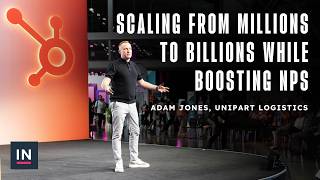
Adam Jones from Unipart, a 50-year-old supply-chain group in 21 countries, explains how HubSpot helped them unify siloed systems and scale revenue. They integrated 700 products into one library, improved prospecting with Sales Navigator, and shortened deal cycles while boosting NPS through better service visibility.
Questions this video answers
Over 12,000 employees.
21 countries.
Seven sectors/divisions.
1974.
50 years (brand anniversary).
Chapters
Good morning inbounds. How are we all feeling this morning? We good? That's good. Like to hear it. Thank you very much. Well, first question is I just want to check that everybody is at the right stage. Right. You're here to hear about scaling from millions to billions and how we've boosted mps. I'll tell you a little story. A year ago I presented at a different conference and a gentleman in front of the stage realized he was in the wrong speaker spot and he tried to get up under a radar. He tripped up and threw coffee everywhere. And it did put me off my speaker spot. Right. So if anybody's not in the right speaker spot, if you like to leave now quietly. Thank you very much. It's good. But thirdly, my third question is just as a show of hands, who's heard of Unipart previously? I like my die hard Unipart people. Thank you very much. So I'm going to start off by telling you a little bit about Unipar, who we are, the challenge that we faced, and how HubSpot helped us to go from millions to billions in our pipeline, but also looking after our customers and increasing nps. So Unipar is a supply chain solutions and performance improvement technologies partner. We have over 12,000 employees. We work in 21 different countries, we work in seven different sectors. But we all unite under something called the Unipart way. And it's how we deal with customers and treat them, how we treat our employees and how we drive world class performance in our business. So uniparts origins, actually the brand was launched back in 1974 and actually it was to transform the car manufacturers spare parts division into the fastest consumer brand for all carmakers. So actually we was probably the first company out there to really do consumer based products. So even before it was fashionable, Unipart was doing it. And actually this year we're celebrating 50 years. So it's our birthday year. So we're celebrating. Thank you. Thank you very much. So we're celebrating whether our employees on our customers because without them, Unipar wouldn't have been around for as long as it has. But as Unipar has continued to evolve over those 50 years, we know that we couldn't just be a kind of a consumer led brand for car parts. We had to change, we had to be flexible, we had to evolve. So actually where our seven different UniPart divisions come from is aftermarket. We went into Unipart Logistics, which is our biggest division, which is a global organization looking after some of Rail's biggest brand supply chains, which I'll tell you more about. We also have Unipart Rail. So anything you go on to a rail track, we provide some of the biggest brands globally. If you go to uk, you go on Network Rail. We look after all that. We're actually a top tier, tier one manufacturer as well. So we really understand our customers when they're manufacturers of how important supply chain is and if that stops and you don't get the parts on the right place at the right time and it grinds to a halt, we're actually a manufacturer, so we really understand that. We've also got a world class consultancy business. So this sits a little bit separate to Unipar. It's very independent, it can actually come into your business, help you understand kind of network designs strategy for your business. And one of our new products that we've launched is really deep diving into sustainability, which is a massive challenge for everybody at the moment as we're a technology improvement business, obviously we've got a technology division as well. And actually these are the buffins of our business. So they come out with all the smart gears, all the. Whether it's AMR robots, whether it's Eco Insights that's looking at gas and water and electric usage, whether it's working for massive aerospace businesses or manufacturers, they're the buffins of our business that what hangs off the back of that is Unipart Signite. So they are really SAP consultancy business and doing transformation in WMS programs. We have an international business but looks after heating and cooling and then also we just continue to grow year on year. So when I talk about some of the international brands that we work with, we actually break it down into seven core market sectors. The first one from our heritage, automotive. So you'll see some of the world's biggest brands on there. JLR, McLaren, Tesla, Rolls Royce talked about Unipart Rail and how we work with Network Rail and Siemens. We're very proud of our healthcare service. So if you ever go to uk you've probably seen NHS or heard about it on the news. So we've managed their supply team for the last five years. Obviously through that we had Covid as well. So that was a nice challenge as we just took on the account. But we didn't lose service and we kept the customer at the heart of everything that we do in aerospace and defence. Last year we won a contract with Airbus, we're very proud of that. And we also work with Rolls Royce, Boeing, so brands that you know in technology, which is probably our second biggest sector market leaders like Sky, Vodafone Free. And what's really unique about these customers as well, some of them have been with us over 20, 30 years. I'm going to tell you a little bit more about our philosophy on how we've kept our customers and how we've kept them happy. Within E commerce and consumer we have some worldwide brands with Pro Direct. In the sporting industry, if you've ever bought a book at an airport or in uk, you've probably bought it from Waterstones. And also if you go into our industrial side, everybody knows big yellow diggers and they're called JCBs. So we manage their production inbound as well. So we trusted by some of the world's leading brands. So now to introduce myself. So I'm Adam Jones, I'm director of business development and sector strategies at Unipar. I've been in sales probably about 20 years, so I've probably worked with every CRM there is and probably seen every scenario known to man. In sales, one of the biggest drivers and I talked about our philosophy is to understand the real and perceived needs of our customers better than anybody else and to serve them better than anybody else. Yamini said it yesterday, it's getting harder to keep customers even when you win it. So if you are not really invested and your culture is not driven by truly understanding your customers, their needs, their pain points, their direction and vision and then you can serve them better. And Ariel. So really look after them to make sure they're getting what they want from you, then of course it makes it even harder. And that's something that we live and breathe and it's embedded throughout our organization. But when we sat there probably about two years ago, we had a great new CEO coming in, Darren, we had a new MD in logistics, Ian coming in. We knew that we could grow quicker. So after 50 years we're about a billion pound turnover business. But actually I know we can grow quicker and I know we can grow faster. So Darren set as a goal that we had to accelerate margin accretive revenue growth. So we had to grow quicker with more margin. Easy, right? Yeah, thanks for that Darren. But we all embraced it because actually we were really excited about it but actually we had some challenges to overcome to start off with. So we had to redefine our sales strategy. So we were very internally facing business. So we really understood our customers, but really heavily on account management. We also had really inconsistent, consistent customer engagement. So actually our account managers would go out and see the same customers, ask the same questions speak to the same people. So we gave some really inconsistent feedback and it probably wasn't wide enough. And that added into our customer feedback loop. We really wasn't getting into real nooks and cranny of our customers and we weren't creating sales opportunities from it. We had different ways of working. When I started two years ago, it absolutely amazed me that we had siloed information in them. Seven different divisions. We were working in different kind of ways of working. We had different multiple systems. So we had a CRM, someone had a spreadsheet, it'd be in someone's head. And I was like, oh my God, how do we actually go about fixing this? And I had no visibility of our pipeline. So I couldn't tell you if I had 100 million or 100 billion in my pipeline when it was going to land, how it was going to land. So actually, how do you then invest as a business if you don't know how you're growing? And also we were missing opportunities because we weren't capturing it because we didn't have ability to upsell. We're absolutely missing out on opportunities to add into our pipeline. So when we actually, it was actually Darren, our CEO, came to us and said, we need to find another CRM and really get something that's going to be embraced by the group. Actually, Darren made it my project to do that and my neck was on the chopping block. So to say I was under a little bit of pressure was an understatement. I'd probably been in the business six months as well, so it could have been a short leg career at Unipar. But actually the team I worked with, Alex and Serena who helped me, was the superstars of the show, really. But we went to market because we really needed four key elements. We needed something easy to work with. Like I've been a sales rep for 20 years and I hate filling in CRMs. Everybody does. There's not a salesperson who enjoys it. So we had to have something that people were going to interact with. We needed it quick. So I've just told you we're missing out on opportunities. We're not engaged with our customers enough. So how do we get it in quick and how do I get a return on investment even quicker? We needed something flexible. So seven different divisions, seven different sectors, all different ways of working. How do we kind of bring that all into one place? And we needed to unify the ways of working. So we had one pipeline on one version of the truth. Once again, Easy, right? So enter HubSpot. So we after a long tender process, actually HubSpot was far and above anybody else. And like I say, I've used some of the world's biggest CRMs, but this one really stood out and I'll tell you why. So we have 100 reps plus globally across all these different divisions and it's unheard of really, but we have 100% adoption rate in our organization and that is driven by our CEOs, our MD's that actually we come, we're saying if it's not on HubSpot it doesn't exist. So if you can imagine our sales reps who are all scrambling around going oh my God, I'm going to get my target's going to be on here, they're going to see my activities. If I don't get embedded into this, hey, it doesn't exist. So actually it's been driven from top down. When we talk about growth or marketing or service Hub, we only talk HubSpot. So that's all the reporting that we use from actually awarding it to HubSpot. We had an MVP up in two months. So really quick we were using it straight away. Within five months we were using it in anger and everybody was using it. It was under time and under budget so obviously our business was really happy. And from a return investment point of view, if you can think that everybody had it in their head they want two or three different systems and we pulled it all together. The payback was like three or four months with HubSpot because actually for the first time in our organization's history in 50 years, we had everything in one place and we could see was flexible. HubSpot and our partners BabelQuest did an amazing job working with these seven divisions and bringing them all together to work in one standard SOP and one version of a truth. And that's how we got all our data in one place. So when we've implemented it, we've gone from a heavily focused account management company to an increased focus on new business. Outward facing comms, outward facing marketing, actually using customer insight into driving new business and our pipeline actually we got consistent customer engagement because we were doing surveys from Service Hub. We were managed to engage with our customers more on a wider basis and we got some more consistent feedback and actually then we could use that feedback to once again really understand our customers, where we were going and how do we serve them better than anybody else in the industry. So one of the best things about putting in HubSpot was actually, how we prospect and a sales rep's time is so valuable. And we heard it yesterday as well when Yami talked about actually salespeople only sell like two hours a day. That's crazy. So actually, how do we prospect smarter so inbound? Last year, if you were here for those who didn't, when they announced that they was actually integrating with LinkedIn, I actually thought it was probably one of the best things I've heard in a long time for a salesperson. You think about having to input data from into Sales Navigator, do your prospect in there, then you have to transfer it across to HubSpot. Remember, salespeople don't like doing menial tasks. They don't like paperwork. So actually that integration to make sure that actually just flows from sales navigator into HubSpot is seamless. So if you don't have that feature, definitely get it because it's been a game changer for our organization. Secondly, it's about actually how do we look at our workspaces and our prospecting. So now I've got more data at my fingertips about how we're prospecting. Who is prospecting? Is there buying signals? Is it the right time to engage? Because once again, a salesperson's time is valuable and I've seen salespeople going after loss leaders. People are never going to buy from you. Random messages going out to people, no rhyme or reason. So now I've got this suite of data that I can help with a team and help managing and support them in making sure we're prospecting smarter. Also, I've done it myself where you speak into a customer and you go, oh great, I'm going to have a meeting. And about the 10th email, you finally get a meeting date in the diary. Now with HubSpot, it's instantaneously so it's cutting down that kind of sales cycle of getting a meeting. And we're very proactive in that we have it on our LinkedIn pages that we actually can book a meeting with our salespeople as well. So once again, we always look into how do we shorten that sales cycle with our customers, which means that we get more opportunities, our pipeline and we grow faster. So one of our. It's all right me telling you this, but actually I thought you would like to hear from some of our salespeople. So Alistair Plant, who's our head of business development for E Commerce, says the HubSpot and Sales Navigator integration has been a game changer. It's allowed us to effortly track entire sales journey from initial outreach to final stages of a sales cycle. With this integration, my team can view LinkedIn insights directly on our HubSpot, contact and company records and even send emails straight from HubSpot. So once again we've gone from working on two platforms now onto one platform, driving more data and closing more sales. So that's not bad, right? When you've got one of your sales team actually promoting it and promoting a CRM, once again, it's unheard of. Right. So it just shows the impact it's had on the team. So when we looked at accelerating margin accretive revenue growth, once again, not an easy task. But how do you go about doing it? And this is probably the secret sauce really. So we've got improved predictability in our pipeline. So before, remember, I couldn't tell you if I was on target, off target, if it was going to land in April, May or June, if I had to increase marketing and activity in a certain month. How do I invest in innovation and technology in the business if I don't know when my pipeline is going to land? So now I've got a full suite of data telling me which division, which sector, which customer, how much and when's it going to land. So actually I can really plan sales activity, marketing activity and how we invest in our business going forward. Also, if you think about us as seven different divisions, how do we ever cross sell before? Because I couldn't tell you who was in each other's pipeline, who they was working with, the deals that they had. Now actually I can see everybody's deals, who they're working with and it's driving a mind shift change within Unipart. We're actually going out and saying, actually I think I can sell Unipart rail or consultancy services. We have a suite of products, 6, 700 products that we can sell to any given customer. So when I used to go out and just sell about logistics, I was only selling logistics, but now I can go out and sell about a wide range of our capabilities as a group and I can't visibility of that. So if I want to go to Unipart Rail and say, hey, you deal with Siemens over there for rail, but I know we've got healthcare and we've got wind turbines and we need logistics, right? So how do you get me in there? So when you talk about step changing from millions to billions, actually, just actually cross selling has helped us massively in doing that and seeing full pipeline visibility within our business and also being able to see all the products that we could see sell in one unified place. I can look at our accounts now and our account directors and go right, what, what are these guys buying? What products have I got to sell? So every time you go into a customer meeting, you're talking about something new. And we see account directors in the room sometimes that hard. When you go into monthly meetings and QBRs, you're going, oh, like what do I talk about?
Before we started using forecasting dashboard, our sales pipeline felt a bit like navigating in the dark. We had a general sense of our progress, but we lacked a granular visibility to truly optimize our sales process. Now this dashboard has transformed how we approach sales, giving us the clarity and the control we need to accelerate margin accretive revenue growth. So let's take a look. On the left, we track proposals issued. This metric instantly tells us how much potential revenue is in play. Next to it, we see deals generated. This is key because it shows us the strength of our pipeline before proposals even go out the door. Are we creating enough opportunities to fuel growth? Just below this, we have leads generated by month. This is our early warning system. Are our prospecting activities hitting the mark? Are we attending the right events? This metric ensures we're building a strong foundation for the entire sales process. Our activity board is where the rubber meets the road. It tracks our sales team's actions in real time. Are we making the right calls? Sending the right emails? Attending enough emails? This helps us identify what's working and where we need to improve. Further down, we track one sales and deals issued per month. This gives us that critical historical perspective where we can spot trends and anticipate seasonal fluctuations and ensure a more consistent pipeline throughout the year. In essence, this dashboard has given us a real time x ray view of our sales process. We can identify potential bottlenecks, we can proactively address issues and we can keep deals Moving forward. We've gained the insights to make data driven decisions to fine tune our strategies and ultimately empower our sales team to close more deals and drive greater success towards margin accretive revenue growth.
Cool. So that's another one of our business development managers showing the power of the data that he's using every day to make the right decisions on who they're targeting. So you've met once again, remember we've gone from spreadsheets to this amount of data that we're using. So we're targeting right customers and winning more business. So how are we scaling sitefully? So touching on it very quickly is everybody loves a sales leaderboard, right? If you work in sales, you want to be number one and you're driven by success. So we put that in our business. So now it drives not just obviously having a bit of competition within the business, but also collaboration. So how is, like Matt doing so well? Hey, reach out and speak to him. How do I help my fellow team members out? And also points mean prizes, right? So these guys get awarded at the end of the year for it as well, but with data driven decision making. So why are deals getting stuck in a pipeline? How do we change things and influence that? How can we convert a sales cycle which was 90 days, down to 30 days? So really we can see through the funnel, at what point are things getting stuck so we can unstick them and win them quicker? So when we talk about serving our customers better than anybody else, we're now transitioning to Service Hub. So this is a new feature that we're doing now. So we're really embracing the NPS scores, how we're using that data. We're looking at help desks for the customers that we serve to actually how do we answer questions quicker with our customers, making sure we're proactive with these kind of answers as well. So we know when there's an issue before our customers know it, how do we react and then drive that and drive our connectivity with our customers and then the workspace that we have there. Once again, it's having all that data in one place. So keep your eyes out. If you're not using Service Hub, definitely get it installed. So just to kind of wrap up, just want to summarize on what we've done. So we've gone from poor data spreadsheets, people in people's heads. We've gone from one unified solution through HubSpot. It's easy to use. The app is great. It kind of gives everybody that kind of real time visibility. Everybody's adopted it because our CEO down has embraced it. Actually, people enjoy using it. You've heard from our salespeople, we're focused now. We're working on the right opportunities and we're closing more business than we've ever done. So you imagine we've had £100 million in our pipeline two years ago. As soon as we put everything up there, it had a massive spike anyway and we was off and running. So if you want to scan the QR code, that gives you a nice little case study about what we've talked about today and our partnership with HubSpot. But I'm probably going to leave a couple of minutes Free. If anybody's got any questions, there's a couple of mics there. So willing to take a question or two if you want to. The marketing element. Do we use marketing element of HubSpot? So yes, it's been like a massive game changer after we put Sales Hub in, went into Marketing Hub. So actually now we're using it to mainly track marketing events that we go to. So when we go to event we create a campaign. So we proactively target customers before we go there. We log the activity that we get while we're there. So when we talk about return on investment on event, we know how many people we spoke to. Has it turned into a qualified lead and a prospect and actually we won some deals off the back end of it. So when my boss says to me, hey, what's your return on investment on that event you went to? Well, actually we got four new connections, we got two new deals, it's worth £20 million. So when I want to go and spend that money again next year, hey, it's a no brainer doing that. But also we've embraced it, we've launched some web pages off it there as well. So we started integrating some our web platform that we've done as well. So yeah, it's been the next evolution from Sales Hub was Marketing Hub and that's helped drive growth even further.
Challenges in uploading such a large parts library into your product library.
Did we have a problem uploading so much of a parts into our database? We did. Luckily I've got some geniuses who work with me that simplified that. But also like Babel Quest, our education partner did a great job in kind of making sure that the data was good going in because I can't stress enough, if you use HubSpot, it's only as good as the data you put in. So rubbish in, rubbish out. So the biggest part for us is how do we make sure we don't transfer all the old data and products that we don't do and services we don't offer anymore to make sure it was really clean. So yes, we have problems, but spending that time before you integrate with them again, a good integration partner is key to that. Yeah, thanks a lot for the presentation. What's your team's most favorite channels for business development? What's my favorite favorite channel? So do you mean like social media or. Social media? Okay, so, so my favorite channel for selling is LinkedIn, right. I, I and once again when we sat here last year they said we're going to integrate it Like, I was buzzing and. Because now I think from a platform or a sales point of view that everybody's on LinkedIn, right? Nobody is not on LinkedIn. It's crazy. So that's the biggest platform. So we create a lot of our content and our media in HubSpot as well, and we post it from there. So definitely for brand awareness and reaching out to buyers, it's LinkedIn. When I started sales 20 years ago, I would have to drive on an industrial estate, knock on a door, speak to a receptionist, argue with her for 20 minutes to get a consulate, and then try and get a meeting. Now I can go and speak to a CEO of some of the biggest businesses in the world. But how do you do it? Really succinct and really targeted so you're not wasting your time. But LinkedIn would be the tool for me.
Any challenges with it being on board.
With the integration with the data? Did I have any challenge with IT as a project? You always have challenges with it, right? I've never met an IT department that don't have challenges, but actually we didn't do it as an IT project, if I'm being honest. We kept that separately, Obviously they got involved with like security and stuff like that. Once again, HubSpot and MabelQuest worked great with us at a standalone business because it's not an IT product, it's an app that we use so they own it to make sure it runs correctly. But actually the customization and what we put into it was a sales and marketing tool. So of course we had them on board, but they realized it was a sales and market tool and not an IT tool as such. So we kept them involved, but not always involved. So anything else? Hi.
Yeah, hey. I'm intrigued by like the multiple products that you had set up. And I'm wondering, once you set that up, did you start seeing trends that you didn't expect? You know, between certain, like, products, combinations of products, you know, like that, that you didn't expect to see? Like cross selling?
Yeah. So I think, I think once we saw all the products in one place, we were surprised actually how many we wasn't cross selling and actually how much we needed to update our portfolio because actually we sell so many more products than we thought we did as a sales team. So like when HubSpot come on board, I actually couldn't, I couldn't, I couldn't fathom actually how many solutions I could go into sell. So when I go and speak to a customer, there's probably nothing I can't talk about right from a supply chain or innovation or technology point of view. So having that visibility globally for your sales team, actually it was hard just to try and think of picking out the right products to actually go and sell them because I could sell them anything really. But also it removed the things for sales reps. When we go, oh, I don't know what to talk about this customer. What about the 700 products that we've got there? Right? You've got to sell something when you go in there. So if you come out of sales meeting, meeting with a customer, I've not really got sold them anything. 700 items, right? You got to sell them something. Can't go in a supermarket and come out with nothing. So. So yeah, it helped us to do that.
Are you able to like predict what a certain type of customer might want based on, on any correlations between products? Are you tracking that data?
So with a natural product mix that you sell into a customer, so if you sell one product, there's a natural evolution that you're going to move to a different product. So once again, you shouldn't ever have to go into a customer and go, I don't know what I'm going to sell them next because it's just an add on sell and an add on sell. So once again, when you talk about millions to billions, actually just sell the products that we've got. If you're only selling them one or two products, 700 more that you can go and sell them. So we made it really simple. Just sell what we do to more people to our existing customers. And what a surprise. You've gone from millions to billions. Cool. Thank you, ladies and gentlemen. That's my time. I hope you've enjoyed the session. Please feel free to rate our session with HubSpot as well. And I've been Adam Jones, thank you very much.









