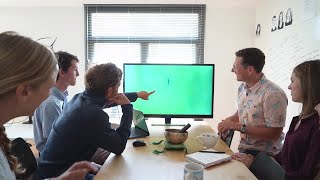
This is a recorded multi-speaker conversation about the "SharkEye" project (UCSB + Salesforce) that uses drones and an AI model (Salesforce Einstein Vision coupled with Field Service Lightning) to detect sharks—especially juvenile and adult great white sharks—and estimate sizes. Speakers emphasize that sharks are ecologically important (not 'super predators'), that misunderstanding drives fear, and that AI can convert vast amounts of ocean video into actionable, near-real-time information (texts/alerts) to improve beach safety, support surf-camp decisions, and enable research into population changes and climate impacts.
Chapters
The fact of the matter is that, like, sharks are not super predators in the oceans. People are the super predators in the oceans. In terms of what we're doing to change ocean ecosystems, life would be very different without sharks and very clearly would not be better for us. What do you think is the most dangerous shark in the oceans?
The bull shark, the kygo shark, and the great white shark are like the.
Top three most dangerous sharks. But like all things, consider.
Not very dangerous.
Not very dangerous.
A selfie is more dangerous.
Selfie.
A hot dog is more dangerous.
It's true.
We have pretty frank conversations, he and I, about sharks. And it's not something that we ignore. It's something we talk about directly. Because I want a pretty smart kid to process that there are things out there that he needs to respect. I think the thing that creates fear is a lack of understanding. If you don't understand and have data about what a shark is and when it's around, you start to fear them. So this is why the AI is cool to me, because it's creating this new stream of new data which helps us get to that point of thoughtful respect for these creatures.
It's an interesting time in the United States. There's now more great white sharks spotted off the coast than we've ever seen before. And there's not a great resource for understanding those populations.
You can use cool technology like drones to look for sharks, look for wildlife. You can use really cool software like artificial intelligence to be able to search all that video. And if you're a seal that's up close to the surface, if you're a dolphin that's close to the surface, if you're a shark that's close to the surface, it'll be able to see it.
With this particular project, we're using two different technologies that are available at Salesforce. What we've done is we've taken the field surface lightning platform and we've coupled it with Einstein vision. And so we've built a special model, a special AI model that understands sharks, specifically great white sharks and their sizes.
Nature creates, in theory, so much data in practice, nobody has the time to look at the ocean for hours and hours and then count that one chart. And so AI can kind of automate things that no human could do.
If ever there was a time in ocean history where we needed these tools, we needed this intelligence, we needed more AI and smart people and new communities trying to put tools together, it's now.
We want to understand how is climate change affecting them? Why are they coming to the coast in larger and larger numbers and for longer periods of time.
We can have really current, up to the minute information, hopefully, and make a really good educated assessment on whether this is a good day to swim or not. We're getting texts every day that tell us what the AI is picking up and what it's not picking up. We can use AI to identify and educate us on the movements and the sizes and the activity of some of these juvenile great white sharks.
I didn't really know how this was gonna go down. You know, sharks blown up here on the phone. I'm gonna ignore that. Hang on a sec. Do you want me to talk about this? We saw one great white shark just north of the creek mouth. It looked around 10ft smaller than the individual we saw yesterday. Started close to shore, swam around 100 meters out. Sounds like there's another shark down there. Your son's down there. Yeah. Right. So Finn just dropped him off at surf camp at 9. Right. Which is just minutes before the text came in. It changes the way I'm thinking about my day. So this is sort of what this is about. It's about trying to understand a little bit more about what's going on down there at the beach so camp counselors can make a smarter decision about how much time they're spending the water.
We all communicate with the other surf camps and other surf instructors on the beach. It's just better additional information that lets us, in theory, maybe get, like, a step ahead.
I think that's the value of this project, is really using the AI to create this data stream so that they can do what they love, which is, in this case, connect to the oceans, fall in love with the oceans, but do it more safely than they were doing before we started this.
It's up to us as researchers in both AI and collaborating with people in other fields to find the most positive use cases and actually double down and.
Work on those you want to go through. Let's do it. Okay. Come on.
My goal is to catch fish.
20 waves. I want to catch 30 waves. Okay. Here's a big tech company, but they care about the oceans. They care about making sure that these same tools are useful for people in a community like mine. This is, like, exactly what our bunny is Ocean initiative is about. You take some smart people, some smart tools, maybe originally built for another purpose, but you bring it in to help with something that's, you might say, more important, which is about community safety, about the future of our oce of kids. Right. That, for me, is like, the essence of what AI for good is.