Talking Money and Murder with Jim Cramer Ep3 | The Inflection Point | Salesforce
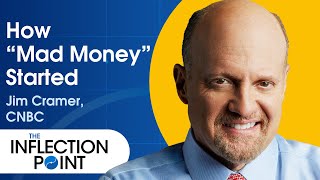
Monica talks with Jim Cramer about his career, 9/11, moving into television, and his personal struggles with alcohol. Cramer discusses what he learned from his early days in business and how those experiences shaped his views on markets and social change.
Chapters
He's CNBC's number one talent.
You can't have an ugly bald guy screaming on tv.
Host of two top rated shows. Squawk on the street in the morning and Mad Money at night.
Truth, the power.
His huge and varied fan base live by his mantra. There's always a bull market somewhere. I want to help you find it. His career has taken him from cub reporter.
When you're the first person at a crime scene, it's your story.
To founderofthestreet.com, he's also a best selling author and active investor. And my favorite title, longtime friend.
I am so excited to do this. I've known you forever.
I'm excited for Jim Cramer to join me on the inflection point. Jim Cramer, it's so great to have you with me today. The one, the only, how are you?
I am so excited to do this. I've known you forever and I regard you as a confidant, but also as the co writer of an amazing book that I've done a lot of thinking about and actually moved my show toward Trim Wiz.
That is great. Thank you. Okay, let's go to what this show is about. It's called the inflection point. And that's a time when all of us had something that we experienced when everything changed. When was that moment for you, Jim?
Well, mine was 9 11. I had been running money. I was a money manager and I quit. And I really didn't know what to do with myself, frankly, because I didn't want to be a money manager anymore. But I had lost a sense of purpose, frankly. I was taking my kids to school and coaching and doing all the things that you do that you really enjoy that matter in life. But I didn't really have a job. And I was called to comment about 911 on CNBC and I was stunned. I happened to have an office@thestreet.com, which was down the block from the World Trade Center. I made my way to the studio the next day and I was talking on a panel about how the people who we lost and what had occurred. And someone asked me, how about some stocks to buy? And I said, excuse me. I mean, I knew I'm a dollar sign represented by a man. Monica. I mean, you know, I totally accept that people ask me on the street about stocks, but it just did not seem to be the right thing to do. And then I was pressed on it, basically saying, jim, I mean, come on, you're a stock guy. Do you buy General Dynamics? What do you buy? And I said, I don't feel comfortable doing this. And I walked off the set, which is something, of course, that means it's the end of your career or if you ever had a career on tv. And I got a call that night from the boss and I told Karen Kramer, I'm not taking it. And he called back. He said, no, I really gotta speak to Jim. And I gotta say, yeah, what, you know, yeah, what? He said, did you mean what you did today when you walked off? I said, absolutely, I did. How insulting to the lives of the people, to the families that here I am supposed to come up with Lockheed Martin. And he said, how would you like a TV show? I said, like a TV show? He said, we have had a parade of people on who had no emotion whatsoever. You're the only guy who came on and was furious, ripped off the mic. We're sitting here talking about making money. How wrong is that? And the guy who's most known for making money is the guy who can't take it. So I want to give a show. I said, you can't have an ugly bald guy screaming on tv. And they gave me a show and I've gotten the bug and I've been doing it. Now this is my 22nd year and I love TV. When that red light goes on, I'm still so excited. I just love it. And everybody laughs because they think I'm like a 9 year old when it starts. But that was my inflection point. Cause whoever I'd be on a show, I mean, I was just gonna be a schmo and suddenly I had a show.
And look at Mad Money. It's the top rated evening show on cnbc. You're the co anchor of Squawk on the street, which is also the number one show in the morning. You're CNBC's number one star. So it's a good thing they took the big bet on you. The bald guy who at the time was chubby. Now you're not. You're looking great, my friend.
I'm like thinking all the things you said. She said, I look great. I mean, vanity is speaking to me.
But look, you do have a lot to say. People want to hear what you have to say.
I'm going to say some things and you're going to get crimson in the face. But Mark and you have a manifesto.
Well, it's really Mark. It's Mark's vision. Mark Benioff, my CEO at Salesforce.
And the book is about how business is the Source of social change, of great change. And I've had to pivot and do far more about what younger people want, because younger people want to know first, is the CEO a good person? Is the company dedicated to saving the earth or to helping people who are less fortunate? And if it is, then I'm willing to. I'm willing to entertain owning the stock.
Well, it's not just trailblazer, the book that Mark wrote, but it's also your own daughter. Your own daughter had gave you some crap about this, right? She's like, dad, get with the program.
It was a rather rough exchange. And I'm going to say at the beginning, I patched things up. I think that's important. I patched things up this morning. But, you know, my daughter, my eldest, has always felt that I'm pretty soulless. And she says that I don't address the big issues. She says, I just try to talk about what stock's going to go higher. And I said, well, that's my job. She goes, that's not your job. That's your old job. Your new job, now that you've reached senior statesman, is to truth the power, because no one's going to fire you. And if they do, it's an even better story. So give me your guest list. So the first week, she's not interested. The second week, she sees Dow Chemical and she says, dad, you have the CEO of Dow Chemical, and that's a company I'm intensely interested in. And I'm like, oh, boy.
Oh, gosh. That's a little bit of pressure from daughter.
Well, Cece's tough. The interview goes on. Oh, boy. So I said, okay. And I said, and by the way, I have a question suggested by my daughter. Because of the fact that you make plastic. And he said, sure. What is that? And I said, how can you live with yourself? And he said, great guy. Excuse me. I said, well, well, you know that island of plastic in the Pacific that's got your name on it? That's you. So my daughter asked, how can you live with yourself? That was the end of the interview.
Wow. Jim, your daughter said to you, you've got to speak truth to power. But think about 9, 11. You spoke truth to power. I mean, in reality, when you said, let's not talk about making money today. So I disagree with your daughter that you have been speaking truth to power from way back when you started on tv. That's my point of view.
The fact is, the way I phrased it was in many ways something that changed my way I do tv and I got a lot of comment from people who said, thank God you're not just a dollar. Thank God you really are someone. And I went back to my Mad Money executive producer, Regina Gilg. I said, you know, I think we're doing these shows wrong. I think when we have someone who's hurting the environment, we have to ask them what they're doing. I said, maybe we never get another oil company on, but every oil company, we're gonna ask about pollution, about methane, about carbon capture. And sure enough, a lot of the oil companies disappeared. I always had the oil companies. And they don't wanna come on anymore. But you know what, Monica? That's okay. They wanna come on tough. I have to ask these questions, and I am getting answers that sometimes shock you positively and sometimes make you feel like, wow, you can't own that stock. No matter how much you like how much they make, they're not doing the right thing. And I love the new, the way we pivoted, because I think the people like my daughter are going to inherit the earth and you better start not being a dinosaur. Maybe the older people don't want to hear about the island of Plastic, but the younger people never go buy Del Chemical. They're never going to own it, no matter what. They want to know, what is that CEO doing about small business? How's that CEO helping minorities? And so I start getting this list of companies like Etsy that are empowering people. And now these people have businesses that are actually quite substantial. And that's what I want to talk about now. You know who else is like that?
I'm not going to say. You tell me.
Dreamforce. Dreamforce.
And when you are here at Dreamforce, you know, it's like you're the Pied Piper. All the people want to, like, touch Jim Cramer. Get a stock tip from Jim Cramer. Get a picture with Jim Cramer. Let's go back to the beginning for a second about when you did start and got your own show. Because there's not a show like Mad Money.
I write the show with my nephew, Cliff Mason. And one day, George Carlin calls the late George Carlin, and he's saying, listen, your stuff is perfect. Your timing is off when you have this. And he gave an example of what I had said. You got to pause. You just got to stop, and you count a beat in your head and where do you see the difference? So then I would do it. He goes, you are so on track. So then Gene Hack, who I happen to know from money management, says look, the show is good, but we have to take it to the next level. I said, well, what are you gonna do? He goes, I'm gonna watch it for a week and I'm gonna critique it every night. I said, well, fine. He goes, but here's the thing. I'm gonna watch it from the set. I'm not gonna watch it at home. And every night. It was so brutal. Brutal. Oh my God. He hated so many things I was doing. And one of the things he said was the pen. Lose the damn pen. You have the pen in your hand. I want that pen. That's how we're gonna get started.
They want me to lose my mouse, but it's my.
Gino said, the pen's gone. And then Gino says the whole stooped over thing. No, straight. And then he starts with it. We look at the camera. You look away from the camera, you look very shifty. But I need a level of crazy, zany energy. And if you can't bring it, cancel the show. Because it's a show about a topic that is ridiculous. To have a one man show about, about stocks, it's crazy. But you've got to be crazy. Because if you're crazy, it's gonna come off, believe it or not, on camera, as seen. You're gonna make it excitement. It can be Carson, you can be Johnny Carson. And then I knew.
And you wanted to be Johnny Carson.
I could be Johnny.
You kind of wanted to be Johnny Carson. Cause your dad loved Johnny Carson. You all grew up watching it together.
Carson is alive somewhere. That's what my father told me. Carson will never die. And Johnny was had the greatest timing ever. Now there's been so many great ones since then and the younger audience is probably saying, who is this guy Carson? But Carson was about timing and my show has to be about timing. There was a book about Johnny that was written a couple years ago. And every night at the end of every show, he went to a bar on 10th Avenue in New York and he drank himself like to death every night because he was so angry at how bad he was. So we go over our show every night and my nephew, who's a genius, he writes stuff in where the other night he had me say, you know what? I'm not perfect. As a matter of fact, I crave attention. And I need you to tell me that you love me. I can't say that. He goes, oh, no, no, truth. Say it. And so I said, you know, I'm a deeply flawed person. I need you to tell me that you love me. And I just put that in at the same time that I think you should be buying the stock of Nvidia.
This is crazy. You do have a little crazy in you. It wasn't just Gene Hackman who told you to be crazy.
I'm not going to disagree with that. Nor is my pharmacist.
Okay. All right. Now let's talk about the drinking issue of Johnny Carson. Because actually you had your own drinking issue long, long ago in your life. Let's go way back before you became the superstar you are today, to when you had no money.
Sure. First of all, I get down to I couldn't get a job. I have. I did a speech at Bucknell commencement address a couple years ago and I bought all 57 rejection letters from all the newspapers that rejected me. And I graduated from college and I said, most of these are closed. I'm still here. I finally got a job. I was with my aunt. I got a job at the Tallahassee Democrat. It was a dead end job. I was covering Florida State football. It was just total dead end. But at the end of the block, it's very sad. Ted Bundy was the Kyle mega sorority house. And Ted Bundy killed these girls. And I was the first person there. And you know, Monica, when you're the first person at a crime scene, it's your story. And I had national recognition from the story. And not that long after the LA Herald examiner, which I sent him a letter with my clip, said, we want you to cover everybody who's dying violently in California. And I was young, doing stupid things. I was 23. And I said, I want that job. So I get out to California. And the thing you have to recognize is that's a night job. The homicides are at night. That's when people kill each other. So I had a night job and I would usually get off around 7, 8am and I know this sounds strange, but when you're off work, you drink. That's what happens. Hey, I'll have a drink. So I was the guy that you would see drinking Jack Daniels at 7 and 8am Because I was off my shift. And then I was evicted, so I was living in my car. So then I really kind of fell off the grid. And wherever there was a crime, I would drive to in my car. You know when you're in your car and it's cold? Yeah. I had a hatchet, I had the gun and I had the biojack dance. And I love Jack Daniels. So, you know, that's what you would do you would go in the back and you'd move your, you know, your underwear and stuff, and you'd lie back and you'd drink. And the next thing I know, I've got a gigantic yellow stain on my stomach. And I go to clinic, and the guy, the doctor there, he's got. He's like, first in his class at Yale, you know, that kind of thing. And he says, do you drink? And I say, now and then. And he said, well, when is now? And then? I said, now, before I came here and then after I leave here. And he said, that's a jaundiced liver. How much do you really drink? I said, I don't know. Bottle a day. He said, okay, you're done drinking. I said, well, no, I'm not done drinking. That's what I do. I drink after work, and I drink before work, and I drink during work. And he said, well, that's over. Cause you're going to die. But I said, when can I drink again? He said, well, that's an interesting attitude. That's great that you have that persistence. Persistence about drinking. I was down and out. I went back and lived with my sister at her studio apartment. And she kept liquor out of the place. And it took a couple years, and I got clean. And then after that, I kind of didn't want to drink that much.
And you cleaned yourself up. Then you went from there. Did you go to Harvard Law School?
You know, my sister said, listen, you gotta make something of yourself, and you gotta get off my goddamn couch because I have a studio apartment. And, you know, I want to have a social life. And I've taken care of you enough. You're not drinking. You're good. So I got into Harvard, and I got a good job there, where they gave me room and board. And I went to some Goldman thing one day because they were free shrimp. And a guy comes up to me and says, who are you? And I said, well, I'm Jim Cramer. He goes, what are you doing here? I said, well, I want to work at Goldman. And he said, all right, then tell me about a stock. I said, I think you should buy Exxon. It's 12 times earnings. It's got a 4% yield. It's easy coverage of the dividend. It's going to probably come out with 2 million barrels more than it should each day. And I think that this is the stock to own for the next decade. And it was. And then I proceeded to try to get a job there for the next five months. But I got the job. And I absolutely loved it. I did it for a while, and it was great.
And that's when I met you, I think in the mid-80s is when you were at Goldman and I was new at the Wall Street Journal, thank goodness. I was a reporter for 27 years, and I didn't drink and live in my car, though it wasn't the road to disaster for me that it was for you. Now, let's talk about the big star you are today. And you do make an impression on everyone. But with your big platform comes a big target. How do you handle that? Because some criticism does come your way.
A lot of times. It's very hard. I'm going to give you the classic one. I happen to be friends with Speaker Pelosi. Her grandson and my son were roommates in Georgia. Oh, wow. So I got to meet her, and I think she's spectacular. And she used to come on the show all the time, and it was a great privilege. There was a time when I got so sick of Trump saying Crazy Nancy that I decided I was going to take him on and attack him by saying, how horrible was it to be called Crazy Nancy? She said, well, what do you think? You just called me Crazy Nancy. He said, my God, Madam Speaker, I'm really sorry. No, I'm trying to show that the President shows disrespect. And she said, well, do you think it's respectful to say Crazy Nancy on air? I considered her to be my friend, and I realized, my God, I apologize again. But I realized I'm done. I'm dead. I'm just dead. Cause I used the term. Well, I have been dead ever since. I called her privately and said, look, my goal was to try to defrock Trump and put to an end this horrible thing that he says about it. A person should be completely respected for her whole life being in public service. But I never recovered from it. It was a special relationship, and I blew it up. And a lot of the younger people here were at CNBC were furious at me. On Twitter, there are people calling me pig and horrible. And I screwed up. I just screwed up. But I had to take my lumps. And I took them. I took them. And I'm a man. I'm masochist enough to be able to look at every single criticism. And I'm not saying it broke my heart. Here I am, I put my suit on, I put my shirt on. But I can't be like Superman in that first movie where I can pull the eight seconds back, but I can't.
Get it back and, you know, you're still just as emotional about it. And it happened quite a long time ago.
She knows I love her.
Okay, Jim, this might be asking you the impossible, but I know that you don't mind looking in crystal balls. So what do you think the future holds for business? Where do you see us going now? Out of COVID Well, I don't know.
If we'll necessarily go back to normal because I think that a lot of people feel that normal sucked. It turned out that there were aspects of the non normal that were great, including working at home, which turned out to be really fabulous because you spend time with your spouse or your kids. Being on the road turned out to be soulless. And we don't want to do it nearly as much. We ended up liking cooking more than.
We thought some did. I still don't.
And it's a very simple lifestyle that I've developed during the pandemic. Very simple. But in terms of business, I think that President Biden has a unique sense of what needs to happen. Whatever happened before was Marx brothers. Okay? It was just Marx Brothers. It was that crazy. And now I think that we're very well run. It was supposed to be the business president before. No, that was just the Apprentice pitting people against each other and embarrassing this guy. And now there's no embarrassment. There's people, really good people that are coming to the fore who want to try to make changes, including, by the way, oil companies when it comes to climate change, companies that are trying to do the right thing when it comes to warn you empowerment, banks that feel like that maybe we ought to get more on the case and trying to make it so that more people are embraced. I think the inclusion of people in our country is going to create a boom. It's not just the end of the pandemic. I think we have a president who recognizes who's in our country and the greatness. And the greatness is going to make it so people stop hiding. Lots of people are going to get more jobs and the country's going to shock people. I believe, and I've told this to Marc Benioff, that maybe January 6th was the high water mark of hate in this country. A lot of people feel it was the beginning of hate. I think it was the high water mark of hate. Wow. And Mark said, jim, maybe you're being a little Pollyannish. And I said, mark, you could be right, but I am a believer. And he said, you know, God bless you. I hope you're right. We have to solve this gig economy issue. These people don't have health care. That is the last thing that we have to do in the fourth industrial revolution. We have got to get everybody health care because that's how people are wiped out. But I am very optimistic about the tenor of our country. And the tenor of our country is going to produce bountiful belief in our country and therefore a belief that people can become anything, anyone they want. And that's what's been lacking for so long. So call me. You know, I'm not a Pollyanna. I'm a tough guy. I've gone through a lot. And whether it be, you know, when I had the gun and the Jack Daniels, not exactly a good combo with the gun to the jobs that I look forward to, all the craziness and things that I've said that I shouldn't have, I'm a deeply flawed guy, Monica. But in the end, I'm quite positive about the country.
Well, on that positive note, I want to thank you, Jim, for joining us. And it's always fun to be with you. And it's no wonder you're the top rated star on cnbc. Thank you for being with me today.
I love you, Monica.
Thank you so much.
Bye. Bye. Join me.
Next time on the Inflection Point. I'll chat with Darius Adamcik, CEO of Honeywell. What is it like then, day to day, being the CEO?
You own the decisions as CEO and you have to be both confident and humble at the same time.
Your transformation is so radical.
We took a very sharp pivot in early 2020, and rather than feeling sorry for ourselves, we started to innovate. This is a bit of a clich, but it's certainly been true for me, which is I've learned so much more from my setbacks than my success.









