Televerde Foundation’s Push for Prison Reform & Second Chances | Leading Through Change | Salesforce
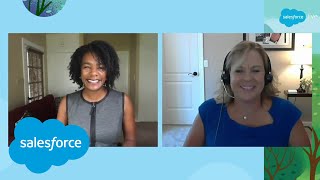
Michelle Sirocco of Televerde discusses how the company trains incarcerated women in sales and marketing to reduce recidivism. Televerde's graduates have low recidivism rates and high post-release employment. The program includes on-site jobs, an MBA-style training curriculum, and ongoing coaching to help formerly incarcerated people build careers.
Questions this video answers
2.3 million.
Approximately 400 women across seven engagement centers (Arizona and Indiana), with planned expansion to Florida and a UK prison.
About 25 years ago.
March 1, 2020.
8,000 masks distributed to women in Arizona, Indiana and Florida; donation from Pharrell Williams.
Chapters
This is business as usual. This is business as usual.
And so is this. And this.
And even this.
The business of business has changed, just.
Like everything else around us.
Instead of looking out for just shareholders, businesses are now looking out for everyone. The business of business is to make the world better.
We can't go back to the way things work. We've got to keep moving forward.
Thank you. Let's build a future that works for all of us. And together we can make business as usual anything but. 2.3 million. That's the number of incarcerated people in the United States. For many of them, there are no second chances. The unemployment rate for convicted women is 45%, far higher than the jobless rate for convicted men. But the Televerde foundation is trying to do something about that. Fighting for prison reform and focusing on the personal development of incarcerated women. This is a story of the power of second chances, the power of grace, the power of purpose. Good morning, My name is Leah McGowan Hare and thank you for being here. And welcome to another one of our live weekly conversations as part of our Leading Through Change series, a chance for you to hear from business leaders around the world who are doing their best to get through these challenging times. Now, before I introduce our next amazing guest for today, I want to preview the next hour. I am so pleased to be joined by Televerde's executive director, Michelle Sirocco. If you have any questions for Michelle, please submit them in the Q and A portion of your screen and and we'll try to get to as many as possible later on in the show. Now, if you're watching on Twitter, please use the hashtag LeadingThroughChange. After that, we will have a special presentation from a friend from our program, Marty Burris, who will show us our latest solution work.com that can help us all reimagine ways of working and getting back to business safely. And finally, we will conclude with a very special performance and interview with the one and only Lucas Nelson. And as we do every week, we want to make sure that we're helping those who need it the most. Millions of people already rely on the United Nations World Food Program for their food they need to survive. And COVID 19 is making it even more difficult. This pandemic could double double the number of people suffering from hunger by the end of the year. To help prevent a hunger pandemic, the World Food Program is scaling up to reach 100 million people across 86 countries with life saving support. Now if you can, Please go to salesforce.com WFP in joining us in ensuring the world's most vulnerable people have enough to eat during this critical time. Through July 31, 2020, Salesforce will be matching donations up to $150,000. Again, that is salesforce.com WFP with that, it is my pleasure to welcome someone who has such an inspiring story. Michelle, thank you so much for joining us today.
Thank you so much for having me.
Listen, why don't we just jump straight in? Could you tell us a little bit about Televerde and your own journey from incarceration to corporate executive?
Sure. So let me just start by telling you a little bit about Televerde and kind of the who we are and what we do. And so Televerde is a business to business business sales and marketing and technology company that was founded in purpose 25 years ago before Purpose driven companies were even a thing. The company was founded based on the idea that providing women in prison with jobs, training, education and opportunity while they were incarcerated, we could build a profitable business, but also empower the women to develop the marketable skills necessary to enable them to get out of prison and become financially independent, take care of themselves, take care of their families and not return to prison. And so we have been very successful in doing that. We, as I said, started 25 years ago with about six women in prison and today we currently are employing approximately 400 women who are incarcerated in seven engagement centers here in Arizona and in Indiana with plans to expand to Florida and Her Majesty's Prison in the UK next year. And so for me personally, I have been with Televerde for going on 22 years and I started with Televerdi while I was serving a seven year sentence here in Arizona. And I recognized that Televerde was an opportunity. I heard that if I was really good at the company when I got out, I could have a job at their corporate office. And I recognized it as the opportunity on which to rebuild my own life. And I have followed that path for now, the past 20 years and continue on that journey every day because I know that the more that I can help Televerty grow, the more we can expand, the more women who can have the same opportunity as me and the more children who can have the same opportunities that my children had and that we can ultimately make the world a better, safer, placer place to be.
That is amazing. That's just so awesome and thank you for sharing your journey. Now can you tell us a little bit about how Televerde goes about helping currently informally incarcerated women re enter the Workforce. How do they get them workforce ready?
Yeah, so it really, it starts, they come to work for Televerde. It is, they are, it's. It's a job and it's a real job. You know, we do sales and marketing and technology services for the biggest technology companies in the world. And so they first get hired on and go through our new hire training program, which is, they call it a mini boot camp, but we refer to it as like a mini mba. So learning all the business acumen necessary to be successful sales and marketing representatives, and then we continue to provide them with the training and the coaching and the support they need to become real business professionals. And then we come alongside of them with the ongoing support services necessary to continually develop both personally and professionally. March 1st of this year, I was tasked with starting the Televerde foundation, which our mission is to empower women to provide them with the professional, personal and professional support they need to successfully join and advance in the global workforce. And so that includes providing them with some of the traditional reentry things that you would expect to find in a prison setting. Things like dealing with personal issues, healthy relationships, family reunification, but also that real professional business acumen that they need to be successful in the workforce. So workplace readiness, dress for success, resume writing, interview skills, all of the things that will enable them to walk into any company and sit down in a cubicle and be successful as a sales and marketing a technology professional.
Wow, that's amazing. It sounds like a really holistic approach, right? Not just giving them the skills, but the life skills, the work skills, the soft skills, and even technical skills. Now, I'm sure there are a lot that you can choose from, but can you share with us one of your most memorable success for Stories?
Oh, my goodness. There's so many to choose from. It's hard to pick one, but I'm gonna pick this particular one because it's relevant to this audience. And Laura is a gal who started with as a call with us, as a caller doing lead generation for technology companies, but was really interested in systems and technology. And so she first learned the skills to become campaign administrator for our company, and then she became a business intelligence technician using tools like Qlikview, and then went on to become the first person to become certified as a salesforce administrator while she was incarcerated. And so when she was released a couple years ago, she came on as Televerde's own salesforce administrator, and then just recently got a very lucrative offer to go work for a company in her hometown of Denver, Colorado, as a Salesforce administrator and consultant for their organization.
That is an awesome success story. We love hearing about bringing in more trailblazers.
Absolutely.
Another great success story that you created was you organized and hosted the first TEDx held in Arizona prison at Perryville Correctional. What inspired you to do that? And I actually watched a few of them there. Really amazing.
Thank you. I was first inspired to do that when I attended the TED Women conference in San Francisco back in 2016. And it just struck me as an idea that it really started as I wanted to do a TED Talk, but then I realized it would be much more powerful to provide other people with the opportunity to tell their stories. It was, I have to say, to this day, hands down, the single best day of my professional life. We put together a team of six volunteers from the outside and a project team of 25 women from inside the prison to design and structure and plan the entire event, during which seven incarcerated women had the opportunity to take the stage and tell their stories, along with six business leaders who came and shared their stories with an audience of 250 people inside of the women's prison here in Arizona. And my hope is that I'll be able to do another one again one day soon after Covid.
I really encourage all of our viewers. Check them out. They're great gems. And you shared with me backstage some great information about some of the ladies.
Yeah. So like I said, there were seven women who did their own TED talks, and of those seven, five of them have since been released, and three of them specifically are very successful and working and employed with Televerde today.
That's so great. You know, wanting to get more current and relevant. How has Covid impact your program, and has it been, you know, a challenge or a blessing in disguise or a combination of both?
You know, it's probably a combination of both, but personally, I think every challenge is a blessing in disguise. I was asked to start the foundation on March 1, so. And then, you know, two weeks later was sent home with a computer and said, go figure it out. Right. And so it's, you know, it's forced us to do, you know, some very quick pivots. The first one was recognizing that there was women coming out of prison who had to come into this world, and they also had people who were taking care of their children. You know, four out of five women in prison are mothers, and the people who taking care of their children were dealing with the whole things of COVID So we established the Televerty Families Foundation Families program to be able to provide resources and support for the incarcerated women, the caregivers or their children. We also were able to provide 8,000 masks to women in Arizona and Indiana and Florida because of a really generous donation from Pharrell Williams. And then with everybody going remote, we were challenged with the idea that we no longer had the same type of access to the women that we had. And we had to develop and deliver re entry programs virtually. But it worked out really good. We were able to do more people more quickly and more effectively than we ever thought possible. So it's really been good from that standpoint.
That's awesome. So that is sort of the blessing that you were able to scale and reach more people.
Yeah. Quickly.
What is the greatest lesson we can implement coming out of COVID with respect to hiring former felons?
You know, in terms of second chance hiring, it was really catching on in the business community before COVID but that was when companies really needed talent. Unemployment was at an all time low and companies were really vying for talent for their organizations. But now we've got 40 million people that are unemployed. And so it's hard to imagine how the labor force is going to treat felons in the days and months to come. And so as we come out of COVID I think it's our chance to do things differently. We can do it in a way where people in every economic bracket can thrive regardless of background and circumstance. And we have to do this by first recognizing the difference, you know, the difference between stigma and reality. There's an overwhelming number of people with a criminal record that have just made a single mistake. And unfortunately, because of the worst decisions they made on the worst days of their lives, they are going to face huge barriers to employment. But people with criminal records, they, they don't make for bad or unsafe workers. Right. The research shows that they are viable and valuable talent force. In fact, a recent study by the Kellogg School of Management shows that people with criminal records are no more likely to be fired for misconduct and have a 13% lower turnover rate than people without records. I know you know, and I know that a lot of people are concerned about how customers or employees react to the idea that you've got someone with a criminal record in your organization. But you know, the Society for Human Resource Management professionals just did a study and found that the overwhelming number of people endorse businesses that employ people with criminal record. In fact, 78% of people feel comfortable buying from an organization that has a customer facing employee with a criminal record. And almost 74% of people are okay. Working with someone who has a criminal record. And I think that kind of really stands to reason because one in two people have an immediate family member that is currently or formerly incarcerated. So that means that everybody is being impacted by this problem. But, you know, to really answer your question, I think the time is now for companies to really double down on their diversity and inclusion efforts. Right. And make sure that this population is included in your definition of diversity and inclusion, because it's often the most overlooked. And then really just take the steps necessary to include them in your hiring practices and enable them to be successful. Commit to fair chance hiring, ban the box, move the criminal record, the criminal background check to further in the process or eliminate it altogether. And then most importantly, prioritize your hiring decisions based on culture and fit over experience in education.
Those are all great, great tips. And I want to jump to this question because in hearing you talk about that, it made me think of, of course, Bryan Stevenson, who is just an amazing human being and is an attorney, an author of Just Mercy. He did a quote, and I was thinking about this quote when I was thinking about the interview. The true measure of our character is how we treat the poor, the disfavored, the accused, the incarcerated, and the condemned. Now, in hearing that, how would you define our character, our country's character, our society's character?
This is a really tough question to answer. As much as I believe we're making huge strides in this area, I know it's not enough. Like you said, There's 2.3 million people in prison today. We're spending $182 billion a year on this system. And it's a model that's destructive, not constructive. 82% of people will return to prison within eight years. Two weeks ago, we reinstated the federal death penalty. And in spite of the fact that 4% of people are wrongly convicted, 28 states continue to use the death penalty. In 2018, we had the First Step act, which was a major move towards criminal justice reform. But there's been no second or third step step. We use prison as a way to deal with people and issues we don't understand, like homelessness, addiction, mental health. We warehouse them, and sometimes we treat them like animals, and then they return to society with limited support, limited access to jobs and housing. And we wonder why they fail. I mean, that's who we are, you know, so as long as we continue to marginalize and exclude people from opportunity, you know, we have to question our true measure of character.
And it sounds like the work that televerde is doing is a step to rectifying and changing that, helping us see people beyond labels, people beyond their worst mistakes. We are all not our worst mistakes. Right. So I think it's truly honorable and it makes me think of this as salesforce. We deeply believe in the power of business as a good, as a force for good. How has your sense of purpose at Televerte helped propel its success and helped you continue to walk in your purpose?
Well, you know, like I said, Televerte was founded 25 years ago, based in purpose, and it's always been the core of what we do and the basis of our success. Right. We've utilized this unique workforce to deliver over $8 billion in revenue for the biggest and best companies in the world. Companies like this don't buy because of our business model. It's cute and it's nice, but that's not the reason why they buy from us. They buy from us because we are the best at what we do, and we're the best at what we do because of our business model. Our success is ultimately propelled by the success of our people, and they have been successful. We've had over 3,000 women that have worked for Televerde over the past 25 years, and they've achieved great success. A 5.4% recidivism rate, 94% employment, which is, you know, 50% higher than the national average for incarcerated women. They earn salaries four times that of a formerly incarcerated woman. And it's not just their success, it's the success of their children as well, you know, so the children of the women of televerde are 11 times more likely to graduate from high school, 11 times less likely to become justice involved as adults than other children of formerly incarcerated women.
Just amazing. I mean, but it must feel so good that, you know, you're doing work that has an impact and a purpose that goes beyond you, beyond your own children, and creating a path for others to have that same opportunity you had.
Yeah, awesome.
I want to switch a little bit. Talk about technology. How has technology helped power the whole Televerde operation? And how has that proven helpful amidst the whole COVID pandemic?
Yeah, well, you know, technology has been the cornerstone of our business. Like I said in the beginning, our company was built based on the idea that the technology industry would be more accepting of our business model and more willing to employ women with a non traditional background. You know, and so it's really the fabric of our business. Over 90% of our customers are in the high tech space. And so from day one, training is focused on teaching the women technology, everything from AI to cybersecurity to ERP to IoT. And this training, it really sparks their curiosity. They become continuous learners, innovative, creative, real problem solvers. You know the type. You would recognize them as trailblazers.
Absolutely. Absolutely. You know, you said the word that hits my warm spot. Continuous learning, so important. I love that. You know, working on trailhead, that's what we foster. Continuous learning, free access to learning, any of the skills you need. So that is so very important. And I think that continuous learning, and you can correct me, but it also helps spark a sense of hope, right? Just that constantly sense of hope, like there can be something better. I can learn and I can continue to grow no matter where I am.
That's right. That's exactly right. They believe in themselves. Right. It sparks that curiosity. They understand that I can learn and I can grow and therefore I am worthy and I can take advantage of the opportunities to have a better life.
That just gave me chills. Question for you. Big picture. What is the biggest obstacle you see in prison reform? Or to say it in a positive light, how can challenging the criminal justice system make this country more productive, safer and less divided and more together and collaborative?
Yeah, so I think the biggest obstacle is the way we think about incarceration in people with a criminal record. We have to stop criminalizing societal problems like drug addiction, mental health, and homelessness. Every offense or wrongdoing should not result in a prison sentence. We need people to forgive rather than label a person as a felon forever. We also, we've got to change the way we treat people while they're incarcerated. We have to provide them with the programs to address the issues that got them there in the first place, as well as training, education, and opportunities that will enable them to successfully join and succeed seed in the workplace upon their Release. For example, 62% of people are in need of substance abuse treatment at the time of their rest, but less than 30% will actually receive treatment while they're incarcerated. And although 40% of incarcerated people do not have a high school diploma, only 6% of them have access to advanced education opportunities. So, yeah, most people believe that people in prison are only worthy or capable of low wage, low, low skill jobs. But the reality is that the majority of people in prison today, they're just really smart, they're creative and entrepreneurial, and they're people who had a desire for upward mobility in their life, but just didn't have the opportunity. So they created their own and so we need to tap into that talent and then provide them with the opportunities to achieve their potential.
That's awesome. That is amazing. I don't want to just keep you to myself and ask you all my questions. I'm going to move to some questions that have been asked here. M. Moore has a question for you. How has the current crisis, the pandemic, racial injustice, impacted, and this is a great point, something that often gets lost in this conversation, impacted the families of those incarcerated?
Well, you know, the families of those that are incarcerated, it's the same as every other family, I believe. But one of the things I talked at the beginning about the televerty families program is, you know, the four, like I said, four out of five women are mothers, and 60% of their children are under the age of 18. And so the women were, you know, very concerned about their children and the people who were taking care of them. Because so often in the case of the women that the children are with, you know, grandmothers and aunts and family members who are already struggling to take care of someone else in the family, and then you layer the COVID and the stress and all of those things on top of them. It's been a lot. So we've been doing what we can to help provide support for those families, financial support, food and other things. And then some of the issues are, could you imagine getting out of prison at a time like this? It's hard enough any other time, right, to find a job and housing, resources, clothing and all of those things. And the stores are closed. Social services agencies are all overwhelmed. All of the financial support that's available to people is for people who are unemployed. But these are folks who didn't have a job, so they're not eligible for any services or any financial support. So it's a lot. There's a lot of burdens. And the best thing we can do is support them the best way we can.
Thank you for that. Our next question for you, Michelle, is what prison reform methods have you seen be successful?
You know, when you talk about prison reform and criminal justice reform, there are. There's a lot of categories of it. And I have to speak from my own experience and from the Televerde experience. And I think that what I've seen be the most successful is programs like Televerde or the Last mile programs that are going in and providing people with the training, the education, and the opportunity to have a real, meaningful and rewarding career after their release and working with them to have those jobs. Because when people can take care of themselves, and they can see opportunity in their future, then they will be successful and they will stay out of prison forever. And that's how we stop the cycle, right? By providing people with employment that leads to something better. They won't go back to prison, and it provides for better, better life for themselves, their families, their children, and then the communities where we live.
Awesome.
You know, before we close out, I have two questions for you. One being, you know, Michelle, you're so humble, yet you're so accomplished. And perhaps you haven't thought about this, but what would you like your legacy to be?
It's interesting. I didn't start out planning to build a nonprofit organization. It was never on my list of things to do. But through the work that I've been doing with the foundation, I've become painfully aware of the fact that there is a huge shortage and lack of focus on the support necessary for people to truly successfully re enter the community. And so, like I said, from personal experience and from what I've seen, when we give people that opportunity, then we can really make a difference. And so with that in mind, I think what I'd like is for the Televerdes foundation to become kind of the national recognized standard for reentry. A real prison to professional workforce program that instills real criminal justice reform because it changes what happens inside the prison and how it affects the outcomes.
There's so many facets to this. There's prison reform, there's being able to help these incarcerated women get the right training, workforce development, all of these many different facets to creating sort of this holistic approach. In looking at all of that, where would you say is the biggest challenge for you for Televerde?
You know, the biggest challenge is, for me for the Televerde foundation is really getting businesses to buy into the idea and commit to doing something. There's opportunities, everybody has a need for good talent. And there's so many opportunities for businesses to get involved in building that prison to workforce pipeline, whether it's through providing training and education and opportunity while people are incarcerated, committing to employing people, outsourcing to companies that are utilizing this type of workforce. And I think the biggest thing is really just changing the mindsets of people to have them make this part of their business strategy.
And I think part of that changing that mindset is you have to be in the same proximity, you have to understand, you have to meet these people, put a human face behind it. Otherwise it's very easy to stay distant and add labels to people right when you actually interact and you see people are just as capable as anyone else, if not more. It begins to add the human element and sort of transcend any of the labels that you have put upon. And that's a big. That's a hard step.
Yeah. Yeah.
Hard step. I want to ask you one more thing before we close out. In this current moment, what is something you are grateful for in this current moment?
Current moment, Right. So I'm a huge believer in, like, in the moment and the power of now. So in this current moment, I am really grateful to be here sharing this story with you and knowing that there are people out here who will hear the story and it will open their minds to something perhaps they've never thought about in their past. And some people will be moved to take action of some form. Some people will begin to change their mindset. And that's how we solve this huge problem, is one mind at a time, one person at a time. And so I'm grateful for this opportunity.
I'm grateful that someone like you is walking in your purpose and making this impact. Your legacy is going to be part of your legacy is going to be the work that you've done and the people that you've touched and the mindsets that you have changed. So I thank you for that and I'm extremely grateful. Thank you for being here and sharing your story. And I'm sure there are so many that are being inspired beyond myself.
Thank you. Thank you so much for having me, Leah. It's a great way to start the day.
It really is. It really is. Thank you. And continue that work and we will look to support you in whatever ways we can and keep creating those trailblazers. You know, I love that.
All right, all right. Perfect. Thank you.
Thank you, Michelle. So many great learnings from Michelle around how her team at Televerde are navigating COVID 19 and the shift to the new norm. So we're gonna take a quick look@work.com and how you can help, how it can help during these challenging times and help shift to a new norm. So, you know, let's go ahead and check this out. Thank you. And check out this lovely video done by Ms. Marty Buress.
Hi, I'm Marty Burress and I'm a product manager here at Salesforce. My work today looks so different than it did just a few months ago. Before, I worked in the office. Now I work in my dirty kitchen. What I'm going to show you today is work.com and hopefully what you get from that is how you can reopen safely, no matter where you are, when you're ready, using some of our Salesforce solutions. So in case you're wondering, let me tell you, work.com is the opportunity for us to pull together our CRM and powerful platform with workplace experiences. And we're pulling that together by using things like the Salesforce platform. We're using our service cloud, things like Trailhead, and it's all coming together beautifully to help you think about and reimagine this new normal that we're all in. As you were probably thinking, right. Returning to work is not going to be easy. And so I want to make sure that you have all the tools that you need. So when you are ready to go back to work, you can do that. So let's get started with the demo. What you're seeing now is Command Center. Command center is this executive level overview of everywhere you do business. Not only is it the opportunity to see location and data, you can also see the employees that are in those places. So let's break that down a bit and what that means. So over your screen, you're seeing all of these widgets, and each of these widgets does something a little different, but I'm going to focus on just a few of those today. So the first one that you're going to see is the location widget. You look over, you'll see the location widget is cool. It kind of looks like a map. And what it does is it allows you to see everywhere you do business. At the macro and at the micro level, you can see things like the stage reopening, you can see things like the reopening type. So whether in stage five or four, hard close or soft close, you'll be able to see that. Customer showed us that just within a single business, you can have so many types of reopenings that it made sense to parse those out. The next thing that I want to show you is probably one of the most important widgets of all. This is the employee wellness widget. Wellness for us here is holistic, and that's what we wanted to convey to you. It's the opportunity to look at everything that makes your employees ready to work, Whether they want to take care of their kids at home like Monica, or if they just want to come back in the office so someone else can make their coffee. Whatever that thing is, it doesn't matter. Wellness for us here at Salesforce is holistic. It is everything that makes you ready to go back to work. Whether that is the ability to Spend time with your kids when you need to, or if you're like me and you just don't want to be in a dirty kitchen anymore, whatever those things are, you're going to be able to do that and think about that. With wellness. And for us, wellness is something that we worked with workday on, and Workday, in partnership with Salesforce, came together to create what we're calling employee wellness. And with employee wellness, that powers much of how you see the solution today. So the next thing I want to show you is wellness status by location. This is where these things collide, and it's pretty magical, I'd say. And what you get there is employee wellness by location allows you to see how individuals are doing within a single location. So if you were wondering, let's say, how employees in the second floor of the Salesforce tower are doing, you'll be able to see that by looking at this widget. It takes you down to all the way to the floor and space level. But that's not it. Eventually, we're going to have to go back to the office. I know being at home is probably great for some of you. Maybe for others, you might want to go back sooner. But when we do go back, we want to be safe, and contact tracing is going to be the opportunity to do that. Contact tracing allows us to see who you've come in contact and where you were. So if there is an encounter and we do need to make quick actions, we have the power to do that right here within this single widget.









