The Science and Psychology Behind Gratitude with Chris Schembra | B-Well Together | Salesforce
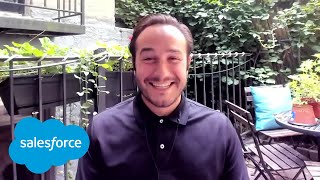
This YouTube interview (B-Well Together, Salesforce) features Chris Schembra—author/founder of the "Gratitude & Pasta" movement—discussing how a simple gratitude ritual (a dinner question: “If you could give credit or thanks to one person… who would that be?”) catalyzed personal healing and large-scale connection. Schembra recounts his personal recovery story, describes how in-person pasta dinners grew into virtual gratitude experiences (scaling during COVID), and explains benefits across three domains: individual wellbeing (emotional release, reframing negative experiences), team dynamics (peer-to-peer gratitude improves retention and productivity), and customer relationships (emotional connection increases consideration, purchase likelihood, and willingness to pay a premium). He gives practical hosting advice (pick a date, use facilitation and breakout rooms) and cites scientific and business-supporting findings during the discussion.
Questions this video answers
August 9, 2020.
Over 400,000 relationships (as stated by the speaker).
Speaker cited studies saying emotionally connected customers are ~5x more likely to consider purchasing, ~13x more likely to purchase, and ~30x more likely to pay a premium.
Chapters
Hello. Hello, everyone. I am so thankful that you are here today prioritizing your own wellbeing with us here on Be well Together. Gosh, so much to say today. I know that in this really uncertain environment that we are living in that we, we all have a lot to worry about. There's no shortage of things to worry about. There's back to school for our kids. There's continued social injustice, there's anxiety around the global pandemic. I mean, it's just layer upon layer upon layer. But I have to say that for me, this extra time has just really helped me deepen my own gratitude practice. This is something that I've always really firmly believed in. But this extra time has really allowed me to go deep here. And it's not something I anticipated or was super intentional about when it first started, but boy, it has really helped me just reframe everything and live a much more healthy life. And so I am sharing all this with you today because I am so deeply grateful to be able to welcome USA Today's gratitude guru, Chris Schembra onto our show. This is going to be so amazing. So let me just give you a little bit. Hi Chris. Let me tell everyone a little bit about you in case they're not familiar with your work. So Chris is a best selling author of Gratitude and Pasta, the Secret Sauce for Human Connection. He is the founder and chief question asker for 747, which is an advisory firm that believes giving gratitude to others is really the key to fulfillment and ultimately good business. And he was recently honored as one of the six most successful men smashing the mental health stigma. So go you, Chris. So today Chris is going to share a little bit about the science and the psychology behind gratitude and what a great tool this can be in all of our lives to create connections, to improve well being and to just spark creativity and curiosity. And as if that was not enough, we are also going to shake it up a bit and we are going to welcome our very own Tiffany Bova today to actually conduct the Q and A with Chris. And this is because Tiffany actually hosts her own podcast and is doing an encore performance with Chris. Because they had such an amazing run last time, we said, well, why not bring that to even more masses? So we have a great show. We're going to have a great half hour ahead of us. Chris, welcome to our show. Thank you so much for being here and we're just delighted to hear your thoughts today.
Jodi, it's really such an honor to be with you and Tiffany and To all of you who are watching today, welcome. I'm here to honor your commitment to showing up today. My guess is you're busy, you're overwhelmed. The world is throwing a lot at you right now. But the good news is you made the effort to show up. And that in itself is not only a commitment to your own well being, but it's a commitment to the other people who are tuning in around the world. So welcome. Today we're going to talk about gratitude. We're going to talk about really three things. How gratitude impacts your own personal well being, how gratitude is great for teams, and how gratitude really impacts the customer relationship. But to get into that, I'm going to dive in with a brief story on how we got here. Just a brief four minute story on our past. I haven't always been massively obsessed with gratitude. If you looked at my life about five years ago, things looked completely different. I was involved in show business, traveling around the world, producing or investing in Broadway plays, having a really good time at it. Our plays had won a bunch of awards. We had gathered a bunch of people to be entertained, and everything looked good on paper. But as y' all that are watching now know so well, just because something looks good on paper doesn't mean it feels good in the heart. And I realized that disconnection in July of 2015. We had just come back from Italy after producing a. A Broadway play over there. And when I got back to New York City, realized this actually isn't it. Italy had changed my entire life. See, I realized when I got back to New York, I essentially, deep down, once you remove the success and the facade, felt four things. Lonely, disconnected, overwhelmed, and insecure. Maybe some of y' all feel that right now. And in that darkness, I realized I had to change. Because the last time I had felt those four things at once led me down a deep, dark path of suicide, depression, jail, and rehab. And I didn't want to go back there. So I thought back. What did I love most about my time in Italy? It was the food. So I started playing around in our kitchen, accidentally created a pasta sauce recipe and figured we should probably feed it to people to see if it's even good or not. And a ritual began. The dinner table was formed. We invited people over, we put them to work, we sat down for dinner, and we had a great, great, great meal. And we haven't stopped since. As Jodi was mentioning, we've used the dinner table to spark over 400,000 relationships around the dinner table. But as we look Back on what made those dinners so good. It wasn't the pasta sauce. The pasta sauce is great. Just ask Tiffany. But it was the gratitude. It's what we talked about at every dinner and what we're here to talk about today. At that very first dinner, we asked a simple question that now I ask y', all, if you could give credit or thanks to one person in your life that you don't give enough credit or thanks to, who would that be? We heard people dive way back into the past and pull forth some autobiographical memories to share their stories with others in that small group format. And people found connection. People had these cathartic transformational releases and a movement began. And so what we're here to talk about today is that gratitude. You know, the food was great, the dinner table was comforting. But when you ask people and give them the platform to share a story, they come alive. Notice we didn't ask what's your biggest fear? We didn't ask what's your biggest failure, your greatest regret? We asked them to tell stories about others because that's what y' all are here to do. Learn how to be good servant leaders. Your role in the customer journey is about being the guide, not the hero. And so the more you can put the emphasis on others using gratitude as a tool, the better off will be over time. See, I can't imagine how you feel right now, but I would imagine a lot of y' all are very future oriented. Who knows where we're going to be in the future, right? We don't know what a month looks like. We don't know what a year looks like. Thank goodness y' all have amazing leadership that is invested in Yalls well being. But the future is a great unknown now. When you live your life looking ahead to the future in that great unknown, a period of uncertainty, it starts to kind of eat you up a little bit. And so we use gratitude as the antidote to looking ahead to the future, right? Gratitude is our tool to go into the past. And that's what I like to do right now for a few minutes. If you're watching this, I invite you to take a brief pause. Maybe you're looking at your CRM system or maybe you're looking at your email thread. But I want you to take a pause and take that gratitude question seriously for a sec. I want you to think for yourself. If you could give credit or thanks to one person in your life that you don't give enough credit or thanks to, who would that be? Someone you never thought to thank. Who would that be? Do that with me for one sec. Could be a mother, be a father, could be a third grade teacher, could be a dog, could be God, could be yourself, could be a boat captain that pulled you out of the frigid North Atlantic waters. I want you to write down that person's name. Write it down here with me right now. Think about what that person means to you. What have you learned from them? What did they see in you? If they were here right now, what would you say? Think about those things. See, gratitude is the invitation to acknowledge that we've received value from other people. There is no such thing as a self made person. We've all received help from others. And sometimes when we can pause and reflect and acknowledge that we've received value from others, then we can take that and we can look at that experience in a whole new way. Maybe some of y' all wrote down someone who triggers a positive autobiographical memory. Well, I hope it felt good just thinking about that positive memory. Maybe some of y' all wrote down someone that triggered a negative experience. Maybe you wrote down that ex boyfriend or ex girlfriend that was so mean to you that when you finally broke up with them, you realized what you do or do not want in a partner. See, gratitude is about taking those experiences and reframing how we look at them. Those negative experiences have no weight over you any longer. That's the power. So when the world is in great doubt, you can pause, reflect, and look to the past to find safety and comfort. Thank you for writing down that person. My challenge to you as you go forth after this conversation is to think about what that person meant to you and how you can do a reach out, not only paying it back, but paying it forward. See, gratitude on one hand is about reaching out to that person, even if they're no longer with us. Writing a letter, making a phone call, figuring out how they like to receive love from you and giving it to them using their language of receiving. And you can pay it forward. Take that reciprocity, take that generosity and pay it to the people on your team. Pay to the people in your immediate family. Oftentimes it's the people that are closest to us that we often overlook. So thank you for doing that. As you go forth, try to think about what are the values those people stand for or stood for? And how do those values show up in your life today? Because when you can connect those two things, that's when you start thinking broader picture. That's when you can start thinking along the lines of Legacy, right. Salesforce is the land of the salesforce ohana. This is a community. And the fact that you showed up here today really proves that. You didn't show up here today for yourself. You showed up here today for others. And we honor that. So, you know, gratitude is really great. That was just an example, small example, but gratitude is free. It's easy, it's impactful, and it's immediate. We've seen gratitude be able to bridge gaps and heal broken relationships. Peer to peer gratitude amongst a team is one of the greatest tools for retention and productivity. Gratitude unlocks curiosity, connection. Productivity inspires further movement and people to take action. When you bring gratitude in a customer relationship, you're able to tell those that you serve how much they mean to you. Now's the time to reach out to your external partners, to your external customers and tell them, thank you for being a part of our ohana. They may not be a salaried employee on staff, but they are part of that community and this movement that helps the world go round. Y' all are literally changing the world by being a part of this amazing culture. Include your customers in that. Give them gratitude. Show them how much you love them in good times and bad. How you invest in those relationships now will set you up for success in the long run. So thank you so much for having me. I know that was just a brief kind of content dump. We can go into it so much deeper, but we're just so excited. I wanted to turn it back over to y' all for the Q and A.
This is amazing. Thank you so much for your words. And, you know, it's funny, there's been someone I've been wanting to thank for years for really horrible experience, and I've sort of been dragging my feet on it, like, it's for years. I wanted to say, wow, that was the best thing you could have possibly done for me. But in the moment, it was just catastrophically, like, disruptive to my life. Um, so maybe this will be the time. And maybe it's. Maybe it's time. I mean, we're talking over 10 years ago, so maybe it's. Maybe it's time to finally put that. Let that person know what a great outcome it really ended up being.
I mean, it sounds like you love persevering through tough times and you love finding the positive.
Absolutely. In every experience. And I finally got there and, you know, I thought it was great to your point when, like, you really released that. I remember several years ago when I realized that the. This was really behind me. And I was actually grateful for the experience and how freeing that was. Yeah.
The good news is for everybody listening, by the way, gratitude has existed as a virtue for millennia. You can literally trace attitudinal reciprocity and food sharing and social reciprocity back to like bonobos and apes and cavemen and like long time ago. And then you've seen gratitude and like scripture and virtues and it's a universal kind of thing. But now science is caught up. So actually everything that we're doing is scientifically back to broaden and build your brain's thought action repertoire needed for building good relationships, for personal well being, for having those transformational moments, acknowledging that, you know, we learn positive things from negative experiences sometimes. So, Jodi, thank you for that.
Yeah, absolutely. So, Tiffany, I'm going to turn this over to you for your. Let's see what you got, sister.
All right. Well, thank you, Chris. It's always a pleasure. I am grateful for you, my friend. And I am going to share a personal story like Jodi did that when I first got to the gratitude and pasta at 7:47pm and you asked that question of who was I grateful for? What it actually made me reflect on is how many people in my life I was grateful for, that I didn't take the time at those moments to actually thank them and share with them how special they were in my life. And so it's changed my behavior in so many ways where I'll actually make it a point at the end of a conversation, hey, I'm grateful for you. I'm grateful for this time. And that little shift in my behavior has shifted the behavior of those around me as well. So I am a testament. So thank you. Well, there's so much about that very first dinner, I think, that is telling about gratitude, that everyone was standing around your kitchen table. Why don't you. Why don't you sort of share how that all came together and when the light went on that you thought you were onto something?
Yeah, great. Great question. I'll start with the second part and then move into the first. I really realized we realized we were onto something. At 2am on a Monday in February of 2016, I woke up in my bed bawling my eyes out. Literally ugly crying my eyes out. Realizing for the first time in my life, I found a little bit of joy, starting to rid myself of insecurity. See, my greatest childhood insecurity that drove me to suicide, depression, jail, and rehab was that I always was the last one called to the party. My invite was always somehow lost in the mail. This has plagued me all my life. And when I realized that I didn't have to run into longer to impress others and be part of their party, be part of their movement, I could focus on being in one place and having the people that I love come to me, I realized I found joy. And I had been chasing the quick fix wrong all my life. I realized that the opposite of addiction is not sobriety. It's human connection. A great man named Johan Hari once said that. And so that's when we really looked at the dinner model and said, oh my gosh, it's this gratitude. And so right from the very beginning when we would ask this question, and we've asked this question to everyone from bill gates to 4 year old kids on skid row and the effect is the exact same is that it gives people the opportunity to pause and reflect. And when we started realizing not only was were people literally answering it and then leaving the dinner and like quitting their jobs and taking, you know, pursuing life in fashion, it was amazing. But they were releasing stress, they were releasing this depression. They were actually physically being healed. And then we realized the business benefit. You know, we looked at the world and said, oh my gosh, this fits in one of two business buckets. Team building, client engagement, partner engagement, external relationships. And we're able to help our clients not just have the people around them see them for their product or their price, and that's how they, you know, beat out the competition, but the fact that they take care of the intangible side. Remember, people buy from people, not from companies. And when you can take care of that person, the person you serve with, gratitude statistically increases upsell, cross sell, revenue referral. Studies show that that when customers have an emotional connection to your brand, they're five times more likely to consider purchasing, they're 13 times more likely to purchase, and they're 30 times more likely to pay a premium. That's all we want in life, right? To feel like our services are valued at a premium. Oh my gosh, golly.
There you have it. And that's fantastic. And then when you were around the table thinking you were gonna serve food and you realized that that dinner table was where everybody conjugated, everyone wanted to stand around that table and participate and engage with each other. And you know, it's like whenever you hear people talk about remodeling their homes, they're like, this is the heartbeat of the house and it's the island in the kitchen or it's the kitchen, or it's, you know, mom kicking you out of the kitchen or grandma kicking you out. Like, that's the heartbeat of the household. So the combination of pasta and gratitude, how did that come about?
You know, I mean, the pasta sauce, you know, it was just the first food item we invented. It could have been candy canes, and we would have done a dinner around candy canes. But then Cornell University did a wonderful study proving that firefighters who eat spaghetti in the firehouse together actually perform better as a team and they save more lives. So once we realized there was actually scientific backing to the art of, like eating this high carb comfort kind of food, because that's essentially what it is. A friend of ours, Jerry Schweitzer, once asked me, if your dinners were a gender, what would they be? I said, it'd be a woman. They said, how would we feel when people walk through that door? I said, you would be overcome and consumed by the greatest maternal love and empathy and energy that you've ever had. And here's a bold statement. A lot of us have mommy issues, and we just want this, like, warm hug. And if you can be that warm embrace to help heal the people you serve using the dinner table and comfort food, boom, they are loyal forever. But the funny thing is, because of COVID we have actually removed the food from the experience. So when Covid hit, we moved from eight in person experiences to virtual experiences. And it's been the best thing that's ever happened because when you remove the food, you dive into the gratitude. Now, our dinners scale. Now we can do 100 dinners a month. It's unbelievable. We've worked with the biggest companies on the planet now to serve thousands of their people without leaving the comfort of our own home. Whoa. This is so fun. And so really, it's cool that gratitude transcends technology. Technology is an enablement. Technology is a way to scale well being. And I'm so honored that y' all have found that through your ohana and that you're making a commitment to it.
Absolutely. Well, so much so that I almost want to take your question that you ask at the end of every dinner, right? Who are you grateful for? And that you and I wrote it on a little post it note. So everybody that has their little gratitude, you know, make sure you send a message today or make that phone call or write that letter or do whatever it was. You know, even Jodi might be the day that she's gonna go back into the trenches and write that letter or make that call. But that's what's important, is then acting on the feeling you have when you are reminded of how grateful we are, you know, especially during this time.
Well, you know, it's crazy. You know, if you're a, if you're a brand, if you're watching, if you're a brand or you're a team leader and you're just relying on webinars and content series, I mean, not saying this, y' all do so much good stuff. If brands out there are relying just on, like speaking at their audience and they're not taking the time to invite their customers, their partners, their teams to an experience like this to help connect them, you're missing out on the greatest brand building exercise of the entire. This is the greatest opportunity to actually create safe space and listen to those that you serve. So, you know, our shtick is doing virtual dinners. But there's so many different ways of letting your customers know how grateful you are for them. And just hosting these dinners now at a time when people need connection now more than ever, it's literally go big or go home.
So if somebody was going to host their own virtual pasta and gratitude dinner on whatever platform they choose to use and invite all their friends just doing it on their own, you know, what would be your one or two pieces of advice on how to make that really successful?
Honestly? Pick a date. I hate to say it, but pick a date. Most people struggle harder to get from 0 to 1 than they do from 1 to 10. So pick a date and start inviting the people and then use a pre. I mean, people can reach out to us to get our template on how to host dinners, or we can just come in and do them alongside y'. All. But the structure is needed. Don't just host a Zoom where it's a free for all. If you invite 20 people to a Zoom and everybody's unmuted, that is mayhem. But if you actually use breakout rooms and facilitated exercises and all these kind of things, it becomes a cathartic experience. We're actually now using over 10,000 unique data points in the last three and a half months, serving thousands of people through these virtual experiences. Excuse me. We've been able to prove that in a 90 minute experience. We're able to prove that our attendees go through a positive, emotional, transformational experience. They walk into the dinner or daytime, it could be done during the daytime, and they walk in feeling lonely, overwhelmed, tired, cautiously optimistic, nervous, exhausted, whatever. And by minute 58, let alone minute 90 by minute 58, we've taken a Second barometer on how they feel. They feel enlightened, connected, joy. So it is possible to go out and tell the people you love to come to a Zoom meeting that doesn't fatigue them? It is possible. It is doable, I promise.
Well, great. Well, I'm going to pass it back over to you, Jody, so you can bring us home. This has been fantastic. I'm grateful for you, my friend.
Thank you for organizing this. Stephanie, I think you're on mute.
Oh, gosh, you'd think 20 weeks into that, I would have figured that out. But not yet. Maybe soon. Thank you so much for joining us this morning, Chris. What a great, A great opportunity to be so inspired. And I wish you many, many happy, grateful dinners in your future. It's just so wonderful to see what you're doing. And I think this idea of being able to host a dinner, I mean, I think so many of us are looking for, what can I do? And, you know, how can I help, you know, raise the spirits and deepen my connections in a time when so much, we have so many headwinds and, you know, hosting a dinner of gratitude seems like a manageable thing. So I really want to thank you for that gift.
I want to thank.
Thank you. Thank you. All right, everyone, great job prioritizing your own well being. As Chris said earlier, you showed up. Sometimes that's all you have to do. You showed up. So good on you. And we will very much look forward to seeing you back here again soon. So be happy and be well.
Bye. Bye. Sa.









