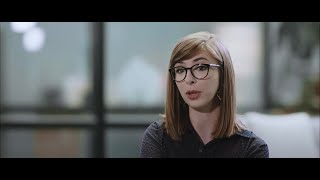
This YouTube video documents how the Town of Cary, North Carolina, has modernized municipal services through cloud migration, smart-city technologies, and a platform approach to citizen services. Nicole Raimundo (CIO) and other town speakers describe cultural and technical shifts: reorganizing the IT workspace into a tech-style lab, moving legacy systems to the cloud, integrating traffic signals with Salesforce for automated work orders, offering an Alexa skill and text-311 for service requests, and equipping field staff with iPads. The overall aim is a 360-degree, platform-based view of citizens and operations to deliver personalized, efficient services.
Chapters
There's been a lot of change over the years. Most of the roadways into this area were single lane roadways when I came here. Smartphones weren't even really invented then. Smart cities was a concept. A lot of the effort was really focused on just keeping the lights on by moving to the cloud. It's really enabled us to shift that mentality. And so I've seen just a massive amount of change over the years.
I love Cary. Cary's a great place to live. It's a great place to work. Cary is a highly educated town. It's got great universities nearby, as well as proximity to Research Triangle park, where there's all sorts of industry, mostly biotech and technology. My name is Nicole Raimundo, and I'm the chief information officer for the town of Cary. The way we think about technology and the way we interact with our citizens is really something where we think about all those scenarios that play through someone's head as they're getting ready to leave for the morning. And then as we travel through the day, where are all the other touch points and where can we help with that? Where can we make it a little more efficient?
When the Great Recession occurred, there needed to be a fundamental realignment of government. But in order to have new service models, you have to have a common language, not only culturally, but, but technically. Cary is an ISO 1 fire rated community, meaning that's the top marks you can get in the fire service. We've had for many years. One of the lowest, if not the lowest crime rate in the country. And the list goes on and on. Money magazine, number one place to live. At one point here in Cary, the goal that's best articulated in our comprehensive plan called Imagine Cary is to make sure we stay at the top. So without the technological tools to do that, it becomes just something that you can have on a bumper sticker, but it won't have any real meaning.
This was done in a workshop where we brought together industry and partners and community to come and talk about what they see as the next step for Cary in terms of building out Smart City and Smart City technologies. We literally tore down the walls in our department right from the high cubes to make it more look like a startup and more like a tech company to get us thinking about things, creating creatively. This is my favorite. Let's test it out at town hall. Right. So we want to make sure that we do the testing here on site before we ever deploy.
One of the main reasons we went to the cloud was just because of the complex Series of systems that we had developed over time. We've always done our best and really tried to do right by our citizens. Why can't they interact with us in the same way that they interact with Amazon and the other services they have online?
Hey Alexa, ask the town of Cary to report a missed trash pickup. I've created a new case for Ms. Trash.
The case number is 000-88-1993.
It's really getting to that state where we're almost predictive. We have interconnected our traffic signal network into the Salesforce CRM product. When that intersection goes in the flash now we can send an automatic ticket, create a work order for that technician to automatically respond, send data out to third party apps like Waze so that it's automatically letting citizens know that there is an issue. So it redirects them from a traffic standpoint. And all of this is happening without the citizen having to call in. It's just incredible how the speed of technology and how the services that are really benefiting our citizens are really accelerating over time as we get more data about how our signals function and we can get to where we're really creating kind of a Fitbit for the town.
The text 311 is one of my favorite, especially out at the dog park where there we have access to the gate to get in. And I will have to admit, sometimes it does malfunction. So the ability to have instant access right there, be able to communicate through text to someone at the town of Cary that can open up that gate and troubleshoot that problem. That's the best kind of service you could ever ask for right right there on the spot. Meeting people where they are with the technology that they already use.
There's always something changing. There's always some new technology that carry is getting. We're always at the forefront of the technology, as far as I know. And I think that's pretty cool to constantly have to learn something new. It keeps you going, keeps the drive up. Time to carry is awesome. I love it.
A lot of these guys who we gave iPads to in the field, they may have had a flip phone, they may have had a smart device, they may not have ever had a cell phone at all. It really has changed not just the data we get, but their approach to work.
This is our technology lab. This is where our employees come and they pick out a new laptop or a device. We've got several, as you can see, iPads in various sizes as well as the phones. So for example, they're in trucks and cars all day and it's obviously going to be much easier for them to have probably a small iPad as opposed to one of the laptops. Not only is it just moving to new technology in terms of platforms, it's also about the people.
My job is to look at things that we're doing with the Salesforce platform holistically. So across our different departments and business groups, I'm looking at how we are putting data into Salesforce and making sure that it's not duplicative or disorganized. And it's bringing us into a future state where we can use it to have all the data about our citizen in one place.
Part of what I have noticed and experience is that there's kind of this general agreement amongst Americans is that local government can be good, but it can't be great. I reject that notion. The government of the future needs to be this idea that is about seeing our services as being more than just within those individual silos. Government employees that transcends boundaries, see opportunities versus walls and continue to evolve in a way that allows them to meet a variety of needs and adapt to those needs on a daily basis. To really serve our citizens in a way that is individualized and personalized versus kind of one size fits all.
We're really able to get that 360 degree view, whether it's internal operations and then external in terms of our citizens. And you put that together and it's really powerful. How do we transform that? How do we move to this platform approach where we can have all the systems on one platform, where we can gain all of that insight in one place? That's really the journey that we've been on. And I really do think that we will be the place that everybody looks to.