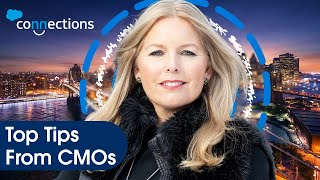
A CMO explains how marketing has shifted from polished storytelling to human connection, shares three career principles (curiosity, courage, conviction), and outlines modern tactics like rapid experimentation and hyper-personalization powered by unified data.
Chapters
When I first started in marketing, it was about creating stories and glossies and things that look perfect. And then I realized that all needed to just be blown up. It was actually about human to human connection. Storytelling wasn't about making stuff up. It was about telling the truth. What is marketing? Marketing is about deepening the relationship between a brand and a customer. That that's essentially what we are. It's the art and science of doing that. And I think that when there's passion and there's joy, it sort of unlocks creativity. It's been a year of just rapid digital acceleration. What advice do you have to younger people, aspiring marketers looking to get into the business? I would say be unstoppable. I like to wrap it up in three Cs. The first one is curiosity. The second one is courage. And the third one is conviction. Because your curiosity gave you the knowledge, your courage gave you the fear to put into an action plan. The conviction is going to give you the resilience to carry it all the way across the finish line. At Salesforce, we pride ourselves in having a single source of truth. How do you connect with different departments within IBM, like deal with different silos of data? I was part of the team at Dell that helped roll out Salesforce to our sales organization. And now we are at IBM doing the same exact thing. And so that's one way that we can get one source of the truth and all get on the same page in terms of the tools that we're using. But the other thing that I observed when I came to IB, and it's so common in big B2B tech organizations, we basically have 40 marketing organizations at IBM, which I actually want to build into one marketing organization that works together to move the market. That's a big change that we're thinking about doing. And your tools actually underpin a big part of that. You've said that 20th century marketing was about selling, but 21st century marketing is about listening. Explain that to me. So we were looking at the likes of a Patagonia and a Nike and the Oakleys and just these great iconic brands. And one of the things we saw last century was that they were very good at sort of creating message. Nike, just do it. We absolutely understand the value of doing that. But we think what's happening in the 21st century, at least for a company like Strava, is it's really not our ability to have the right message. It's our ability to take all this information that's coming in from our athletes and listen In a way where we can create personal experience. It's going to be our ability to understand Sarah the runner on Strava and provide you with the information that you need to go have a success, successful day. Much more so than just delivering that iconic brand message. And what advice do you have for marketers that are trying to explain their products as so eloquently as you do? Get to know your product management and your product marketing people. They are the secrets to understanding what the product does in such an intimate way that after they've explained it to you using all of that complexity and they'll eventually get to a place of. And this is why it matters. How did you transform this organization into using these modern marketing tactics failing fast? We tried some stuff. We got the data from it, we figured out what made sense, what didn't make sense, and then we were able to bring that information back to our leadership appropriately. Heat mapping for email communications, learning that we don't need to send emails that are stories, but maybe two or three really tight paragraphs gets the job done and gets people to the call to action. And then implementing things like, you know, geotargeting for specific locations that we're interested in. It's been such a growth for the organization. Holistically, we're excited about where we're going. What do you think is the future of marketing for brands and experiences? We created a whole program of what that would look like and it was all about enhancing the skills of our organization so that they felt that they could be confident to be bold in that space. The future's bright. We have the metaverse coming. Who knows what this physical space will be? Virtual. I can't tell you everything, but I'm dreaming big. And I'm excited about how hyper targeting, hyper personalization, AR AI is going to take us to the next level of experience. We could be in the pocket of every Gen Z. Er, if we do this well. So with this crazy business world we're in, how do you think that marketers can lead with the next phase of reinvention? I always say that marketing is not to support or is not to enable. We're not here to support the business. We're not here to enable the business. We are here to lead. I love that we lead by informing where the market is going and informing what the customers want. And that's really important mentality to have. You've been just one of the most innovative CMOs out there. You're on every list and everybody admires you. How do you bring that innovation in every day and how do you do things at a fast pace. Thank you for your kind words. But you know, it's. I think as the leader of the team, you get disproportionate credit for what is happening in terms of innovation. My first thing is to have the right team in place. People who are unbound in their thinking, who are willing to really go beyond above and beyond, into everything. How does creating connections correlate into marketing? A lot of marketing is about curiosity and seeing a story and figuring out how to connect things together in order to drive growth for a business. And so you don't know where ideas are going to come from. Sometimes the diversity of the people you interact with gives you new ways to see an equation. So much of marketing is about give an idea and how do you actually make it happen? Right. So can you find the right person? Can you get to the. Yes. A lot of that is connections and relationships. There's so much work that shows that companies that is driven end up outperforming the market. And so it's that notion of tech for good, where you leverage something to enable people to actually get to know each other. That's what it's all about for me. I feel like as marketers, what we need to strive for are stories that are as interesting and compelling and engaging as the best thing that we're streaming on television. And that is a redeeming, ridiculously high bar. But I feel like that's what good storytelling is, is how do you make people fall in love with your brand? Thanks for tuning in. Make sure to check out more episodes on Salesforce plus.