Understanding Mentorship, Sponsorship & Championship - #BossTalks FT. Ebony Beckwith
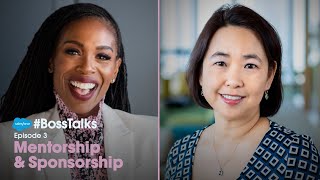
This content was created by Automation App. This content was uploaded by Automation App. This is a YouTube video titled "Understanding Mentorship, Sponsorship & Championship - #BossTalks FT. Ebony Beckwith" featuring a conversation between Ebony Beckwith and Neeracha Tejagunavud. The discussion, recorded on June 30, 2021, focuses on the roles of mentorship and sponsorship, their differences, and their impact on career development. The conversation also touches on personal experiences, challenges of being a minority in leadership, and advice on career progression.
Chapters
Hello, everyone, and welcome to a new episode of Boss Talks. This is a series featuring candid career conversations with people I admire and trust to keep it real. Today we're talking about mentorship and sponsorship, how they're alike and how they're different and the value each one can bring. Now, if you follow me on LinkedIn, you know that this is an area I am super passionate about, and that's because I've experienced it firsthand, the benefits of that from my own career. And I've been so grateful for all the people who have so generously given me their time over the years because it has made all the difference for me. But I also know that not everyone has someone in their corner cheering them on and telling them to go for it. And really, that's what I try to be for other people. And that's a huge reason I started Boss Notes. We really want you to succeed because it does take a village. And that's why I'm not even going to try to tackle this topic alone. I've invited a colleague from Salesforce who I truly admire, Executive Vice President and Chief Success Officer Neeracha Tejagunavud. I'm so excited for you all to hear what she has to say. Neeracha, welcome to Boss Talks. Thank you so much for joining us.
Oh, Ebony, I'm so excited to be here. Thanks for having me.
I know today's topic is of particular interest to you. I've heard you talk about it a few times at Salesforce and walked away thinking, wow, she really gets it. And she needs to share this with our Boss Talks community. So let's dive right on in. So my first question for you. I really want to make sure that the audience has a chance to get to know you a little bit better. You have a huge job at Salesforce. It just got even bigger. Tell everyone about your background and how you got to where you are.
Well, I don't have a techie background. I have, as they would call it, a humanities undergrad degree in economics and international relations. And I ended up in tech somewhat accidentally. But I loved the fast pace, the innovation. I loved the fact that it became a foundation. Technology is a foundation of our entire world. And so I stayed.
I love the accidental part. I definitely call myself an accidental philanthropist. Really just proving that you know where you start is not always where you finish, and things kind of ebb and flow. So, as you know, today's topic is all about mentorship and sponsorship. And before we go any further, I want to make sure we're all on the same page with definition. So tell us how you define both of these roles.
Well, mentorship for me is the idea of a trusted advisor. It could be a peer. It could be a trusted peer who can give you feedback, who you can get advice from, especially in key moments. Could be ongoing, but could be just key moments of advice to someone trusted who knows you. Sponsorship is like mentorship plus, right? It is usually someone with a little bit more experience, more seniority, who can actually not just support and advise, but advocate. And that's kind of the delta between the two in my mind.
I really like that mentorship plus. I'm gonna have to start using that. Do you think one is more critical to a person's success? Do we need both a mentor and a sponsor?
You know, I think we all need mentors. Whether. Whether you call someone a mentor, whether you call them like your personal board of directors. Right. A trusted circle where you can, you know, really get advice. Some people who know you and people who can be very neutral and objective about maybe a decision that you have to make. Now, sponsors, I think, are. I don't know if they're an absolute need to have, but they're an immensely nice to have. Right. It's hard to tell the moments at which you will need a spons, but that is somewhat of an organic relationship. So you have to think and plan, but if it doesn't happen, I don't think it's a big deal. I think mentorship is crucial, though.
I absolutely agree, and I like how you frame them both. How have these roles shown up for you in your life and career?
I've been lucky to have both mentors and sponsors. I think mentors for me. In fact, when I went to business school, I was assigned a mentor in the business school program. And that was many, many years ago. My mentor now is about 95, and he, you know, has had a long and storied career, and he's been an amazing touchstone for me, not necessarily in tech, because that was not his background, but in just life, in. In thinking about your work and your life as the single unit because he's had so many more years of experience. So that one is very key to me. And I do have what I consider my personal board of directors that I, you know, can just talk to, get advice. If I'm frustrated, if I'm not able to see the big picture, they really, really ground me.
How do you find a mentor or sponsor? And any guidance on when to approach one versus another?
I think it's a little bit easier from a point of commonality, Right. If you see someone and you're just kind of cold calling, if you will, to have them become a mentor, I think that's a little bit harder. There has to be some sort of basis for the relationship, whether you've been in meetings together, whether they are really deeply invested in an area of personal interest for you, whether you have just a specific question. I do think mentorship for can actually occur ad hoc, meaning if you are trying to get someone's advice about something in particular, you don't have to. And I, I, I will say in my position, if someone, you know, comes up to me and they say, well, I want to meet with you, you know, once a month, I'm like, whoa, okay. You know, that's, that's a, a big ask of my time. But if it's carefully thought out, if it's, I have this question or this scenario, I'd really love to get your opinion advice. What would you have done in this situation that's like ad hoc mentorship that I'm always super happy to do. I think that commonality, though, what is the bond? And ultimately being very prepared and thinking about the mentor and what's in it for them, like, what can you share that would be extra learning for them? I think those are kind of two important areas to think about as you approach someone, as you're trying to figure out who might be a good mentor for you.
So what are some best practices for creating and maintaining these relationships?
I think it requires thoughtfulness and an investment of time. Right. So one person has to reach out to set up a touch base. You know, let's, in the before times, let's meet for coffee, right? You know, in person. Touch base is nice. We haven't had that for a little while. But I do think it is understanding and not always having an ask, maybe just a check in it. Is that what you said, Ebony, about maintaining that relationship? And maintaining a relationship requires work, right? So if you're the mentee and you're reaching out to a mentor, the mentor may check in on you, but as the mentee, it's your, you know, if you asked a question, for example, and you had an ad hoc moment where you're like, well, give me some advice on this particular scenario. You should always go back around afterwards and say, hey, well, this is what I did, and this is how it turned out. Right? So always close that loop with the mentor. And I think if you work at it, everything takes a little bit of work. It can be years and years of just a fruitful relationship.
One thing I do is I like to. Like to send Texts or through LinkedIn or whatever, you know, vehicle that we have in common, you know, and just check in, how are you doing? Here's what I'm doing. I just got married. Or I just, you know, here's what's happening in my life just to keep the connection warm so that when I need them, it's not always take, take, take. It's that I'm invested in them. And I. And, and they. And I acknowledging that they have invested in me too. I'd love to switch gears and talk about how you've supported others in their career journey. Can you talk about your experience being a mentor or a sponsor, whichever one.
Well, if I had to count the number of people who would probably consider me a mentor, it would probably be a larger number. There are a number of people I touch base with regularly. I would say probably on a quarterly basis. And I've done so for years. There are people who used to work for me and don't work for me anymore after moving teams, who I still advise and stay in touch with because I care. I care about them as people after again having developed that relationship. And I also want them to do well. And to your point, evony. Right. If you're mentoring someone and they do well, what joy, what joy that brings because you really know that you've had an impact. And that I think, is what the mentor gets out of all this. So I also do a lot of ad hoc mentoring because the kind of the ongoing time commitments, a little bit of a challenge. But if someone. I just got into a new organization and I have skipped leveled with, I don't know, probably I'm close to 50 people I've skipped leveled with now. So spending time to know someone, understand where they're at, get their advice. So that's a little bit different for mentoring. Get their advice as I come into a new organization, but also check in and see what they're facing. I think that is. That's kind of a matter of course for me.
All right, Narasha, One thing I hear you talk about a lot, and I love when you talk about it personally and professionally because it applies in both is this importance of zooming out. Tell us more about that you're going to mentor all of us today.
Well, I. I think sometimes when someone comes to me and they are dealing with a decision and they. They think about that decision in a very discreet way, like this is the thing I'm trying to decide, do I, you know, stick it out here? Do I leave? I'm trying to get a promotion, like whatever that decision point is. And, and one of my first pieces of advice is you gotta zoom out. Right? So there, there may be frustration here, but think about the context. Think about the context and this, this empathy as well. Right? Think about the entire context, the other people involved in it who may be frustrating you, but think about what they're about and then think bigger. And I feel like zooming out, meaning taking a more holistic view of whatever challenge you're facing. I think that really helps give perspective and helps hopefully think, have you think a little bit differently about your dealing, about what you're dealing with.
I love that. And I think it's advice that anyone could use at any company or any stage in their life. Just taking that zoom out. Let's talk about. And you just hit on this, a topic that a lot of people have questions about, especially when you're mentoring them, and that's promotions. You and I talked in depth about this recently and I would love for you to share your thoughts on how to guide people who are really singularly focused on being promoted.
Yeah, that, that is actually a super common question that people ask and people ask me. And I think that sing Focus on Promotions is, if that's what you're focused on, it's going to be hard, right? It's not all within your control. No matter how great you are, no matter how well you've executed, there are a lot of other factors in the mix. And I would say, you know, promotions are one thing, they're certainly a validation of performance, they're a recognition. But think about other things. Think about what you're learning. Think about taking on new projects that help expand your knowledge areas, your sphere of control. And remember that, you know, kind of the old world of kind of this standard career ladder where, you know, I get promoted every two years in this day and age, it's really not the norm anymore. So you go up, you go across, you go across, maybe you go back down a little bit, then you go across, then you go up again. Like it's this, you know, it's. I don't even know what you call it, but it's this graph that isn't linear and it isn't standard up and to the right all the way. So instead of thinking about a promotion as the goal, think bigger. Think where do I want to be in a few years and how do I get there? Regardless of Whether my title is manager or director, how do I get where I want to go?
I also want to talk about the idea of being the only. The only woman, the only woman of color, whatever it may be, you know, for you in the room, how have you navigated this?
Gosh, I think you and I have spent quite a bit of time discussing it. It's a little exhausting sometimes, right? That intersectionality means you bear the stereotypes, the burdens, if you will. It's a little bit of a harsh word of both things, right? The gender, the race. And so I think it's something that, for me personally, I think of myself as, you know, just being there and being visible in leadership so others coming behind can see that it's possible. And as they say, you know, if you can see it, you can be it. And that's what I think about a lot. Perhaps not always being. Not always enjoy being the only, but understanding that there is a responsibility and. And there is how we help all the people coming behind us.
And there can be a lot of pressure in being the only. And you feel like you have the weight of the world or the whatever on your shoulders. But I.
You're like a spokesperson for all these people, and you did, really. And I was like, oh, wow, it.
Can be a lot. But as you said, you know, there is that. That desire to want to help people coming up behind us. So we take that responsibility. In fact, we were just talking about this yesterday. In fact, we take that responsibility very seriously. So have you received any helpful advice from your mentors on this, on how to navigate?
I think the advice I've had from my mentors, which I've always taken to heart, and it's actually one of my personal values, is kindness and thinking about where someone is at and helping them. Work is not life, although we have a combined work life that we all manage through. If you think about the legacy you want to leave in the world, the idea of making positive impact, you know, we're not curing cancer or anything here in technology, but the idea of making positive impact on people one at a time, I think is still immense.
I want to shift gears again, and I want to talk about what's going on more recently with the rise of hate crimes and violence against the AAPI community. That's been really devastating and just so horrible to watch. I'm curious about both sides of support. How have you both leaned into your network to get support and how have you approached giving support during this time? I know I've definitely seen you give Your support, but I'd love to know how you approach this.
Yeah, I mean, it's definitely a challenging time and just personally processing kind of the senseless violence we see and having racism which may have always been there. And, you know, conveniently, you just kind of pack it in a little box and you put it away in the closet in the back of your head. Having it rear its ugly head in a very obvious way and with incidents that don't seem to end that, I think personally has been very, very challenging. I do. You know, we at Salesforce run equality circles so our various team members can learn from each other, share, and then listen to everyone's experiences. And being a part of those, not only have I offered support, it's actually been immensely supportive for me as I process through this. Right. I think it's super interesting when you look at the lens of your personal experience and you're like, well, did that happen because I'm Asian? Did that happen because I'm a woman? It's really hard to pinpoint that. And so I think for me, it's caused a lot of self examination and talking to mentors both inside and outside the company in terms of how they've experienced this in their lives. I think that conversation. I learned something from every single conversation I have. And I think the more conversations we have, the better the understanding and the more learning is imparted.
Thank you for sharing that. It was very personal and I hope the audience gets a lot of that. I have one more final bonus question for you, and I'm asking everyone about what their superpower is. I like to say that one of mine is bringing out other people's superpowers, which is why I love mentoring. So, Neeracha, what's your superpower?
When I was a kid, we moved a lot. Different countries, different schools. I had to learn to adapt. I had to learn to fit in. I think my superpower is you put me next to anyone, say, at a dinner party, and I can talk to them. I will find. I will, whether you want me to or not. I will find that commonality, that shared something, no matter how small, and I will take that and I will run with it, and I can sit next to anyone and I can derive a meaningful conversation.
Neeracha, haven't known you for over a decade. I have to say that's absolutely true. It's so fun to be in rooms and spaces with you. That is definitely your authenticity superpower. And I think it's also what makes you a really good mentor to others. And sponsor and colleague friend. So thank you so much, Neeracha. I know we covered a lot today and I also know it's going to be so helpful for everyone tuning in. So thank you so much for joining us.
This was such a wonderful conversation. We could keep talking forever.
We could. We good? I don't know about you, but Neeracha's comments really hit home for me today and I hope you found her comments just as helpful. Sent in your questions, so let's hear them.
Hi Ebony, My question is how would you encourage a mentee to see the fullest range of potential for their future and imagine a reality in which the barriers that they felt were no longer present?
Hi Kelly, and thank you for your question. I think it's really important to zoom out and get a sense of the bigger picture. It can be really easy to get tunnel vision and feel limited in what we're able to achieve. And this is where having a mentor can really be helpful and powerful, especially someone outside of your own department or even your company. They'll be able to offer a different perspective and help you think beyond the role you're in and maybe perhaps even the options that you currently have. I also try to remind myself that each career decision I make is a stepping stone and not the final destination. So if you have big dreams, keep going after them one step at a time. Thank you so much for your questions and please keep them coming in. I will read some of them each episode, so please comment on our LinkedIn page or send me a tweet @ebonybeckwith using bossdocs. I really hope you enjoyed today's conversation about mentorship and sponsorship. Now, if you want to learn more about the impact you can have as a mentor, head on over to Trailhead, Salesforce's first free online learning platform that helps anyone scale up for in demand jobs in the salesforce ecosystem. With that, I'm Ebony Beckwith. Thank you so much for tuning in to boss talks and we'll see you all next time.









