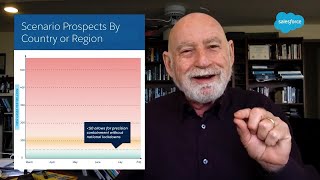
Peter Schwartz outlines a three-zone framework for managing COVID-19 based on cases per million. The green zone, below 50 cases per million, allows gradual reopening with targeted testing and tracing. He builds on Thomas Pueyo's "Hammer and the Dance" model: an initial shutdown followed by sustained, precise containment through travel restrictions, prevention measures, and outbreak response.
Chapters
So this is the framework that we're using to describe the kind of future dynamics of the crisis. What you see here on the vertical axis is number of new cases per million population. And so what you've got are three zones of concern. The first is the green zone. This is the best place to be. This is where the number of new cases is roughly below 50 per million. And that means you can take precise measures to control it. Cluster busting, as it's called, early identification of a cluster, test, trace and isolate. And if you don't have too many, if you're in that zone, you can probably manage that. And there are some places in the world, like New Zealand, that are probably in that position right now. They've had a recent outbreak, but it's small enough that they can probably contain it by conventional measures without a universal lockdown. Now, it still does imply the social measures like social distancing and mask wearing. So this doesn't get you out of that, but it allows those kinds of measures, along with targeted, precise interventions, to contain the virus and allow you especially to gradually reopen. So that's the green zone. The yellow zone. In between is the kind of highly uncertain. You could get it right and move down into the green zone, or you could get it wrong and move up into the red zone, where you. You're beginning to lose control. Up there, you do not have the option of opening there, you do not have the option of precise intervention. You have to take much broader measures that, for example, from time to time lead to shutdown. So Australia was a perfect example of that. They got it under control early and then they had a significant outbreak in Melbourne. They didn't shut down the whole country, but they shut down Melbourne. And that is probably going to be sufficient to contain it. So those are the kind of dynamics that we're going to talk about. Are you in the green zone, the yellow zone or the red zone? And what are your movements? It's also the case that what's happened in the recent past influences strongly what's likely to happen in the future. And what we've seen is highly diverse responses all over the world. So we're going to be talking about different responses and different dynamics in different places. So what we've seen is mostly in Asia. A few countries did a good job of containing the virus. China, Japan, New Zealand, South Korea, Taiwan, Vietnam. They've all had some outbreaks since then, but in each case they were down in that green zone and they've been able to mostly contain it. So as Long as they're able to do that. This is what we have called the dance. And in fact, to think about this, we've relied on a paper that has had a great deal of impact all over the world by Thomas Puyo, called the Hammer and the Dance. And the hammer was that first phase where we had to slam things down, really massive shutdown. And that happened because we really didn't know what was going to happen. Now, we've learned a lot, and we first of all know that people won't go for that hammer again. That is, they won't accept the universal shutdown. But we've also learned how to be much more targeted, either in geography or particular locations, et cetera, that need hotspots like military bases or prisons or retirement communities, etc. These are places where we've seen massive outbreaks. And so those places you want to target. And so we're mostly out of the hammer phase in most places, not everywhere. And we're now into what Puyo called the dance. What you have to do to dance with the virus to contain it. And here we see three fundamental elements to that dance. Step one is keep it out, restrict travel. Island nations, island states can do that. Hawaii can do that. New Zealand can do that. Australia, an island continent, can do that. Most places have a very hard time restricting travel. The second is prevent infection. This involves all the kinds of things like masking, physical distancing, hand washing, public education. Now it may even involve dealing with ventilation and filtration, as we have some concern about things like air conditioning. And then the final is containing it, if you have it. This is testing, tracing, quarantining, isolating. So either keep it out if it comes in, prevent further spread and contain the spread that happens. Those are the three elements of the dance. If you do that well, then you can probably keep the virus suppressed and gradually open up.