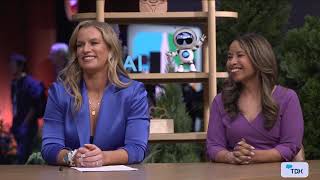
In this panel‑style discussion hosted by Diane Misota, Salesforce leaders Gillian Bruce, Ryan Schellack, and Susanna Playstead break down the major announcements from the TDX 2026 keynote and explain how they translate into concrete opportunities for businesses and individual careers. They highlight AgentScript – an open‑source, low‑code framework that lets developers and admins author LLM‑driven agents with version‑controlled scripts, natural‑language or drag‑and‑drop canvas, and deterministic if‑then logic for mission‑critical processes. They describe Headless 360, which opens every layer of the Salesforce platform (work, engagement, agency, context) to any agent, model, or tool, spawning 60+ new MCP tools and 30+ coding skills while enforcing organizational guardrails. The conversation moves to Slack as the primary engagement surface, where AXL enables agents to be deployed across any channel (Slack, WhatsApp, ChatGPT, etc.) and to bring together human and AI agents in a single collaborative context. Ryan explains how the new developer toolchain – including Cloud Code, Vibes 2.0, testing harnesses, smoke‑test pipelines, and observability dashboards – lets engineers build, test, and manage end‑to‑end agent lifecycles faster and with less hand‑holding. Susanna emphasizes that AgentScript’s observability and deterministic branches give enterprises confidence to use agents for mission‑critical work. Gillian notes the challenge of “build once, deploy everywhere” – rethinking agent design to work across diverse interfaces rather than a single UI. Overall, the panel translates the TDX innovations into actionable steps for leveraging AI agents to accelerate business outcomes and advance professional skill sets.
Chapters
What do all these TDX innovations mean for you? Well, you're in the right place because we're going to show you how to put them to work for your business and your career, moving from inspiration to implementation. I'm Diane Misota, joined by Gillian Bruce, Ryan Schellack, Susanna Playstead. Welcome, everyone. What stood out to you most in the keynote? Susanna, I'm going to start with you.
Absolutely. So AgentScript for me, it's a new way to control how agents work. It blends that probabilistic nature that we love in LLM, right? That's why they're so powerful. You don't need to have hardcoded logic. Logic, but when there are critical business processes, sometimes you need that predictability. And so with AgentScript, our developers are able to work in one file. It's version controlled. They can define how the agent essentially moves about its tasks and control how it transitions to one thing or another. And one thing that I love about AgentScript in particular is that it's not just for devs, it's for admins as well. They can build AgentScript with natural language and they can also use the canvas to drag and drop, to click use low-code tools to build an agent script. And my favorite part of that agent script announcement was that it's now open source.
Ryan, what about you? Most exciting thing from the keynote?
I mean, headless is so exciting. And first off, no characters were harmed in the making of this announcement. But it's incredible news for our developers who want to have the choice to go and build with their preferred tools how they want. What we really did was we took the 4 systems that make up this entire platform—work, engagement, agency, context—and we opened them up so that agents could operate through them, creating 60+ new MCP tools, 30+ coding skills. Agents love these markdown files that define how you navigate a solution, and we're enforcing the guardrails of the organization and a trust layer throughout all of these. So you can go to any coding agent or use something like Vibes 2.0 with any SDK of your choosing and go and build incredible solutions that deeply understand your customer and your business. This is huge for what you can build and how you build it.
Gillian, I have a guess what your takeaway is, but why don't you hit us?
I mean, it's all about the system of engagement. Slack has been part of the Salesforce ecosystem for quite a while, but this is the first time that we're really seeing it come to life as the true engagement layer for not only agent force, but all agents. I mean, one of the amazing things that you saw a little bit with AXL is you can deploy now to any surface, and Slack is obviously the primary one, but you can deploy to WhatsApp, you can deploy to ChatGPT, anywhere you want to surface agents. The unique thing about Slack, and you saw this a little bit in the demos, is it's the one place that you can pull all of the agents, whether they're agent force agents or your third-party agents like a Linear, a Cursor, a Claude, all into the context of work with your entire team. So it's really the one place where you can bring your entire human team and your entire agent team together to get work done.
All right, Ryan, Headless 360 opens every layer of the Salesforce platform to any agent, model, or tool. What does that mean for the day-to-day in a developer's workflow?
It means you have so much more choice now in terms of how you go about creating and generating the outcome you have in mind. You can really start now and think through the an entire solution, then go to the preferred toolchain in front of you, be that Cloud Code or something like Vibes 2.0. And we've created so much infrastructure now that helps those coding agents and the respective harnesses go and build incredible enterprise-grade solutions from scratch, from putting together not only, let's say, the agent, the agent script, as Susanna mentioned, but also putting together the testing harnesses around it, creating the smoke test that then proceeds through, as we saw in the keynote. This means that you're not only going and generating something that's a kind of cool-looking POC or demo, you're thinking through every step of what that agent would require across its lifecycle. We've now made all of that available to these toolchains so that the whole system end-to-end, the whole lifecycle is exposed to them. That means they can just complete so much more, do it faster, and do it without as much handholding. This means as a developer, you're not just creating the solutions, you're steering this fleet of agents towards a business outcome. It's going to make everybody so much more powerful in what they do. Amazing.
And Susanna, we heard about the probabilistic nature of agents. How do we make sure enterprises are comfortable with mission-critical work?
Well, I think that's one of the powers of AgentScript. You're able to write that if-then conditions. You're able to see in our tools how the agent is actually decisioning and making those choices. So everything's traceable. We didn't talk about it at the keynote, but we have observability tools that show exactly how an agent is behaving. But I just think that capability to blend the creativity of an LLM and the flexibility of it with this core deterministic business logic is really what's going to allow enterprises to trust building agents with Salesforce.
All right, Gillian, really quick. Build once, deploy everywhere. It sounds great. How— what are the challenges in making that seamless?
I think it's— the challenge is finding it— the thinking, rethinking how you're actually building agents, right? You're not building it within the context of just like the Salesforce UI. You're building this to interact across the board with whatever the end user's preferred interface is. So it really kind of changes the game there.
Susanna, Gillian, Ryan, thank you so much for your insights.